
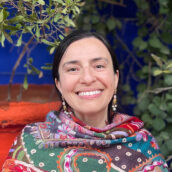
Season 04 – Episode 100: Weeds, Weevils and the Cultivation of Authenticity, With Sat Dharam Kaur
By The Gifts of Trauma /
Listen this episode here:
or here
Authenticity isn’t something we build, but something we’ve always carried and spend our lifetimes learning to trust. Sat Dharam defines authenticity as fidelity to one’s own personality, spirit and character, and traces hers back to early childhood where she showed up as; the leader, the organiser, the person who ‘got things done’. But her path to trusting led her on a healing journey through shame and the fear of rejection. That healing, she says, is what Compassionate Inquiry offers at its core.
In this wide-ranging and delightful conversation, Sat Dharam explores:
- What it means to be true to one’s personality, spirit and character, across a lifetime
- Why shame is so corrosive, and how being accepted and received can loosen its grip
- How safety, confidence and repetition build the capacity to act with authenticity
- The balance between masculine boundary-setting and feminine collaborative trust.
This is a conversation about gardens, weevils, bumblebees and Yellowstone wolves… all of which takes us back to what it takes to become fully ourselves.
Episode transcript
00:00:00 Rosemary
If you’ve completed or are currently enrolled in Compassionate Inquiry training, you’re invited to attend the third International CI Conference in Vancouver, Canada from October 30 to November 1. Dr. Gabor Mate is returning as our keynote speaker and masterclass presenter. Enjoy engaging workshops and inspiring demonstrations with Sat Dharam Kaur, CI facilitators and practitioners. Whether you join us in person for three days of shared inquiry with CI cohort partners and colleagues from around the world, or attend virtually to focus on the teachings, tap the link in the show notes to learn more and secure your place. And yes, there will be dancing.
00:00:47 Sat Dharam
It’s been a long transition for me, a long process of eroding shame, especially. It took me a while to recognize that was there. Shame is hidden for a long time, isn’t it? Until we face it, or make friends with it, or notice it, but it’s very constrictive and corrosive. What helped so much for me, this goes back to childhood trauma, was to be received. The shame can only be reduced when we’re accepted, we’re received, we’re understood, we’re loved. So that’s what I’m excited now, when I think about Compassionate Inquiry is I think that’s a community we’ve created for one another where all of us can release that shame by a little bit, by little bit through the dyads and triads, through the bi weekly meetings, through being with one another, through expressing our vulnerability, for not being afraid to say hey, this is showing up for me. And then when we can be held, then that shame starts to decrease and then we have the trust in our authenticity and then we can really show up with our authenticity and then that allows people to contribute their capacity. One of the things that I have recognized within Compassionate Inquiry is I’ve been able to express my capacity, capacity that I didn’t know that I had. That’s what’s so beautiful, is the capacity increases as the support and the acceptance and the non rejection continues. Everyone can be authentic as well as express their capacity.
00:02:25 Rosemary
This is the Gifts of Trauma Podcast. Stories of transformation and healing through Compassionate Inquiry. Welcome to the Gifts of Trauma Podcast by Compassionate Inquiry. Today we have a wonderful opportunity to chat again with our fearless leader, the CEO and Queen Bee of Compassionate Inquiry, Sat Dharam Kaur. And I’m joined in this conversation by my co host and colleague Kevin Young. Welcome Sat Dharam. It’s a pleasure to have you back.
00:03:07 Sat Dharam
Thanks so much Rosemary. It’s always wonderful to be here.
00:03:10 Rosemary
It’s great to have you. You’ve recently penned an article on authenticity and I think that would be a great place to start for people who don’t know you. Your full bio is in the show notes and I’m wondering, is there anything that you’d like to share for people who are new to you, Sat Dharam,that might surprise or intrigue them?
00:03:31 Sat Dharam
Oh, yeah. This weekend I am going to battle with spotted knapweed, which is a noxious weed that came over at least a hundred years ago from Europe and now has propagated over much of North America. And it overtakes many other plants. So in my orchard, it is overtaking other medicinal plants that I would like to grow. So I have been investing a lot of time in the last week or so, to, how can I tackle knapweed in the most effective way?
00:04:07 Rosemary
I love that picture you painted. You are battling the invader plants.
00:04:11 Sat Dharam
Yeah. You know, and I’m sure we’ll weave this into authenticity somehow. But what I discovered was that all of the resources say you have to dig it all out. You have to just dig every one out of them because the roots are very deep. Has a deep tap root, it flowers. The flower produces a thousand seeds. The seeds live for five to 10 years. They’re basically indestructible by anything. So you’ve gotta pull it out. However, then I found that there are several species of weevils, little beetles that dine specifically on knapweed. And that when you find these weevils, they will take care of the population of knapweed, very systematically and ingeniously. So here we look at the power of nature to create what it needs to restore homeostasis to a system, and I find that really incredible. So at some point, both the knapweed and the weevils die out because there’s no food for either. You know, there’s no support for either. So it’s just really interesting to think about that and even where we are as a human species, right now and nothing is outside of nature and how can we find homeostasis even in the worst circumstances? Right? Find a way through. That doesn’t mean that we over control or go to battle, but we’re working with… somehow working with nature. So I find it really fascinating, these sorts of dilemmas. Even though it seems overwhelming, there’s a way through.
00:05:43 Rosemary
It’s really interesting that you found that research and how did you… how did you come across the weevils?
00:05:51 Sat Dharam
Just looking for hours to see, there must be a solution. And in Montana, they’ve been using weevils for years with great success. In British Columbia, they use them. In Alberta, they use them. I tried to order weevils from the States. I can’t order weevils from the States, so I’ve got to find some weevils in Ontario. Someone’s going to get back to me soon with the weevils. But the thing is that this whole area that I live in, Grey County in Ontario, close to Owen Sound, is known for this invasive weed. It’s taking over the grazing land. It’s toxic to the animals. It becomes a monoculture if you don’t take care of it. Not unlike humans have become on the earth… Not unlike humans. So it’s a danger when there’s a monoculture or an invasive species, as we have become to many other species. So how to restore order and biodiversity is what I want to do. And so these movements have occurred in other provinces, but as far as I know, there hasn’t been a movement yet in Ontario to actually actively use the weevil. So that’s what I’m hoping to initiate.
00:06:57 Rosemary
Well, given the extent of the spread of this weed, I have a feeling that the weevils you bring in will live long and prosper while they take that out.
00:07:08 Sat Dharam
I hope so.
00:07:09 Kevin
There’s a story, I’m sure lots of our listeners have heard of it, where they. I think it was Yellowstone national park. And the theme is how wolves can change rivers. Have you come across that before?
00:07:23 Sat Dharam
I haven’t seen that.
00:07:25 Kevin
It’s because all the wolves had been killed in Yellowstone. Because all of the wolves had been killed then the deer became invasive. So the deer didn’t have a… Didn’t have a predator to take care of them. So the deer were able to just stand and eat all the grass at the river edge and eat all the trees. So the grass then, which was holding the soil firm because the grass was all eaten, the soil became really loose and got washed away by the river. So the river was moving. The soil got washed away. There was no grass growing. The deer were eating the trees because the deer were eating the trees. There was no cover then for small mammals. There were no little voles and mice and squirrels. There were no pollinators. So because all the grass was going away, then the bees and the butterflies were all growing away. And the whole topography or geography of this park had changed. And what they did was they. They tried loads of stuff, tried growing stuff. And, you know, and what they did was they introduced a new pack of wolves. And the wolves just reversed that whole process and the grass started growing because the deer couldn’t stay so long, the grass started growing, the bees and the butterflies came back and the pollinators came back and the trees returned and the birds returned and the squirrels returned and the river changed direction. All because they introduced the wolves again.
00:08:38 Sat Dharam
Amazing.
00:08:38 Kevin
And it’s about biodiversity
00:08:40 Sat Dharam
And ecology, so it’s really about looking at the whole system and well being of the whole system rather than a single species.
00:08:48 Kevin
As you’re chatting, Sat Dharam, maybe me and my esoteric mind. The story of the weevils and the. What was the weed? The ragweed?
00:08:56 Sat Dharam
Kknapweed. K N A P. Kknapweed.
00:08:59 Kevin
Kknapweed, yeah. And that idea in Buddhism of the mind being the garden, your mind is your garden and thoughts and beliefs in different things can be weeds or flowers, depending on how we tend to them. And I’m hearing your story with the knapweed and thinking of it very esoterically and spiritually and how these things, when an invasive thing, belief, thought, behavior gets into us that it can become a monoculture, it can completely take over.
00:09:26 Sat Dharam
Absolutely. And the other piece, I mean gardening is such a beautiful lesson in life and wisdom. So what I’m doing… So I have these rings of trees, I have about 135 fruit trees and they’re planted in circles as you’ve seen them. And around them is soil with other plants and berries and herbs and things. And so now what I need to do is put in enough seeds of clover and chamomile and creeping thyme and self heal and yarrow and those… that group of species then forms a thick mat in the soil and they’re all low growing and beneficial for the insects and the pollinators to crowd out the knapweed. Right. So there’s your good thoughts, a diversity of good thoughts. You can’t do it just with clover. We need these other plants to do that. But not only that, but if I dig out one knapweed, I have to replace it with something else to fill that spot or something else will come in. Nature abhors a vacuum. And that was my error, really, not error… but it takes a long time to transform a field to produce an orchard, especially if you’re doing it organically. And so the error was not recognizing there was a knapweed problem. Right? That I have to fill in every little bit of soil with something beneficial to prevent the overgrowth of the invasive detrimental species, so that I don’t create an environment for it to come in and invade, basically and take Over. Fascinating, isn’t it? So, like, how we have to be so discerning with our mind, and if we pull out one negative thought or negative belief, whatever it is, what are we putting in? What are we replacing it with that’s going to be beneficial for the whole system? And what can we do in our lives? Maybe what are the habits? Right. What are the habits? Those would be like the good plants, the beneficial, synergistic plants that work together. What are your good habits that prevent the opportunistic invasive species from creeping in again? Because that’s how I experience my life. If I don’t have enough of these healthy habits in place, stuff erodes within me. Right. So it’s one of those good habits that we need.
00:11:44 Kevin
Can I quote you a little poem? Promise it’s the last one. Promise to our listeners is the last one. And hopefully I can remember it because I’m trying to recite this from memory by James Allen, and it was written in 1903 or something. “Mind is the master power that molds and makes and man is mind. And evermore he takes the tool of thought and shaping what he wills, brings forth a thousand joys or a thousand ills, he thinks in secret and it comes to pass. Our mind is but a looking glass.”
00:12:19 Sat Dharam
That’s great.
00:12:20 Kevin
And that’s leaning into that. Yeah. What we’re sowing and reaping and taking care of and tending to will regenerate and produce. And that’s Gabor’s quote around, ‘With our mind we create the world.’ That’s the same as that James Allen poem from 1903 or 1907.
00:12:36 Sat Dharam
Yeah. And I want to share one like before. On the topic of gardens, I want to share one other experience I had a couple days ago. So I was sitting digging out knapweed and thinking about, oh, my God, this is an overwhelming task. And I was just sitting down beside a haskap berry bush, which is in bloom right now with these little yellow blossoms. And I was sitting there, and a bumblebee came by, and you could just see him or her, whatever it was, going from one blossom to the next, just nonchalantly, one to the next. I’d do this one and this one. And it was just so extraordinarily beautiful to recognize what that bee was doing so effortlessly and simply, the thought that came to me. Oh, my God. He’s like a spiritual teacher, initiating each one of the students with a little touch in the blossom, of each of these blossoms on the berry bush so that there could be fruit. And what a gorgeous metaphor of how we can be. You know, this is the difference. Are we an invasive weed in our lives or are we a bumblebee pollinating every blossom so there can be fruit for that species? Isn’t that a beautiful analogy?
00:13:51 Rosemary
It truly is. And every time you say the word ‘invasive,’ I’m taken back to an interview we did a little while ago now with an aboriginal elder, Rosemary Wanganeen. And she would always pair colonization with invasion. She called it the invasion-colonization and what you’ve described with the knapweed and the weevils. If you look at 1788, when the ships sailed into the… I guess Botany Bay was where they showed up. It was weevils without a knapweed that got off that ship and they destroyed, for no apparent reason, so much of what was there when they arrived. So this energy, the balance, I think, Is so important.
00:14:40 Sat Dharam
And thus the need for the diversity. It’s also the same with the gut flora. Right. So when you look at the microbiome in the gut, it’s not so much what species are there that determines health because the species of the microbiome changes depending on where you live in the world. It’s the numbers and the diversity. So longevity is related, and good health is related, to increased diversity of the microbiome and the gut. Same thing with everything in nature. It gives more room for diversity. And this is what we’re doing with diversity, equity, inclusiveness, even within Compassionate Inquiry, is how can we encourage, invite, sustain promote diversity.
00:15:25 Kevin
Sat Dharam, could I take you back a little bit? And relating your last story around the idea of authenticity again, I was thinking of that little bumblebee merrily doing its thing, pollinating. And when we think about what it’s actually doing, that’s a big deal to pollinate from flower to flower.
00:15:43 Sat Dharam
Yeah.
00:15:44 Kevin
That bumblebee is actually making plants or fruit or blossoms or trees. But yet the bumblebee goes about that with complete humility,
Sat Dharam: Nonchalantly.
Kevin: It doesn’t. It doesn’t. Nonchalant, as you said. Yeah. So it’s like the bee. When a bee is being a bee. Sorry, for all the bees. When a bee is being its true self, it’s not showing off, it’s not performative, it’s not doing it in a loud way, but it is doing something truly miraculous. It is a miracle. And there it is in its authenticity, there it is a bee being itself and creating the world. It is literally creating the world the way that it helps us survive. And it’s just chill, nonchalant, authentic, itself.
00:16:30 Sat Dharam
And it knows what to do. That’s the thing. The bee is also, let’s say, my little ecosystem of the orchard, right? We have pear blossoms and apples and has gaps and flowers and all kinds of things. And the bee comes along every day and just recognizing, okay, I’m in this vicinity, this is what I’m meant to do, right? And it brings that back to the hive, and it does what it does, and the whole system benefits, which is also incredible. It’s not one plant only that it pollinates. It’s all of the flowers. It’s not exclusive. Right. It’s benefiting all. And that’s why to have a lot of different flowers or trees or shrubs blossoming at different times is beneficial to the bees, too, instead of only one culture or only one plant.
00:17:25 Rosemary
Yeah. It’s so interesting, because what I’d like to focus our listeners on is, yes, the process of being authentic is one of ongoing farming, because things change. There is a diversity, we are diverse beings. I’m thinking of the honeybee going about his business so nonchalantly. At the end of the day, he has gathered pollen. He will…. He or she will create honey. So in the process of us living into our authenticity, there are outcomes as well. We weed, we manage, we tend, and at the end of the day, all of that creates something. So I’m wondering if you could speak a little bit about what has been perhaps the result of you following your own authenticity, Sat Dharam probably never foreseen or intended, but as you move forward in life, surrendering to life, being authentic.
00:18:33 Sat Dharam
I think it’s such a wonderful question and a really great question for each of us, Right? Because authenticity for each of us is a little bit different depending on who we are. So one definition of authenticity is to be true to one’s own personality, spirit, or character. Interesting, right? So the spirit is in there as well as personality as well as character. So if I look at that spirit, personality, character, and if I look at what’s my character been, that I can recognize since I was a young child, right? So I can look back and say, okay, I was always a kind of a leader in grade school, high school. I could give examples, but I like to take charge, or I like to organize people, or maybe more importantly, I like to have a mission. So that’s been part of my character that I could trace back. I could also say I have always been creative, and innovative, part of my character. I’m a little bit impatient. I like to get things done. I like to see what’s possible and make things happen, that are possible. So that’s the sort of the visionary. And I like to do it with other people. I like to be alone, but I also like to do things with other people. And I get excited about projects. Oh, let’s do this. I get excited about projects. So that’s all part of my character. And it’s always been part of my character. I can even go back to age 4, 5, 6 and see that that’s part of my character. And then we go to the spiritual piece. So part of your spirit. So to be true to one’s spirit, it’s different, isn’t it, than character or personality? For me, being true to my spirit, the yoga has helped, the meditation has helped, listening to my intuition has helped. Paying attention to my dreams have helped. And just, I guess stilling the mind has helped a lot. So having the capacity to not pay so much attention to what my mind or my thoughts are saying, but to have the capacity to do the inner listening, to wait to see what comes, I would say that’s probably listening to my spirit. And that’s come through meditation and yoga and time in nature. So then honoring everyone in their authenticity, honoring what comes through on that intuitive level when you’re not thinking. And I think that’s fairly strong in me and has been fairly strong in me since at least I was a teenager, that capacity to pay attention to intuition. So in terms of where that’s taken me now, I think people know the story of… I was teaching the Beyond Addiction program and reading Gabor’s book and met Gabor and had this quick idea, after working with him, that there’s something here that can be birthed. And I didn’t know quite how it would happen or what it was, but I just kept following that thread of what next? What needs to happen next? What needs to happen next? And it certainly wasn’t coming from my left brain. Oh, I have to do this. It was just, oh, this is what needs to happen next. Okay, I was following the guidance that was coming through rather than trying to make anything happen.
00:21:51 Kevin
Can I ask a question? Thank you. As you’re chatting there, Sat Dharam, I really love that quote. True to one’s personality, spirit, or character. Yeah, it’s really beautiful. I’m wondering, has it ever led you to a place and you’ve thought, holy smoke, what am I doing here? How did I get here? And I’m thinking of the obstacles to authenticity, shame, beliefs, and sometimes just that idea of the things that get in the way of authenticity and where our Personality, spirit, our character are inviting us to do something or encouraging us to do something. And something in us is frightened or ashamed or playing small or whatever that might be. And I’m curious, have you ever found yourself at a place like that going, oh my goodness, I’ve come too far?
00:22:38 Sat Dharam
Yeah, yeah, of course. It’s been a long transition for me, a long process of eroding shame, especially shame and the fear of rejection. And of course those go together. So if there was fear, it’s fear of rejection. But I think shame is much bigger, tied to that. Those would be the two big ones for me. And it took me a while to recognize that was there. Shame is hidden for a long time, isn’t it? Until we face it or make friends with it or notice it. But it’s very constrictive and corrosive and I think what helped so much for me, and this is, this goes back to childhood trauma, was to be received. So the shame can only be reduced when we’re accepted, we’re received, we’re understood, we’re loved. Right. And that’s been a long process for me, to find that with community and people and then trust… Trust builds trust in myself, trust in what’s happening. So that’s what I’m excited now when I think about CI, is I think that’s the community we’ve created for one another, where all of us can release that shame by a little bit, by a little bit. Through the dyads and triads, through the bi weekly meetings, through being with one another, through expressing our vulnerability, for not being afraid to say, hey, this is showing up for me. And then when we can be held despite this belief that there’s something wrong with me or I’m not good enough or it’s my fault or I’m going to be rejected, I’m going to be cast out, you know, to see that, no you’re not. Then that shame starts to decrease and then we have the trust in our authenticity and then we can really show up with our authenticity and then that allows people to contribute their capacity. I love that word capacity because one of the things that I have recognized within Compassionate Inquiry. is I’ve been able to express my capacity, capacity that I didn’t know that I had. Right? That’s what’s so beautiful is the capacity increases as the support and the acceptance and the non rejection continues. Then the capacity, okay, maybe I can do this and maybe I can do this and maybe I can say this and that’s so incredibly beautiful. So that ideally it’s wonderful to be… I think that we’re doing it not perfect, but we’re doing it to create an organization or a place where everyone can be authentic as well as express their capacity, build capacity, which I know that both of you have done and are continuing to do.
00:25:23 Kevin
We’re taking a brief pause to share what’s on offer in the compassionate inquiry community. Stay with us. We’ll be right back.
00:25:32 Rosemary
If you’ve been listening to our podcast and are curious about the Compassionate Inquiry approach developed by Dr. Gabor Maté and Sat Dharam Kaur, consider joining the professional training program. It’s open to all healing professionals, including naturopaths, physicians, bodyworkers, coaches and therapists. In addition to learning how to use compassion to support your clients in their most vulnerable moments with greater empathy and authenticity, you’ll also deepen your own internal process. If you’re interested, look for the link in the show notes.
Rosemary:
Thank you. It’s a beautiful answer. And I’ve got that image in my mind of the knapweed being replaced by this diversity of seeds that nurture the land, nurture the beings that exist on the land. And as I’m listening to you speak, I’m hearing a lot of what I would classify as feminine wisdom. You know, feminine wisdom leans into intuition. You’ve mentioned that. It leans into our beingness or our presence, intuition. And I’m curious as to whether or not once we’ve made progress with that weeding, if it makes space for things that perhaps there wasn’t space for before, like more time for being, more attention to intuition, more connection with the natural cycles and natural rhythms. I’m trying to imagine someone, maybe myself, back in the corporate days, when I was zipping to the office, spending 8, 9, 10 hours there, zipping home, taking care of tasks. There was no way I would have been present to a bumblebee’s path. I’m curious as to whether or not you see any connections between leaning into your feminine wisdom, and of course, all of us have both, some sort of balance of both. Maybe it’s leaning into both, your feminine and masculine wisdom, but you’ve been naming feminine wisdom traits. What do you think of that?
00:27:36 Sat Dharam
Some of the feminine perspective, the divine feminine perspective in women and men, or in people that don’t define as either gender. So it’s in both sexes also. It’s really tuning into the harmony of the whole. Right? It’s not individualistic, it’s collective. It’s also collaborative. Also, it includes trust. It includes nurturing, caring, healing, empathy, interdependence connectivity, those are part of the feminine. So if we look at this analogy then, if I look at myself within CI, well, in CI initially, and I had to do an awful lot because I was forming the thing and nobody else knew, or I don’t know, I was receiving the instructions, if you will. And there was a lot that had to be put in place. And of course, other people supported that and were very important. But I had a bigger role, Now… So here’s the diversity and the collaboration now that we’ve grown to a certain degree and we have heads of departments, right? The technical director, the marketing director, the mentorship coordinator, the graduate program coordinator, et cetera. So then I can step back a little bit and trust that other people can succeed and do well at that particular task. So then we have more diversity in the system with everybody knowing what they’re supposed to do so that the person who’s leaving the system can rest, allowing everybody else to do what they do best. Right? So that would be a connected, collaborative, diversified kind of management, I guess you’d call it, with trust and support, ideally for everybody, recognizing that we’re contributing to the harmony of the whole.
00:29:28 Rosemary
Beautiful, thank you. And I see very present, is when you’re deep in your feminine wisdom, you can hold space for both creativity and chaos.
00:29:38 Sat Dharam
Yeah, yeah, that’s right. I have a capacity for that. I’m not sure where I got that capacity to hold chaos. Maybe it’s from my childhood trauma, but I have the capacity to hold chaos. I think that’s part of the regulated nervous system. So here’s the other thing. For authenticity, we need a regulated nervous system, for sure. Otherwise we’re going to be reactive. So the capacity to have that inner stillness or connect your breathing or however you want to describe that to be and to trust the process that, yes, something’s turbulent right now, but it’s not going to last forever and we can get through it.
00:30:16 Rosemary
Thank you. I wonder if you could speak a little bit to how boundaries play into this, because it can be very exciting when you have a new project. There can be chaos, there can be rampant creativity. I’ve had nights myself when my creativity is so on fire that it’s really hard to shut things down and go to sleep because it’s… there’s so many ideas coming up. And I’m wondering if you could just speak to that a little bit.
00:30:42 Sat Dharam
I’m not the best person for boundaries, but I totally understand, hear, agree with what you’re saying. We do need to have boundaries. So you mentioned rest. And the feminine is also about activity and rest. So everything happens in cycles. If we’re going to come back to the metaphors in nature, there’s the night, there’s the day, there’s the twilight, there’s the dawn. So everything has a rhythm. There are the seasonal rhythms. Every 24 hour cycle that we’re in has a rhythm. We have the moon, we have the sun, et cetera. So I think part of that is being in touch with our natural rhythms that we also are becoming distanced fro, in a Western competitive world, in the..Or the patriarchal, competitive power overworld, there’s not room for rest if you’re wanting to dominate, because there’s the fear of losing what you want to dominate. So why would you rest? Right? But if we’re using the word feminine for this, the other possibility is not domination, but cooperation. Right? Cooperation. And then there’s time for everybody to rest, because nobody’s overly pushing to dominate. There is a recognition that there’s a synergy between everybody that can carry the whole. It doesn’t require competition and domination.
00:32:08 Kevin
As I was listening to your chat, Sat Dharam, I’m conscious that I’m a man and a male and a word that I haven’t heard you use yet. And the word that was arriving and arising for me was confidence. And I think it really ties in with authenticity. A couple of months ago, I was doing a module with one of our groups and it was around confidence. And I’ve had people reflect that I seem confident. It got me thinking. I was reflecting, I think, confidence, right? Am I confident? And what does that mean? And I learned, and this is a celebration of Compassionate Inquiry. Because what, on reflection, what I learned about myself is that I’m not so sure I feel confident that I can do anything better than anyone else. But what I was recognizing that over the last few years, what I was really feeling was safety. And when I perceived and believed myself to be safe, I didn’t then fear making a mistake or getting it wrong or trusting that I would show up with my best intention and want to do my best. And I was explaining to my group that I would disagree or have another slant, that I don’t know that I am confident. I just believe that this community has allowed me to… or led me to a perception of safety. And when we do that, when we do that, when we can feel safe, then I think this authenticity piece is really allowed to blossom and bloom. And the diversity is allowed to blossom and bloom. People who have a natural inclination to a masculine energy or female energy, or to work in small teams or big teams, or be creative in different ways, all of that is supported, encouraged, allowed, naturally.
00:33:46 Sat Dharam
Yeah. And also, I mean, this is ideally what we want to develop even further in Compassionate Inquiry. So when people feel like they’re judged, which many people have been judged terribly, either as a child or in school or because of intergenerational trauma, so then that shuts down the confidence and we have fear, the fear of making a mistake, or the fear of doing something wrong, the fear of being punished, the fear of being laughed at, the fear of being told that you’re stupid, et cetera. So that inhibits a lot of people from their confidence. So if we can create an environment where it’s okay to make mistakes, it’s okay to do things wrong, it’s okay, no one’s going to be cast out or fired or whatever, but let’s learn from them and let’s practice again, let’s do it again, let’s do it again and again and again. So the confidence also comes from repetition, Kevin. So you, as a facilitator, have been repeating over and over again, you know, the tasks associated with facilitation, until they become natural, easier, et cetera. Right? And then when that happens, we can be creative, we can be authentic, because there’s not the fear of making mistakes, there’s not the fear of being judged, et cetera. So it’s partly the safety, partly the repetition, partly also positive feedback. Positive feedback makes us more confident. Partly the support of peers increases the confidence, and then the greater the confidence, the greater the authenticity. So they work together, don’t they?
00:35:21 Kevin
Yeah, they do. They’re almost interchangeable, some of those words, authenticity, safety, confidence, or they’re Venn diagrams supporting the self. If we put self in the middle, all of these things are pillars or structures that are supporting this self.
00:35:34 Rosemary
Yes. I am just really curious, Sat Dharam. You followed this path that led you to Gabor, that led you to create Compassionate Inquiry as first an approach and then an organization that trains people in this approach. We looked a little bit before we spoke, Kevin and I, at other healing organizations that might be a little bit similar to Compassionate Inquiry out there in the world that are led by women, and there are very few. Which seems to really be opposite to the percentage of women who train in Compassionate Inquiry. I believe the last figures I heard, there’s perhaps 70% women trainees, 30% men. Yet there’s just a handful of organizations around the world that are offering trauma informed training of one sort or another. So given how women relate to what you’ve created with Compassionate inquiry, do you find it odd that there are very few women led trauma informed other organizations out there? Yes? Or not?
00:36:49 Sat Dharam
You know, historically, the world has often validated the men more than the women. And I think that’s still true. So that’d be one, that’d be one piece of it. Conferences and maybe universities are remedying that by trying to have more women or equalize the number of women to men and also equalize diversity. This is interesting coming back to diversity again, equalized diversity in terms of race, religion, et cetera. So it’s… this is quite interesting… because we’re seeing that in maybe the last five or 10 years, that movement even in conferences to include more equal amounts of men and women and to have diversity of backgrounds, so that the whole picture can emerge. And it’s not just the white men that are given the power and that are the speakers. But this seems to be, if I’m not mistaken, an evolution in the last 10 years or so. Would you agree?
00:37:47 Rosemary
Yeah, definitely.
00:37:49 Sat Dharam
That went toward more diversity and equality among gender, race, religion, et cetera., has been happening in the last 10 years. So then that would be back to our unconscious bias in the patriarchal colonialism shadow affecting organizations, affecting the publishing industry, affecting universities, and affecting women. And also, how many women have had the opportunity to pursue both their family and their child raising, as well as an academic career, a professional career, and to have the support of either family, community partners to be able to do that. That would be the other issue, wouldn’t it be? That would be the other obstacle, is women, of course, don’t have the opportunities that men have had to form their path, because they’re too busy taking care of children, doing the laundry, making the food and running a job, to be able to start anything new. So for this I want to thank my husband and my family because my husband contributed when my children were young, to 50%, at least, of the taking care of the children. So we had very much a shared responsibility for raising our children. And he always has encouraged me to follow my heart and to do what I was meant to do. And I’ve done the same for him. So that’s what’s required, Rosemary, is the people around us, our partners and our families and our communities, for anything like this to happen, need to be supportive. Otherwise, it’s a long shot. And as my family was involved, this is the weirdest thing. How could I be born into a family? It’s not weird… but this is what it Is like where my son, is the primary video person for Gabor. And he started when he was 16, filming Gabor at these events with me. You know, it was just, I won’t call it luck, but it was divinely planned really, that I would have such a family that could support me with this work. Otherwise it would be impossible to have been done.
00:40:01 Rosemary
Yeah, yeah. My daughter comes to mind as you speak, because she’s got a 14 month old child, my grandson, and it’s challenging. She works full time, keeping up the house, there’s a dog, there’s like all kinds of things. And it really also explains why a lot of people who join the Compassionate Inquiry community are not in the active child rearing stage of their life, because they haven’t necessarily had that support that you were blessed with.
00:40:30 Sat Dharam
Yeah. And the other thing is time too. Right. So, I mean, I’ve been living where I live now for almost 30 years near Owen Sound. And so Owen Sound is 21,000 people. To get from one place to another, literally 10 minutes, you can get what you need anywhere. So I’m not spending a lot of time commuting, I’m not spending a lot of time in traffic. My farm is 12 minutes from town, so I have. That’s also something to think about. So many people are spending time caught in traffic. Right? It’s lost time. It’s all of these things are huge resources, time and the support of family. And so how do we create more of that for people? It’s a good question, right? Is you gotta live close to your work to be able to make that happen.
00:41:18 Kevin
For me, Sat Dharam, I know we’ve been using our gardening analogy or metaphor and when you said there about having support around us, I like to use the word illuminating and supporting when we really lean into it. Anything that has ever happened anywhere, ever, has been done by reams and reams and reams of people. If we think of the clothes we wear, the food we eat, the books we read, the fuel, the buildings, the roads, the parks, your garden, there is a multitude. And I guess if we can do anything for each other, and this might be in our Compassionate Inquiry world for our clients, but certainly within our families, our business structures, when people support each other, when people illuminate each other, the results can be really wonderful. It’s something that’s really important. And maybe as I got a little bit older and a little less vain, and a little less conceited, it’s something that’s really important to me that where possible, the difference that can make in a life or an organization or a teaching facility to illuminate the other, to support and encourage is a priceless commodity.
00:42:28 Sat Dharam
A hundred percent. We could also call that mentoring, couldn’t we? So there’s two things. There’s one, that actually supports someone with their physical, mental, emotional needs so they can thrive. Right? We want to take care of Maslow’s hierarchy of needs, otherwise we can’t do the next level. So that’s the first thing, just take care of people’s basic needs. But then the other thing, and here’s the Compassionate Inquiry piece, is see the possibility in one another and support that. See the possibility in one another and help to grow that. That’s the bumblebee or the honeybee pollinating, allowing that, but that’s a little touch of grace and support. To encourage rather than compete, but to encourage, to allow everybody to flourish.
00:43:13 Kevin
And another cliche, a rising tide floats all boats. And when we do that, when the tide rises, when we encourage each other, it’s better for all. I want to come back to you and work again, but I’m just thinking of another piece of research on wellness. And the research was showing that when the least well off in community are better taken care of than everyone, right up to even the people at the highest end of community and the wealthiest, when we take care of the poor, even the rich or more wealthy people get healthier. And it’s just that idea that a rising tide floats all boats.
00:43:52 Sat Dharam
Thank you, Kevin.
00:43:53 Rosemary
I was thinking too, the well tended garden, like everything in a well tended garden, thrives, in the same way because everything’s taken care of, there’s diversity, everything has its own space. And as you were talking about planting the creeping thyme and all of that mix that nourishes soil and the creatures that are existing in it, it took me back to the indigenous tradition of what grows together well, yeah, you want to plant corn and beans and I think it’s squash together because the three sisters, they support each other. And that’s true for horticulture and it’s also true for humans. It’s just, it’s so important to pay attention and not just go in wholesale and grab a piece of land, take out everything that’s there and put in your own stuff because how’s nature going to respond? Like how on earth could a human know who’s not been paying attention? What fits in that land? What fits into the ecosystem that was there before they came in and cleared it out? Look at the number of lawns people plant, where other plantings would be much more beneficial to the ecosystem of that area.
00:45:09 Sat Dharam
Yeah. You know, there’s something else here that we need to, I think, be also aware of… is we do want to use the masculine to put up the boundary. Right. The knapweed is being invasive, so I have to do something about it. I do have to go in, like I said, go to battle with it. I do have to remove it. I do have to assert myself. Yeh, if I don’t do that, then the whole system won’t flourish. So that’s also really important is recognizing when the harmony is under threat, recognizing when the harmony of a whole system or the diversity of a whole system is under threat, and catching that, not being blind to that and doing something about it at the beginning before it’s overwhelmed by that threat. I’m sure there’s many things we can think about that are that threat to this beautiful planet we live on. But that’s where we have to use our inner masculine to say, no, I’m not going to allow this. And I’m going to work really hard to prevent this from happening because it’s going to be so hard if I don’t. It’s going to be almost impossible to defeat it if I don’t take a stand now against this, whatever that is. So that’s also true. Right? So there’s the balance of the feminine and the masculine and knowing when to use both and what’s the repercussions of both? Yeah.
00:46:30 Rosemary
And it’s toggling back and forth because you described some masculine traits. You did your research, you looked for an answer, you went out there seeking, protecting boundaries. You knew that this had to happen. There needed to be some structure to create order to contain this knapweed. Yeah. Strategic thinking. We all have both. And maybe that’s what our authenticity, our journey to authenticity brings us, is an intuitive knowing of what aspect of our wisdom to lean into.
00:47:02 Sat Dharam
Yeah. And what to say no to, to protect the harmony of the whole and what to work towards integrating, so that whole system can flourish.
00:47:13 Kevin
Thank you, Sat Dharam. I have a question, arising. And just as I took my in-breath to ask it, I remembered the last time I asked you a question. And you sent me off with a challenge and a job to do. And I’m like, oh, I must remember that when I have ideas in front of Sat Dharam, I quite often get a job. The last one was talking about men rising up and stepping up. And we went away and just recorded, if anyone’s listening, recorded five episodes of the Gifts of Trauma podcast around what it is to be a man in the world today. So when I think then Sat Dharam of you, and you are a mother, grandmother, you are finding yourself within Compassionate Inquiry where we have heads of department and people looking after mentorship and people looking after different programs and you’re stepping back just a little bit and having time to research weevils and weeds. And you spoke before the things that you’re interested in and your art and poetry and that sort of thing. What about for Compassionate Inquiry? You know, if our community were to put a shoulder to something, you know, if we were all to push in a direction, what do you foresee that being for Compassionate Inquiry in the next little while?
00:48:21 Sat Dharam
I would say I know this is one of your favorite words too, Kevin, which is kindness. So I say kindness is really important. And embracing diversity, protecting ourselves as an organization, I’m not quite sure against what, but keeping that in mind, that we may be against threats related to AI or threats related to various things, but protecting ourselves as an organization and making sure that everyone is taken care of, as you said, making sure that whether it’s on an administrative level, or whether it’s people in their bi weekly groups or people helping each other personally, but just to have that sensitivity, empathy to people’s emotional well being and to be present to respond to whatever that emotional state is in the holding of one another. I think that’s what we do well and what we need to continue doing.
00:49:19 Kevin
Thank you. And there’s something beautiful about all of those things. I’m going to say them again. Kindness and embracing diversity, protecting ourselves as an organization from things like AI or other challenges, making sure everyone is taken care of, sensitivity to people’s well being, empathy. And there’s something that I find really astounding with that is, like the seeds that… that like the bee that almost germinates itself.
00:49:43 Sat Dharam
Yeah.
00:49:44 Kevin
When organizations can take care, if we three can do that sitting here, then the likelihood is that the next person that you’re going to meet, you’re going to be kinder to, because your needs have been taken care of in this moment. And I really love that ripple effect, that things like kindness, empathy, love, compassion can have.
00:50:03 Sat Dharam
Well, it’s even bigger than that, isn’t it Kevin? Because as we do that, if we’re able to continue that and as we’re able to continue that as an organization, then that modeling, we all learn from modeling, that modeling affects everybody in their individual lives, which people CI have shared with us in their families, with their partners, their kids and then it changes communities, and then we have the spread of a whole other ecology globally. Right? Because then let’s say my 105 acres of land and the regeneration on that land, if we’re able to maintain it and continue, can spread. So there’s regeneration globally. Now. It’s not impossible. It’s just a matter of restorative systems. And I think that’s what we’re all about.
00:50:48 Rosemary
Yeah. It’s not only possible, but I see it happening. We had Diana Gharib on an interview recently, and she is practicing Compassionate Inquiry on the front lines in Beirut. Like, literally on the front lines. And what enables her to do that is the support of this community. So it’s already happening. We’re taking calm, we’re taking kindness, we’re taking compassion into areas of chaos and unbelievable, unimaginable for most of us, cruelty and horror and destruction. So, it’s already happening. The tendrils are out there. So it’s almost as if, to go back to our gardening metaphor, it’s as if you were to gift a few packages of weevils to the wilderness where the knapweed has taken hold. And just… It’s… The picture in my mind is like creating a firebreak. Like, just seeding out so that the weevils work their way back towards your property as well as out into the wilderness where that knapweed is doing harm that’s not visible to humans.
00:51:59 Sat Dharam
And continually planting these other seeds to encourage the diversity.
00:52:03 Rosemary
Thank you.
00:52:04 Sat Dharam
Thank you both.
00:52:05 Kevin
Let’s be explicit for a moment just to end our podcast. Satiram needs some weevils. Okay, can we just say it? Can we just put it out there? Satiram needs weevils. Please do not run them across the…
00:52:16 Sat Dharam
I need weevils. And I also need people to help me dig. So if you’re listening to this and you have a shovel and you’re close to Owen Sound, come on over.
00:52:26 Kevin
There you go. I’m sure you will have a cup of tea and a tour of the farm. And bring your weevils if you have any. Please don’t run them across the border. Please don’t be getting yourself in trouble. But we do need weevils. Weevils and shovels. There you go. There’s the name of… There’s the theme of our episode. Weevils and shovels.
00:52:41 Sat Dharam
There we go.
00:52:42 Rosemary
I have never before had a conversation with someone who is shopping for weevils, so it’s definitely a first for me. And I bet you never imagined that you would one day be shopping for weevils.
00:52:53 Sat Dharam
Didn’t even know what a weevil was till last week.
00:52:58 Kevin
Oh, dear. Oh, that’s a good belly laugh. I enjoyed that right from my belly. I just want to say thank you. It’s always, it’s always a real pleasure Sat Dharam, and a real joy to share space with people who have worked on their nervous system and who are doing the work. You know, the work is never done. And to pick, certainly for me, I’m really already really keen to listen back and to pull out those little threads of really grounded wisdom that I think we spoke about today. So thank you. I really appreciate it, Sat Dharam and this is our hundredth episode that will go out. We have… Compassionate Inquiry now is seven years old. We spoke about that last time you were here. And I think from us all here, we want to wish you every success, great health. Please continue to enjoy your garden and your weevils and your weeds and your authenticity and your true expression. It’s a delight having you here. Sat Dharam Kaur. Thank you for joining the Gifts Trauma Podcast from Compassionate Inquiry.
00:53:55 Sat Dharam
Thank you so much, Kevin, and thank you, Rosemary. It was a delight to be with you both.
00:54:00 Rosemary
Thank you so much.
00:54:07 Sat Dharam
Dear listeners. Thank you, each of you, for doing your inner work. On behalf of Kevin and the podcast team, he has a request to please subscribe to this podcast so more people can hear and benefit from bringing this beautiful podcast to life and creating a space for not only myself, but other speakers, for the words to be heard and for these thoughts, insights to contribute to this unfolding of whatever’s happening through us. Very beautiful.
00:54:46 Rosemary
The Gifts of Trauma is a weekly podcast that features personal stories of trauma, healing, transformation and the gifts revealed on the path to authenticity.
Listen on Apple, Spotify, all podcast platforms. Rate, review and share it with your clients, colleagues and family. Subscribe and you won’t miss an episode.
Please note this podcast is for informational purposes only. It is not a substitute for personal therapy or a DIY formula for self therapy.



Resources
Websites:
Related Links:
Courses:
Presentations:
Books:
- The Complete Natural Medicine Guide to Women’s Health
- A Call to Women: The Healthy Breast Program & Workbook
- A Naturopathic Guide to Preventing Breast Cancer
- The Complete Natural Medicine Guide to Breast Cancer
Podcasts:
- Sat Dharam, Your Addiction Reveals Your Hidden Pain
- Sat Dharam, Compassionate Inquiry Training: The Origin Story
- Sat Dharam, Healing Addiction and Codependence in Community
- Sat Dharam, I’m All I Wanted to Be, Now What?
- Sat Dharam, Technology & AI: Benefits & Hazards
- Sat Dharam, Bridging the Gap
- Diana Gharib & James Gordon, MD, When Survival Usurps Grief
Quotes
- “Shame can only be reduced when we’re accepted, we’re received, we’re understood, we’re loved.” – Sat Dharam Kaur
- “Confidence comes from safety, repetition, positive feedback and the support of peers. The greater the confidence, the greater the authenticity. So they work together, don’t they?” – Sat Dharam Kaur
- ‘With our mind we create the world.’- Buddhist Philosophy
- “Before we can create the world, the world creates our minds.” – Gabor Maté
- “When we can feel safe, authenticity is allowed to blossom and bloom. Diversity is allowed to blossom and bloom. People who have a natural inclination to work in small or big teams, to be creative in different ways, all of that is supported, encouraged, and allowed, naturally/”. – Kavin Young
- [Global regeneration] “It’s not only possible, but I see it happening. Diana Gharib is practicing Compassionate Inquiry on the front lines in Beirut. We’re taking calm, we’re taking kindness, we’re taking compassion into areas of chaos and unimaginable cruelty, horror and destruction. So it’s already happening”. – Rosemary Davies-Janes
- As A Man Thinketh
Mind is the Master power that moulds and makes,
And Man is Mind, and evermore he takes
The tool of Thought, and, shaping what he wills,
Brings forth a thousand joys, a thousand ills:—
He thinks in secret, and it comes to pass:
Environment is but his looking-glass. – James Allen.