
Listen this episode here:
or here
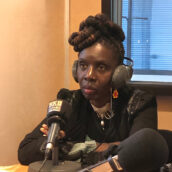
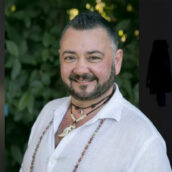
This vulnerable conversation continues exploring relating through the LGBTQ+ lens, as Vimalasara and Jordan share insights rarely disclosed to the heteronormative population. Jordan reflects on the inner work required to create safety for others—unpacking his own trauma so he can hold space for someone else’s. Vimalasara addresses the harsh realities of domestic violence in LGBTQ+ communities, highlighting the barriers to seeking help—being subjected to transphobia, homophobia, and/or violence in shelters intended to provide refuge.
They also explore:
- Why trans women face the most heinous violence
- The erosion of trans rights which give people “permission” to be openly transphobic
- Why supporting trans youth requires parents’ unconditional love
- The trauma of conversion therapy, and the impact of ‘unsafe’ school policies
Both guests emphasize that change begins within as, “humans are capable of transformation,” and cultivating self-compassion allows us to see others more clearly. The conversation concludes with Jordan offering his mantra: “Every minute is a choice. I choose to get better by the minute.”
Episode transcript
00:00:01 Jordan
You know, when I was trying to find housing last year, that was one of the biggest things that was my fear, was going into a shelter and being found out that I’m trans. It kept me from doing that. It’s a big deal to be in the queer community and need services and not be able to, one, find them or find…. Find some that you don’t feel safe in. We’re talking about divested violence, leaving a violent relationship to then have to navigate violence in a place that’s supposed to be safe.
00:00:43 Rosemary
This is the Gifts of Trauma Podcast. Stories of transformation and healing through Compassionate Inquiry.
Welcome to the Gifts of Trauma podcast by Compassionate Inquiry. I’m Rosemary Davies-Janes and along with my co host, J’aime Rothbard. Today, we’re continuing with part two of our series with Dr. Valerie Mason-John, known in the Compassionate Inquiry community as Vimalasara, and Jordan Decker. Last week, our guests addressed a number of relating issues through the LGBTQ+ lens. We talked about gender identities, pronouns, our unconscious social and cultural biases, and safety. Today, we’re going to continue that conversation, dig a little bit deeper into safety, barriers to seeking help, issues faced by trans youth, and challenges faced by LGBTQ+ beings. Finally, we’ll bring it all home with the power of compassion and change.
00:01:49 J’aime
So today we’re going to jump into the conversation exactly where we left off, because as we closed, Jordan expanded a little bit on his last answer, and we wanted to include that in the show, and then we’ll carry on from that point.
Anything else in terms of creating safety in the world, making the world more expansive and larger for all beings.
00:02:14 Jordan
I think in order to create safety, we have to really look at ourselves to find out where we don’t feel safe and why, so that I’m not projecting my things onto other people, but I’m expanding myself, understanding myself from the depths, which then helps me ask a better question from somebody else. Right? And we do that by unpacking our own stuff. For an example, with my mom, we had a conversation last year before my grandfather died. Like, my mom, my whole life, wasn’t going to allow my grandparents to go into a nursing home. And then all of a sudden, she changed her mind. And so I got curious. In my curiosity, I touched on her trauma of being told, ‘Don’t question me.’ So my curiosity came out like I was questioning her, and she literally yelled at me and told me to shut the f up. And I went, “Time out. I may be your son, but you’re not going to speak to me like that. I can see that your emotional 5 year old is driving your bus right now. Let’s let her take a breath, let’s give her a hug, and let’s come back to this conversation. I’m curious, I’m not questioning your reasons. I’m curious about your reasons.” So I had to open a conversation. It just, her traumas just came right out and I had to open the conversation with, I’m curious. Like, I’m not questioning, I’m curious. It’s different from mine. I’m just curious. That’s all. Right? But that came from unpacking a lot of my own triggers and we spoke about that last time, but it really being able to come inside and know those things that are hard for me, and holding myself, holding my own inner 5-year-old when things get hard allows me to create a safe space for somebody who’s in their five year old.
And it’s really… this year has been super difficult for me to hold two thoughts together between the severe concussion I had and all the medication after the heart attack. So in a way, this Lyft driving has given me confidence that I’m always in the right place.
You know, I started with I am the light I see in others. And what I’ve learned is those things in other people that drive us crazy are usually the things we can’t see about ourselves. But those things that we love in other people are also those things we can’t see in ourselves. So I make it a practice to listen to the things that people say to me about me, and understand that every single person that I see in love with their joy. ‘Oh, wait, I can’t see that about myself. Oh, I am that good person. Oh, I am that shiny person. Oh, I am…’ Like, instead of just beating myself up with what I’m not, I’ve started loving myself with what I couldn’t see. And I think that’s part of the reason that I can say I’m grateful for this heart attack. It showed me my own light.
00:05:20 J’aime
I have to ask you, because of the story you shared the first time you were with us, about shepherding your father through all of the medical stories, the water pills, the ways that you were with him when he saved his own life, that you facilitated, and what do you make of experiencing a heart attack yourself?
00:05:41 Jordan
So if we look at the emotional component of a heart attack, it’s a heartbreak. My heart broke. I left a 21 year marriage for many reasons, but my heart broke. And I didn’t deal with it. Like I just shoved it down and went on. And, I ate all the wrong things. I smoked cigarettes. I did all those… I did all that, after I left. Right. And so this was my body saying, ‘Hey, we still have a heartbreak here we gotta deal with.’ And what do I tell my clients? “You gotta feel it to heal it.” So there’s been a lot of feeling. There’s been a lot of feeling things I didn’t want to feel. There’s been a lot of acceptance of the things in me I didn’t want to accept. I’m neurospicy. Okay? It’s not my diagnosis. It’s my gift. And so you asked me what my plan is for the next year is to really understand how to use, Utilize my gift for others. One thing that I know about myself is I’ve been told I’m honest to a fault. I’m overzealous around social justice issues. I speak the truth, sometimes in a way that’s hard for other people to hear. Does that make me neurospicy? Or does that make other people afraid to use their voice, afraid to say the truth, afraid… Let’s look at these gifts. I don’t beat around a bush. And so I’m learning how to impart that knowledge a little more gracefully. Asking somebody to take accountability for themself in a way that doesn’t sound like I’m asking them to take accountability for themself. Right. It’s really… It’s having to learn to be neurotypical. It’s having to learn to put a filter on. Because neurotypicals can’t always take the truth without having some kind of defensiveness.
I am a beautiful partner. I am a beautiful lover. And I’ve taken all of that off the table, in order to work on myself. Why? Because I kept giving myself away. I kept giving myself away and hope somebody would love me. And what I know through this heart attack is I am the cake. Like, I am the cake. And if I find somebody else that also knows they’re the cake, and we want to share a little icing. Okay! But my need to be in a relationship to feel perfect whole and complete no longer exists. Which is hard for me, to be a super nice guy, and then somebody think that I want something from them, and they don’t want to engage with me because I’ve been put in this box over here. ‘Oh, nice guys just want this.’ I guess this next year is about delivery. Working on a delivery that can be taken in small bites. That same thing. People can’t hear you when you yell at them, but if you talk softer they have to lean in and listen. So how can I get people to lean in and still say the truth and still be honest and still be all of those things?
00:08:48 J’aime
Do you count yourself in as part of that audience? And when I say that, I mean how you talk to yourself, is that a part of it also?
00:08:58 Jordan
That has shifted, absolutely. That has been my work for years. So for years I was told, it’s your tone of voice. And I’m like, “What do you mean it’s my tone of voice?” Like I couldn’t understand. And then one day I was listening to myself talk to myself and I went, oh, I speak to myself that way. That’s what I’m reflecting to other people. And even though it’s not my intention, it’s how I spoke to myself. So, yeah, absolutely. Now it’s like, ‘Oh, okay, you did that. Okay, all right. Your five year old was behaving that way. Okay, acknowledge it. If you need to make an apology, make an apology, but learn from it.’ I took that bat of beating myself up out of my hands. Doesn’t mean it doesn’t still happen occasionally. But, for the most part, I speak to myself in a completely different way, which helps me, like I said earlier, have that conversation with my mom. Right? Because she taught me to hold it in and then yell. And that doesn’t work. But that’s what I was doing to myself. I would hold it in and then I’d yell at myself. And now I’m just like, ‘Oh, I did that. Okay, that’s my neurospicy side. Okay. Everything is okay. Everything is okay.’ But I did have to hear myself talking to myself to understand what other people meant by my tone of voice.
00:10:22 Rosemary
I love how universal this wisdom is. Jordan and someone I follow, who we’re hoping to get on the show, a woman called Solea Anani. She said what you said in different words, and I think you’ll enjoy these. She said, “…healing is not the erasure of pain, but the capacity to hold it with consciousness until it transforms.” And you’ve demonstrated doing that. You’ve demonstrated the spiral path of changing how you speak with yourself. And if our listeners can take away those two pieces and play with them, get curious, because I’m sure many people listening have been told, “It’s your tone and they’ve gone through that same loop.” And it’s, “What’s wrong with my tone?”
00:11:12 Jordan
“I don’t understand. What do you mean, my tone of voice?” Yeah, introspection, inner engineering, as Sadhguru says. Like, I find joy in It. When I first started Lyft, I would turn my little app on and I would burn my palo santo and I’d say, bring me the right people. Okay? The right people. Now you’re asking for contrast because the right people are going to help you grow. Right. And then about six months ago, I started going, wait a minute, bring me joy and abundance. Let’s change this a little bit. And it’s amazing how the contrast just left the car. Yeah. This is the core of CI. When we can stop blaming other people and really look and take accountability for ourselves, it shifts things. It gave me my power back. I took my power back by finding my voice and taking accountability for my actions, I did that. Okay. So remembering that guy that just cut you off, didn’t cut you off. That guy just cut a car off, that was in his way. It wasn’t personal. Somebody acting from their five year old, it’s not personal. And that really is the hardest place to sit is when… When you have an adult acting like a five-year-old and really just holding that sacred space for them. And it’s one thing if you have a client, it’s another thing if it’s a stranger on the street. My inner 5-year-old comes out like, ‘Why do I have to be the adult?’ But stepping in and being that adult and holding that sacred space for somebody who is in their trauma, is one of the safest things we can do. And we do that by unpacking our own stuff.
00:12:52 J’aime
Can I ask, what if that person in their inner-5-year old is truly making you feel at harm? What if it’s one of those.
00:13:02 Jordan
That’s a tough one. And you always can walk away. You don’t have to stand there and take it. That’s why I’m divorced. I thought that person was the only person that was ever going to love me because of who I was. I didn’t think anybody else in the world could love me, so I stayed in that abuse until one day I went, ‘Wait a second, I can walk away. I am an adult. I have the ability to walk away.’ And I also know that’s easier said than done in a lot of cases. There are so many hurdles that people have to get over. Right. I learned self defense when I was 14 years old, because my mom didn’t want anything to happen to me. Right. There are things that we can put in place to keep ourselves safe, without blaming or shaming or being a victim of our safety. If we’re really afraid of our physical harm, then what can we do about that? Well, we can take self defense classes, we can do this, we can reach out, we can have a friend… There’s always 911.
00:14:11 J’aime
Thank you. Yeah. I’m curious if you want to go down that road a little bit more, as I know that it’s hard enough in a heteronormative situation for a woman to leave. On average, seven times to leave an unsafe relationship and stay away… That domestic violence and intimate partner violence is one of those things. If we wanted to talk about any of the specific barriers or what that experience was like for you.
00:14:40 Jordan
You know, I can blame my ex wife for being a narcissist, but who was I? I was codependent. I was un-boundaried. I gave myself away to her. I did all of that, and I stayed every day until I left. I did all of that. So again, going back to accountability. Right? And I had to find my victim guy and I had to squash him. Actually, I didn’t squash him. I just loved him into being accountable, is what I did. That’s just what’s coming here. I’m sure there are many other… I’m sure Vimalasara would have many more things just from their own experience.
00:15:20 Vimalasara
Let’s just say, of course domestic violence is going to happen in queer trans relationships. Where do we learn? How do we learn to have relationships? It’s just, it’s a human thing. So I think, you know, in a way, I don’t want to put this as abnormal. It’s like, it’s inevitable it’s going to happen. And also because in a way, because queer culture, trans culture has been so underground, so there’s been a lot of alcohol and drugs in the community. And we know that if you’re under the influence of alcohol and drugs, then, you know, domestic violence in relationships is definitely more probable. It doesn’t mean to say it’s inevitable, but it is more probable for it to happen. And we have to also remember that in… in relationships in our community there are children involved. So again, it can be really difficult to leave a relationship when there are children involved. I just… Domestic violence is, I mean, there are so many reasons why there can be domestic violence. We have to remember that there are, from our community, people who are in the army and who have been, you know, have PTSD from the army. And I’m not saying all people being in the army have got PTSD or are going to, there’s going to be domestic violence, but actually that can be one of the causes why there is domestic violence. So in a way, I think the issue Is, it’s a lot more harder to speak up about domestic violence in our communities. Okay? You get more, you know, if you’re in a heteronormative relationship to speak out about domestic violence, there’s a lot more places to go to. So if we go, we might experience a transphobia or the homophobia or the lesphobia or whatever. So that’s why it’s a lot more difficult to get the help and the things that we need. And of course, I think there needs to be podcasts on race, because that’s the other thing. It’s like the double whammy. If you’re in our community and you are BIPOC, we’ve seen it happen that actually somebody has called the police because there’s domestic violence happening, and then they get arrested, or somebody gets shot or killed. So it’s not even…. There isn’t even the safety. Who do we call upon? So this, to me is the issue, because domestic violence, unfortunately, will happen because we’re human. Doesn’t happen in all relationships. Doesn’t happen in a lot of relationships. But when it does happen, it’s like, where are the places we can go to? And as I said before, you’re in a heteronormative relationship. There are more places to go to. It’s still difficult, it’s still hard. And again, there’s this, when we stay. Sometimes it’s dealing with unresolved trauma. We know that many people who are in domestic violent relationships grew up in childhood, in violent relationships. So that’s what they know. That’s their normal. Nobody told them it would be different. Well, this is what happens in relationships. Yeah? So again, we have that, and there are services, but there needs to be more services, and to make it safe for people to be able to go somewhere and say, ‘This is happening in my relationship. I need help.’ And then let’s. I want to say, I want to call it out, that the most heinous murders that happened is towards M to Fs, Men who have transitioned to female. The most hideous and actually. And even higher, even in the black and Latinx indigenous Hispanic communities are the most heinous murders. So again, you know what safety is there if that is the attitude. The attitude there on the streets.
00:19:27 Jordan
You know, when I was trying to find housing last year, that was one of the biggest things that was my fear, was going into a shelter and being found out that I’m trans. Like, it was… It kept me from doing that. I really appreciate you bringing this part up. Vimalasara, it’s a big deal to be in the queer community and need services and not be able to, one, find them or find some that you don’t feel safe in. We’re talking about divested violence, leaving a violent relationship to then have to navigate violence in a place that’s supposed to be safe.
00:20:07 Vimalasara
One of my friends who is a trans man, and, trans black man, and he says if he’s stopped by the police, he will show his female ID, because that will keep him safer, in that moment. That will keep him safer. And then again, we have to also talk about the tides of change in terms of the Supreme Court, and stating gender is just a biological thing. And even in England as well, the Supreme Court really taking away human rights, taking away the human rights of transgendered people. So it’s become unsafe, because now it’s given people the permission to be transphobic because the governments have said, ‘Okay, you don’t have these human rights.’ So where people have been woke or politically correct, they no longer have to be politically correct anymore. So, yeah, how unsafe it has become, this past year, in places in the US and places in the UK, to be transgendered. So again, who’s going to recognize domestic violence if we’re not recognized under federal law, under government law, who’s going to take it seriously?
00:21:36 J’aime
Yeah, I really thank you for presencing that. We’re talking about what’s real. Right? We’re talking about what’s happening in this world we’re living in right now. Not a year ago, two years ago. Right. Right now it’s a lot different. And in the last episode, I was alluding to that when I was asking Jordan about some of the work he’s been focusing on. Because I’ve read about how you’ve become more active in supporting parents and bringing awareness to parents who are trying to support their children and I was wondering, did you want to speak a little bit about that?
00:22:08 Jordan
Yeah, you bet. You know, it’s interesting. I have a…. technically, she’s a stepsister who has a child that’s 20 now, who is trans and on the spectrum. It was very interesting to have a conversation with my sister who I found out, you can’t know more than her and you can’t tell her anything about her kid. Even though I have lived experience in both being trans and on the spectrum. Trying to help her understand her child was not easy. There was a whole lot of pushback, mostly because, one, she’s a fierce advocate for her child. Like a fierce advocate, and simultaneously would bring things like Domino’s Pizza and Chick Fil A, which are well known for putting money towards anti-LGBT things. And when I questioned her, she says, “I’ve talked to other people in the community and they’re fine with it.” And I’m like, “Do you not see how unsupporting you are to your own child in your own house? Just food. Just food from a company that gives money towards anti-LGBT things that something little like that.” She didn’t realize how much was affecting her child. So sometimes it’s talking about the little things.
Because I had such a traumatic conservative religion, that’s where a lot of my conversations end up. And people come to me about my religion this and my culture that. And I’m like, wait a second. Before your religion and before your culture, God gave you a child to love. Not to put constraints on, to love this child in front of you just as they are. And that’s unconditional love. If you only love your child because of religion or because of culture, you love them conditionally. And so, really getting down to unpacking language. What does unconditional love really mean? There are some parents that just don’t want to open their ears. Right? And so how do we equip the child with resources? It’s super hard. Like, I’ve got a friend whose father put their child in conversion therapy. And the mother was very supportive of this child, and for about four years, from four years old to eight years old, he was able to be the boy he knew himself to be. But then his father put him in conversion therapy and all signs of being a boy are now gone. And the child is depressed, more than I’ve ever seen a 12 year old. And there are just going to be some parents that won’t open themselves up.
So how do you support the child? How can you support the child? It’s getting harder because now when you go to school, if your child wants to use their chosen name versus their given name, then the teachers have to report that to the parents. And now safety, inside the school, is gone. It’s really… the state of the United States right now, is really hard to support LGBT people. But trans kids in particular, they’re trying to erase us from everything. Like, I’m not going to be the guy who marches down the street every day waving the trans flag. But I also don’t hide myself because sometimes I… for example. So I do some part time Lyft driving and there was a mom and two kids and they were visiting San Francisco and they had a little passbook and they were getting stickers for the little passbook, and mom was so proud of it. And I’m like, well, okay, well, now for your passbook, you can say you’ve been driven around in a Lyft car by a trans guy. And this kid in the back went. Yes! I mean, he was a trans kid. And the mom was like, “Oh, my God, my son is 12 and he’s trans.” And I’m like, “Welcome to San Francisco.” That was just such a moment that I know that kid will always remember, because one, I stepped into my fear of saying something. I don’t come out to everybody who gets in my car, but there was a sense, there was a feeling, there was some language that I heard. And I went, huh? And so I just stepped into my own fear to make this kid feel more comfortable. And I got one of the best reviews ever from the mom. And it was just like. Just sometimes it’s just that little moment that can give a kid hope. And if I can give a kid just one little moment of hope, then I’m okay with that.
00:26:56 Rosemary
Thank you, Jordan. Wow! What a beautiful story. It’s just …you’re making it very clear, painting a picture that, you know, even children, like, especially children, are being subjected to all these forces as they get older, when their parents aren’t around, if their parents are supportive, sometimes the parents aren’t supportive. It’s just… It’s heartbreaking and it’s massive. Thank you for sharing.
00:27:22 Vimalasara
I was just listening to Jordan and just being reminded of the importance of… We do this work for the generations that come after us. We think of that as seven generations behind us and seven generations in front of us. And so it is really important to be able to do this work, to have an impact on that younger generation. It’s a lot harder to change the older generation, actually, to have more impact on that younger generation. And when talking about the education system, if I was in charge of hiring, you wouldn’t be able to be a teacher until you were at least 30. I really think that actually, you often have a lot of teachers who are still kids that gone through. They haven’t done their work, and yet they’re teaching these kids. It’s unsafe. It’s like, really unsafe. And I just really think to do that job, you should at least be 30 and have some kind of life experience behind you, especially in all range, even working with younger kids. I’ve worked in the education system and young people are so impacted by adults. Yeah, by adults thoughts, by adults views.
00:28:39 Rosemary
And it touches on the schools as well. I know in the US teachers are so overburdened and overstressed and under trained and underpaid and it’s like the whole system is failing the kids, unfortunately.
00:28:57 J’aime
Mmmm. Thank you for sharing that story. I was reflecting a little bit on how you said, well, I don’t have the letters. And Vimalasara said, well, you have the experience. And we do know the beautiful role you’ve served in CI, the incredible way that you’ve expanded the Compassionate Inquiry experience and the literacy that you’ve brought to how we hold space for each other and create a larger space. But that story about you working as a part time Lyft driver, it comes in mysterious ways. The teaching, Right? The accidental activist, the accidental activator, the accidental fill in the blank.
00:29:38 Jordan
We’re always right where we’re supposed to be. And how do I know? Because that’s where we are. It’s so funny. I’ve had… I’ve had more comments about how people have said, I’ve never had such a deep conversation on my ride to work. Jordan doesn’t swim in the shallow land. Oh, if we’re going to have a conversation, let’s talk.
00:30:03 Rosemary
We’re taking a brief pause to share what’s on offer in the Compassionate Inquiry community. Stay with us. We’ll be right back. The Compassionate inquiry Suicide Attention training is for therapists, health professionals and others working in therapeutic, healing, educational, medical or coaching roles. If you’re seeking sensitive training to help you recognize and support people in your communities who may be experiencing suicidal distress, tap the link in the show notes. It will take you to a webpage where you can learn more about this training and decide if it’s a good fit for you.
00:30:42 J’aime
Vimalasara, I know we only have you for about 10 more minutes. I just wanted to create space for you to drop in anything that you wanted to make sure came into this space.
00:30:56 Vimalasara
So, I think I want to just really add this, that to really recognize that the Compassionate Inquiry is an international community. And so therefore even, again, if we’re thinking about gender, like there were certain, like Spanish is so gendered language, there are languages which are so gendered. So what does that mean? And in certain parts of the world we start talking about gender and people, what are we going on about? And just really, actually just recognizing, that actually being queer or trans in certain countries can be punishable by being stoned or you know, through death and whatever. I just really want to signal that, that actually, there’s still a lot of work… There’s still a lot of work to do that while I have this privilege to live this life in this female body, you have to remember that, even… forget about queerness in a moment, for… to be the woman that you are, to be able to live like that. There are certain countries you couldn’t. You wouldn’t even have the right to education. Yeah. The right to be able to spend your own money. And so again, the rights. The human rights of women. So again, just really signaling that actually, this conversation can feel so different if it’s within a context of certain countries where things like queerness is punishable by stoning, or punishable by death, or punishable by imprisonment.
I descend from a continent where, yeah, it is imprisonment. And if somebody’s murdered, people don’t really care about it. What does that mean? And I think for me, it’s so we can begin to change. How do we begin to change things? So it’s not just about listening to these conversations, but how can we begin to start changing the communities that we live in? Yeah. And we begin to change the communities that we live in from here. [Points at own heart] We change within here. We change our families and the people around us so that actually, again, if you’re raising children, they are the new. When I worked a lot in the education system, I would remind the kids, you’re the new bus drivers, you’re the new president, you’re the new politicians, you the new. You’re the new whatever. And so really, we can. To remember that we can change things. We all know that actually change often happens from students. Revolutions often happen by students. Yeah. Just as I say that I can really feel that in a system of the, of the sadness of the lack of recognition in certain parts of the world, and even here in the west, we are invisibilized, you know, very much invisibilized.
00:33:54 Jordan
Yeah.
00:33:54 Rosemary
Thank you, Vimalisara. If I may put this in, it seems to bring us back full circle to what you said at the very beginning, that you’re going out to homeless encampments with a carafe of coffee and without agenda, with a few little things, and just being present with those people, being a friendly face. And it seems, that we need to take that sense, that lack of agenda, that kindness, that friendliness to all communities. And maybe that’s something that, if more people did that, there’d be more understanding and less separation.
00:34:32 Vimalasara
We’re not separate, isn’t it? It’s because we become separate and ‘other.’ This is where this conflict arises, and we’re not separate. And I feel so glad that I grew up on the aphorism that ‘we all bleed red.’ And that was a really important aphorism. And it’s not to say that we’re all the same or whatever, because we’re not the same. We are part of this human condition, we have to recognize that there are differences. And yet at some point, as we’re evolved, we will see oneness, but at the same time we’ll see oneness in its fullness. So being the same, when we’re evolved, oneness means, that you see all of us and you see all the differences, like we’re all this. Whatever that is… Insight. Yeah. So this thing, rule one, we don’t. Whatever that’s. Yeah, well, you’re not really seen. Because being all one is that you get to see the differences, you get to see the fullness, you get to see the emptiness in that expression of oneness which is so full.
00:35:43 Rosemary
Thank you, Vimalasara. We have a bit of a tradition on this show that Kevin Young, our co host, started, which is asking people if they were inviting people, since they have the ear of a chunk of the world, through our listeners, if there is something they’d like to wrap up this conversation by suggesting they consider, a thought, something to contemplate, something to practice, an action they could practice. Is there anything you’d like to leave with people that sort of aligns with this conversation of making the world a safer place for all of us?
00:36:22 Vimalasara
I think what I’d like to leave listeners with is that, humans are capable of change, Humans are capable of transformation and liberation of the mind and that we are capable of true compassion. When I was going to say, great things, and I think compassion is a real great thing. So in a way, compassion is a doorway. If you really don’t understand and you don’t get it, is cultivate compassion towards yourself. Yeah, cultivate that. Touch into your suffering. Touch into that and that will be the doorway into compassion to others, and seeing things more clearly, rather than seeing them how you want to see them in your stuckness, in your fixedness, in the fixity.
00:37:17 Rosemary
Thank you. Dr. Valerie Mason-John, Vimalasara, thank you so much for sharing your wisdom with us today. It’s been wonderful to have this very deep conversation. I’m sure my co host, J’aime would like to say a few words.
00:37:36 J’aime
Yes, thank you for presenting that very beautiful and very Buddhist closing of orienting us to the world as it is through the dory of compassion. First to ourselves. Vimalasara, once again, it’s been a real gift to have your presence here and send you with our love and gratitude to your very lucky client who you’ll be seeing next. If there’s any last piece you wanted to drop in before you go.
00:38:03 Vimalasara
Just want to say thank you, Jordan, for just… for your authentic self and having the courage to be your authentic self. It’s been a real privilege to be in dialogue with you around issues which concern human rights. So thank you. And thank you for the two of you, and I look forward to being back when we talk about race.
00:38:32 Rosemary
We look forward to that as well. Thank you so much. Vimalasara, it been a delight. Beautiful. Thank you. So could we have a neurospicy or neuro non-spicy Jordan quote, something that you’d like to leave with listeners? Some words of wisdom that they could take away and contemplate or take action on, or inquire into.
00:38:58 Jordan
I don’t know how wise the words are. Every single person that gets in my car, I ask them how they’re doing and if they ask me how I’m doing, I say, “I’m getting better by the minute. And people laugh at that and they’re like, are you really?” And I’m like, “Every minute is a choice. Every minute is a choice. So, yeah, I choose to get better by the minute.”
00:39:22 Rosemary
Transforming lives one car ride at a time.
00:39:25 Jordan
There it is!
Rosemary:
I love it.
00:39:29 J’aime
So appropriate. Sorry. So appropriate that we’ve had this whole conversation with Jordan in the car. It all makes so much sense now. Yeah. I just want to thank you, Jordan, for really landing us in that interior, inner engineering space, when we talk about relating because it’s really easy for us to project when we think about the word relating. We did consciously choose to release this series during the holidays as we’re all in different layers of relating, meeting people maybe we don’t see, only, but this time of year and having to bring whatever parts out we need to meet them and their parts. And I really thank you and appreciate you bringing us back to the integral relationship to self. How we relate to ourselves, how we speak to ourselves, how we can break our own hearts, and how we can mend and build them back up, and all of the power that comes through that. You’ve really done us a great service in just bringing that to the fore.
00:40:33 Jordan
Thank you for saying that. I really appreciate you all. This has been great. Always look forward to having a chat with you. Just thank you. Thank you for asking the right questions and pulling it out.
00:40:46 Rosemary
Thank you for being you, Jordan. It’s been an absolute pleasure. And if you can direct people to a path that avoids having their breastbone sawn and rewired. Oh, that’s an amazing gift. That’s an amazing gift from your experience today. It’s been such a full and informative conversation that lands so well with all of us. Thank you both for sharing your personal experiences with such candor and vulnerability.
00:41:14 Jordan
You bet. Thank you all.
00:41:15 Vimalasara
Thank you for having us.
00:41:25 Rosemary
The Gifts of Trauma is a weekly podcast that features personal stories of trauma, healing, transformation, and the gifts revealed on the path to authenticity.
Listen on Apple, Spotify, all podcast platforms. Rate, review and share it with your clients, colleagues and family. Subscribe and you won’t miss an episode.
Please note this podcast is for informational purposes only. It is not a substitute for personal therapy or a DIY formula for self therapy.
Resources
Websites:
Related links:
Videos:
Courses:
- First Aid Kit for the Mind Course
- Overcoming Addiction Course
- Inner Engineering Course
- Compassionate Inquiry Professional Training