
Season 03 – Episode 51: Tending to Our Wounds: Where Science Meets Spirit, with Solea Anani & Dr Aimie Apigian
By The Gifts of Trauma /
Listen this episode here:
or here
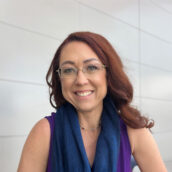
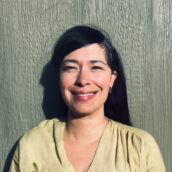
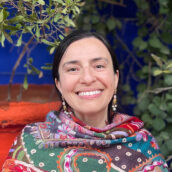
What is the body actually holding, and how does it release it? While every Wounded Healer episode has touched on this inquiry, this final conversation brings it firmly into focus. Solea Anani, who opened this series with myth, prayer and an invocation to the wound’s own intelligence, returns to close the circle. She’s joined by Dr Aimie Apigian, a double board certified physician whose Biology of Trauma framework maps what happens at the cellular level when the body stores survival.
Coming from two very different perspectives, they hold aligned understandings on:
- What blocks our bodies from their innate ability to recover fully from injuries or illness
- How to unravel the legacies of epigenetics and its spiritual counterpart, the karmic bundle
- Why the nervous system ‘braces’, and why healing cannot begin until the brace is released
- What home feels like in the body, and why arriving there, in yourself, is what healing actually is
- What Chiron says about the moment the wound has finished its teaching
Solea opens and closes this conversation ceremonially, holding the container she created in Episode 1. Her closing, an invocation for everyone who is creating new antidotes in a world being birthed anew, brings the series to a quietly luminous end.
Episode transcript
00:00:00 Rosemary
If you’ve been listening to our podcast and are curious about the Compassionate Inquiry approach developed by Dr. Gabor Mate and Sat Dharam Kaur, consider joining the professional training program. It’s open to all healing professionals, including naturopaths, physicians, bodyworkers, coaches and therapists. In addition to learning how to use compassion to support your clients in their most vulnerable moments with greater empathy and authenticity, you’ll also deepen your own internal process. If you’re interested, look for the link in the show notes.
00:00:38 Solea
Oftentimes when people come to work with me in a ritualistic context, when there’s some kind of inherited pain or some pattern that is relentless within the family system, I relate to the pattern and the wound as a wound that’s being carried not just within this individual, but it is the world that individual is the world, is the cosmos. So already that begins to inform the wound and validate the wound, because everything that’s both blessed and fragmented has a message. I think the less and less we polarize, the more we can be in an inclusive sphere with our reality, including what comes.
00:01:23 Dr Aimie
Life is so much more than just a biochemical reaction. There’s a relational field, an energetic field. There’s a magnetic field that is part of what it means to be alive.
00:01:45 Rosemary
This is the Gifts of Trauma Podcast Stories of transformation and healing through Compassionate Inquiry.
Welcome to the Gifts of Trauma podcast by Compassionate Inquiry. I’m Rosemary Davies-Janes and I’m excited to move into this final episode in the Wounded Healer series. The theme grounding all of our previous episodes is, healing is not something you do, it’s something you allow or tend or receive in yourself, through your ancestors and in right relationships with others. Now there are a few questions the previous episodes are inviting this conversation to answer. Efu Nyaki said, the body knows because before the cortical brain knows. Dr. Karen Hill spoke about our relationship with illness. Rennet Wong Gates said, when I sit with a client, I sit before 4,000 ancestors. And Solea, you said in episode one, the wound carries medicine, it carries messages. And Dr. Aimie’s biology of trauma says trauma is stored in the cells. The nervous system is hijacked. The body keeps the score at the molecular level. So the question that contains all of this is what is the body actually holding and how does it release it?
Before we address that, I’d like to introduce my guests with just a few highlights as their full bios are in the show notes Dr. Aimie Apigian is a double board certified physician known for making trauma healing both precise and deeply human. Bridging functional medicine, attachment science and trauma therapy to show how the body stores survival patterns and what it specifically needs to heal. Through her Biology of Trauma framework, she integrates somatic work, parts work, and targeted biology to identify where the system is blocked and restore its capacity for healing through a structured, measurable sequence. Dr. Aimie also hosts the Biology of Trauma podcast and that’s also linked in the show notes. Welcome, Dr. Aimie. I’m delighted…
00:04:06 Dr Aimie
Yeah, I’m delighted to be here.
00:04:08 Rosemary
Thank you. I’d also like to welcome back Solea Anani, who was with me in episode one to open the series. Now, Solea is a woman of Indigenous, Dominican, West African, Chinese and Spanish ancestry, and in her work she uses evolutionary astrology, somatic attunement, core and ancestral reverence to support the emergence of the individual’s soul intelligence. Her attunement approach and foundational practices stem from eight different pathways. Solea, I am so happy you could be back with us today.
00:04:44 Solea
It’s good to be back. Thank you very much.
00:04:46 Rosemary
I’d like to start with an intention. This is something that we do in Compassionate Inquiry, which really sets a focus for the time we have together today. And my intention is very simple. It’s to create an inviting space for this conversation where thoughts and ideas can safely emerge and be present. If either of you would like to share an intention, I’d welcome it, and it’s not required.
00:05:11 Dr Aimie
My intention is to show up with my whole heart in this space that you are creating, all of me, my full presence.
00:05:20 Rosemary
Your full presence is absolutely welcome. Thank you, Dr. Aimie. Solea, do you have an intention?
00:05:26 Solea
Yes. My intention is to remain completely open to the muses and to the intelligence of our ancestry that are vibrantly present here.
00:05:37 Rosemary
Thank you. Before we begin… for our listeners, I’d really like to address why these two amazing women are here with me today. Solea, you work with individual and collective trauma through ancestral, somatic and ceremonial lenses that reach back through lineages and across generations. Dr. Aimie, you arrived at the biology of trauma not through academic curiosity, but through personal necessity. And you’ve spent years mapping what happens in the body at the cellular level when trauma takes hold. Now, in episode two, Dr. Karen Hill said something that has stayed with me. She said, healthcare is not healing care, necessarily, and we need both together. So, Dr. Aimie, I see you as healthcare, and Solea, I see you as healing care. So with you both here today, we’re asking what becomes possible when neither healthcare nor healing care has to stand alone when they do come together. So I’m just gonna leave that question hanging in the ether. Solea, I’d like to invite you to open this conversation in the same way that you opened the series ceremonially and with intention. Can you re-invoke the Chiron container that you opened in episode one, please? And I invite you, Dr. Aimie, and everyone listening, to receive her offering fully.
00:07:05 Solea
Taking a moment to drop into the intelligence of the body, the inner temple, initially observing the movement of the breath and what it carries in this moment. And together, as we attune to the ancient intelligence of Chiron, recognizing the archetypal movement of Chiron in ourselves, and sensing the refreshed intelligence of Chiron as an ancient force that’s meeting the newness of our times, and how the body is a cross point between ancient wisdom and innovation. And as you stay in attunement with the rhythm of the breath, also synchronizing with being carriers of wound, ancient, individual and collective wounds. And as we sense into the space in between the breaths, recognizing the space as the field in which the blessing parallels the wound, and recognizing the ancient intelligence of our ancestors; well, stable, whole ancestors in our lineages, and asking that they come into this conversation and collaborate with us as we humbly bridge health and healing, bring these offerings to the collective. Thank you. Ashe. Ashe.
00:08:48 Rosemary
Thank you, Solea. Just let that land. What I find remarkable is that it seems you’re both asking the same questions from different directions. What is the body actually holding and how does it release it? Neither framework is complete without the other. And today we’re asking, what becomes possible when neither has to stand alone. Who would like to speak to either or both of those questions?
00:09:19 Dr Aimie
Just the more time I spend on Earth and working with people, still working with my own nervous system, I see everything as so integrated, so interconnected, that it really is an illusion to separate anything, even separate mind from body or emotions from physiology. It really is so interconnected that when we can work with it in that arena of knowing that the ripple effects are going to happen on all levels, then that’s where I see that the more repair can be made, and the repair can happen much faster than in any form of siloed approach.
00:10:09 Rosemary
Thank you, Dr. Aimie, Solea, would you like to comment?
00:10:12 Solea
Yeah, I’m staying with this word interconnected. I very much agree with the intelligence of interconnection. And I’m sensing into what is it that formulates our interconnection. I’m imagining the nodes inside of a net, and the nodes are embedded by the material of the net as well. And just bringing into the space that the interconnected space is also conscious of the wound and the healing as well. And oftentimes in my work with people, I see that they come into the space with this idea of I’m fragmented or I’m broken. And as the process slows down a bit and we enter a different space time continuum, or the simplicity of slowing down that wound also begins to speak of that parallel synergy that the healing is always present I’m finding time and time again. So an emphasis to what Dr. Aimie just said, approaching it from this wholeness. The system’s already whole and it has the antidotes within it already.
00:11:13 Rosemary
Thank you, Solea. I’m wondering, Dr. Aimie, do you have a short story or an example you could share that will perhaps… it’s sounding a little bit philosophical, but that could maybe bring that down to ground for our listeners.
00:11:27 Dr Aimie
You know, a very common example that I see is a form of chronic illness and especially ones that involve the immune system; autoimmunity. We also have long haul syndromes. The most well known has now become long haul Covid. But we’ve had long haul syndromes for a very long time. We have an uprising of those with symptoms from mast cell activation, so mast cell activation syndromes. So there’s so many of these manifestations in the immune system. And if a person were to go to a medical provider, the medical provider would focus on the immune system. And yet the immune system is just in an ecosystem of everything else. It’s… The immune system is not isolated by itself. It’s sitting in an environment and its response is very normal for the environment in which it is. So we want to look at what is the environment that’s actually driving these expressions in the immune system. Not to say that we won’t also need to do the Omega 3s and the support for the immune system. It doesn’t neglect that at all. It just expands it to say, and… we are going to need to look at your inner belief that you need to be perfect in order to be okay. We’re going to need to look at those elements of people pleasing that drive your nervous system to constantly be on guard and what does someone else need and what are they going through and how can I attune to them and completely misattune with our own needs, or our own younger parts that are getting triggered by different aspects of our environment. And so the immune system is one specific example that when I look at immune imbalances, especially autoimmunity and the hypersensitivity aspects of an immune system that is always a much larger ecosystem and environment. And I’m not necessarily talking about the external environment, though of course it does involve that. And we know that our relationships with other people directly influence our immune system. What is the quality of connection that I feel with someone? Do I have someone in which I can have a hug that feels safe, that I can let down my guard and actually be myself and be authentic? And it feels safe to be authentic. These are all of the environmental influences that are just as much a part of the mast cells or the microglia or these immune cells overreacting as what we would see it in the healthcare model. And yet again, when we look at the whole environment, external, relational and internal environment, it actually makes perfect sense, and we’ll need to incorporate that if we really want to be well and not just manage symptoms for the rest of our life.
00:14:36 Rosemary
Thank you, Dr. Aimie. Solea, I sense that you have a few additions to what Dr. Aimie just said.
00:14:42 Solea
Actually, it felt really thorough. I’m enjoying listening to you. It’s just so refreshing to interact with someone in the medical field that has this holistic approach. And primarily what arose in your commenting of the parts of the ways that the person creates these loyalty patterns that derives from a sense of belonging. I think at our root level we’re all relational. If we’re healthy, we see that expressed in nature. Nature is very relational and from the moment of conception there is a relational spectrum that opens as well. Yeah. Particularly in my work with people, they arrive into the space of anom with I don’t know who I am, I can’t feel my feelings, my thoughts are running my life. How do I change this? Something doesn’t feel right. So in the recognition of ‘something doesn’t feel right,’ there’s already an aperture, there’s a course correction that’s made aware. And I find that the numbness is so precious because the numbness for me started multiple generations ago. So to fast forward in time to have an individual within the lineage recognizing that there’s numbness, that in itself creates a movement in the system. So yeah, I’m very curious to explore these loyalty patterns that we have to our family systems and how they get recycled through time and then as Dr. Aimie was saying, affects the immune system, which is, my understanding is a very intelligent system within the body that touches every organ. Yeah, for me I got this sense of like, oh, this core around belonging and interconnectedness.
00:16:16 Rosemary
Thank you. I am going to leap a little bit or take a left turn. Solea, you mentioned the moment of conception. Science has captured, as you will both know, the actual spark of life at the moment that a human egg is fertilized. Billions of zinc atoms ignite across the egg’s surface in a visible flash of light. And those zinc sparks are like neurotransmitter releases in the brain or insulin releases in the pancreas. They’re firing at the very first moment of life. So I couldn’t resist asking the question, is this meeting point between cell and cosmos, is this soul and biology coming together? Who would like to comment on that?
00:17:00 Dr Aimie
I think that’s Solea’s expertise. From my more medical perspective, this is where the magic of life, I find myself using the word energy. And I know that the word energy is used quite a bit for many different things, but there’s so much that is purely explained by a biochemical reaction and an enzyme. And the zinc does this, and this is what happens. And yet being able to actually watch life happen is quite magical. There is a feeling to it. I’ve also had the privilege and honor of being with a lot of people, my patients, as they passed and you. I felt their presence leave. It’s something that life is so much more than just a biochemical reaction. There’s a relational field, an energetic field, There’s a magnetic field that is part of what it means to be alive. And it’s just incredible to be able to capture these things that you can actually see, ‘Oh, this is the beginning of a life.’ Because we often. Right. Just see the end of a life, but not the actual beginning of a life.
00:18:25 Rosemary
Yeah. Thank you. That’s what I was imagining. It’s the spark is the threshold between not yet being and being. It’s just. Yeah. Thank you. Solea, what does it mean to someone who understands the body as carrying more than one life, holding a lineage, a memory, and the unfinished business of those who came before? When you’re present at either end of the spectrum, from not quite being to being, or from being to no longer being.
00:18:59 Solea
Yeah. This question invokes this awareness around growing to become an ancestor worth descending from. And also activates the sense of responsibility of… we’re born into light. Like this expression you just brought in. At conception, we’re detecting light. We’re born into light, and that light continues to shape our human experience. So I like to engage life more as a spectrum of multiple existences happening at once, happening at once inside of multiple ley lines of time as well. So there’s this illusion that we come in and we have the singular soul and we have to feed the singular identity. And for me, it’s way more interesting and dynamic to really relate to our human experience as a multiplicity of souls, as a multiplicity of identity. There’s something limiting around needing to hyper-individuate and needing to tend just to one identity. And then the birth of responsibility is born from actualizing that… that point of view. We are a multiplicity of soul, a multiplicity of identities. And in that multiplicity, we also have access to more information. I can feel both of you more because I’m in accordance, like an orchestra effect of resonances, and to carry lineage… It’s like saying we’re focusing on, just speaking about we’re breathing air. It’s like we are all born into lineage. We’re all born into a natural world that’s breathing with us and there’s not a how to… how do we do it. It’s more like it’s already happening. And entering into accordance and relationship with it makes what’s already happening more alive and available to us.
00:20:44 Rosemary
Thank you. Dr Aimie, what does the biology of trauma say about what the body inherits without personally experiencing it? Is there a molecular memory of ancestral wounding? How do you see that?
00:20:58 Dr Aimie
Yes. And we call it epigenetics. We actually have a name for it. We can understand it. So much of epigenetics is passed on through methylation patterns. These are ways in which the DNA itself has not changed, but it just has a mark on top of the DNA guiding the body in what genes to read and create proteins from and which ones to leave alone. And proteins don’t get made. And there’s so much of our personality, there’s so much of us that comes from these marks on the DNA, even down to our eye color, our hair color, and being able to see, even that, the genetics of someone, it’s not a random selection of eye colors that you get, it’s based on your lineage. And so all of these things are being brought into our human experience. Another mechanism for the epigenetics is oxidative stress. And that is the one that is most able to be changed in a person’s lifetime. And when we have experienced stress at a toxic level, trauma, the amount of oxidative damage to the DNA is what prevents it from being able to be repaired. It overwhelms the repair systems, leaving that damage there and affecting then, how the body reads those genes. And those are things we can measure. There’s a blood test for measuring the amount of oxidative damage to our DNA. One of the tests that I like to run on people when I’m really trying to assess what is the degree of burden that your body has so that we can redirect it to a different path, a healing path, and not continue on a path that is for sure leading to unwellness and symptoms. And so these are the two primary mechanisms that we see as footprints of our lineage in our methylation patterns and in the oxidative damage to our DNA that results in this umbrella term of epigenetics.
00:23:15 Rosemary
Thank you. And I wonder if you’ve got an example for our listeners how that might show up in a person. Like what might someone be experiencing, or challenged by when they come to your office for you to want to order that test?
00:23:30 Dr Aimie
Yeah. So I’m going to say that the ways in which this shows up are often around mood and mental health, especially when we look at methylation patterns. These are ones that affect our detoxification system. They are ones that affect our ability to make neurotransmitters. And so the serotonin, the dopamine, the gaba. And so that is one where, if we are born and because of our lineage, our methylation patterns are one of, say, an under methylation status. Generally, what will happen is that from a very early age, we are going to be having less serotonin and dopamine activity. What that means is that even as a baby, we are less available for the relationship and the bonding. And so we can have the best parent in the world who is actually doing all the attunement and the relational emotional connection. But we, as the baby, are not available to show up in that space. And we don’t feel it. And so we don’t feel the connection, we don’t feel the safety of their arms. And so this is something that I’m looking at for, what are the patterns that we can see… for the methylation patterns? Are there signs that perhaps we have a methylation imbalance, that we want to test that? And then be able to repair that, or I say support that. And with the oxidative damage, a lot of this is, you can think of it as the wear and tear on the body. And especially when I see someone who’s developing a condition, a diagnosis, earlier than what just their lifetime would expect, then that is where I’m immediately thinking, What has been passed on? What already came with you? For your immune system, this oxidative damage that we want to prioritize the repair and the support of that oxidative stress and help Your body clear that out.
00:25:44 Rosemary
Thank you. That was really clear. So I was asking Dr. Aimie about what the biology of trauma says about what the body inherits without personally experiencing it. Solea, is there something you’d like to say about that?
00:25:56 Solea
Yes. I often teach that we’re all born into a karmic bundle that pre-exists our incarnation. So I’m looking at it more from the perspective of we incarnate into a world that’s already in movement and it has its distortions and it also has this blessing. So this is the spiritual angle of the epigenetics piece. I would add that along with being born into fragmentation, into that karmic bundle, we are also born with the tools and the skills to unravel it. That’s a key, important balancing point that we’re not just dropped into this chaotic existence without any, any skills. And that is the beauty of that ancestral contact is keeping those blessings alive and keeping our system saying, yes, come close into my life, accompany me, so that those skills and those tools that are existing both in the linear and the non linear can have a place to land. So this piece, this last piece that Dr. Aimie was speaking around,,about landing in the body is also connected to the degree that we land. We also have access to these skills. So presence, compassion, attunement, the ability to feel another within my field, those are the kinds of skills and tools that we’ve been cultivating for multiple lifetimes. So yeah, the science looks at it from an epigenetics gene/DNA level, but there’s all these spectrums that are not visible to us at a scientific level that I’m referencing as our karmic bundle.
00:27:24 Rosemary
That is really encouraging because I love how you’ve opened up possibility and potential. It’s not. “You didn’t get this, too bad.” As Dr. Aimie was addressing, there’s so many layers and so many perspectives. So thank you for sharing that. Dr. Aimie, I’m wondering if the example you had of a baby that can’t respond to a mother, no matter how attuned she is, and they just don’t have the DNA to do that. Obviously DNA is familial, so it could end up that there’s a whole family with this issue, so it becomes, like a family trait. You know, there’s no personal displays of affection, there’s a lack of connection, so it can self perpetuate into something like that. Yes, I see you nodding your heads.
00:28:10 Dr Aimie
Very much. And we see these traits, we see conditions that we have labeled as, oh, must just be family. Genetics. And it’s so much more than genetics. It’s epigenetics. But it’s also so much of then the way in which we learn to relate to each other and the way that a parent will model for their child how to navigate change and stress and grief. And so all of that, the whole soup gets passed on. And you can see addictions run through families. You can see a lot of diseases. I’m not gonna name any specifically, just cause I want people to keep an open eye and not think, oh, it’s only that condition. But we see these traits run through families. And it is so much more than the… just labeling it as, oh, that family must have the gene for an addiction.
00:29:05 Rosemary
Yeah. Thank you. Yes. Now, across this series, every guest has named the same shift from doing healing to allowing it, from fixing to witnessing, and from knowledge to presence. I bring this up because, Dr. Aimie, your guiding philosophy is living with open hands and open heart. So I’m wondering, what does the biology of trauma tell us about why the nervous system can only heal when it stops bracing? I think this kind of follows on what we were just talking about.
00:29:37 Dr Aimie
Oh, that’s such a deep question. There’s many layers to that. And on the surface level, I’m going to say that the body is designed to heal and repair by itself the way that our genes are designed. We are designed to be able to not just push through and survive, we’re actually designed to be able to fully recover, which means, for me, reset back to a sense of safety. And so when, for whatever reason, and there can be a multitude of reasons why there is a block, but it’s blocking the body’s natural ability to move through these phases of healing. One of those phases is the bracing that can happen. So bracing happens when we are still very scared that either the danger is not over or that the danger could come back. And so we stay braced, and in our nervous system, there’s either signals of danger or there’s signals of safety. And so bracing tells me that there is still more signals of danger than signals of safety. And safety is where the body’s natural ability to heal can happen. And so just with the bracing, I am recently going through active grieving. And my companion of eight years, my dog, died two weeks ago tomorrow. It just devastated me. It was unexpected. And one of the first things that I noticed was this bracing that my body was doing. And so being able to know that the bracing was going to block the healing. And so allowing myself to sit down in a chair that had full body support, it held my head up for me, it held my arms up for me so that there was no part of my body that I had to hold up myself. I let the chair hold me. And that was when I noticed that the sadness could rise up to the surface and I could feel it and move through it. But the bracing will block those feelings of sadness, the feelings that we need to feel in order to be able to move through them and heal. Yeah.
00:32:05 Rosemary
The feelings that need to be released. Otherwise, healing cannot be completed. Goodness. I’m curious, in your years of clinical work, have you encountered healing that your biological framework can’t fully explain?
00:32:19 Dr Aimie
I think I honestly come back to the first question that you asked, that everything is so interconnected that I see everything as a ‘Yes and..” Is there healing that can happen where we don’t see it translate into the biology? No, because the biology is going to reflect the healing that has happened. And so I see everything as so “yes and…” this is also how I approach new research that comes out, or research that comes out that seems to contradict a model or an understanding that we have had. It’s like, is this a ‘yes and’ we’ve been looking at the elephant, but we’ve been looking at it from the front and now we’re going to see another side of the same elephant. Healing is healing, and healing has to happen at all the layers for it to actually be healing. Otherwise, one layer that gets unaddressed will keep us stuck.
00:33:19 Rosemary
We’re taking a brief pause to share what’s on offer in the compassionate inquiry community. Stay with us. We’ll be right back.
00:33:30 Kevin
Your journey with Compassionate Inquiry matters. Your work in the world matters. If you have a story to share about bringing compassionate inquiry into the world, we’d like to amplify your voice. Spotlight episodes are full length Gifts of Trauma podcast interviews offered exclusively to CI community members. You’ll not only share your story with 55,000 healing professionals across all platforms, you’ll receive a pre-interview strategy session, plus three promotional video clips. We’re offering only 10 Spotlight episodes per year and production realities require a financial contribution. Follow the links in the show notes to access full details and express your interest.
00:34:19 Rosemary
Thank you. And so really, if something seems unexplainable, it’s just that perhaps it’s not being looked at from the right angle. Maybe you need that elephant on a glass floor and look from underneath.
00:34:32 Rosemary
Yeah. Thank you. What does home feel like in the nervous system? What’s the biological signature of a body that’s arrived that’s no longer bracing?
00:34:43 Dr Aimie
It’s interesting that you asked that, because that’s been something that I have struggled with for most of my life, is to feel at home. And yet that’s exactly what I see as the healing process, is arriving to a place where you feel at home, not in a place, even though I think that it will translate to that as well. And when I hear people say I never really feel at home, never really feel like I belong anywhere, I have this home over here, but it doesn’t really feel like home. Those are words that I am also kind of latching onto and being like, interesting. We’ll want to explore that more later. But this idea that I feel like that’s what the healing process actually is, arriving in ourselves, with ourselves in a way that we feel primarily safe and at home and like we belong in our own body, in our own skin, and then being able to translate that to our relationships with other people. But I see that it really starts with our relationship with ourselves and arriving home in ourselves.
00:35:55 Rosemary
Beautifully said. I also asked across this series, every guest has named the same shift from doing healing to allowing it, from fixing to witnessing, from knowledge to presence. SOELA I’m wondering if you’d like to share your own observations, or perhaps reference what Chiron might like to say about that.
00:36:17 Solea
The emphasis is on allowing and also what is doing the allowing. That for me is the foundational inquiry moving away from I’m doing the allowing and more of something bigger than me is doing the allowing with me, the continuation of consciousness, interacting with us and participating with us. Because also as modern humans, as we’ve polarized towards intellectualizing our experience, there’s this emphasis on carrying a burden that we need to fix the ‘how to’ mentality. And my sense is that when from our perspective something hasn’t fully healed, that there is a mysterious component, a mysterious field around that as well. I experienced that personally with the father of my children. A healthy man who moved his body every day really well and had an immense amount of relational contact. Like all the things that supports the nourishment of a human being, he actualized in his life. Nonetheless, he got cancer and died within nine months. So there’s this perspective of as a tribe around him, we did everything we can do to keep him alive both from non medical tradition and medical angle as well. And at some point the tribe just said this is what needs to happen. This is part of the healing journey is death. That ultimate release is important to also look at the healing component of death. And sure enough, he fought it for nine months and he woke up one morning and said, we’ve done everything we can do. Thank you, everyone. And he died at home peacefully, two hours after he said that. So there’s a way that this word ‘allowing,’ he allowed that collaboration with something bigger than himself. Allowing and surrender paralleled in that moment for him. And he took his last breaths a few moments after. So there’s this piece around, like there is a mysterious force that’s constantly permeating every choice and every movement.
00:38:26 Rosemary
Thank you. I can’t imagine how it was to witness that with someone you loved. But it also is a beautiful story that speaks of the freedom available in acceptance and allowing. And I think the question that Dr. Aimie answered about what might have showed up in her experience, that wasn’t medically explainable. SOELA I think you’ve already given us a very different answer to that. I wonder is that.. has it shown up multiple times with different people, that it’s just there is no explanation? In a logical framework.
00:39:05 Solea
Yes, I particularly see the phenomenology of healing and reorganization within the ancestral reverence work, where a person hasn’t spoken with their parents for a really long time because there’s so much obstruction or things unsaid, and it gets in the way of relating and communication. And they start doing the ancestry work and being the witnessing light on behalf of the whole lineage. And there really is this updating that happens into the past and into the future. And after opening their altars and after bringing offerings to their ancestors, they get this random phone call, random quote, unquote, because nothing really is random from their mom or their dad they’ve been estranged from for a really long time. So I love hearing those stories because the restoration then reverberates in each of those individual lives, but at the consolation of the family system as well.
00:40:03 Rosemary
So as you work with them, do they gain… I’m trying to put words to something that perhaps can’t be described in words, But I’m just wondering what that shift is. I’m imagining that it might be them gaining greater understanding for their lineage, why their parents might have chosen to do what they’re doing or what they did, if there was a rift. Is that related or is it in a totally different realm what you’re speaking of?
00:40:28 Solea
It’s “yes and…’ I am living in the world as an advocate for ritualizing our human experience. And part of ritualizing also keeps us in contact with play and keeps us in contact with that which is bigger than the identity, that morphogenic field that binds us and breathes with us. So I would say that the primary principle that creates that restoration is actually the act of making offerings to an intelligence that’s bigger than the identity, because we live in a reciprocal world. Like the foliage behind you, the plants around you are interconnected with each other and dependent on the solidity of the earth and the light of the sun. So I find a lot of magic comes into people’s life once they begin the reverent practice of making offerings, of putting out a little cup of tea or wine on the altar and keeping that magical sphere relational. I come here sincerely bringing this offering as a gratitude to feed the loop of reciprocity between life. And that reverberates across the family system in beautiful ways.
00:41:40 Rosemary
I love that. I love that picture SOELA. And I see the connection between the magic and the playfulness. And again, around the ancestral body, we’ve spoken about what the body inherits. I’m wondering, like, when an individual you’re working with is tending those inherited wounds. Would you like to say any more about that? I’m sensing that our listeners might be curious. It’s like, how on earth do you tend an inherited wound?
00:42:06 Solea
Yeah. The first piece is becoming aware that there’s a wound. Right. And wounds show up in variant ways. And a lot of them have deep intelligence and trickster energy if they don’t want to be seen or felt. But the first piece is to develop a relationship with space, the space within the body, the space around the body, which is an extension of the nervous system as well, and keeping an open aperture around, abiding in that space without any agenda. And that’s when stillness and presence gets activated, and then setting a clear intention of I want to be in more conscious relationship with the woundings that I’ve inherited. And I always say the wound is conscious. It will begin speaking if the space is created and mostly speaks through your most open channel, emotions or the mind or visual channel or spiritual channel. That would be the first step to make contact. And just abiding in the humble sincerity of this is me acknowledging that I’ve descended into my human incarnation and want to participate more directly with it. And then the wound or the fragmentation or the inherited patterning will begin to speak. And then it will also show you how it wants to be tended to.
00:43:27 Rosemary
Yes, I love that. In episode two, we had a Mohawk physician as a guest, Dr. Karen Hill, or Karena Onwe. And she shared a teaching that she received from a ceremonialist from South Dakota, that when illness comes, we don’t fight its spirit. We invite it into ceremony. We acknowledge the work it’s been doing. We love it. And because its work is now finished when the person has finally heard the message that it brought, inviting it to leave. But it’s such a different way of relating, and SOELA I wonder if you’d like to speak about that. It sounds very much like what you were saying.
00:44:08 Solea
Oftentimes when people come to work with me in a ritualistic context, when there’s some kind of inherited pain or some pattern that is relentless within the family system, I relate to the pattern and the wound, as a wound that’s being carried not just within this individual, but it is the world. That individual is the world, is the cosmos. So already that begins to inform the wound and validate the wound, because everything that’s both blessed and fragmented has a message. I think the less and less we polarize, the more we can be in an inclusive sphere with our reality, including what comes. Many traditions are across the world, in Africa, Asian traditions are known for creating little shrines for the dead or shrines for the wound as to have an actual place that’s localized where we can converse with the wound or converse with the pain and be in that direct contact, that it is acknowledged. Because part of this word, allowing the healing to happen also invokes an acknowledgement of its power. Because we’re all here to invite power and life force to interact with us. And less the power to obstruct or hierarchical power, but the power to influence each other, to exchange each other’s sparks. So that healing that wound, that constriction, that bracing that Dr. Aimie was speaking about, also has its own intelligence as well. I’m an advocate of letting the bracing also happen, letting it inform the system and then softening around it in due time.
00:45:53 Rosemary
I think that makes sense because the example Dr. Aimie shared where she lost her beloved dog, suddenly, it probably served her very well to be braced initially to take care of what needed to be taken care of before she could allow herself to sink into that chair and let the sadness rise and everything else that was coming in.
Solea, you’ve sat with everything this series has held. The physician’s wound, the therapist’s wound, the teacher’s wound, the biology of healing today. I’d like to give you a brief recap of what we gained from the episodes.
Episode one, where you were present, gave us the wound as a conscious messenger, the body as the place where unspoken truth lives, ancestral support as real and present, and the difference between efforting towards healing and just allowing it to arrive.
Episode two, the physician’s wound, gave us the body’s disease as a message the Self cannot yet speak the practitioner’s wound as the hidden engine of their vocation. Finally, what came up was presence trumps knowledge every time.
Episode three gave us the wound is not the gift, the tending to it is. It’s our relationship to the wound, not the wound itself, that makes the healer. What also came up with two women of color was the exhaustion of resilience in the colonized body, sitting before 4,000 ancestors when sitting with a single client.
Episode four, the Teacher’s Wound gave us the classroom as sanctuary. The collective healing that occurs when we do the work together.
So I have just inundated you with a lot of key points. But having allowed what this series has held before today and today allowing that to wash over you, I’m curious to hear what you think when like what are we actually doing when we think we are healing ourselves or each other? What is our perception? And perhaps I’ll throw this in too, since I’ve thrown a lot of information at you, what does Chiron say about the moment the wound has finished its teaching? I’m just wondering if you can put all that together.
00:48:11 Solea
Just feeling into Chiron actually, as you were speaking, and the impact of being struck by this arrow and the surprise that comes from that, of him being the witness of something happening, collective that disbalanced, and his commitment to tending to the wound. But the wound as an extension of a collective psyche as well. I feel like in your question of how do we know the healing has gone completed itself. I feel like it’s the same with the message of longing. Healing and longing for me coexist in a similar movement. And healing is something that doesn’t fully complete, I find. It has radiuses of information and wisdom that it’s continuously ringing into our life form. There’s that piece. And then I also find from the chironic perspective of being wounded unintentionally and his commitment to find antidote to the wound leading him to becoming more human, like releasing his godly nature. There’s something in that, that I feel is important to reflect on. When you say what is it that we’re doing here really? And what feels true to me is ‘come back to the simplicity of allowing ourselves to be human.’ And for me, to be fully human is to proudly carry our wound and to be with our grief and to be with the places in life that are messy. There’s always that drawer in the kitchen. No matter how much we try to keep the kitchen orderly, there’s always a little place that’s a little chaotic and messy and there’s beauty to that, I find and to let ourselves be our wild, undomesticated selves and get messy and be playful and stay simple, yet innovative.
00:50:05 Rosemary
Yeah. Thank you. You just reminded me one of our guests in the physician’s wound episode talked about, ditch the white coat and lower your IQ and just relate on a more human level. Like put the mind aside and just become relational as opposed to clinical or practical or rational. So… Yeah. And playful. I love that, too. What does homecoming look like from where Chiron sits or stands?
00:50:34 Solea
Homecoming for Chiron is now he’s a constellation in the sky and also a planet. So he’s a he. She is in a continued metamorphosis. This question around home, I find, is really sacred. And it commands a respect. Something gets silenced inside of me, because there’s a versatility and a variancy to home in that. The way I experience home is through rhythm. Like movement, rhythm, heartbeat, the ability to move inside of the technology of our bodies and our flesh, to watch the movement of breath around us that come back to this point. That it’s like an orienting teaching in my being of having it be simple and accessible. So for me, home is rhythm and being in contact with that rhythm, the unique, essential cadence we were born into to add into the orchestra of life in the world. Every human has their own movement and jazz and rhythm…
00:51:40 Rosemary
And notes and melody and.Yeah. And it all works together. It all works together. Thank you so much, Solea. It means so much to have you here. And I’d love to invite you to close this container. Your presence has held the entire series, so might you be willing to close the circle that you opened five weeks ago, in whichever way is coming up for you?
00:52:04 Solea
Sure. I would love to. Shall we begin with silence? And recognizing that nothing really ends but morphs into another movement, inviting silence in once again. And as the silence permeates our being, recognizing the ancient intelligence of Chiron, the wounded healer, recognizing this intelligence in our lives and taking a moment to feel the ways we have been wounded and sensing into how those wounds have shaped our humanity as we sense into our humanity, also aligning with the constancy of light, grace, honoring the mysterious fabric that unites and collaborates to make us whole and free. And I offer a deep vow of respect for all the ways everyone listening and not listening is creating new antidotes inside of a world that’s being birthed anew. Honoring the antidotes coming in from all the sacred dimensions and all the ways in uniting our antidotes. We are alchemizing a new human that’s connected, open and free. Thank you to the spirits of land, intelligence of our ancestry, the rhythm in our hearts. Thank you Ashe. Gracias.
00:53:40 Rosemary
Thank you. Solea Anania, it’s been a complete pleasure having you back and your presence has been felt through this entire series. I’m grateful for everything you’ve contributed today. Dr. Aimie Apigian thank you so much for joining us today to share your insights and wisdom. I really appreciate the time that you’ve carved out to be here and I really feel for you. I’m so sorry for your loss. I have lost many beloved canine companions and it takes so long to process that grief. Who else comes to the bathroom with you, shadows you through your day, and loves you no matter what? But thank you so much for being with us today. I appreciate all that you have shared.
00:54:25 Dr Aimie
Thank you. Thank you, both of you.
00:54:27 Solea
Thank you for the invitation.
00:54:38 Rosemary
The Gifts of Trauma is a weekly podcast that features personal stories of trauma healing, transformation, and the gifts revealed on the path to authenticity.
Listen on Apple, Spotify, all podcast platforms. Rate, review and share it with your clients, colleagues and family. Subscribe and you won’t miss an episode.
Please note this podcast is for informational purposes only. It is not a substitute for personal therapy or a DIY formula for self therapy.
Resources
Websites:
Related Links:
- Ancestral Reverence
- Somatic Attunement
- Evolutionary Astrology
- Solea’s Free Somatic Attunement Meditation Classes
- Solea’s Core Resonance Mentorship Introduction
- What is Collective Healing? (Podcast)
- Biology of Trauma Professional Training
- The Essential Trauma Release Sequence Guide
- The Attachment Trauma Roadmap
- Biology of Trauma Podcast
- The Biology of Trauma Book
- Dr Aimie’s YouTube Channel
Quotes
- “It really is an illusion to separate anything, mind from body or emotions from physiology. It is so interconnected that more repair can be made much faster than in any form of siloed approach.” – Dr Aimie Apigian
- “The immune system is in an environment and its response is very normal for the environment it is in.” – Dr Aimie Apigian
- “Bracing will block the feelings that we need to feel to be able to move through them and heal.” – Dr Aimie Apigian
- “The healing process actually is arriving in ourselves, in a way that we feel safe and at home.” – Dr Aimie Apigian
- “For me, home is rhythm and being in contact with that rhythm, the unique, essential cadence we were born into… Every human has their own movement and jazz and rhythm…” – Solea Anani
- “We’re not just dropped into this chaotic existence. We are born with the tools and the skills to unravel it.” – Solea Anani
- “Healing doesn’t fully complete. It has radiuses of information and wisdom that it’s continuously bringing into our life form.” – Solea Anani“To proudly carry our wounds and to be with our grief and to be with the places in life that are messy is allowing ourselves to be fully human.” – Solea Anani