
Season 03 – Episode 52: From Displaced to Belonging: Navigating the Journey Home, with Stephane Sheng
By The Gifts of Trauma /
Listen this episode here:
or here
For those of us who have never quite fit in the environments where we found ourselves, the search for home can extend beyond geography. Stephanie Sheng knows this intimately. Born in the US to a father from China and mother from Hong Kong, she belonged fully to neither culture. At age 10, when her father was diagnosed with stage four cancer, big questions arrived and never really left.
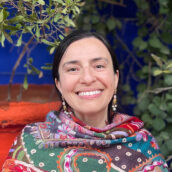
A Compassionate Inquiry Practitioner, Somatic Therapist, Yoga Guide and Psychedelic Integration Specialist, Stephanie has spent years supporting others in finding their way back ‘home’ to themselves.
Drawing on her own path which was shaped by displacement, loss, grief, and a decades-long inquiry into what it means to truly belong, in this thoughtful conversation, she reflects on:
- How growing up between cultures, and her father’s last 10 years, seeded her life’s work
- The moment in a Colombian Maloka that transformed her understanding of ‘home’
- Why homecoming is less a destination than a practice of returning to what we already are
- How it can look and feel when we’re longing for home, but don’t know it
If you have ever felt like a stranger in your own life, this episode shares gently profound wisdom. It often turns out that the way back home is not as far as it seems.
Episode transcript
00:00:01 Rosemary
If you’ve been listening to our podcast and are curious about the Compassionate Inquiry approach developed by Dr. Gabor Maté and Sat Dharam Kaur, consider joining the professional training program. It’s open to all healing professionals, including naturopaths, physicians, bodyworkers, coaches and therapists. In addition to learning how to use compassion to support your clients in their most vulnerable moments with greater empathy and authenticity, you’ll also deepen your own internal process. If you’re interested, look for the link in the show notes.
00:00:35 Stephanie
I didn’t really expect the whole world that I was stepping into when I came into Compassionate Inquiry®. I was really truthfully just looking for something to supplement or support the way I work with people in integration. And I ended up falling in love with the approach, the work and my work with people now not only related to psychedelics, but also just as a CI practitioner to be able to go deeper with my clients, to be able to touch up trauma in this therapeutic realm. I also really, truly believe there’s people and places that invite us, that encourage us, that inspire us to be more authentically ourselves, to be able to put masks down, to acknowledge and celebrate the values that feel true to us and that being another way that we can feel this homecoming through our surroundings, through people, through place. And there’s something so special about nature being this untouched raw expression or raw form of essence in itself. It is just what it is. And that is the perfect mirror for us to remember just what we are, that essence, this invitation to come back home to what we are, with this beautiful mirror. So there’s so many ways to come back home.
00:01:53 Rosemary
This is the Gifts of Trauma Podcast, stories of transformation and healing through Compassionate Inquiry®.
Welcome to the Gifts of Trauma podcast by Compassionate Inquiry®. I’m Rosemary Davies-Janes and today I am delighted to welcome Stephanie Sheng, a CI practitioner whose passion is to support people who are searching for home, or journeying back home to themselves. Stephanie, thank you for being with us today.
00:02:31 Stephanie
Thank you so much for having me. I’m so delighted and honoured and excited to be here.
00:02:38 Rosemary
I’m really excited about this conversation too, it’s one that I’ve noticed rising in communities I frequent lately. What is home and what is our inner home? Your full bio is in the show notes. I’m not going to read that now. I’m just going to touch on a few highlights. You work with people wanting to explore their embodied wounds as a somatic therapist, and you have many different therapeutic approaches that you draw on. You’re a yoga guide and a Psychedelic Integration Specialist, maybe you can say a little bit more about that. What is a Psychedelic Integration Specialist. And please feel free to add any other points you think are important to share up front with our listeners before we get started. But a lot of people have questions about the integration. What is integration? Psychedelic integration?
00:03:31 Stephanie
Yeah, psychedelic integration and preparation, I’ll add, is really the support around, as I like to call it, of expanded states of consciousness. The support before, the support after. How do we prepare ourselves best for exploring this unfamiliar or maybe new territory, or maybe familiar, but always surprising, territory? And how do we approach it with respect, with care for all the parts of ourselves in a way that really takes care of the risks, the fears, the reduction of any potential harm and really prepares ourselves for the most amount of benefit and value that we can walk away from these experiences with? And then that integration aspect of, like, how do we continue working with what we explored, what we touched upon, what truths we we came in touch with, what parts of ourselves we came in touch with? How do we continue that process of unfolding? Because it’s usually just beginning or continuing, and there’s still so much juiciness that unfolds. And then from there, how do we really apply it and integrate it into our lives in a way that brings what may feel so sacred or intangible in some ways, or even inexplicable, how do we bring that into also the tangible, into how we show up in the world, into how we show up for ourselves and for others and connect to others and bring forth our fullest selves?
00:05:15 Rosemary
Thank you. Yeah. And of course, it makes sense that you do that because it’s just another aspect of the journey.
00:05:23 Stephanie
Absolutely. Yeah.
00:05:25 Rosemary
It’s all about the journey. And I’d like to also use a Compassionate Inquiry practice that we often do in sessions, which is setting an intention. And what I would love to offer is to… really just a safe space for people to hear stories that some of which may be quite familiar… aspects might be familiar aspects might also be quite unique and new to them. And I would just like to create this space and invite everybody who’s listening to open, let the input land, and then either choose to consider it or discard it, if it doesn’t suit. So this… this is a place where you can totally bring yourself, be yourself, and if something resonates, by all means, take that away. Much will be offered in the next hour, I have no doubt.
00:06:17 Stephanie
Yeah. And that’s also my intention that I bring. When I was thinking about this coming into this, my intention is also to be here as much as possible, again and again from the heart, and just speak from that place. So I hope that that is what you can receive if you’re listening.
00:06:33 Rosemary
Thank you. Everybody knows the ache of feeling lost, and the sweet relief of homecoming. Many poets, sages and mystics have written about it, and I have a few quotes here. Maya Angelou said, “The ache for home lives in all of us, the safe place where we can go as we are and not be questioned.” Wallace Stegner called home, “A notion that only nations of the homeless fully appreciate and only the uprooted comprehend.” And lastly, James Baldwin suggested that “Perhaps home is not a place, but simply an irrevocable condition.” Three different perspectives all have truth in them. So, Stephanie, from your perspective, what is home?
00:07:23 Stephanie
Ooh, there’s the question of my life. I feel this is really the question of my path. And I feel that I still continue to unravel and get to know new layers and new depths of the answer to that question. But as it stands now, thus far in my path, both in work and in my personal life, to me, home is this belonging, this place, this not physical place, but where we can come back to being fully ourselves, remembering, recognizing the fullness of who and what we are. And I think there’s layers to that, that, as I’ve mentioned, throughout my path, I’ve continued to touch upon which there’s the layer of what it means to be human and to be in connection and to move through this world as experiencing the fullness of what it means to be human. There’s the layer of being authentically and fully expressed myself. Welcoming all the parts of me to be here and allowing to… Being able to just rest in that. And then there’s the even deeper layer that is, you know, maybe this more spiritual, definitely influenced by this yogic path that I’m also on, of just what are we? And to come back into that remembrance and that recognition of who and what we are beneath all the stories, beneath what we are in this life. But to that, as Gabor talks about it, sometimes, that essence as well, that is what we are all made of the same essence. This consciousness, this… people have all different names for it. But that to me is to be able to rest in those different layers is to be at home.
00:09:10 Rosemary
Thank you. Beautiful answer. So what initiated your search for home? What initiated this journey for you? It’s… It’s a bit of a unique path.
00:09:23 Stephanie
Yeah, I definitely. And I don’t think I realized this at the time, of course, but looking back and I’ve had many years to reflect on this. I absolutely think it was so meant to be this way. Just from everything I experienced growing up. I was born in the US to parents from China and Hong Kong. They moved to the States and met each other in the States. So I was first generation. And growing up in the States and then having a couple years, we moved to Hong Kong, where my mom’s side of the family is from. And having this experience in both places of not fully in one place in the US, very visibly not belonging and then culturally and in behaviours and that whole process of the pressure to assimilate, although not realizing or recognizing it at that time, as a child growing up, but not fully feeling that sense of, oh, this is home. And then when I was 9 to 14, going to Hong Kong, and having perhaps that expectation, ‘Oh, where I’m from.’ And then very soon realizing there, ‘Oh, this isn’t quite home either.’ I actually don’t belong here either. So I think there is this always this theme of not fully feeling that I in my full expression of coming from these roots, but being in this place like I fully belong as I am fully expressed. So there was that. And then I have to say, the other element that really was a big impact or driver for this questioning was my dad was diagnosed with cancer when I was 10, and stage four cancer. I’ll pause for a moment. My dad was diagnosed with stage four cancer when I was 10 and he went on to live through this process until I was 20 when he passed away. Throughout these 10 years, I was there accompanying and being witness to, even if not fully understanding, but being there as a sponge to soak up his process of facing death, of questioning life, of understanding what this all means, wondering what it all means. And I think that really planted a seed in me, whether I understood it at that time or not, of just… these questions of, ‘If nothing is for sure and this can happen just at any moment, what are we here for? What is this? What…’ Just all the big questions of when something really dramatic in life happens or something drastic in life happens, ‘What are we here for? What is the meaning of life? What does it mean to be alive? What is death? What is this sense of belonging or being human?’ And so I think these two very formative aspects of my upbringing really just naturally combined and led me to. And a very curious soul that I have to start wondering and questioning. Okay, so then what is home? Also? And never quite feeling it fully and having to discover that for myself.
00:12:37 Rosemary
Yeah, it sounds like you felt very much on the outside, the US was not home. And that was made very clear by the children you associated with. And it’s oh, Hong Kong, maybe that’s home. You got there. That wasn’t it either. And then your dad being on this journey out of life, there were many different things going on for you. Because inquiring about the meaning of life is not what most 10 year olds, anybody between 10 and 20, usually that happens much, much later. So there seem to be many crossing paths in your early life story. So I wonder if you could take me back to the first time that you felt that sense of home.
00:13:21 Stephanie
Yeah.
00:13:22 Rosemary
What was that like? That must have been quite, quite a landmark.
00:13:26 Stephanie
Yeah. It’s interesting because there’s one experience that really stands out and I’m sure that I felt home before in little bits and pieces. But there was one experience that is actually when I came up with this name of ‘The Way Back Home.’ And it hit me, oh, this is what it’s about was actually not too long ago, this was back in 2017 and I had found myself. This is when I was really continuing my exploration of psychedelics and this whole realm of preparation and integration and just the powerful medicine that psychedelics are. And I found myself at a gathering in Colombia. It was a week and the purpose of it was to gather, to bring together elders from different indigenous cultures and communities, and to bring them all there and to share different medicines, to share different wisdom through their words, through their teachings, through their presence. And I remember distinctly one morning there was still some of us gathered in the Maloka and one of the elders was singing, playing the drums, singing the songs of his place. We were all listening and I just felt there, in that moment, ‘Wow. I feel like I don’t know the songs. I’ve never been to this place where he’s from. And yet there’s something that’s almost like a remembering deep down in my bones, something that feels like I’ve been here or it’s touching in upon something where I’ve been before or I know is in me.’ And that’s when I really started to play with this idea of wow, what is this beyond the home, the kind of relations that we have to home, the definitions that we have of home, of okay, maybe it’s a place I’ve been or I’ve been for a long time or people that know me or people that I feel very comfortable with. That’s when I started to kind of opened up to ‘Wow, the full spectrum of there’s so many things that home can be felt through that can be invited through.’ And so that really sticks out for me as something that really opened my eyes to. To what it means to feel at home and what it means to come back home.
00:15:35 Rosemary
And it sounds like you are quite a traveler.
00:15:38 Stephanie
Yeah.
00:15:39 Rosemary
Where else have your travels led you?
00:15:43 Stephanie
I would say, yes, I do travel quite a bit, but I didn’t get very far in terms of… I mean, I grew up in the States, also spent that time in Hong Kong and there. I traveled around a bit with my family during those years. But I would say in the last decade, what I think a lot about is my time spent in Mexico, in Colombia as well, here in Europe, really. It’s been such a rich gift to be able to spend the time that I have in Mexico and Colombia. And I laugh that I didn’t get very far because after those two, I just got stuck there. I never went more south, unfortunately, I hope to do so soon, but, yeah, especially Mexico now, where I spend my time between here in Berlin, and there really just drew me in and is where I do feel this sense of home.
00:16:33 Rosemary
Thank you. I’m also curious. Was there a direct journey for you to the work that you do today, or were there some detours along the way?
00:16:43 Stephanie
Yeah, it was definitely not direct. And I wouldn’t say that there were really detours either. It felt like a long, winding journey and everything perfectly makes sense and brings me here. And I feel like that recognition that, ‘Oh, it all perfectly fits and makes sense’ continues as the journey goes. And I look back on different parts that maybe I didn’t understand at that time. And now I see how that fits. I actually started my journey in the realm of psychedelics. Like, a couple years after I graduated of college, a friend asked if I wanted to volunteer at a psychedelics conference. And at that time, this was 2012, I didn’t know so much other than my own personal experience or the recreational aspects, and I went. And that really completely blew my mind. And that was, for me, the beginning of diving into this world that I continue to be surprised and excited about. And so I spent those first years really going to conferences, immersing myself in the different variety of topics that… what I love about psychedelics is how it really touches upon all these different aspects of life, touches upon art, science, the legal aspects, the cultural aspects. There’s so many aspects to it. And I really dove in. I was working in something completely different in brand strategy. And I felt in my years there, that I really was gravitating more towards, instead of understanding the world, to support a company and their story. What I was really interested in was people. And so I went down the coaching route, and that alone wasn’t really doing it for me, I must say. And then I started to see the connection and hear about this connection between psychedelics and the potential of support through coaching. Because at the time when I think integration wasn’t so much talked about as it is now, I was doing these group interviews to help out an organization trying to understand their audience better. And what I kept hearing was about the challenge that it is afterwards, after the experience, after… And that’s when I made the click of, ah, okay, coaching and supporting this part of this process and this realm of things that I’m so fascinated by. That was when I started to get into preparation and integration. And yet for myself, I was also exploring my own process of integration with exploring in these expanded states, exploring with these different medicines. And that’s when I found myself diving more fully down the yogic path. I had practiced yoga since college, and had been doing so for maybe 10 years already, and then found myself at a school of non dual tantra. And that’s when I really began to dive in, and dive into the philosophy. And for me, that really began to serve as a sustainable, more solid foundation to what I was exploring and experimenting and questioning with psychedelics, this philosophy and this, this path began to support me and, and be a really fundamental aspect to my own integration process. And that’s when I started to get into the yogic path with meditation, self inquiry meditation, and then that led me eventually also to explore more somatic movements and a somatic form of yoga and just to get into somatics and that relationship with the body that surprisingly enough, even having practiced yoga for those years was actually realizing only in that moment that I started to explore the more somatic type of yoga, that wow, I actually hadn’t been in relationship with my body this whole time. I was actually more telling it what to do, putting it in these positions, instead of really listening, really allowing that expression to come from my body.
00:20:45 Rosemary
Yeah, can I just interrupt you for a moment? Because many people listening will understand what somatic means and there may be some who don’t. So what is the difference between yoga and somatic yoga?
00:20:58 Stephanie
Yeah, the way that I speak about it… So the yoga that I was practicing and that I also trained in is Hatha Yoga, the more traditional form of yoga. And this is where there are specific positions, asanas that we practice and there’s a specific way that it is practiced and way that your… or position that your body is in. And when I learned and began to practice this more somatic type of yoga, it allows for so much more of this freedom and this bottom up approach to moving. So instead of me telling my body, okay, this is the position for me to be in, this more somatic form of yoga is okay, here is the reference. This is a container that maybe you’re familiar with, let’s say downward facing dog. And then this ability to flow out and back in, spill out of that container and back into it, or allow for the body to completely express in a different way, if that’s what’s alive. What’s really inviting, this aliveness of the body in expression, in movement, in stillness, whatever it’s wanting to express in that moment. And instead these positions become more just reference points that someone can use in case they’re out floating, and they’re like, where are we? What are we doing? And it’s okay, this is the reference point, this is the anchor you can come back to. But really inviting whatever is present to be expressed, which is really related to this Compassionate Inquiry approach that we have as well. But in movement, in expression of the body.
00:22:32 Rosemary
Thank you. And it ties in beautifully to the series that we just completed with the Wounded Healer. Something came up during that series. It’s a common phrase in the therapeutic world, “doing the work.” And what surfaced in those conversations was it’s not about doing, it’s about inviting, it’s about allowing. So I love your description because it’s almost like you shifted from instructions from the mind going down to the body, from inviting the body to feel, allowing the body to feel. And just, you know, you talked about top down and bottom up. I love how you’ve explained that. It makes so much more sense. And I’m curious, how did that transform your experience of yoga? Shifting from mind directed to body invited?
00:23:22 Stephanie
Yeah, it completely shifted. More than anything, it brought a completely different understanding and experience of the philosophy of non dual Tantra to me, when I was able to allow my body and this aliveness, this essence to actually be invited to express, to be free to express itself instead of telling it how it needs to be. I still do practice Hatha Yoga, but I see it and work with it in a totally different way. For me now, coming into these positions is really settling in to this container to come back to or to create the conditions that allow me to come back to that essence of who and of what I am, with stillness, with quiet. So it’s almost like, in the Hatha Yoga, I feel I’m more in resonance with that container, with that background of stillness, with that background of awareness. And then with the somatic yoga, I more become the actual aliveness itself that flows through. For me, It’s really important and so complimentary to practice both.
00:24:37 Rosemary
Yeah, thank you. I wonder if you could speak a little bit about how you got from there into the therapeutic approaches that you’ve studied, including Compassionate inquiry.
00:24:49 Stephanie
The way that I got into Compassionate Inquiry is actually through the psychedelic journey that I was on and beginning to work, you know, in preparation and integration. I really found myself wanting to also be able to… be able to feel more comfortable, to have more facility, have more understanding of trauma, because that was inevitably coming up. And I also felt like I wanted to be able to go into more depth with people in this process of preparation and integration. I had heard about Gabor, because he was for some time working and supporting at a retreat center in Peru, the Temple of the Way of the Light. And so I’d gotten kind of a connection there of, oh, okay. There’s this person who works and has this whole approach to understanding trauma, who works in integration, supporting integration in this space that I had a lot of trust and confidence in, Which is something that I think is really not always the easiest to find in these days with this proliferation of spaces and retreat centres and different medicine providing. And this brought me to Compassionate Inquiry, to be able to go deeper with my clients, to be able to touch upon trauma. And I didn’t really expect the whole world that I was stepping into when I came into Compassion Inquiry. I was really truthfully just looking for something to supplement or support the way I work with people in integration. And I ended up falling in love with the approach, the work, and work with people now not only related to psychedelics, but also just as a CI practitioner in this therapeutic realm.
PROMO:
00:26:34 Rosemary
If you’re listening right now and wishing that this platform could be available for you to share with the world the unexpected ways that the compassionate inquiry approach is helping you bring more connection, healing and authenticity into your clients lives. We’ve got a really exciting offer for you. Stay with us, we’ll be right back.
00:26:57 Kevin
Your journey with Compassionate Inquiry matters. Your work in the world matters. If you have a story to share about bringing Compassionate Inquiry into the world, we’d like to amplify your voice. Spotlight episodes are full length Gifts of Trauma podcast interviews offered exclusively to CI community members. You’ll not only share your story with 55,000 Healing professionals across all platforms, you’ll receive a pre interview strategy session plus three promotional video clips. We’re offering only 10 Spotlight episodes per year and production realities require a financial contribution. Follow the links in the show notes to access full details and express your interest.
Rosemary:
Beautiful. And you continued on. You’ve studied internal family systems. Would it be fair to say you’re on a bit of a learning journey as well, through life?
00:27:50 Stephanie
Yeah, absolutely. I think that’s… absolutely. Although I will say I did a round of learning in internal family systems, and I’ve gotten to a point where I want to take a little bit of a break and integrate more what all I’ve learned and take some time to also work that in, and let it unfold into my work as well.
00:28:14 Rosemary
Yeah, and you’ve done some interesting things too. Before we started recording, in an earlier conversation, you talked about a vision quest and you talked about dance as a doorway into authentic expression. I wonder if you could share a little bit about other doorways that you’ve opened and explored.
00:28:31 Stephanie
I think dance is a really interesting one and I really feel like it speaks to, you know, all these different ways of coming back home to ourselves. And when you say this, “doing” that you spoke about before, I feel like dance has been this really interesting… So I used to dance when I was younger, growing up, and then I stopped when I went to college. And since moving to Berlin, and mostly in the last couple years, I’ve returned full on into dancing, doing so many classes and really falling in love all over again, with dance, with aspects of dance and styles of dance that I never knew existed. And what’s so interesting is I’ve been seeing the ways in which the healing path and my own personal journey and the work that I’ve been doing for myself, how that is showing up and being expressed through dance in a different way. So the way that I can show up and be more expressive, be more fully expressed, be more emotional in how I move that at some point along the way when I was growing up, something happened and I felt like I couldn’t fully express myself. I couldn’t fully and comfortably be in front of people. But, yeah, somewhere along the way, I lost that. And to be able to come back home to this form of expression and now be able to feel what it means to more fully and authentically express myself and show up. It’s just beautiful to have these different modalities in which we can feel that. So to feel that in dance. And this is what I mean by the complexity of what home means and what it means to come back home, because it can take shape in so many different ways. It can also be, you know, when I spoke about Mexico and in this place where I stay and these friends that I have and just feeling so at home there. I also really, truly believe there’s people and places that invite us, that encourage us, that inspire us to be more authentically ourselves, to be able to put masks down, to welcome more of the parts of ourselves, to be there, to acknowledge and celebrate the values that feel true to us. And that being, you know, another way that we can feel this homecoming through our surroundings, through people, through place, and through the vision quest. I can just speak to that shortly. That’s also been a whole journey, but I’ll just speak to this first time I ever explored this rite of passage. So vision quest… I’ll just quickly note. We go out into nature with very little to nothing, like maybe a sleeping bag or it depends on in which traditions you’re doing it. And it’s a vast… So we really bring ourselves into this emptying to allow ourselves to be filled by spirit or allowed ourselves to be filled in other ways. I just remember being out, I was on a rock and just sitting on the rock and being completely surrounded by wild nature and just feeling, wow, this sense of home. And there’s something so special about nature being this untouched, raw expression, or raw form of essence in itself. It is just what it is. And that is the perfect mirror for us to remember just what we are, that essence. And again, this beckoning, this invitation to come back home to what we are with this beautiful mirror, this beautiful reminder. So there’s so many ways to come back home.
00:31:57 Rosemary
Yeah, that’s very well said. Because we are nature, nature is us. It’s been less shaped if you are really out in the wilderness. So I’m curious. I’d like to turn this a little bit, this conversation, to really ask you what can it look like when someone doesn’t know that they’re longing for home? They just notice that something’s off. And I’m wondering if you can share some stories that clients have shared with you because that’ll give us a little bit of variety. So if someone doesn’t relate to your story, it could be something that someone you’ve worked with shares that they will. It’s. Oh, my goodness. Yeah, I’ve been there. Yeah.
00:32:33 Stephanie
Just as many ways there are to feel that homecoming. I feel it speaks to all the ways in which we might feel or it might look like to not feel at home, to feel lost or to have lost our way. That can look, you know, anywhere from feeling just out of touch with our emotional landscape, not feeling the possibility or the capacity or the safety to be in touch with the fullness of our emotions, with the fullness of their expression. It can look like not being in touch, or not being in relationship, or not feeling safe enough to be in relation, in connection with our bodies. I have somebody that I worked with who came to me because… exactly this, they experienced pain in their body and it never felt safe enough for them to really be in connection with their body, to welcome that part of the fullness of who and what they are. And so we worked a lot, again, this wonderful approach of Compassionate Inquiry, so helpful here, but just to go at a really slow pace, little by little, coming into contact also with that pain, holding space for that pain, allowing it to be there, letting it speak, letting it express. And also with this grounding, with the safety in relation in connection, to be able to hold that and still make room for the possibility that, okay, I could feel it and I’m still here. And slowly that trust in that capacity begins to build until we can also include the experience and aliveness of our body, to be welcome to our daily experience of what it’s like to be ourselves. And so definitely a lot of people that come with this disconnection to their bodies for whatever reason or that just simply don’t know what’s happening. I think that in our many cultures and in today’s society, there’s so much that takes us away from actually feeling what’s happening in our bodies. And I was one of them as well, learning the vocabulary of what it is to feel and where do we feel what and what’s there and what does that mean and what does want it to express?
00:34:46 Rosemary
Yeah, because you brought up the word safety and I’m curious about how safety shows up in the context of your work because those of us, and I’ll include myself in this, who have a history of being chronically unsafe. When I first started the Compassionate Inquiry year long training and all this, the first module was about safety. And it’s like, what is this conversation? I didn’t know what it felt like to feel safe. There had been like so much lack thereof in the communities. And of course that’s one of the beautiful things about the Compassionate Inquiry community is that it is overflowing with safety and compassion. So I’m wondering if people come to you not knowing that they don’t feel safe, but that’s how you might recognize it from your perspective.
00:35:33 Stephanie
Absolutely. I think safety is such a big aspect of so many ways that we turn away from ourselves or cut off parts of ourselves or don’t allow full expression or don’t allow ourselves to choose authenticity, is when there is that safety in question. Yeah. Again, many people that might not word it as, oh, I’m looking for safety. It’s definitely something that again and again, people have mentioned of just their experience of, oh, wow, I feel safe here. I feel like I can share. Wow, okay. I feel finally I can be seen and it’s safe enough to show myself to be seen.
00:36:11 Rosemary
Yeah. When people approach you, they come to your website or however they find you, they’re referred to you, what brings them into your virtual or tangible office? What are they feeling so uncomfortable about that they are reaching out for support?
00:36:26 Stephanie
Again, there’s so many different ways that it shows up. But this feeling that they’ve lost sense or they don’t feel like they are able to fully be with the fullness of themselves, or that they’ve lost touch with that… that fully expressed, fully authentic self, whether that’s the words that they’re using, is, oh, I’ve lost touch with my authentic self, or not, rather, losing touch with or being out of touch with the fullness of who they are.
00:36:54 Rosemary
I’m wondering also if they feel like they’re losing touch with the fullness of life. Skimming across the surface of life and they know there’s more depth, but, you know, it’s almost like one of those little bugs that skims across the pond and they can see all the depth beneath them, but they can’t get to it. So it’s…
00:37:13 Stephanie
Absolutely. Yeah. I’m thinking of one particular client that showed up and said, things are good, life is good, but it just feels like there’s something that I’m not in connection with. There’s something deeper that feels like it’s just under the surface, that’s wanting to be explored, wanting to be seen, wanting to be touched upon. And could continue, and just again, keep floating on and doing relatively fine and great. But that depth and again, that being able to welcome the fullness of life and all of what that looks and feels like.
00:37:55 Rosemary
Yeah. So it can be very subtle. It’s like nothing’s really wrong.
00:37:59 Stephanie
Yeah, absolutely.
00:37:59 Rosemary
And something’s not quite right.
00:38:02 Stephanie
And then we have… Also I teach yoga and meditation class. And there, you know, a lot of people come and get swept up in the busyness of life or especially nowadays, in the overwhelm or the fear and the anxiety of everything that we’re seeing and having to witness, every moment of every day and they really come and have a chance to. You know, I love to look at this yoga and the movement and the meditation as this almost like daily practice of this muscle, and this access point of, ‘Ah. Oh, yeah. Okay. Out of all the midst of everything, I can come back and create the conditions where I can remember and come back home to what I know is there.’ There’s that in the yoga and the meditation practices that I facilitate and that I’m such a big believer of, that for some people, they know what it is when they’re lost. They know what it is when they’ve gotten swept up. And it’s the maintenance of having a practice, or having something that brings them back, just like we work a muscle. So there’s a whole range of people that I work with, from ones that are very aware that it’s easy for them to lose their way and forget, even on the daily, and just to come back. And then some people that don’t even realize it, but just know and can feel… I know for myself and I know from clients and also friends and family that we all know what it’s like when something just feels not fully there, something’s missing, or we’re a bit out of touch with ourselves. And that depth that we do know, if we really sit with ourselves, we do know is there.
00:39:42 Rosemary
Yeah. Thank you. So people will notice this… Some will come and work with you, some will go work with other people and they integrate these practices into their lives. You know, it could be going to the gym to get back into your body. It could be dance, it could be any number of things… That’s what I’m picking up from you. But once someone has done the work and come home to themselves, from a somatic perspective, they’re back in their body. They know how to get back in their body. They may drift off and they know how to bring themselves back. Someone in that situation, can they feel at home anywhere? Or does place still matter?
00:40:18 Stephanie
This is a tricky question that I feel I’m still continuing to explore for myself. I do think at the beginning I spoke to the different layers that I see this, or maybe not layers on top of each other, but these different aspects. What it means to be at home, this being in this experience of what it means to be human, fully being ourselves, authentically, fully expressed, and then also in this remembrance and recognition of what we are, even beneath the stories, even beneath this, me, here. So I think it… It depends on which level we’re operating on. And I do think, you know, these are what the practices are Here for and these anchors that we can come back to again and again, and we can feel that and come back to that no matter where we are, I believe. And yet I don’t discount the power and the potency of place, and of people, and how much that is, I found, to be an important aspect of what it means to feel at home. Because this also is what our environment, where we are, can help encourage us to be again and again ourselves as well, more and more ourselves, showing up again and again, authentically, fully expressed. So I think it’s possible to cultivate that sense of home no matter where we are. And yet it can also be such a powerful invitation as well.
00:41:46 Rosemary
It sounds like really what you’re speaking about is connection. We connect… you spoke about Mexico. We connect to certain places, we connect to certain people. Could be we connect to ourselves, to our bodies, to the land. And the other people we might connect with could have shared values, shared perspectives. I wonder if you can speak a little bit about the importance of connection, because you mentioned that in our earlier conversation.
00:42:12 Stephanie
Exactly. This is what it’s all about, this is what we’re here for, is to be in connection. And there are so many, as you just named beautifully, there’s so many aspects to be in connection to, to bring that fullness of life. I believe it’s this connection to ourselves, all the parts of ourselves and also all the different levels in connection to our emotional landscape, our mental landscape, our physical and somatic landscape, to our spirit, to our soul, in connection to each other, in connection to community and to the environment that we’re in, to the earth, to nature, to the animals, and then in connection, you know, for those who believe in this, this beyond, this greater, that holds it all. Yeah. And this is also what really underlies the work, especially when I think about, from a preparation or psychedelics perspective, a lot of this is how do we support coming back into connection, coming back into alignment and seeing where, you know, which parts are we disconnected from? What aspects, in which ways are we disconnected and bringing the support, bringing the healing there.
00:43:23 Rosemary
Yeah. Yeah, Very well said. I have a question rising that I wasn’t planning to ask, but I’m curious. I personally have moved and have lived in eight different homes in the last six years. And I notice that when I move into a place, I organize things a certain way, I bring in certain things, and it feels like home. And then when I know where I’m going next, the sense of home leaves the place where I had been living, and it just becomes a place that I occupied and the new place becomes home. You know, I do the same thing over and over again and make it. Make it like my nest. And I’m wondering what your perspective is on that, because as I describe it, I’m feeling like there’s not much difference between me and a bird who makes a nest or a mouse that makes a nest… just finds a comfortable place and while we’re there, it’s home. But, you know, when a bird is finished with a nest, which it’s built to raise its young, that nest gets abandoned often. So…
00:44:25 Stephanie
Yeah, I don’t know.
00:44:26 Rosemary
Does that raise anything for you?
00:44:28 Stephanie
Yeah, the first thing that comes up is I’ve been there and I’ve done that many times where I… The bare minimum of a little set of things that are important to me or that represent something meaningful to me or something that I could create an altar with. When I was traveling a lot, I would bring that with me everywhere. And exactly as you just said. You know, as soon as I come to a new place, even if it’s for a month or two, a training here, I set up my space and it becomes my home for that time. And I think it’s, again, it comes back to this sense of the safety and what invites us to, and welcomes us to be fully ourselves. And I think that can be even in the smallest little of things, that wherever we go, it doesn’t have to be in things, but those can, honestly, can be really helpful in grounding us and inviting us. These things that have meaning, that remind us of who we are no matter where we are, and that sort of speak to that depth of who we are or that authenticity of who we are, whether that be in just in a photo or in photos of my family or in something that’s been really meaningful that I’ve been carrying with me everywhere. I have a llama that my friend gave to me when I started traveling, and I take it with me everywhere. And it’s. I have a whole set of things that remind me of who I am. And the connections that remind me of who I am that can make any place feel like home.
00:45:51 Rosemary
Yeah. Thank you. I appreciate you reflecting on that for me. Stephanie, you maintain that homecoming is always available. And in, Women who Run with the Wolves by Clarissa Pinkola Estes, she evokes the theme of returning home when it’s time and learning to recognize the signs from your personal experience and those of your clients. Feel free to mix them up. How can these signs show up?
00:46:20 Stephanie
Oh, that’s such a Great question. Ooh, how can these signs show up?
00:46:25 Rosemary
What might be a sign that shows up that links to that?
00:46:30 Stephanie
I think this… I’ll speak for some clients, but I feel for many people there is a sense of knowing. Maybe the ones that get in touch, but there is a sense of knowing that they’re not choosing or not acting always from what they truly deeply want, or believe, is themselves. But maybe because they’ve been in a relationship or they tend to or have, you know, developed this people pleasing quality that I think many people can relate to. But there’s a recognition, even if it’s subtle, and it only comes through sometimes that I’m not really choosing. I’m not choosing what I want and what I don’t even know sometimes. And I think that is, you know, a sign of, okay, it’s time to come back home to yourself and to remember who and what you are. I feel like from a personal perspective, yeah, I can definitely sense it when I’m just caught up, caught up in the speed of life nowadays, which is so fast. And sometimes I catch it, sometimes I don’t. But definitely one of the signs when I do catch it is just not having the time. That’s something that also… people come and, it’s just, I don’t have enough time for that, or I never have time for that. And ultimately it’s also not then having time for themselves and to hear themselves, to remember themselves and to move through the world from that place. So I think in these days, it can look a lot like just getting caught up in the speed of things.
00:48:04 Rosemary
Overburdened, overstretched, exhausted. Yeah, yeah.
00:48:08 Stephanie
Yeah. And then again, you know, the full spectrum. But that can look like when you’ve lost a sense of direction or I just feel like I don’t even know what I want, what I would choose, what is my. Yes. Yeah.
00:48:22 Rosemary
Yeah. Thank you. Thank you. We’re coming to the end of our time together here, Stephanie. And as a woman who grew up belonging to no country, who went searching for. For home and discovered it isn’t a place at all solely, but a practice of returning to yourself again and again, I’d love it if you could leave us with one thing, a practice, a quote, a prayer, a question, that someone who’s feeling lost, that’s listening today could take away with them. Yeah.
00:48:56 Stephanie
I have a quote that I wanted to read. This is an excerpt from, Jeff Foster is the writer. And I came across it in my yoga teachings and trainings. I won’t say more than just read it. “Your deepest longing has already been fulfilled. And you were the last to know. Everything you have ever longed for is already present here and now. Which is the last place you’d ever look. The miracle to end all miracles is happening. And it is this moment, exactly as it is. Yes, this is the grace. Every breath, each sensation, every sound. That which has already been allowed in, that which cannot be blocked out. Even pain, even boredom, even despair. Those most unwanted and unloved waves of human experience are finally allowed to flood into the space where you are not, and have never been. And the paradox is this, none of it can touch you anymore. Not even the greatest pain. And yet you experience all of it. You feel it all more intensely than ever before, unable to block it out anymore. Unable to turn away. Who would turn away, and from what? This is life in its fullness. No holds barred. So what is left but simple gratitude? Gratitude for the fact that anything has ever happened at all. And if nothing ever happens again, know this, dear friend. You have been here to witness the miracle of life. You have known it, tasted it, felt it, seen it. The reflection of a waning moon in a car window. The taste of still water. The fragrance of cotton. The silent depths of meditation. The fierce intensity of fear. Your grandmother’s bones. It has been enough. Oh, it has been more than enough. It has been too much, in fact, too much grace. And so the separate self turned away from it and looked for more, seeking a future that never came and cannot come. You’ve only been seeking yourself.”
00:51:17 Rosemary
Beautiful. Thank you for sharing it. Stephanie Sheng, thank you so much for being with us today on the Gifts of Trauma podcast by Compassionate Inquiry.
00:51:27 Stephanie
Thank you so much for having me. It’s such an honour and so special to be able to speak and share.
00:51:32 Rosemary
It’s been a delight.
And if you’ve enjoyed this episode, please subscribe, rate, review and share it with others. Thank you so much for listening and we look forward to welcoming you back to another episode of the Gifts of Trauma podcast by Compassionate Inquiry very soon.
The Gifts of Trauma is a weekly podcast that features personal stories of trauma healing, transformation, and the gifts revealed on the path to authenticity. Listen on Apple, Spotify, all podcast platforms. Rate, review and share it with your clients, colleagues and family. Subscribe and you won’t miss an episode. Please note this podcast is for informational purposes only. It is not a substitute for personal therapy or a DIY formula for self therapy.


Resources
Websites:
Books:
- Women Who Run With the Wolves (Chapter 9: Homing)
- Braiding Sweetgrass
- To Bless the Space Between Us
- The Wayfinders
- I Am That
- The Teachings of Ramana Maharshi
Podcasts:
Poems:
- By David Wagoner (audio reading)
Lost - By John O’Donohue
Belonging
For Presence - By David Whyte
Everything Is Waiting for You
The House of Belonging
Sweet Darkness - By Mary Oliver
Wild Geese
Why I Wake Early - By Rumi
There is a Candle In Your Heart
Meditation:
- With Tara Brach, Realizing Our True Nature with Tara Brach
Trainings, Retreats & Programs:
- Authentic Flow with Satu Tuomela
- Acer Integration
- Compassionate Inquiry
- Hridaya Silent Meditation Retreats and Yoga Modules
Quotes
- “Home is where we can come back to being fully ourselves, remembering, recognizing the fullness of who and what we are.” – Stephanie Sheng
- “Safety is such a big aspect of why we turn away from ourselves, cut off parts of ourselves, don’t allow our full expression, or don’t allow ourselves to choose authenticity.” – Stephanie Sheng
- “Things are good, life is good, but it feels like I’m not in connection with something that’s just under the surface, that’s wanting to be explored, to be seen, to be touched upon.” – Stephanie Sheng
- “We’re here to be in connection, to bring out the fullness of life.” – Stephanie Sheng
- “Your deepest longing has already been fulfilled. And you were the last to know. Everything you have ever longed for is already present here and now. Which is the last place you’d ever look. The miracle to end all miracles is happening. And it is this moment, exactly as it is… You’ve only been seeking yourself.” – Jeff Foster
Social Media:
- IG: @theway.backhome
Telegram group community
Substack