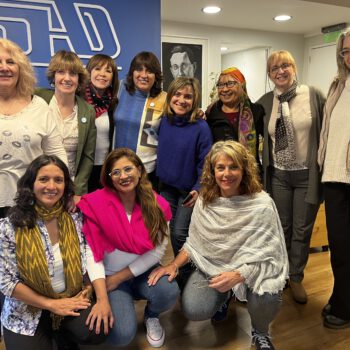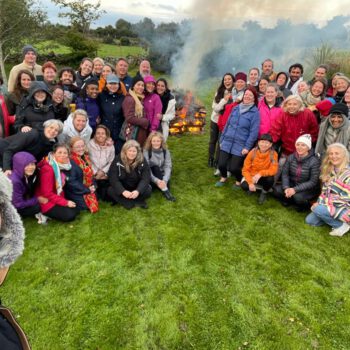

Sat Dharam Kaur ND is a practising naturopathic doctor with a focus on women’s health, cancer, and mind-body healing approaches. Since 2012, Sat Dharam has been collaborating with Dr. Gabor Maté and, in 2019, structured his work into the Compassionate Inquiry® Professional Online Training. As an expert Kundalini Yoga instructor, she has developed yoga-based addiction recovery, trauma, and breast health curricula, which she delivers to teachers worldwide.
In this excerpt, Sat Dharam explores what it means to be authentic and what gardening has taught her about shame, healing and balance. Hear the full conversation on The Gifts of Trauma Podcast.
Authenticity is something we’re born with and spend our lives learning to trust. One definition of authenticity is to be true to one’s own personality, spirit, or character.
This conversation, marking the podcast’s hundredth episode, begins in Sat Dharam’s orchard.
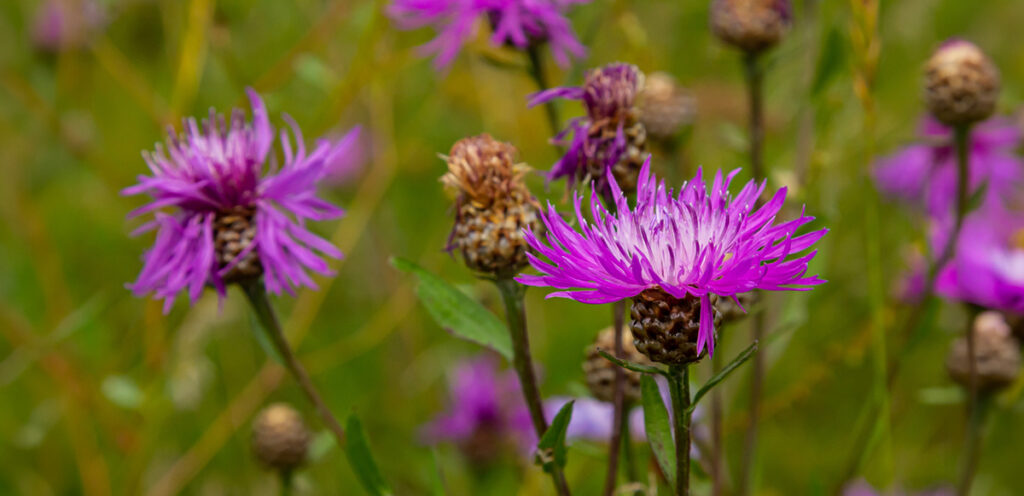
SAT DHARAM: This weekend I am going to battle with spotted knapweed, a European noxious weed that has propagated over much of North America. Resources say it has to be dug out, as the taproots are very deep. When it flowers, each bloom produces a thousand seeds, which live for five to 10 years. They’re basically indestructible, so you have to pull them out. However, I discovered there are several species of weevils, little beetles, that dine specifically on knapweed. If I can find these weevils, they will take care of the knapweed population systematically and ingeniously. At some point, both the knapweed and the weevils die out because there’s no food for either. This is the incredible power nature has to create what it needs to restore homeostasis to a system.
This metaphor isn’t incidental. It relates directly to Sat Dharam’s authentic character.
SAT DHARAM: I was always a leader in grade school and high school. I’ve always liked to take charge, to organize people, and more importantly, to have ambition. I’ve also always been creative and innovative; that’s part of my character too. I’m a little bit impatient. I like to get things done. I like to see what’s possible and make what’s possible happen (that’s the visionary). And I get excited about projects. While I like to be alone, I also like to do things with other people. So that’s all part of my character, and it’s always been part of my character. If I go back to age 4, 5, or 6, I can see that that’s part of my character.
Character is one piece, spirit is another, and it’s also where the story of Compassionate Inquiry®’s own beginning comes in.
SAT DHARAM: I think people know that I was teaching the Beyond Addiction program and reading Gabor’s book when I met Gabor and had this idea of working with him, as it seemed there was something there to be birthed. I didn’t quite know what it was or how it would happen; I just kept following the guidance that was coming through me. It certainly wasn’t coming from my left brain. I just kept following, ‘This is what needs to happen next.’
If character and spirit are always there, what gets in our way? What blocks us from trusting them?
SAT DHARAM: It’s been a long transition for me, a long process of eroding shame, especially, and the fear of rejection, which go together. It took me a while to recognize shame. It can stay hidden for a long time, until we face it or make friends with it or notice it. But it’s very constrictive and corrosive.
What helped so much for me, and this goes back to my childhood trauma, was to be received. Shame can only be reduced when we’re accepted, received, understood, and loved. And it’s been a long process for me to find that in community, in people. But when I did, that trust built trust in me and in what’s happening. So when I think about Compassionate Inquiry®, what I’m excited about now, is seeing the community we’ve created for one another where all of us can release that shame, bit by bit through the dyads and triads, through the biweekly meetings, through being with one another, through expressing our vulnerability, for not being afraid to say, ‘Hey, this is showing up for me.’
The same logic that governs the knapweed governs our inner lives. Removing what’s harmful is not enough.
SAT DHARAM: If I dig out one knapweed, I have to replace it with something else to fill that spot, or something else will come in. Nature abhors a vacuum. This is why we have to be so discerning with our minds. If we pull out one negative thought or belief, what are we putting in its place? What healthy habit are we replacing it with that’s going to be beneficial for the whole system? In a garden, those would be the beneficial, synergistic plants that work together. What are our good habits that prevent the opportunistic invasive species from creeping in again? Because that’s how I experience my life. If I don’t have enough of these healthy habits in place, stuff erodes within me.
As shame loosens its grip and the gap fills with something beneficial, capacity follows.
SAT DHARAM: One of the things I’ve recognized within Compassionate Inquiry® is that I’ve been able to express my capacity, a capacity that I didn’t know that I had. What’s so beautiful is that our capacity increases as the support and the acceptance and the non-rejection continue.
KEVIN: When I perceived and believed myself to be safe, I didn’t then fear making a mistake or getting it wrong. I trusted that I would show up with my best intention and do my best. Now people see me as confident.
SAT DHARAM: Confidence also comes from repetition. So it’s partly the safety, partly the repetition, partly positive feedback, partly the support of peers. Then, the greater the confidence, the greater the authenticity. They work together.
KEVIN: When it comes to working together, there’s a story set in Yellowstone National Park. When all of the wolves had been killed, the deer became invasive, as they didn’t have a predator. They were able to eat all the grass at the river edge and eat all the trees. The grass had been holding the soil firm, so when it was all eaten, it became loose and was washed away by the river. So they introduced a new pack of wolves, which reversed that whole process. The grass started growing. The bees and the butterflies came back. The pollinators came back. The trees returned, the birds returned, the squirrels returned and the river changed direction. All because they reintroduced the wolves.
As Sat Dharam said, nature has incredible power to create what it needs to restore homeostasis to a system. To explore this ecological example further, read the full story of Yellowstone’s wolf reintroduction.
The Gifts of Trauma is a weekly podcast that features personal stories of trauma, transformation, healing, and the gifts revealed on the path to authenticity. Listen to the full conversation, and if it resonates, please subscribe, rate, review, and share.
Editor’s Note: This post is comprised of edited excerpts drawn from The Gifts of Trauma podcast transcript. Selected passages have been carefully woven together to create a cohesive narrative that speaks in the guests’ voices and faithfully represents their perspectives. – Rosemary Davies-Janes