
Listen this episode here:
or here
This thought provoking conversation explores relating through the LGBTQ+ lens, but not only presented to that community. Instead it is a vulnerable and honest sharing in which Vimalarara and Jordan offer insights and perspectives rarely disclosed to the heteronormative population. In this inclusive episode they touch on the:
- Use of pronouns can create a sense of safety and inclusion
- Perspective of gender as a social construct rather than a personal identity
- Historical impact of religious and colonial beliefs on gender and sexuality
- Concept of “care” being used to justify harmful practices (residential schools/conversion therapy)
This conversation concludes with reflections on the importance of self-awareness regarding one’s own biases, and how understanding personal challenges can help in supporting others. It also pauses the conversation on care, which will be resumed in the second part of this episode.
Episode transcript
00:00:00 Vimalasara
For me, what got me thinking about pronouns was about 15 years ago, working in the schools in Vancouver because I’d go in and do the conflict transformation anti bullying and you’d be with kids who were seven or eight and they would introduce themselves. This is my name and this is my pronoun. As young people we do have a knowing, but then it can get quashed because of religious beliefs or because of colonial beliefs. And I say colonialism because in places like Africa, we are still suffering from some of the colonial laws in the continent of Africa which said homosexuality was illegal, which outlawed third agendas, et cetera. We even know in Canada in the indigenous communities, but yet somewhere in there we know, but it can get so quashed, quashed down because this isn’t a conversation which is for the queer, trans, 2 plus, whatever community. This is a conversation for all of us. You know, we’re all affected wherever we are in the world.
00:01:11 Rosemary
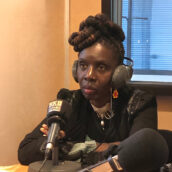
This is the Gifts of Trauma Podcast. Stories of transformation and healing through Compassionate Inquiry. Welcome to the Gifts of Trauma podcast by Compassionate Inquiry. I’m Rosemary Davies-Janes and along with my co host, J’aime Rothbard. Today we are graced with the presence of two remarkable beings. Dr. Valerie Mason John, known in the Compassionate Inquiry community as Vimalasara and Jordan Decker. Vimalasara and Jordan, welcome to the podcast.
00:01:54 Vimalasara
Thank you for having us.
00:01:55 Rosemary
Oh, it’s our pleasure. Great to have you, Jordan.
00:01:58 Jordan
Thank you.
00:01:59 Rosemary
I’ll start by sharing some key facts from your bios, then I’ll invite you to add anything else that you’d like our listeners to know that I haven’t mentioned. Your full bios will be included in the show notes, just so listeners know.
You were both interviewed on the Gifts of Trauma podcast last year, Jordan in episode 11 on August 29th and Vimalasara in episode 18 on November 28th. I’ll invite you to catch us up on what you’ve been focusing on since our last conversations after we’ve gone through your bios. And I’ll also invite our listeners to catch those earlier interviews which are linked in the show notes.
Now, Dr. Valerie (Vimalasara) Mason John is a keynote speaker, a mindfulness expert, master trainer in the field of conflict transformation, leadership and mindfulness. You’re a Dharma teacher, a playwright and the award winning author of 11 books. Valerie uses the pronouns they, them and their, because they do not subscribe to how society defines a woman. ‘She’ and ‘her,’ limit their capacity to be who they truly are. In addition, they are a certified professional mindfulness teacher, a recovery coach, life coach, and a Compassionate Inquiry Facilitator and Practitioner. And Vimalasara is one of the leading African descent voices in the field of mindfulness and addiction. They have designed Buddhist Addiction Recovery programs, a Buddhist Addiction Treatment and offer Buddhist Healing along with Buddhist Addiction Recovery Coaching and Mindfulness Addiction Recovery Coaching, which they co created. In addition to training professionals working in the field of addiction all over the world, Vimalasara leads and co-leads national and international retreats. They were also co founder of Healing and Insight and a teacher on Worldwide Insight.
And I checked out Vimalasara’s Wikipedia page which I’ll also link in the show notes because you’ll find all of their published works, awards and prizes listed. Now Vimalasara, that’s a lot. But that’s just a drop in the bucket of everything included in your bio. What would you like to add to what I’ve shared about you?
00:04:14 Vimalasara
You know, sometimes, Rosemary, I always say, what if you met somebody and you never told them anything about the self. Yeah. And so there’s nothing go on to add. It’s. That’s who I was then, who am I, who am I now? And right now really fully present and really open to being in dialogue with Jordan, yourself and J’aime. So yeah, that was a lot. I would have abbreviated it, but hey, thank you.
00:04:45 Rosemary
There’s just such diversity. You really are a multipotentialite and I relate to that because I’m one too and I love the diversity, Vimalasara,what have you been engaged in this past year? We didn’t speak to you since last fall. We’re at the end of 2025. Can you fill us in a little bit on what’s been happening and what you’re moving towards in the new year?
00:05:06 Vimalasara
Yeah, I would say last year I would have had my 11th book published, the First Aid Kit for the Mind. And since then have developed a course on Kujabi which is breaking habits. And I really love the course because it’s just short videos of five minutes, no longer than seven minutes, you know, because you know when we have those long videos you look in to see, let’s speed it up, let’s speed it up. Or you get through like a third of it and it’s like, oh man, I can’t do… anything. That’s too much for me. I would say really, that actually this year I’ve been really working on the self. Some people will know that one of the things that I’ve really had to work with is disordered eating. I was diagnosed many moons ago as somebody with chronic anorectic bulimic. And although I don’t, I don’t starve, I don’t purge and whatever, I still can have a neurotic relationship to food. And so I really put myself into specific therapy around that. And I want to say, actually anybody who’s struggling with it in Canada, I worked with this organization which, even if you don’t have money, they will still take you on. It’s like… I had money said to pay, but it’s a nine month program and what I got from that is to learn mechanical eating. Mechanical eating. And hopefully it will come into intuitive eating. Just really seeing that actually if I miss meals I’m going to binge… Rocket science! And that actually how can I just really begin to treat food like medicine and give myself a breakfast, give myself a lunch and give myself something in the evening? Because what I want to say is that, I know that actually that is something that has obstructed my freedom. I’m a Buddhist practitioner, and it is about becoming less of ourselves. And how can I become less of myself? How can I begin to release that identity? Because there’s a rut, really for me, It’s about going deeper into my practice, into non dual practice. And then the last thing that I would say is something that I just felt so strongly. I used to be the president of Buddhist Recovery Network. I’m now on an advisory committee. And we had this summit and there was this father who has had addiction, who’s in recovery. And he spoke about his two children who have addiction. One is in recovery, doing well, and the other one is just living on the streets. And he said… it just touched me so much… He said, you know what I realize is the best thing I can do is go to the streets and meet him on the streets and just have the dialogue on the streets. And for me, I was just thinking, ‘Oh, here I am in my comfortable life, working in that comfortable side of addiction, of trauma. What about if I go to the streets? What if I go to the downtown Eastside? What if I go to the encampment where I live?’ So I started doing that, of just going and taking, with a couple of friends, a few friends, taking a carafe of coffee, some donuts, some socks, a few bits of clothing. No agenda, absolutely no agenda. Just to be there, to be a welcoming face, a friend. And it’s this time, they asked us what our names were. So this is it. This is really, it’s actually really, I think because of the work I’m doing on myself, I have more space to be with the woes or the cries of the suffering in the world. And on a micro level, because there’s this macro level, I can’t… There’s not much I can do with the wars and the genocides that are happening out there. But on a micro level on my doorstep, there are things I can do. So that’s what I’m doing. That’s my long answer. So thank you for asking me.
00:09:12 Rosemary
That’s a beautiful answer. I love that and I’d love to link in the show notes the organization that you mentioned that works with chronic eating disorders. I think that it sounds like it’s been revolutionary for you and it could be for others. Thank you.
00:09:28 J’aime
Yeah, I love hearing how much you’ve turned that into a self love practice. It really is about, well, not binging is really about remembering to feed yourself beautiful food. It’s about remembering you, and about nourishing yourself and it feels good.
00:09:42 Rosemary
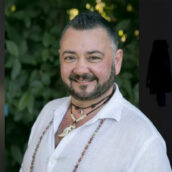
I agree 100%. Jordan. I’d love to introduce you now and I’m going to use your honorary title from your website, I love it. Jordan ‘Samehart’ Decker is a polarity integration consultant and the creator of the Alchemy of Authenticity Coaching. He’s a national and international speaker and an accidental activist for suicide prevention. He’s the founder of Trans Heartline and the Heartline Approach Course Collection series for the transgender social media surgical client. He’s engaged consistently in the healing and shadow work that’s needed to be a strong advocate in the service and support of others. And Jordan has also completed training with Gabor Maté through Compassionate Inquiry. Jordan, would you like to add anything to what I’ve shared about you?
00:10:32 Jordan
Oh, thank you. What’s always hard for me is somebody who doesn’t have a lot of letters behind their name, to give a bio. But what really comes to me is, I am love, I am gratitude, I am breath, I am the light I see in others. I’m also a son, a brother and an uncle, and a fierce searcher of the inner self, the inner engineering. And I really, I thrive on the inner engineering.
00:11:10 Rosemary
I love that term, inner engineering. It’s an interesting term. Is there a story behind where you… how that showed up?
00:11:17 Jordan
Sadhguru has a whole program on inner engineering. So it’s his words.
00:11:24 Rosemary
It’s fascinating. We spoke last, Jordan, towards the end of August last year. Can you share a little bit about what’s been happening in your world since then? Because it’s over a year and also what you’re looking forward to in 2026.
00:11:39 Jordan
Yeah, you mean, interesting how food came up with Vimalasara, thank you for broaching that subject. You know, last year when we did this interview, I was actually homeless and my website was shut down. I got myself back up on my feet. I had a place to live, and in February of this year I was rear ended. I was off work for three months. I lost my housing, and then just as I get back up and running, I had a heart attack and triple bypass, and so I was off for another three months. It’s for me… it’s been a year of not ‘why me’ but ‘what are the lessons?’ And really I had this big victim guy in me before I started CI. I’m not sure I’ve ever heard anyone say I’m grateful for a heart attack, but I’m actually grateful for all of the lessons that came out of it. Part of it was self care, which came to food. So Jordan is also a diabetic, and diabetes and heart disease go hand in hand, and so this was really a wake up call for me. I’m a sugar addict. And so every person that… every doctor I’ve gone to see, I’m like, look, if I was an alcoholic, you’d send me to rehab. If I was a meth addict, you’d send me to rehab. I’m a sugar addict. But the system makes money off of me being a sugar addict. And so there is no… anywhere that I can find a sugar addiction program. They’re like, oh, you can go to AA meetings. I’m like, no, you don’t understand. I actually need to go somewhere for 30 days or 60 days or 90 days where people just take the sugar away from me and then hold me in that space of whatever’s gonna happen. I gotta do that myself. Like, I gotta do that myself. And so, I’m grateful for the time that I had off to get on top of this and help me help myself. So it’s been a magical year of learning many life lessons. And the beautiful thing about it is expanding my experience and knowledge helps me help others as a polarity integration coach. Right. It’s fuel for my own fire in a way I can give back to others.
00:13:53 Vimalasara
I wanted to say something. Is that. Okay, firstly, I just really want to say you have experience, and experience has far more weight than letters behind somebody’s name. And I just want to say that actually I just watched a video and I’ll send a link to you. It’s called How Not To Die and it’s all about heart disease. And what these cardiologists are saying, it’s not coronary disease, it’s culinary disease. But I will send it to you because it’s a very powerful documentary with bariatrics specialists and cardiologists and saying it’s all about nutrition. All about nutrition. But yeah, just inspired for you that you could really come out of this and just say, wow, this is a powerful teaching for me. And you have gratitude for that teaching.
00:14:43 Jordan
Absolutely. Thank you.
00:14:44 Rosemary
Thanks for that addition, Vimalasara. And if you could send me the link as well. I’m sure anybody listening is going to be curious. And looking forward to 2026. Jordan, are you just going with the flow? Is there anything planned?
00:14:58 Jordan
I am going with the flow. I’m definitely learning how to be in the river and float, and not drown. There is a whole lot of flapping going on, and I’m channeling that after having open heart surgery. I mean, they saw your breastbone open and then they wire it closed, and that shifted me. That shifted me on so many levels, understanding that I think there was a part of me that thought I was invincible. And then when you’re laying in a bed and you can’t move. ‘Oh, but, oh, I’m human. Okay, here’s my human.’ And so it’s. It’s really been, again, an act of self care to start cardiac rehab and to really see it as self care. I’ve been so busy trying to work, to catch up from being off work, that it’s… wait a second. I have to put my oxygen mask on first. And my body is making me go do these things which are helping me. I didn’t know how bad I felt until I felt better. And so now it’s like, okay, look, ‘it is not going to hurt anything to just stop and take a walk for 30 minutes. It’s not going to hurt anything to stop and watch the sunset.’ Like, really valuing self care in all of the small ways that I can do it. And also being conscious of the financial grind. Yes, that exists. And if I’m not healthy, it doesn’t matter. And that was really proven to me with this heart attack. It was like, oh, wait a second. ‘I have put myself last for the last time.’ Yeah. The next year is all about helping people find the same thing. Like, find resilience. Like, I’m not a victim of any of these things that happen. I had to go through this so I could expand my knowledge and understanding. And that helps me then pass on my knowledge and understanding to other people. And for some people, it’s going to hit.
00:17:01 Rosemary
Yeah, beautiful. Thank you, Jordan. So now that we’ve spent a few minutes all relating with each other, I want to let our listeners know that this is the first of a two part interview with you both, within the Relating series. Today we’re going to be exploring self awareness around our gender identities, pronouns, our unconscious social and cultural biases, and creating safety. And next week we’ll be exploring relating issues more specific to the LGBTQ+ community. As we get started, would either of you like to share an intention for this conversation?
00:17:38 Jordan
Yes, I could share. My intention is to listen in, learn and grow and be real. Like, just be real.
00:17:47 Rosemary
Thank you. That’s a beautiful intention.
00:17:50 J’aime
I would love to just presence something. We’re talking and listening right now about taking what life gives you and creating something that you integrate and then later share and teach. And Jordan, the reason why I share my pronouns is because I attended the workshop that you hosted back in 2022 at the CI conference, the Compassionate Inquiry Conference, and you said that if you share your pronouns, what you’re doing is you’re signaling a safety, a safe environment, and you’re opening, you’re welcoming and making it an invitation for the presence of others, for all people. And I googled the latest acronym, 2QIPAA. We just keep expanding because there’s so much beyond the heteronormative CIS existence. So I just wanted to thank you and to let you know that this is a ripple that continues to cast out from something you said three years ago.
00:18:52 Jordan
Thank you so much for sharing that.
00:18:55 Vimalasara
I’d like to say something about pronouns because there is this… Yeah, this… There’s something about. People can find it difficult when perhaps you might have more of a feminized look, or whatever that is, and you’re non binary, etc. And I really wanted to… that something came up on my feed, which I found really powerful because I want to say that actually for me, what got me thinking about pronouns was about 15 years ago, working in the schools in Vancouver. And you’d be around… you know, because I’d go in and do the conflict transformation, anti bullying, and you’d be with kids who were seven or eight and they would introduce themselves. This is my name and this is my pronoun. And I found myself thinking, what’s my pronoun? To have to really think about that coupled with my practice as a Buddhist practitioner, where we really begin to let go of self. And actually part of the Buddhist transformation was to let go of all gender. Yeah? And so I just wanted to read this because I think for me it was just so powerful and it just resonated for me. It came from Max Glamour and it said, “I’m not non binary in the sense of the third gender or something in between. I’m non binary in the sense that the binary itself is the problem. I don’t want a new category added to an existing system of classification. I’m refusing a system that produces a regime of normative, gendered expectations. My non binary isn’t an identity that is simply looking for recognition. It is a critique of the metaphysics of gender built on colonial domination. My gender is a refusal of the assumption that man and women are natural, exhaustive or desirable containers for embodiment and desire. My gender is a disruption, a disidentification, a structural exit, a refusal of the classificatory logic that makes gender a legible commodity in the first place.” And I don’t know what, Jordan, you think about that? For me, that’s just… That speaks to me and where I’m at around my gender of the non binary.
00:21:26 Jordan
I think that’s a beautiful journey. I found myself absolutely sitting in the binary, like being socialized as a woman till I was 38, 36, and then knowing inside of me that since I was 2 years old that I was a boy. Like I just knew that about me. So for me, I do fit the gender binary. And I love that your story is different. It expands the understanding of gender. It welcomes it, like it welcomes the differences as, not good or bad or right or wrong, but just simply not the same. So thank you for your journey.
00:22:13 Vimalasara
What do the two of you think about gender?
00:22:17 Rosemary
That’s a really big question. Yeah, I don’t really think about gender much. I just look at people as human beings. It’s like to me it’s.. if a person is like a hundred percent, has my focus, their gender is like 2% of that hundred percent. It’s just… Yeah, it’s..
00:22:39 Vimalasara
It’s interesting. But yet you will be treated as you look as you will be treated as a woman in this world, Even if you say you don’t think about it, people are projecting gender onto you and you will walk into that. You know, you…
00:22:56 Rosemary
I do and I fight against that. I do fight against that. I do non female things. I do home renovations. I go into building stores and direct tradespeople and work to overcome their resistance to that.
00:23:09 Vimalasara
But why is that non female activities? My partner is very female and does house renovations and would not see that. Why? It’s this thing, isn’t it, that we’ve said, certain…. Jobs are assigned to men. So you are still colluding with the gender if you say that you do non…
00:23:30 Rosemary
Yeah, I hadn’t thought of it that way. I’ve been looking at it as breaking down the stereotypes and showing many, many blue collar tradesmen that you don’t have to be a man, to be in that world. But I hadn’t thought of it from that perspective. Thank you.
00:23:47 J’aime
I’ll jump in. I’ve thought a lot about gender in my life. I’m a mother, I have a 12 year old, who’s a boy. And when I was pregnant I actually wanted to create a clothesline of, like, purple and orange clothes that would get away from this like badging of gender. And I would buy shirts, whatever kind of shirts, and sometimes the shirts would have puffy little shoulders on them. And I really worked very consciously to try to create a world where he wasn’t getting pushed into some sort of box. And to my disappointment, and perhaps it’s like my projection of, like developmentally, because I remember when I was a little girl, I went through that wild dress thing of, I’m this. But it was… It was a little humbling, I guess, to watch the developmental cycle take shape and to say, okay, this is part of him deciding who he is and how he is in the world, and not being able to control that and just to witness it, like, as a parent, it’s like the strongest thing you can do, I think, is often just be a witness and a reflection and be very conscious of the projections. But personally, I think fluidity and spectrums are beautiful ways to perceive gender. And I’ve always hoped to live in a world where we can identify with all the parts of the masculine and the feminine and the beyond that we identify like a lot what you say, Vimlasara, transcending it all through Buddhism. And I believe we’re all just hammering away in our existence of trying to create more space for everybody.
00:25:30 Vimalasara
Yeah, we definitely get to. We should… be…choose who we want to be. And I want to come back to something you said, Rosemary, because there’s a part of it that I love that we don’t think about gender. Because in a way, for me, I really believe that these are social constructs. Who decided that something was a woman who decided that? However, we do live in a world which is gendered, so we can’t throw it out with the bathwater. I don’t use… I think that term with the baby’s awful with the bathwater. In a way, I’d really get… Actually. Yeah, it’s the same of… We don’t think of… We don’t see colour, but actually we are treated differently because the world is so racialized. It’s happening and they are, again, race is a social construct, but yet we live in a world where these constructs are, and they have an impact.
00:26:21 J’aime
Jordan, what’s…. I see a smile there?
00:26:26 Jordan
Yeah, it’s.. I have a quick funny story about gender. So my former wife and I were married for 12 years before I started my transition. And so we were married as a lesbian couple. It was so funny one day… as a lesbian couple, we didn’t have roles. There was just stuff that needed to be done at the house. We just did stuff. Right. My job allowed me to do more of the things around the house, so more of taking care of the cars, taking care of the animals, taking care of the yard, also doing more of the and more of the cleaning, just because of the way my work was set up. So it was a joke that I became the house husband. But what happened in this moment in time, I started passing very well. And so she comes around the corner one day and here I am, I’ve got a full beard and I’m not sure what feather was in her hat, but she was like, “I guess I have to be the wife now.” She’s like, “I guess I’m going to have to want this.” She pulls out the broom and she starts sweeping and she’s so upset. I’m like, “Wait a second. Time out. What is this I have to be the wife now, thing? I don’t think anything needs to change with how we’ve set our life up.” But for her, it was a very intense moment of having these gender roles, not put on her, but taken on herself. Like she took that on herself because of… as Vimalasara was talking, this social construct of men do this and women do that.
00:27:58 Vimalasara
That’s a great story. Attached…
00:28:01 Rosemary
Wonderful. Thank you. Does anyone have anything else to say on that or should we move forward into the relating issues?
00:28:08 J’aime
I think we’re deep in the relating issues though, with this very exploration. Right? This is almost the first step of what it is to even. This is why I think it was so important, why we’re giving it two episodes to really explore as we’re doing this series on relating and all being Compassionate Inquiry trained. Can we really open this more? Can we open this deeper?
00:28:32 Vimalasara
Yeah. Because this isn’t a conversation which is for the queer, trans, 2+ whatever community. This is a conversation for all of us. You know, we’re all affected wherever we are in the world.
00:28:45 Rosemary
And it’s making me reflect. As a child, our family always went to Provincetown, Massachusetts for holidays. My parents were straight. We used to go the same two weeks every summer, and gather with all kinds of wonderful people. A lot of lesbian couples, a lot of gay people. Like some amazing people that as a kid, I had no idea what they were. I just knew I loved them because they were amazing. I’ve got the combination of traditional gender separation, and this exposure from a very young age to this community that did not answer to any particular gender rules. They set their own.
00:29:27 Vimalasara
I have a funny story about P Town. Yeah. We were at P Town a few years ago and we’re walking and this straight couple behind us said, they’re everywhere. Cause you know, it’s one of those places that you don’t realize… you could… just it was at the end of the coast and you end up there and think, oh yeah, this is really beautiful. It was like. It was hilarious. “Everywhere!” We turned around and it was like, what are they going on about. Oh, they’re talking about that. Yeah, yeah. That visibility. Visibility. Yeah. It’s just really touching into… My father in law has just died and he was so accepting of the relationship that I have with his daughter. And he would always say, thank you for letting Shay be with me, because she made that choice to be there during that period, three or four months, and whatever, and thank me. And yet the mother in law who’s still alive has not been able to accept the relationship. Yeah. Has just been in real denial with it. So again, those are… And it’s the same with gender. Somebody, Somebody’s child knows that actually they’re in the wrong body or they’ve got gender dysphoria and they need to transition. That actually, people won’t accept it. And that, that blame criticism, there’s all of this… unmet emotional needs. It’s. Yeah, it’s. It’s huge.
00:30:54 J’aime
It’s a big part of the work you’re doing right now, Jordan. Isn’t that right?
00:30:59 Jordan
Yeah. I knew at 2 years old that I was a boy. Like, I knew that I didn’t put mom’s makeup on. I cut myself shaving. Right. And the first time I asked for death, I was six years old. ‘Please let me wake up a boy or not wake up at all.’ Because in my family structure, coming from a very conservative Christian household, to be a tomboy was a sin. Right? So I would get spankings for wearing pants. And when I was six years old, I threw a fit. And I’m like, I’m not… ‘I’m not wearing a dress anymore’. And because I would get spanked for it, I prayed for death. And that was. What does a six year old know about suicide? And that’s why I say an accidental activist. Like, I have stayed awake so many nights understanding that light always overcomes the darkness, and just waiting for the sun to rise. And so for me, because of my own experience, that’s when I’m able to sit with people with, is experience. I get it. I get it. Light always overcomes the dark. There are so many sunrises that I’ve watched because I needed to. I had to. Like just praying for the darkness to go away. And so it really, yeah, I don’t know where to go from there. I’m grateful. I’m grateful I’m still here. Like to walk into my doctor’s office and actually be having a heart attack. And then to take myself to the ER, after stopping to get some fruit. Right? My angels, my ancestors, my guys, baby Jesus, whatever. Something greater than myself had their hands on me, and that’s what I help other people… Something greater than you has their hands on you. Whatever you need to call it. Right? And so it really. I’m grateful for this opportunity to share in this way. So thank you. Yeah.
00:33:08 Vimalasara
It’s interesting, Jordan, just listening to you, because I was thinking, actually I always knew that I would not be saying queer is new or lesbian or whatever, but that actually was always attracted to women. And I’ve never had all my romantic relationships have been with women and just knowing from a very early age. Yeah, yeah. And I can remember the first time I fell in love, and I fell in love with this somebody who was so unlike me. She sat in the desk in front of me, so unlike me. And I remember praying to God for thinking such evil things. So where that came from, like really praying to God to stop thinking such evil things, yeah. And then, it’s interesting, I had been in relationship with a couple of trans men. And I remember, I won’t say their name, but I remember that I was very strong that I did not want to be gendered, because in this relationship, all of a sudden, I had to take this female role. You know, I had to walk on a particular side of the street, I had to sit back and whatever. And it was like, I just didn’t know how to play the dance. There’s a whole heterosexual dance that you… Whatever. And I have no idea how to play that. So again, it’s so really in me… It was actually, I don’t want to… This is not what. How I want to be or want to be in a relationship. So that thing of just knowing and also having… With the conditioning that I had was being able to follow that through. I also knew I was a tomboy, and I really enjoyed being a tomboy. And that was fine. But I knew I didn’t want to be boy. And that partly, it was because, boys changed. They started doing really weird things and it was like, oh, my God, cutting the tail off something, or whatever, but just doing all these weird things. But, yeah, but definitely, I think that as young people we do have a knowing. But then it can get quashed because of religious beliefs, or because of colonial beliefs. And I say colonialism because in places like Africa, we are still suffering from some of the colonial laws in the continent of Africa, which said homosexuality was illegal, which outlawed third genders, etc. We even know in Canada in the indigenous communities. But yet somewhere in there we knew that it can get so quashed, quashed down.
00:36:11 Jordan
Well, and I’m grateful you mentioned the indigenous communities. I mean folks who skirted genders ,or who heard voices, or who saw things other people didn’t see, were othered. And yet in the indigenous communities we were celebrated, we were taken apart and our gifts were honed in. They were seen as gifts, and not as something that needed to be squashed.
00:36:41 Vimalasara
Yeah, thank you for saying that, Jordan, because it reminds me of Bayo Akomolafe talking about care and what was done in the name of care. And so again, it’s like in the name of care, residential schools. But was that care? Absolutely not. And in the name of care, really squashing gender, two spirit, whatever, in the name of care, and it wasn’t care. And so really, in a way that’s why we, as queer people, as trans people, as non binary, two spirited people, in the name of care, we have been harmed. Okay. If you think of when people had to be electrocuted to change. I’ve just written a forward for a book which is by, bipoc, trans, non binary Buddhists, and wrote that, and actually just thinking, yeah, the harm that was done under the name of care, which is why people have this aversion, have this attitude, have this transphobia, this homophobia, it was cultivated. I don’t think it’s in it. Yeah, it’s learned.
00:37:52 Jordan
In my world we use the term ‘assimilate or die.’ It’s still so present in the Cherokee community and in most indigenous communities in the US, that if you don’t assimilate to the religion or you don’t assimilate to the education, or you don’t assimilate to the other culture, then there’s still that fear of dying or being killed.
00:38:15 Rosemary
Thank you. That seems to lead us into a conversation about, and you’ve already covered it quite well, is the creation of homophobia, the creation of these, I don’t even know what to call them, these perceptions that people need to be gender normative, and that something’s wrong if somebody isn’t. And I was lucky not to be exposed to that in my family. Even though it was very strange that my very straight, very Christian parents chose to raise me that way. I’m very grateful. I have never been on the receiving end of that kind of bias. And I wonder if that’s something you’d like to speak to.
00:38:57 Vimalasara
We live in a different world, don’t we? Yeah, the bias is such, you know, I just, I mean it brings up the whole thing of disability. If you think like, bias and how the world has been created… especially in the West, the world has been created to suit people who can walk, who can run, who can speak, who can speak verbally, because people can speak with hands. But it’s designed, hetero normative, white, normative. Yeah. So bias. And yet again, bias is so unconscious. We talk about decolonizing, and when I’m in BIPOC or queer spaces, I have to say, we have to decolonize our minds, too. It’s not just about the white, the other, decolonizing because we have been impacted as Resmaa Menakem talks about that historical trauma, that institutional trauma, that personal trauma, that persistent trauma. Yeah. That actually we have to decolonize as well as deal without epigenetic traumas as well. Bias. I have to be aware of my bias. Once upon a time before.. I mean, I’ve been a dharma practitioner for a very long while, but once upon a time, I would have seen a particular white person, and I would just, would have turned away and I would have just. That’s who they are. That’s what they represent. Yeah. However, being a dharma practitioner has made my world bigger. Yeah. Has made my world so much bigger. Bias. Once upon a time, I was too scared to be in a room with just people of color. I felt more comfortable just being with white people, because of the way… because I was raised by white people. Yeah. Well, that’s sick. As we say in our community, that impact, that mental health, like to be too scared to be in a room with somebody who reflects you, you know? Yeah.
00:41:10 J’aime
This is so speaking to the patterns. We adapt, though, to survive. This brings us right back to the things that help you get to a certain point and then stop you from getting any further and, in fact, start to eat you up. Maybe we could start to close up this conversation, sort of the way we opened it, talking about how Jordan taught me how to signal care. And what more can we do to signal care? True care, true safety?
00:41:44 Rosemary
We’re taking a brief pause to share what’s on offer in the Compassionate Inquiry community. Stay with us, we’ll be right back.
00:41:53 Kevin
If you’re not a therapist or a healer, but you heard our guests describe the personal transformations they experienced during their compassionate inquiry journeys and wonder what might that be like for me? There is a program that is offered to anyone who wants to experience the power of Gabor Mate’s approach to trauma healing. I’m Kevin Young and I’ve been facilitating CI circles since 2022. I’ve seen people transform in many ways. I’ve seen people change beliefs, relationships. I’ve seen people change, change how they show up in the world. I have seen people literally change how they look in front of my very eyes. There are many, many ways that people change during Compassion Inquiry Circles. Circles is a 10 week small group experience and registrations are opened until January 26th. Click the link in the show notes. That’ll bring you to a webpage that gives you all you’ll need to figure out if this is for you.
00:43:06 Vimalasara
Thank you for that. And just rounding that off and coming back to what you said, J’aime, in terms of Jordan signalling to you in the name of care and gender. And I think what I’d like to signal to listeners is that you don’t have to pass. Passing has been a way to protect oneself. And we know that people have passed, being heterosexual people have passed being in the gender that they’re in to protect themselves. And there’s been a whole history of passing. So actually, in a way, let me dial back, actually, because it’s not right for me to say that you don’t have to pass, because for people… passing has been a protector. However, to signal, to become aware of what you’re doing. So even if you are passing, even if you’re not being who you really want to be, just become aware of that, because that can be healing and accepting. You’re making a choice not to do anything about it. I think that is to give yourself some choice, to signal that. To be aware, you know, be aware of your gender. What is that? Be aware of that. Be aware of how bias can put people into boxes and ourselves, most importantly, how bias boxes us, and makes our world small. Yeah, we can’t see our clients, really, unless we really begin to look at our bias, we can’t. We stay fixed. Jordan, your mouth moved.
00:44:47 Jordan
It was very interesting for me to start passing, as you say, having moved through the world as a woman for 36 years, as a butch lesbian. Let’s just call it out. I would walk into a room and have the answer, and nobody would even turn to look at me. And now when I walk into a room, everybody asks me what the answer is, and I’m like, I don’t know. I was in a situation in Fort Worth, Texas, where we were putting together a very large communion table that was made from a tree that was downed in Hurricane Katrina. And it was the second time the table was put together, and this woman was a steward of the table, and there were six guys trying to put it together. They wouldn’t listen to her. I walked up to her, and I’m like, “I’m so sorry this is about to happen, but just tell me how it needs to go together.” And she told me how it went together. I looked at these guys and like, did you guys put it together last time? They’re like, no, we don’t have. I’m like, you just do this. And after an hour and a half of them trying to get it together, in 10 minutes, they had it together. And I’m just like, “I’m sorry, Jen. I’m sorry. I’m sorry that they listened to me and not you”. Like, it was a very… I mean, I can see the gender bias now even more clearly than I could before. And it is a super real thing that happens every day. And on the flip side of that, I’m a super nice guy. And a lot of times when I’m nice to a woman, all of a sudden I get put into ‘that guy’ category. Like, I just want something from her. And I’m like, no, I’m just a nice guy. But then there’s a history of trauma that puts that perception in there that a nice guy is going to do something that or want something from me. So it’s been difficult to navigate just being a nice guy.
00:46:31 Rosemary
That’s such a great reflection, Jordan. I actually went through this when I was acting as the GC on my home ‘gut and remodel’ projects. It was so frustrating that I wasn’t being heard by people who dismissed me based on my gender. Actually, more than dismissed, they disrespected. There was a carpenter who stole lumber, figuring I wouldn’t notice, and there were contractors who attempted to shift from a… A boss/worker role into a dating dynamic. Eew.
00:47:01 J’aime
Rosemary, what is a GC?
00:47:04 Rosemary
Oh, sorry. A general contractor.
00:47:08 J’aime
Yeah, it’s funny that you mentioned that because Rosemary and I met in the 2022 cohort and we were triad partners. And I remember you telling me about your frustration at that time doing a home renovation and what that was like for you. You didn’t even want to finish the project because you were feeling so uncomfortable.
00:47:28 Rosemary
Yeah, it was so frustrating. I had to have paving stones laid for a patio three times because I kept telling them the slope wasn’t right and they kept laying them wrong. So fortunately, I found someone who managed to hear my request, and finally I had them laid right. o I… You know, I totally get how challenging a gender bias can be to experience. Unfortunately, we’re out of time for this episode.
00:47:57 J’aime
And fortunately, there’s going to be a second episode. This is why we decided that we wanted to create a lot more space to really broaden and deepen into this conversation more.
00:48:08 Rosemary
And we’ll pick up right where we left off. Please join J’aime and I and Vimalasara, and Jordan for that conversation, which is the final episode in this Relating series. Vimalasara and Jordan, thank you so much for being with us today.
00:48:25 Vimalasara
Thank you for having us.
00:48:26 Jordan
Thank you.
00:48:35 Rosemary
The Gifts of Trauma is a weekly podcast that features personal stories of trauma healing, transformation, and the gifts revealed on the path to authenticity.
Listen on Apple, Spotify, all podcast platforms. Rate, review and share it with your clients, colleagues and family. Subscribe and you won’t miss an episode.
Please note, this podcast is for informational purposes only. It is not a substitute for personal therapy or a DIY formula for self therapy.
Resources
Websites:
Related links:
- Eating Disorder Recovery Programs
- Vimalasara’s Wikipedia Page
- Sadhguru’s Website
- Bayo Akomolafe’s Website
- Resmaa Menaken’s Website
Videos:
Courses:
- First Aid Kit for the Mind Course
- Overcoming Addiction Course
- Inner Engineering Course
- Compassionate Inquiry Professional Training