
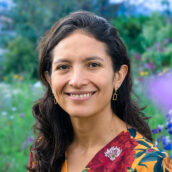
Season 03 – Episode 07: Healing Ruptured Connections to Self, Land and Culture, with Sanjog Kaur
By The Gifts of Trauma /
Listen this episode here:
or here
Sanjog’s spiritual name means ‘connection.’ In this flowing, deeply connected conversation, Sanjog describes how ‘longing’ helped her heal her eating disorder. She also explains how heartfelt intentions (as opposed to external goals) helped her navigate obstacles in her addiction recovery. In addition to attuning to our innate ‘longings’ and ‘intentions’, Sanjog highlights the importance of trusting our own intuition, and accepting that we inherently know what we need.
Join us to hear Sanjog describe how:
- A trip to the US, unspoken grief, and early bullying led to her develop Bulimia, at age 13
- She overcame her reluctance to seek help through Kundalini Yoga, her relationship, community and her own longing to free herself from a coping strategy that served her well…but at great cost.
- Her professional focus shifted from anthropology to therapy
- Her emerging personal and professional aspirations might evolve her life and work
Sanjog also paints a beautiful picture of her upbringing in the Andes Mountains, the influences of her land’s unique geography, languages and cultures, and how, after initially dismissing what Ecuador offered, and wanting to leave, she has come to deeply appreciate its culture, land and diversity.
Episode transcript
00:00:02 Sanjog
One thought that came to mind is, I guess before, I always traveled with this idea that I’m inferior, the place where I come from is inferior, right? So I would hear or look at other people’s experiences and believe that mine was definitely less than everyone else’s. And that’s why I believe it has to do with healing as well. The fact that I can travel and really enjoy and value the culture in other places, and really even long for the maintenance of that culture in that place, without seeing mine as less than, valuing that too. That diversity is so valuable, and that diversity makes sense because we’re born in different lands and the land shapes us in different ways.
00:00:51 Rosemary
This is The Gifts of Trauma Podcast, stories of transformation and healing through Compassionate Inquiry.
Kevin:
Welcome to another edition of The Gifts of Trauma podcast. I’m Kevin Young, and I have the pleasure of being here today with my dear colleague, Sanjog. Sanjog, maybe you would like to just say hello.
00:01:25 Sanjog
Yes, hi Kevin, and hi everyone. My name is Sanjog and I’m from Quito in Ecuador, and it’s a pleasure to be here on this podcast today.
00:01:36 Kevin
Yeah. Thank you. And Sanjog, when I feel into myself I, I can recognize that I get very excited about speaking to certain people and you’re one of them. I am very keen to hear all about you. I’m very keen to hear about how you work and who you’re working with. And I think we’ve a lot that we could talk about, but let’s see where we get to with maybe about one hour of conversation and see what happens. And Sanjog, I know you well, as a colleague, might even go as far to say as a friend. And I would love for you to take a moment and introduce yourself to our listeners. You’re welcome to talk about who you are, where you are, what you do. How would you introduce yourself?
00:02:19 Sanjog
Yeah, great. And thank you. And then I guess it’s interesting that I started with where I’m from. I think that’s a big aspect of what has shaped my life is being born in this area of the world in… in the Andes Mountains of Ecuador. I believe and sense that this is a big part of who I am. And so I would describe myself at this time as a therapist who works with Compassionate Inquiry as a main model of work. But what’s interesting is that I became a therapist as a part of my own healing journey. I didn’t really plan or ever thought of, or even dreamed of becoming a therapist, at any point of my life. But what brought me to becoming a therapist, at some point, was my own longing to heal from an eating disorder that I developed when I was a teenager. And then in the search for tools, resources that could help me with my healing process, I discovered that I had some skills in working as a therapist. And at this time, it has become my main, the main aspect of my life at this time.
00:03:36 Kevin
Thank you, Sanjog. There’s already 1000 questions far enough in my head. I’d like to… Sanjog, first of all, can… you are like Madonna, or Prince, or some of these people that only have one name and… tell me a little bit about that. Tell me a little bit about Sanjog.
00:03:54 Sanjog
Yeah, so it’s a spiritual name. I was trained as a Kundalini yoga teacher when I was 19 years old. And in that discipline, you have the option, the choice, to ask for a spiritual name. And the purpose of this name, in the way that they teach it in the kundalini yoga community, is that it’s like a blessing. So when somebody calls you by your spiritual name, it’s a way of helping you remember who you are, and what is your purpose on this earth. So I guess when I heard that, I was like, I really want the spiritual name, so I requested one. And the way it works is that based on your date of birth, there’s a big spiritual scripture that is called the Gurugram Sahib and they search, based on your date of birth, what is your spiritual name. And this is the name that I was given, Sanjog, which means in one word, I would describe it as connection. That’s what it means. And I guess the way I understand it,in terms of being a blessing or remembering who I am, is that saying Sanjog or hearing Sanjog is a reminder that connection is available every single moment of our lives.
And I don’t use this name everywhere. My family, some friends from maybe childhood don’t know me by this name. I also have another name which is the name that I was born with, which is Natalia. And that’s what my parents called me like that, my dad, my sisters, my partner… But in the Compassionate Inquiry® community, one of my main kundalini yoga teachers in the past was Sat Dharam, and she knows me by this name. That’s how I got everyone now in the Compassionate Inquiry community knows me by Sanjog and I like it. It reminds me that this is also my purpose in Compassionate Inquiry, that not only what I do, but also as a therapist, but also what I offer and I went to offer myself within the community.
00:05:52 Kevin
Thank you, Sanjog. It reminds me of almost using your name like a little bell, just like ringing a little bell to bring you back to presence or connection. I like that. I hadn’t heard that before, that it was a blessing for you to say or hear a Kundalini name. I really like that. Thank you. I wonder, can we go back a little bit? You, you talked about… the first thing that you said when you introduced yourself was I’m from Ecuador, from the Andes Mountains. You said that’s a really important part of who you are or how you might show up in the world. And tell me a little bit more about that. First of all, tell me a little bit more about the geography. Tell me, are you high in the Andes Mountains? Are you in the lowlands, in the Highlands? Tell me a little bit about the geography first and then I’d love to hear how that… yeah, how that impacts you, how that impacts who you are, how you show up.
00:06:46 Sanjog
Yeah, sure. Geographically, Ecuador has many regions, but the altitude where I live right now is 2,500 meters above sea level. But I was born at 2,800 meters above sea level, so a little bit higher. I guess there’s two particularities about that, because one is that it’s really high up, so low pressure, low oxygen. The weather can be really cold at night and in the morning it can be really hot when it’s sunny. But it’s also in the middle of the world, particularly the city where I was born. It’s like on the equator, you can literally have one foot in the Southern hemisphere and one foot in the Northern hemisphere. And that creates a lot of energetically… not only the weather, the position of the sun and the fact that we don’t have any seasons, but it’s most of the year, it’s the same season throughout the year. I believe that really shapes your understanding of the world and the way that you relate to life. That’s what I would say geographically.
00:07:48 Kevin
Could I ask you to extend that a little bit more? And I get geographically, on the equator, one foot northern hemisphere, one foot southern. You said that really shapes your life. How does that shape your life?
00:08:00 Sanjog
One thing I was going to add is that the land here, because of the weather and where we’re located, it has a lot of water, fresh water, and it also has a lot of volcanoes. So I grew up with volcano threats. It has never happened, but I grew up with, in my city, there’s a huge volcano that’s active, and then just a few hours East, there’s another volcano. A few hours South there’s another volcano. And they’re all very… they’re huge, they’re very powerful. And in the original cultures of this land, volcanoes, mountains, they were considered as very sacred aspects of communal life here. So even though I didn’t… I don’t know if as a child I would have thought that this was shaping who I am, but I know I spent a lot of time after I came out of school… of high school, I spent a lot of time trying to leave my country. I always thought that we were underdeveloped and that there were no opportunities in Ecuador, that I really needed to find my way to more developed countries or places where there was more wisdom or knowledge and or work opportunities. And I guess it’s taken me a decade, maybe more.
I had the privilege to travel to different places in the world and to live in different places. It was not until the COVID-19 pandemic that kind of forced me to come back to Ecuador that I understood the value of the land that I was born in. Just the fact that we have one key aspect of what I value right now is water. The water that we have, that there’s so much fresh water in this land, and that even though I thought, well, we don’t have seasons. I remember even in high school, one teacher once taught us that all the reason why the global North is more developed than the global South is because they have seasons. This is something that I was told. So they had to develop more technology and more of these things because of the seasons. And now coming back to Ecuador and really relating in a different way to the land, but also with people from this land, just understanding that yes, we don’t have seasons. That’s true. But there’s a very close relationship to the culture. Like we understand culture as the relationship that we have with the ecosystem where we’re born. Just that, there’s a lot of wisdom in the culture that was born in this place, in relationship to this land, and to the fact that the way that the people that lived here in the past could see the sky from this place is very different from what you can see in the sky in other places in the world. Just because we’re in the middle of the earth. The fact that there’s a lot of volcanoes makes the land here very rich. So there’s a lot of agriculture… is very rich. Everything grows here, not necessarily here, but there was a lot of exchange because you change altitudes very quickly. Like you can be at 2,500 [m] and just travel 20 minutes and then it drops down to 1000[m]. And that makes the cultures here very reciprocal. But also there was a lot of exchange between different altitudes, and that made life very communal. And even though colonization has created a rupture in the dynamics, it’s still very present in this land. So just understanding that the landscape shaped our culture, and that culture is still in me, even if I couldn’t see it before, or if I denied it for a very long time. It’s filling me as a resource, or a source of resilience, that has been very important for me in the past few years.
00:11:40 Kevin
And I know as well that if you would have told me when I was maybe 25 years old that I would be living in a rural part of the north of Ireland, I would have said you were absolutely crazy. Because I too couldn’t wait to get to somewhere else, that had better things and better people and better prospects and to better… it was… anywhere else would be better than here. And right now. I’ve been in South America a few times and recently in Canada, and it always surprises me at how much I really love to get away. I really love it, and I love it when I’m away, and then when it’s time to come home, I really love coming home as well. And that surprises me. I wonder, Sanjog, is that something to do with healing or growth or maturity? Because I too, feel like I’m from this land, and South America’s wonderful. I love being there. Canada is beautiful. I love being there. But there’s something that pulls me to my land. And what would you think of that? Is that something to do with healing? Is that… what is it for you that pulls you back to your own culture, your own people, your own mountains, your own volcanoes, your own sky. What does that?
00:12:59 Sanjog
Yes, I hear your experience. So I do believe that it partly has to do with healing, just with recovery, connection with ourselves and with our surroundings. Personally, I would say it has to do with healing.
00:13:14 Kevin
We’re taking a brief pause to share what’s on offer in the Compassionate Inquiry community. Stay with us, we’ll be right back.
If you’re a current Compassionate inquiry professional, training programme participant or graduate, you’re invited to CI’s Experiential Intensive Retreat in the North of Ireland from September the 8th to the 12th. Deepen your personal and community connections in the beautiful natural settings of Corrymeela with beautiful views over the Irish Sea. Rest, reflect and partake in workshops, CI body and nature based practice sessions plus delightful evening community celebrations with home cooked meals, Irish music and dancing. Tap the link in the show notes to learn more.
Kevin: I would like to spend some time talking about your healing. You’ve already mentioned how healing and healing yourself from an eating disorder brought you to therapy, and I’d really like to discuss that path. Before we do that, Sanjog. I’m really keen and I’m learning from you. Tell me a little bit more about culture in Ecuador. You’ve mentioned… you’ve used this word a few times. What does that look like? What are the standout pieces of culture for you in Ecuador?
00:14:35 Sanjog
Yeah, sure. And maybe just to say that when I shouldn’t say that you had this as a 25 year old dude, that you wanted to leave and now that you really come back home, it’s nice to go to live,and it’s nice to come back home as well. One thought that came to mind is, I guess before I always traveled with this idea that I’m inferior. The place where I come from is inferior, right? So I would hear or look at other people’s experiences and believe that mine was definitely less than everyone else’s. And that’s why I believe it has to do with healing as well, the fact that I can to travel and really enjoy and value the culture in other places, and really even long for the maintenance of that culture in in that place, or the wisdom of that culture without seeing mine as less than value in that tool, that diversity so valuable. And that diversity makes sense because we’re boarding different lands and the land shapes as in different ways. I think there was a… like a veil before that didn’t let me see that or as a possibility. So that’s why I was saying that it’s part of healing. And culture in Ecuador, it’s a small country, but it has a lot of diversity because of that big shift in altitudes in a very small space. It still is, but it has decreased very fast. The diversity has decreased really fast with globalization and I would say colonialism, but I don’t know what the number would be right now. But at least, until when I was 20, 25, we had 23 different languages in a very small area, which means, of course with 23 different languages, 23 different ways of understanding life in the world. And so I think that’s a very important characteristic of culture here, is diversity. But also… There is also something that connects. For example, in the Andes Mountains, we were conquered by the Incan Empire before the Spanish Empire colonized us, the Incas were here.
So there is like a thread that is common to the Andes Mountains. I would say from maybe Argentina, Chile, Bolivia, all the way up to south of Columbia, which is, like the, just the connection with the sun and the moon and the nature in general as a… the place to find connection or spiritual connection. It is a very agricultural-based country. So that’s the main economic activity here is agriculture, which means life, especially in rural areas is organized around crops, particularly corn, potatoes, grains. That’s the main basis of the diet. I would say we would be a really good vegetarian culture. We eat a lot of meat, but because our main crops are really quinoa and amaranth, they’re all from here. It makes a really good vegetarian diet, if one wanted to.
And then we… and there’s a lot of synchronism with European, particularly the Spanish culture. So it’s a very Catholic country, but it’s very mixed with the traditions of people who lived here before colonization. So the place where I live in, it’s a small town called Pacha and every month, there is a pilgrimage. I think that’s what it is… with music, bands and Catholic Saints or Virgin Mary, there’s a lot of devotion to these figures, but it always has components of culture, local culture, so that mix is a very important aspect of life here.
00:18:18 Kevin
And do you still engage with those Sanjog? Or would you consider yourself to live a very westernized lifestyle? Because I know you do a lot of work with Compassionate Inquiry and you’re meeting and speaking to people from all over the world. You’re working on Zoom, so you’re pretty far removed from the managing of a quinoa crop. And I wondered, do you still engage with those cultural things? I’m thinking of cultural dress, cultural music, cultural food, cultural festivals. Is that still something that you find yourself moving towards?
00:18:52 Sanjog
I would say now, as an adult, I do, I would say that’s an important aspect of our cultural drama more than anything. I was born in a very privileged part of Ecuadorian society, privileged both in economic terms but as well as in social terms. When I was a child, I went to private schools in the capital city, which means, here in the context of Ecuador, means really what I would describe as, living in a bubble. I didn’t really have a lot of contact with local culture. The way I was shaped as a child was to always look upwards, learn English as opposed to learning the local languages or, dreaming about, at some point the study outside. There was a lot of value of…particularly the US culture and really having the opportunity to study there or to even work there would have been a great success, if that could happen. So I was raised in that way. My parents come from a city in the south of Ecuador. There is social location is also a very privileged one within the society in the smaller city. So I would say even there in our schools, the way that we were taught, is that many of the phrases that I could hear as a child were all indigenous cultures. They don’t exist anymore, or the numbers have decreased so much that it’s not an important component of our culture. Or the main languages here are Spanish, but not necessarily other languages as official languages. So growing up, I didn’t have a relationship with local culture. At the same time it’s everywhere. So I think I was just raised to not see it, or to not value it, but it has always been there and it’s always been a part of me. And it’s been, as an adult, one book that really shaped my understanding of cultural drama was the book by Resmaa Menakem. And I remember reading that book and really understanding how, I don’t know if it’s in the whole world, but in many places, colonialist structures shape you to not see what’s there, right? So as an adult, it’s been more of a conscious choice to really understand, this is the place where I come from. It was always unreal from what I was reading. It’s not true. Not necessarily that it’s not true, but it’s really separated from what most people in my country practice, or experience, in this territory. And it’s been more of a conscious choice to come back and learn with a lot of humility, to understand, oh, this is what’s been practiced here for centuries and maybe thousands of years. I don’t know. So I’ve made a choice to move to places where I can learn more about this land, and the cultures that have taken care of these lands for many years, in practices and understanding of the world and I find a lot of value in that.
00:21:46 Kevin
Yeah, Thank you, Sanjog. I’m conscious that I, not you, I could lead this into a very politically minded conversation. We, we mentioned languages, we mentioned culture, colonialization. And I meant to say at the start of this interview, thank you for conducting it in English. And I know that English isn’t your first language and I’m just, I’m mindful of that. Now, but on a grander socio-political scale. Maybe Spanish isn’t your… I get that’s the first one you use, but it’s, I guess before Spanish people came to South America, nobody spoke Spanish. They were speaking other languages. And yeah, there’s part of me, the anti-establishment and the anti-colonization part of me would value that conversation. Maybe it’s for another time, just about how lands are taken and cultures are taken and languages are taken and how we can be blinded to our own history, our own culture.
Where I’m from, in the north of Ireland, I went to school here, but we didn’t really learn Irish history. We learned British history. I was blind to a lot of Irish history, and a lot of the trauma of Ireland and how things were taken, and even the idea of… a lot of people know about the Irish famine, the potato famine there. And there wasn’t a famine. There was an ethnic cleansing. There was a murdering of millions of people, but I said I wouldn’t go there and now I’m finding myself going there, Sanjog. Please can we change gear a little bit? Can we shift? And can I ask you some questions about something else? Thank you.
So talk to me then about a young woman who ends up with an eating disorder. How does that happen? And maybe… just, can you talk me through that. and please disclose as much or as little as you want, and talk me through that process of moving towards an eating disorder, living with an eating disorder, and then moving away from an eating disorder. Can you tell us a little bit about that?
00:23:50 Sanjog
Yeah, sure. And I guess it is connected with what we were speaking about before. My eating disorder developed when I was 13 years old. At that time I was a teenager and as a teenager I was starting to go out with boys and really being interested in parties and staying up late, as every teenager does. But I have always been a really good student, like an A student, very disciplined and organized and never really making any trouble. And at some point my mother saw that things were shifting in the way that I was starting to behave. I guess she did have a conversation with me about how afraid she was that I would lose when I had built until that age. And so she proposed that I would, I’m not sure if I had with my consent, it was decided that I should move to the US. And we had an aunt that lived in the US and they thought I would be better off going to school there and coming back to my studies and, and just preparing myself to go to College in the US as well. And so I left and I guess when I left, it was a big loss for me in many different ways, not only in my family, but also my group of friends. The way that all the things that I was enjoying as a teenager, or starting to enjoy as a teenager at home. And it felt like a really big rupture. I remember when… I never spoke to my friends about this, but when I went there, you know, we didn’t have iPhones or smartphones of any kind. The internet was already… we were using it, but it wasn’t as fast or as good. So communication was not easy between Ecuador and the US yet. So I remember just experiencing this very long base of missing everything about my family, friends, and really, really feeling sad and with a lot of grief that I didn’t have anyone to share it with. And I guess at that point I remembered clearly one of the messages that my mother and my family gave me before going to the US was that eating disorders are a big problem there, but not necessarily, they were speaking specifically about obesity and junk food. And they gave me a very clear message to be careful with junk food and the US diet, because that’s the information we also had from Ecuador. A big health problem in the US. And I think that’s stayed with me. So when I went there… and I remember my mother told me, “… And you’re starting to gain weight…”
00:26:30 Kevin
Wow.
00:26:31 Sanjog
Which of course at that age it’s normal to… that our bodies change as females. But I think the mixture of that unspoken grief with these messages that you’re starting to gain weight, and just the lack of support, I think it all got mixed together and suddenly I found myself very obsessed with my weight, my diet, my exercise routines. In a big way, I think it really helped me cope with all the big emotions that I was experiencing without being aware of them at that age. But at some point I lost so much weight that my aunt, who I was living with, she got afraid. She was, she got scared of what she was seeing and she talked to my mother and she said she thought it wasn’t good for me. This experience was not good for me. So I was able to come back after 7 or 8 months of being in the US, but after that the eating disorder had already developed. And I think my parents, I think they thought if I came back that would be enough, but they didn’t really do much more about it. And so then it became a very hidden aspect of my life, and just the eating disorder continuing to change in different forms and shapes throughout the years until when I was maybe 21, or around that age that I, I’ve decided, I thought, I think I have a problem and I decided to look for help.
So I guess the connection that I wanted to make with what we were speaking before is that throughout my healing journey, I really looked at answering the question, did the eating disorders start when I was 13 or was there something that paved the way to the disorder developing? And I guess there was a lot before becoming a teenager that was already in me that maybe contributed to… I remember every time my parents would call me in the US that I would never say I miss you, I don’t want to be here. I’m not having a good time. And I would always tell them oh, it’s amazing. The school is nice, I’m having good grades, life is good, but when in fact deep inside I was not OK. So I don’t think that started when I was 13. I think that started way back.
And also, I suffered from bullying when I was younger. One of the things that… There’s a lot of racism here in Ecuador, that’s also a big aspect of the cultural trauma here. And I was always in that, in that privileged little part of society, I was always looked at as a person with darker skin. So my skin was always an object of humiliation or bullying when I was a child. So I also think when I was 13, I already had that imprint of those experiences as that child. And I had very low self esteem in terms of my body and living under this darker skin. And so I think when I got to that age and that experience in the US, it was already the base for that to happen was… had already been there from before.
00:29:40 Kevin
This is a very Compassionate Inquiry question, and as soon as I start to ask it, you’ll guess you might laugh or smile. Why didn’t you tell your parents that you weren’t happy in the US? What would prevent you from saying that to your parents?
00:29:54 Sanjog
Yeah, yeah. Just to say that I never talked to them before, too about the bullying experiences at home. OK. I think there were many factors. I think on the one hand, my parents were very busy. They made, even though they put us in these very privileged private schools, they didn’t economically… they had to make a lot of effort in order for that to happen. So they were always very busy with work and making a living, with all these things that they decided to pay for. And also, I think emotionally, I might have found them not, you know, not available in the way that I needed it. The couple of times that I remember speaking to them about the bullying experiences at home, they did respond to me, but the way they responded was not necessarily what I, as an adult, believe I might have needed. And so I, I think I was always afraid of their reaction and if I said anything, and I guess particularly in that case, because for, especially for my mother, she really believed that she was doing something good for me. Yeah. And I didn’t want to break that as a child. I really wanted to make sure my mother saw me as someone that was up to what she expected of me. And I didn’t want to break that illusion, yeah.
00:31:18 Kevin
I guess that would be pretty tough, right? They were so tough that you wanted to hide it, your own discomfort, your own pain, that you didn’t want to say anything about it.
00:31:27 Sanjog
Yeah, yeah. And I think that’s a big aspect of all these ways that we develop. We’re coping with our emotions when that adult presence is not available. Yeah.
00:31:40 Kevin
Yeah, thank you. So then ‘healing journey,’ you’ve used that term a few times Sanjog, talk to me about that. I think you implied that around 21, kind of thing, you decided you had a problem and you sought help, I think was the term that you used. What did that look like? Seeking help?
00:31:56 Sanjog
Yeah, one thing that was really important was that I had my first big or long term relationship. He really saw that I had that… my relationship with food, with exercise was not… It was really hurting me. So I think his insistence that I reach out, getting me to say yes, that’s true, I need help. I think in the beginning, one really big, I think characteristic of any eating disorder, but particularly, I developed bulimia, is that hide… right, hiding is a big aspect of it as well as with any addictive behavior. There was a this way of living with two identities that was a really big thing. I was very functional. I was doing great. I went to College in the US again, later, and I was really good at what, at everything I was doing. So everything was, in the face of people, everything was well and there was something really protective about the eating disorder. It was my way of coping with everything. So there was a really big fear of losing something that was so helpful, at the same time so costly, but something that was my only way of dealing with life difficulties. So for a long time he insisted. And he asked, you know, possible ways that I asked for help. But it took me a long time. And I think his insistence, but also the fact that I had started to do Kundalini yoga when I was 19. So I came back from College, in one summer and spent a few months back at my parents house. And at that time I had the eating disorder, but I also had started using different substances, recreationally. And I have that capacity. I could be very functional at college and at work, I was working too at that time. And at the same time you have this very crazy life. I would take it, when I could, right? And that included my disorder, but that also included what I would describe as an abuse of substances, or at least not a conscious choice of what I was putting into my body and when and how and with who. And so my mother, in that summer, she said, I’m really worried about you. And you have to go to this Kundalini yoga retreat or I’m going to stop paying for your college, which was of course, like, I really wanted to finish school. So I decided to go. I didn’t decide, but I went to that Kundalini yoga retreat. And then I, I found something there. I’m not sure if I really resonated with everything that was shared in that retreat, but just the connection with my breath, with my body, maybe for the first time, just hearing some of the teachings, I think it did plant a seed somewhere within me. And so when I came back to New York, where I was going for college, I looked for a Kundalini yoga centre and I started going continuously to classes. The first person I revealed to that I had bulimia was actually my Kundalini yoga teacher there. And she said this is really going to help you. Kundalini Yoga is going to help you, but you also need to ask for help, for someone that can help you with that disorder in combination with what you’re doing here. So I think she also planted another seed within me, but it took me a couple of years more to actually say yes. I’m not able to do this on my own and then came back to live with my partner and in that living together, it became really impossible for him to live with someone that lived with an eating disorder. So he kind of asked me, “If we want to continue with this relationship. I really need you to look for help,” at that point.
00:35:38 Kevin
It’s fascinating Sanjog, certainly in my world, how when we look back over our life and we see what seemed like ordinary people, but who were actually guiding lights and people that changed the trajectory of our lives. Have you ever read the book The Five People You Meet in Heaven by Mitch Albom?
00:35:57 Sanjog
No, no, I haven’t.
00:35:59 Kevin
Please. It’s a tiny little book. It’s just a little novel and you’ll read it in a couple of nights of reading in bed. Yeah. The Five People You Meet in Heaven by Mitch Albom. It’s wonderful. But yeah, just and noticing these people that have nudged or bumped or directed you to be this Sanjog, that this one that sits here with all that she has achieved and all that she’s doing. Thank you for sharing that, Sanjog. I really appreciate it.
Can I pull you forward a little bit then to discuss this version of you, this woman that sits in front of me right now. And I know that you do a lot in our Compassionate Inquiry community. I’d really love to talk about all of that. So tell me a little bit about this version of you. So the work that you’re doing, I know you do a lot in our Compassionate Inquiry Spanish world, and I’m sure you have private clients in your practice and people you support and help. Tell me a little bit about this version of you and the work that you’re doing. Maybe I’m asking about the impact that you’re having on the world Sanjog, and I don’t know if that’s too grandiose a term for you to think about, but when I look at someone like you, I really do see someone who’s having an impact on the world. Is it comfortable for you for me to describe it like that? Or simply… Yeah, tell me a little bit about that?
00:37:22 Sanjog
So there is a part of me that is asking… an impact on the world?. But yeah, in terms of CI, the CI world, dedicating the past three years to bringing Compassionate Inquiry to the Spanish speaking world or part of the world, I have become really immersed in that project. It’s been a lot of work, and much more than what I would have expected at the beginning, so it has required a lot of my energy, attention. Every aspect of me has been investing in this project. Right now it seems like I’m coming to a shift in my life. I’m not sure what that would look like will look like, but it does feel like, wow, I’ve been delivering this project and it seems like now it’s finally, you know, if I leave, it could work on its own and working on that so that it can be passed on to any person who wants to lead it in the future. And so yes, my life right now has basically been in the past three years working with people that want to learn Compassionate Inquiry or want to use Compassionate Inquiry in their own healing process and in Spanish and working with in private, private sessions, but also group sessions, traveling to some places in South America to share Compassionate Inquiry.
00:38:44 Kevin
And tell me a little bit about where it’s at Sanjog. I would love to use this as an opportunity to share more about the Spanish wing, if we want to call it that, of Compassionate Inquiry. So you’ve been running our professional training for about 3 years now in the Spanish speaking world. And how many, how many cohorts of people have moved through that Spanish speaking wing of Compassion inquiry?
00:39:07 Sanjog
It must be like, 6 or 7 cohorts we’re running. I think we’ve had about between 450 and 500 participants in the past three years. I guess what’s most important for me right now, is that for a big part of the journey, I was the only facilitator. And now it’s really nice to have…. We have a team of four people now that are trained in Compassionate Inquiry and facilitating the professional training too. And we’re also offering the Circles Compassionate Inquiry Circles. And the team is also growing and yeah, it’s beautiful to see that, not only that we have people interested in learning Compassionate Inquiry, but also people who can either facilitate it, in terms of our professional training or lead the circles, in terms of offering these group therapeutic settings. So a new stage.
00:40:02 Kevin
And are the demographics of people Sanjog, that come through the Spanish speaking wing of Compassionate Inquiry, is it the same sort of demographic as we get in our on our English speaking professional training? Midwives, yoga teachers, school teachers, doctors? Is it that same sort of people?
00:40:20 Sanjog
Yeah, yeah.
00:40:21 Kevin
And maybe just as a very blatant plug, when does the next cohort of Spanish speaking people come on board so that anyone that’s interested can reach out and click on the Spanish speaking website?
00:40:34 Sanjog
Yeah, we have two professional training cohorts a year, one that starts in April and then one in October. So the next one is October 2025 and we also have 3 Compassionate Inquiry circles a year. I think it’s March, June and October, so the next concert is also in October 2025.
00:40:56 Kevin
OK, so yeah, any,,, anyone listening to you and keen to engage with Compassionate Inquiry via the Spanish language can reach out. Is there a dedicated website? Is it a Spanish PH on the big website?
00:41:08 Sanjog
Yeah, it would be compassionateinquiry.com/es And then you’ll…
00:41:13 Kevin
OK. And I’d love to know, Sanjog, as well, about your personal work. Who are you working with and what sort of people reach out to you? Is it all around? Is it for an eating disorder? Is it around addiction? Is it primarily women? Who’s speaking to you?
00:41:28 Sanjog
Yeah, right now I am working mostly with people who experience eating disorders and addiction, but also patterns of codependence are an important group of people that I work with. Yeah, mostly through Compassionate Inquiry. I also have training in brain spotting and art therapy, so sometimes I include that in my work. But I work mostly through Compassionate Inquiry.
00:41:51 Kevin
And so maybe I should have mentioned this earlier, Sanjog. I’m not going to get this right, but I know your, your education, you were a… was it a sociologist or something like that? Is that right? What was that?
00:42:02 Sanjog
Anthropology, yeah.
00:42:04 Kevin
Anthropology, that’s what it was, yeah. How did that happen? How did you move from anthropology, Kundalini yoga into therapy? And you’re shaking your head as if that was a crazy move or something.
00:42:14 Sanjog
Destiny, I guess. You could call it destiny. Because I do understand anthropology in a way. It’s just understanding the psychology of cultures and people. I was always interested in that, in that aspect of how have we normalized this as a community? And I worked as an anthropologist for a long time here in Ecuador, after I graduated. And then I continued on that path, and I guess when I asked for help for the first time with my eating disorder, I also…, and, and it’s always challenging to speak up. I never find the right words because I don’t want to say that the people that I asked for help, didn’t help me. That wouldn’t be true. I entered a clinic, an eating disorder clinic here in Ecuador and I’m very grateful for all the support that I got there. And some people in particular in that clinic were very supportive of my process. And, at the same time, it didn’t really land for me. It wasn’t getting better, even though looking back I can understand what I was learning there too. But at that time it felt like I was getting worse and worse even though I was investing a lot of money and time in that healing journey. But I guess in parallel, I was doing my masters degree in gender studies, and I decided to do my thesis on food sovereignty, which got me in touch with people who were relating to food in a very… what I find to be a very loving way, and just understanding food as nourishment, but also as our connection to land and culture. And food is related to sovereignty, not only culturally, but also personally, right? And so, in parallel, I was doing that. And in parallel, I also met Sat Dharam and the Beyond Addiction Program. So I guess at that point in my life, maybe I was 23, 34, I started to get into this anthropology and healing connection. And then at some point, with my thesis ,with Beyond Addiction, we just decided that the clinic was not helping me in the way that I needed it to. I decided to do my own research and say, OK, I’m going to heal because I want to. I can’t live like this anymore, and I’m going to look for whatever helps me and lead my own recovery process. And I did and that meant learning, understanding what is an eating disorder, how does it come to be? What has been proven that helps, that has helped other people, and in that process of learning for myself at some point, I guess first Sat Dharam said, ”I would really value it if you could also share Beyond Addiction with other people.” And that was my first experience of not only learning tools for myself, but also sharing these tools with other people. And I loved that experience. So I decided to study more, and to be more so that I could continue to support myself but also others. So I studied Gestalt Therapy and then many different modalities that kind of added up. And then with Compassionate Inquiry I decided to dedicate completely to this. But then my jump to Compassionate Inquiry was also sudden and quick. So it wasn’t really a conscious decision. It was more like, OK, yeah, I’m gonna do this and see how it works, And then suddenly I was really immersed in it. So now I’m fully dedicated to that, Yeah.
00:45:44 Kevin
Suddenly you were leading the Spanish speaking wing of Compassionate Inquiry. Yeah. And I could hear my mind chuckle there, when you mentioned Sat Dharam’s name. And like, yeah, good old Sat Dharam, nudging people in a direction to bring healing and consciousness and love and compassion into the world. I’m saying it playfully, but also acknowledging what that woman does by just gently nudging, giving people a little elbow. You’re, you’re going that way. And I can certainly relate to that story as well. That she does that. And yeah. And we spoke to Sat Dhaam on the podcast recently and she was talking about the idea of what next? What next for her? What next for Compassionate inquiry? She was saying she looked back and found a lot of her old journals and the woman that she wanted to be in her journaling, she had become. And that was putting her in a space or a frame of mind right now to ask herself what next. And I wonder about that for you.
There’s two things, Sanjog, that are really present for me right now that I would love to use our remaining time to discover. So what’s next for Sanjog? What next for you? And, and I don’t even mean, you know, a three-year plan and here’s my steps. I just mean more aspirationally, what’s calling your heart? What is pulling you? I’d love to have that conversation for a few minutes. And I would love to have a conversation with you around sharing a little bit of your wisdom for anyone listening, around this idea of healing. And I always think it’s beautiful to hear about healing from someone who has come through an eating disorder or come through addiction, or come through trauma. So would you be willing to do that? Talk to us a little bit about your aspirations for yourself, your life, your partner, your family, whatever that is. And then would you be willing to share a little bit of wisdom for anyone that is struggling through addiction, or eating disorder or relational things or behavioral things? Would you do that?
00:47:54 Sanjog
Yeah, sure. So in terms of my aspirations for the future. I guess, as I said, in the past three years, I’ve been really invested in this Spanish Compassionate Inquiry community and it’s been amazing and I’m really grateful for everything I’ve gotten at the same time. And my body is asking me to slow down and to be.. And it hasn’t because we’re an online training. It has meant to be to spend a lot of time on the computer. And it’s always interesting to be connected with hundreds of people every… sometimes every day, sometimes every week, and still be very in my office with myself, right? It’s that paradox of online work. So one of my aspirations of design is to slowly decrease, as I said, I think the Compassionate Inquiry Spanish programs are very well established at this point and I can start to loosen up my degree of investment in that. I have a team now. That is very supportive so one of my aspirations is to be more reliant on this team and community and to start working more at a professional level.
I really enjoy in person, we create processes, just working with people directly. So I really want to move towards that direction. And I’m also seeing a connection between my anthropological background and where I would personally want to bring Compassionate Inquiry. Just to explore, you know, I’ve been working to bring Compassionate Inquiry to different countries in the Spanish speaking world, but not necessarily focused on Ecuador. I haven’t had the time for it. I really want to explore where is it needed here? Or how can it serve in a way that is helpful with the different social difficulties we’re having right now in my country. There’s a big security and economic crisis. So just how can it serve? That’s what I’m asking myself right now and I don’t have a response for that, but I want to continue to explore that. And there’s a big question within myself of becoming a mother, hopefully at some point in the future. I say its a question because it’s not a question that I’ve had in the past. It’s a new question in my life and it has moved a lot with it myself. And so I’m dealing with those questions and seeing where they’re taking me in the future.
00:50:19 Kevin
Yeah. Thank you. That’s all very exciting, Sanjog, to hear that there may be moves to work more closely with communities from where you’re from, the possibility of starting a family. And we know that. Yeah. Well, knowing these things… doesn’t necessarily mean that they’ll happen. But that’s very exciting and very happy for you that you have those aspirations in your life. And maybe just reflecting for myself as well. It’s beautiful to be in a position where we can be thinking these thoughts. Sometimes I just like to think the thought. I might not do any of the things, but I appreciate the privilege of being able to think the thought.
00:51:00 Sanjog
Yeah, I was just going to say, it’s really powerful, I like the way you say it to think the thought knowing that who knows where it takes me like, but also I feel it in my body as a longing that comes from really deep inside. It’s not something that I have planned for. And yet, as I said, like the question about being a mother, in the past, if you had asked me, I would have said, no, I don’t want to be a mother ever in my life. And then suddenly I have this something coming from your side and asking, do you want to be a mother? And so it also feels like something’s coming from deep within that it again, it might be a thought that I’m thinking and I can just witness that and see where it takes me. And I think always in my life, it’s been like that. Like I have a thought that I think and then I just chew on it and then suddenly it opens doors that weren’t in existence. So we’ll see where they take me this time.
00:51:59 Kevin
I wish that you could see you as I see you right now, Sanjog, because your eyes are very different from the rest of this conversation. And it’s interesting just to witness you having this part of this conversation and noticing what that’s doing to you. It’s really beautiful to watch. Yeah, who knows, let’s see, let’s see where that goes for you. Maybe in the future you’ll pop on to the Gifts of Trama podcast with little Sanjog, a tiny Sanjog. Who knows, who knows, who knows. And then is it OK to ask you that other question then, about would you share a little bit of your wisdom, a little bit of your perspective on healing? What can people do? We have lots of people around the world and we have lots of people struggling around the world. And I like to use this platform as maybe some motivation or maybe some inspiration. What would you say to people that are listening to you right now? And maybe they’re starting to be in a place to inquire into their own healing.
00:53:02 Sanjog
Yeah, I have a couple of messages, maybe. One is…one of my favorite aspects of this Compassionate Inquiry Map is clarifying our intention. I’ve always find that stepping stone to be very powerful. And for people who might not know what a stepping stone means, it’s just, you know, one question that we ask in the Compassionate Inquiry process is, what is your intention? What do you want to get from this process? And I love that because particularly when you’re struggling with an addiction or an eating disorder, what I found in my own healing journey is that having a very clear and powerful longing of, you know, ‘Why do I want to heal? Why is it important for me to stay in this?’ That… even when it’s challenging, sometimes it seems impossible, right? But having something to look up to, even when it might seem so distant, really helps you stay on the path because sometimes it’s really difficult to stay right or sometimes have relapses and it seems like, oh, I’m back where I was before. And just not having something that you can, that can move people towards a healing, continuing in the healing journey can make it difficult to stand up again. But if you have something that really, yes, that’s where I want to get to, and that’s bigger than anything else, then I think somatically you move towards that.
00:54:30 Kevin
Sanjog, could I pause you before you move on? I’m really conscious. That’s the third time that we’ve been chatting that you’ve used the word longing, because I really like how you use the word. Even there you see it, that longing towards something that’s moving you along. What does that word mean to you? Longing?
00:54:47 Sanjog
Yeah, I don’t know how to define it, but maybe it’s similar to what I was speaking about. These questions that come from within, that really move you towards something bigger that might be, but not something bigger. Because I think sometimes, if I think about when I was 15 years old or 18 years old, I would have thought, oh, I really want to lose weight, right? And I really want to be thin and have this type of body. And, and I wouldn’t describe that as a deeper longing or a longing that came from the connection with myself. I would say that’s someone else’s voice telling me what I needed to be or who I needed to be in order to be accepted or to belong or to be safe in the world. But the longing would have been, yes, I want to belong and I want to be safe in my body and I want to connect with people. And then I want to be accepted and loved and live with dignity. That’s what I really wanted for myself in my life. And the idea that thinness will bring you there was just a distraction. But what I was really desiring from deep within was to live a dignified life and discover my purpose in life, and I so when I think of longing, I make a difference between that and desiring something that maybe comes from the outside or from other people and really connecting with, what do you want for you? And usually I’m going to make a generalization, but I would guess that most humans want the same thing. In my healing journey, I want to love and be loved and, what would that look like? I’m not sure, but that’s what I want or I want to serve because I received a lot for myself in my life, and I asked myself what would that look like in my life. But that’s why the longing that I feel, somatically, comes from our connection with ourself.
00:56:38 Kevin
Yeah. Thank you. And you’re also making me think of… there’s a little quote, and listeners to this show The Gifts of Trauma will have heard me quote John O’Donoghue before. And he says a little thing. “Our hunger to belong is the longing to bridge the gulf that exists between isolation and intimacy.” And that longing, that’s definitely an inner longing to bridge that gulf from isolation and what we are isolating, towards intimacy. And I see that intimacy with ourselves and with divinity and with wholeness and with healing and with wellness and with truth and with love. Yeah nowI hear you encouraging people then to maybe try to see what it is that they are longing for, and to own that, to to name that, to to make that real. Yeah. Thank you. And I interrupted you, Sanjog. You said that there was. You said you had a couple of little messages and that was the first one. What was the other?
00:57:31 Sanjog
That was the first one and the second one was more about… sometimes they hear. And I remember hearing myself throughout, you know, growing up, and to be able to do this on my own, I had a big belief in myself. And maybe again, it’s a generalization, but maybe we get a lot of messages from different places telling us that we are supposed to be able to love ourselves and be independent and be whatever we are told. And that.. that really I see as messages that isolate us as well as and is it OK if I share a little story so that maybe…
00:58:08 Kevin
Well for sure.
00:58:10 Sanjog
Because I remember one of the most difficult aspects of being in that eating disorder clinic was that when we were eating, there were a lot of rules about, you cannot count calories, you cannot speak about calories, you cannot speak about the food, you cannot… all these rules and the experience was very isolating. That’s how I would describe it. It was like I was sitting with my own fear about the plate of food that I was eating, and really knowing that I should not do all of these things that I was used to doing. But also not really connecting with anything. I would say. Not with myself, not with the people that I’m with, the other girls that were eating with me, not with the person that was supervising us, quote unquote, or making sure that we complied to all these rules. And even though I can understand why those rules were there, I think what I was really missing was connection. Not just knowing that, yes, I was counting countries and that’s not good because that’s not going to take me to healing, but really connecting with the voice in me that was so used to counting calories and understanding it or really connecting with the person who was supervising me and really hearing me. I’m really afraid of sitting in front of this plate of food and really scared of eating a bite and then not being able to do what I do after I eat. Just being able to connect in a way that I could be heard and understood without judgment, but also without validating my stories about food or body or whatever.
And the reason why I’m sharing this story is because I think deep inside, we intuitively know what’s helping us and what isn’t. And I would say, and this might be tricky, but my message is trust your gut. You know what you need to heal, and you also know what you don’t need, and what’s not helping you. So I think we’re very fortunate that we have more and more resources. I really value Compassionate Inquiry because it really provides connection. I think that’s the main fundamental aspect of this work. And I’m really grateful that I… even today when I have some difficulty. I ask one of our colleagues, I need help. I need connection. I need someone to listen to me because it’s difficult to. I remember I sent you a message and some a few weeks ago when I was saying, I know everyone sees it except me. But I can’t see it on my own. It’s difficult to see it, and I need someone to help me see it, right? Because it’s hurting me, but I don’t even know how. So just, I guess the message is trust your gut. You know what you need. You know also what you don’t need, and it’s OK to continue to need someone to help us see what we can see on our own. It’s OK to not be able to do it on our own and to need someone to support us. I would say that will remain forever, you know, in our lives healing. We need connection for healing.
01:01:02 Kevin
Thank you, Sanjog. Just as I was listening to you Sanjog, and I was conscious of what would I say this, I don’t want it to sound too fawning or too, I don’t know, trite or something, but I just want to acknowledge that you’re someone with him. Every time I sit in your presence, my heart is really soft and full and I just want to acknowledge that I really appreciate that when I sit with you, there’s something in me that around my outlook to the world just softens a little bit more and becomes a little bit more compassionate. And I remind you occasionally, but one of the finest things that anyone in the Compassionate Inquiry world has ever said to me, when I was an intern in your biweekly, and you said to me, “Can you be fearless and compassionate?” I ask myself often, can I be fearless and compassionate? How can I do that? How am I doing that? Can I do that? And I really just want to acknowledge that the softness you bring into my heart and, and the wisdom as well is something that I’m very grateful for. Would it be OK, Sanjog, just to close our conversation here?
01:02:04 Sanjog
Yeah, Thank you so much. Thank you for this conversation. I’m glad that I’m having this conversation with you. I was a bit nervous about it and the fact that it’s with you, I’ve been really grateful for it. So thank you, Kevin.
01:02:17 Kevin
You’re welcome, Sanjog, thank you for coming on The Gifts of Trauma and we really look forward to watching what’s next for Sanjog and maybe you’ll come back and tell us about that in a little while.
01:02:27 Sanjog
Great. I’ll be glad to, thank you.
01:02:30 Kevin
Take care. Take care of yourself.
01:02:32 Sanjog
Thank you, Kevin.
01:02:43 Rosemary
The Gifts of Trauma is a weekly podcast that features personal stories of trauma, healing, transformation, and the gifts revealed on the path to authenticity.
Listen on Apple, Spotify, all podcast platforms, rate, review and share it with your clients, colleagues and family. Subscribe and you won’t miss an episode.
Please note this podcast is for informational purposes only. It is not a substitute for personal therapy or a DIY formula for self therapy.
Resources
Websites:
Books:
- My Grandmother’s Hands: Racialized Trauma and the Pathway to Mending Our Hearts and
- Bodies, by Resmaa Menakem.The Five People You Meet in Heaven, by Mitch Albom
Quotes:
- “Our hunger to belong is the longing to bridge the gulf that exists between isolation and intimacy.”
– John O’Donoghue - “Can you be fearless and compassionate?” – Sanjog Kaur
- “I really want to be thin and have this type of body. I wouldn’t describe that as a longing that came from the connection with myself. I would say that’s someone else’s voice telling me who I needed to be in order to be accepted or to belong or to be safe in the world. But the longing would have been, yes, I want to belong and I want to be safe in my body and I want to connect with people. And then, I want to be accepted and loved and live with dignity. That’s what I really wanted for myself in my life. And the idea that thinness will bring you there was just a distraction.” – Sanjog Kaur
Training:
Social Media: