
Season 03 – Episode 17: Invisible Made Visible: Authenticity, Healing, and Impact, with Barbara Brangan
By The Gifts of Trauma /
Listen this episode here:
or here
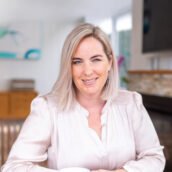
Our guest, an expert grant writer for charities, social enterprises, and Indigenous organizations, shares her profound transition from a deep sense of invisibility to authentic visibility and happy invisibility. Barb also describes how integrating spiritual wisdom, trauma-informed healing and self-introspection ultimately directed her to surrender to her unique gift for impactful social justice work.
Barb delves into:
- Her own “happy childhood” myth, hiding the pain of her childhood medical trauma.
- The value of Cosmic Human Design, Gene Keys and True Sidereal Astrology
- The mysterious illness that led her to Dr. Gabor Maté’s work
- How CI therapy and training profoundly transformed her parenting
- The power of recognizing one’s inherent beauty, gifts, and supported nature
Initially aiming to build a “spiritual empire” based on Human Design, Barb realized her true passion by using her gift of “translation” to simplify complex grant proposals and secure over $50 million in funding for charities, social enterprises, Aboriginal and Torres Strait Islander organizations.
Episode transcript
00:00:00 Barbara
I think we’re so conditioned to seeing the shadow or what we’re not good at. Imagine if we could pause and say, “I see you. I see you.” And there’s that great power, and particularly in times of struggle. “I see you. “And whether it’s I see you and that this is a struggle, or I see you and what you did, and that no one else noticed that connection and that belief. And then that beautiful word surrender, as hard as it is, I think we are being supported. We do have that beautiful nature. We do have that magic of how we were nurtured, and that fusion of both, makes us such beautiful people.
00:00:43 Rosemary
This is the Gifts of Trauma Podcast. Stories of transformation and healing through Compassionate Inquiry.
Welcome to the Gifts of Trauma podcast by Compassionate Inquiry. I’m Rosemary Davies-Janes, and today I’m joined by Barbara Brangan, a fascinating individual who has followed a unique path to healing through which she renewed her deep passion for her work. Barb, thank you for both volunteering to be on the podcast and for being here today.
00:01:23 Barbara
Thank you, Rosemary.
00:01:24 Rosemary
Barb, I’ll share a few key points of your extensive background for our listeners and then I’ll invite you to fill in the gaps. Now, 90% of your work is as a grant writer, primarily for charities, social enterprises and indigenous organizations in Australia. You specialize in helping them secure funding, by translating their visions into compelling proposals. You’re also passionate about Human Design, Gene Keys, and True Sidereal astrology, and you use these tools in the remaining percentage of your time to support your clients personal growth. What would you like to add, Barb, that I haven’t touched on? You know, you’ve had such a rich, diverse life and that was a very brief summary.
00:02:07 Barbara
I think it’s a good summary. I think perhaps outside of my work, I’m originally Irish, proudly, also now Australian. I am the mom of two beautiful daughters. They’re in their teenage years, happily married to another Irishman, who’s also Australian, and living a two-minute drive from a beautiful beach, here just outside Sydney.
00:02:30 Rosemary
That sounds amazing. What a lifestyle.
00:02:32 Barbara
Yeah.
00:02:33 Rosemary
Also in true Compassionate Inquiry form, I’d like to share my intention for our conversation today, which is simply that your stories and experiences open doors for our listeners that they never noticed, never considered opening before, and that what they learn by opening these doors enables them to chart their own courses, follow their hearts, and trust their intuition. Now, Barb, I didn’t give you any warning of this. Do you have an intention for what you’d like to accomplish by the end of our conversation?
00:03:05 Barbara
I do, actually, and it was one of the reasons why we even were here in the first place. For me, it is ultimately that gift. And it’s a gift for somebody or for many. And I don’t know who they are and I’ll probably never meet them. right? But it’s a gift that’s somehow connected to the journey from being invisible to visible. And it’s a journey to being seen. And for me, most importantly, it’s a journey of authenticity. And then from that space, more can happen.
00:03:35 Rosemary
Yeah. Thank you. From invisible to visible. It sounds like there’s a story there and we’ve only just begun. Is there anything else you’d like to say about that?
00:03:45 Barbara
Invisibility has been a theme of mine. And I know in Compassionate Inquiry we often talk about the people with the happy childhood. I was that person with a happy childhood. I had no trauma. I was totally fine, right? And fine, probably written in capital letters, right? But I have realized, and I have weaved, and I’m happy to dive into it, kind of more, the pain of feeling invisible. And there was medical trauma, kind of, and early attachment stuff identified to that, that I only pieced together in the last few years. And how now, the irony is, since I have been and done the work both as a client, as Compassionate inquiry, and then from learning in the year long cohort, I am now proudly invisible as a grant writer. I’m almost a ghost that people don’t know that I exist. And I have great comfort and I have no problem being visible, but I’m happily invisible.
00:04:43 Rosemary
Yeah. Wow, that’s a huge shift. You talked about weaving. I’d like to explore the various aspects of your life and work as separate threads. But before we begin, can you just give us a glimpse of the full tapestry of your life? Like, how does your awareness of trauma healing, spiritual and what you call self introspection tools and social causes, how do those all weave together in your life. Weaving together everything that you’ve learned, how has that created this finished tapestry of your life?
00:05:15 Barbara
I was thinking of this recently. I think social causes are both in my Persona as a person, but it was also demonstrated to me by my parents, in their participation in community and their advocacy work and witnessing them and talking about that. And they always, I think, advocated for what we would call the underdog and contribute their gifts to support. So I think that was definitely demonstrated to me. Yeah, I think if I was to work backwards as to how I got here, from that kind of weaving sense, I had always been in early careers and industries of like, sales, relationship roles, connection. I could almost see invisible connections between people. I worked for a long time in recruitment, and one of my favorite projects towards the end of the 10 years of working in recruitment was in Ireland with one of the major homelessness prevention organizations. And they were looking for someone on the pivot of change, someone to lead that change. I then entered the kind of nonprofit industry in Ireland, and then I had joined it when I moved to Australia, and my role again was connections, trying to find supporters, advocates, and I accidentally fell into the grant writing part. I had no idea that I was a good writer because I am not the stereotypical writer. When I was in the equivalent of high school, my English teacher was a beautiful lady, an amazing soul, quite close to retirement when I was younger. She spoke the Queen’s English. And she said to me at one point, and it stayed with me, she’s like, you’re not good at English. I don’t think I was scoring high. And I was like, oh, okay. So that belief stayed with me. But I’ve looked back retrospectively, and I think for her interpretation, she was right. I did not write the English that she was used to. I didn’t write that formal report writing complex. I write for this generation. I write for the busy world that we’re in, to try and engage and take complex things and make them simple.
00:07:20 Rosemary
I suspect a theme of doing things your own way might be emerging.
00:07:25 Barbara
Just a little bit of a rebel in there, too.
00:07:29 Rosemary
Kind of makes sense, given what you’ve shared about your past.
00:07:32 Barbara
I think you have to be. Yeah, I think you have to be. But I also know that my background made me choose that independence. I love the poem or the sentence from the Robert Frost poem, like, “…two roads diverged in a yellow wood, and I took the one less traveled by. And that has made all the difference.”
00:07:49 Rosemary
It makes a world of difference to the life you live. So I’m going to separate those threads out now, and I’d like to start with your healing journey. Many people don’t know they need healing. They don’t know it’s even available. And they certainly don’t understand the benefits that they could gain through the healing process. I wonder if you could take us to the beginning, maybe start with what happened in your life that led you to realize that the healing path would be very beneficial for you.
00:08:22 Barbara
Yeah. It was not long after the birth of my second daughter. So coming up 13 years ago, my journey originally started in the spiritual healing space, on that path. And I had a friend say to me, “Oh, you should come to my meditation class.” And I’m like. A: My first response was, I would have no clue how to meditate and I’d have no clue how to sit still long enough. And I thought it was a meditation just in terms of mainstream, but when I went, it was actually a spiritual meditation class. And I was like, oh, this is interesting. I put my two feet into that kind of space, and I started a whole personal and spiritual development that took me on a profound psychic and intuitive pathway, even as far as doing psychic readings on TV, which is another chapter, another story.
Rosemary: Wow. Yes.
Barbara: It was insane, but fun. I trusted. I can see the commonality of the theme of trust, but at the same time, while I was in that space, and I love the accuracy of being able to read someone’s energy and to know and sense and feel, and to give yourself as a channel to something else. The humans that I was supporting, I could see that there was resistance to change. And I’m a firm believer that what you see outside, like, shown to you, is a reflection of a part of yourself. So I think I would have thought I was a little bit more enlightened and healed, per se, but again, still very much in denial. And the word trauma didn’t even come into my life. And then in 2020, I got sick mysteriously, and I didn’t know why. And it was a very slow demise. And again, it was around the time of COVID, so it was harder to go to any kind of medical services. It was obviously only mainstream, etc. But I can see now I was in full denial of how my immune system was really struggling. And then my GP was like, I need you to go to the hospital. I was like, why? Just the blatant disconnect from my body was alarming, when I look back at it. Not at the time. When my GP rang me with the test results and she’s like, I’m a bit concerned. And I was on the phone to her and she could hear my labored breathing. To me, it felt normal. I think I had lived with it for so long. And she said, I want you to go to the hospital. And I was like, but my daughter has a friend coming for a play date this afternoon. Like, you need to go to the hospital. Play dates don’t… Yeah, it was just that aspect. But it was actually when I was in the hospital, I was exhausted. It was like, my brain was still quite active, but my body was very tired. And I don’t know if it was the universe, the social media algorithm, or what, but that was when Gabor’s work showed up in my world and it was when the body says no and while I was sitting in the hospital bed and I went, ‘My body has said no.’ I didn’t even have the mental capacity to be able to read his book or buy it on Audible at that point in time, I couldn’t. So I started to consume videos. I think I bought a course and I’m like, there is something in this.
00:11:35 Rosemary
We’re taking a brief pause to share what’s on offer in the Compassionate Inquiry community. Stay with us. We’ll be right back.
If you’ve been listening to our podcast and are curious about the transformative power of Compassionate Inquiry, you are invited to join us for a six hour online experiential introduction to the Compassionate Inquiry approach and community. Whether you’re a healthcare professional, therapist, coach, or simply someone seeking trauma, informed personal healing or professional growth, the CI Experience Event invites you to witness live demonstrations, learn practical techniques, participate in reflective conversations and connect with a supportive community of like minded individuals, all in a single immersive day. This event will be recorded and as a participant you’ll have lifetime access to the event recording and so much more. To learn more and register, just follow the link in the show notes.
00:12:30 Rosemary:
Wow, that’s quite an initiation. And I’m just going to back up… So the meditation happened before 2020, before you had this physical condition, this mysterious condition. So you started with meditation. And can you share, like, how, when and in what order you went on to discover Human Design, Gene Keys and astrology? Like how did, yeah, how did those all play out? Did those come before 2020?
00:13:07 Barbara
They came a little bit before, yes, I think so. If people don’t know of Human Design because in the corporate world there’s also a terminology called Human Centered Design, they’re not the same thing, although they definitely have similar approaches or attributes. So what Human Design and Gene Keys use is an amazing blend of esoteric wisdom from many generations and many different cultures who’ve gone before us. So the Gene Keys and the Human Design are two systems that somewhat have evolved from each other, although even that statement is quite topical. There’ll be people who would dispute that, but that’s fine. And it has the I Ching, it has a Kabbalah tree of life, has astrology, has Chakra systems. It is a very unique blend. And so when I first saw my Human Design chart, I’m going to guess it was like 2018, something that kind of drops in. It said that one of the wounds of what they call my energy type was being invisible. And I was like, oh, yeah, that rings a bell. And then when I initiate things without the invitation, and people don’t see or acknowledge my effort or my contribution, I become quite bitter. And I was like, oh, yeah, that definitely rings a bell, right? So there was just so much truth in that. And I think I would describe the Human Design system as yin, and then the Gene Keys as yang, and very expansive and open and potential. So I like logic. So the Human Design system worked for me, especially as I grew as an individual and trusted. Then the Gene Keys expansion was just mind blowing. And I think then the Human Design being quite structured, the Gene Keys being expansive and like on a continuum. And then when I introduced interpreting those with True Sidereal astrology, I was reading something that was like my innermost diary. I was like, how is this even possible that this is so accurate? I felt so seen.
00:15:21 Rosemary
So you integrated all three together to create, like, your unique profile.
00:15:27 Barbara
Yeah, yeah, I know of astrology, I would not be equipped to give anybody an astrology reading. The thing is, I’m not an astrologer. I don’t even know what my rising sign is. But what I understood is that in order to calculate the Human Design and Gene Keys chart, we need to understand the thinking and the logic model that was behind the astrology. But the biggest thing I learned was that astrology quite often is based on a calculation that hasn’t changed in 2,000 years. And then living here in Australia and with Aboriginal Torres Strait Islanders and First Nations people here, you learn so much about their connection to what they call Father Sky and Mother Earth. And they track the visible sky, by the naked eye, what we can see. And then I was introduced to True Sidereal astrology, and that too tracks the invisible sky or the visible sky.
00:16:25 Rosemary
So are you saying that the traditional astrology is not kept up to date because we’ve had earthquakes, the poles have shifted, Things are not as they were, like, many things are not as they were 2,000 years ago.
00:16:40 Barbara
Exactly. Okay, yeah. So I think about, from what I understand, when what’s called tropical astrology was chosen, and for good reason at that time, about 2,000 years ago, it was more to try and align us with seasons, quite fixed seasons. But so much has happened, right? So much expansion, so much movement, and we’re not alone here in this universe. And I think, for me, I couldn’t step away from the fact that Aboriginal and Torres Strait Islander people are one of the longest… they are the longest living, continuous culture, and they pass everything down through storytelling and they trust the visible sky. And I’m like, why can’t… What if I did too? Right. What if I did that? So I think for the first time. But that for me was a mirror of my nature. It was that what I see in there now is aspects of me. And there’s so many different parts to us and so many different gifts. And I see myself. And sometimes on a good day, I can be the beautiful example of the gift of that attribute. And on other days, I can be the shadow side. I can be anything. I am the expression of all of it.
00:17:55 Rosemary
And that’s one of the things I’ve learned to understand that we are contradictory. We are the best and we are the worst, and we are everything in between those opposite ends of the continuum. And… because I used to wonder, how can I be this and that? How can I be these two extreme opposites? So you put it all together.
00:18:17 Barbara
I saw myself in that. It’s not my language. I didn’t. I wasn’t the initial person to find that connection. So it’s called cosmic Human Design or cosmic Gene Keys. But when you were talking about that, knowing yourself and how can I be two different aspects, that’s where compassion comes in. To me, that is the ultimate definition of, okay, today I wasn’t perhaps my best self, but can I have compassion for myself? And then also can I be proud of myself? Not in an egoic way, but just to shine and be myself on those days when I am on my gifts. It’s allowed me to claim my gifts more and I really claim them from an embodied way. And it shines.
00:19:02 Rosemary
Yeah. And have compassion for when more shadow aspects are showing up.
00:19:06 Barbara
Oh, yeah. Oh, yeah. And to do it. And also, I think I’m not in this space of going, people must use their Human Design or their astrology this way. It doesn’t matter. There’s different doors to the same palace. And who knows? It could all be wrong.
00:19:22 Rosemary
Yeah. I’m curious. Now you’ve mastered some of these tools, how do they show up on a practical basis in your everyday life? How have they been helpful? I wonder if you could come up with an example or two.
00:19:34 Barbara
Yeah, in quite a few ways. So the Human Design and Gene Keys descriptions of who we are can often be quite complex. So the Gene Keys, I said, is very expansive, and it’s almost like you need to sit with the interpretation of it and allow it to be with you. But what I had used, is one of my gifts of translation and interpretation, and that’s one of the ones I use quite a lot in my work. And I was reading the text and I was like, yes, and some of this is true. I know it, I can feel it. I don’t really understand this complex English. So I started to translate it quite simply. And then when I started to translate it, I was like, oh, this is so interesting. So one is, my biggest gift is translation and communication. And that’s what I do in my work. That’s what I’ve done with a lot of the descriptions of the Human Design and Gene Keys. But then I had landed on this language. Like these social futurists. I work and I love to be with these people who I say sometimes they’ve almost traveled here from the future to bring change and they can see it, but they’re looking for other people like them to help it happen. And then another aspect of mine is fun, right? Nobody likes grant writing or tender writing. And I work sometimes with really big businesses and it can be fast, hard-paced and there’s somewhat no room for humor, or bring humor and fun into all I say life’s too hard, right? It’s just that kind of simpleness. So the biggest change that I found when I transitioned to this interpretation. I was knee deep in trying to build, well, let’s just say it was a spiritual empire, right? I was knee deep in the personal development, I’m going to say the spiritual industry instead of actually being spiritual. I didn’t even know that I was in that space. And it was all about how women can build a fantastic business and they can grow their business to six figures. But in my chart, reflected back to me was that one of my biggest shadows was greed, right? Was when I chose what I felt like I was entitled to or if it was greedy, as… and taking too much resources versus a more collective and sharing model. I knew I had been just pushing too hard to try and build. And I, at the time, I was like, I’m going to build this Human Design and Gene Keys empire. I’m going to help everybody awaken and all going to be great. And I’m going to leave my day job, which at that time was an amazing charity. And I was like, I just want to leave that and I want to do this. And I realized I had to step away. I had to let that go.
00:22:13 Rosemary
Yeah, I think there’s another skill in there that you haven’t called out specifically, where you can flip the script on things just as you flip the script on the need to be seen, versus being comfortable being invisible. When you were talking about interpretation and translation. It took me back to your English teacher who said, you’re not good at English, and you left the rigidity and the prose behind and you pulled out what was necessary for it to be understandable. So there’s that gift there.
00:22:45 Barbara
Thank you for reflecting that back.
00:22:48 Rosemary
Barb. You began with meditation, as we said, went through spirituality. Then you came across Gabor’s work. And at some point you were in the hospital, you were too exhausted, you were watching YouTube videos, and then you went from there to experiencing Compassionate Inquiry as a client. What was going on that led you into that therapeutic work with a practitioner?
00:23:12 Barbara
I think there was quite a sassy voice inside of my head as I was learning more about the Compassionate Inquiry and even the considering of trauma. And I was like, if I’ve got trauma, let’s just acknowledge that, right? This is all in my head. And I then was exploring Compassionate Inquiry. So… Again, this is 2020, and there was nobody in Australia at the time. There’s quite an abundance now of amazing practitioners, but at that time there was nobody, but there was somebody in Ireland, and we were in the year 2020, so everybody was doing zoom and virtual connections and working remotely. So then I met a beautiful practitioner who was one of the early, kind of, participants in the Compassionate Inquiry work. She just held me so beautifully in that space. And as we began to explore Compassionate Inquiry, the memories that kept coming up were from super early childhood. And I was like, oh, what’s this? And, yeah, I really explored and revealed so much, which I’m happy to share.
00:24:14 Rosemary
Could you maybe give us just a top line version? Because we have a lot to cover, but I’d love to hear more.
00:24:19 Barbara
Okay, yeah, go for it. Yeah. I think the biggest thing that I realized is I had heard the story growing up quite often, how I’d been very sick as a baby and I had heard that I’d been in hospital a lot and that I’d almost died and I didn’t, and I’m alive and how great that is. That was the story within our family, and I was really happy to have survived that. But when I was doing my Compassionate Inquiry sessions, my memory was very much of being alone in hospital. Right. Very alone. And I’m. I’ve pieced it together now that I was actually below one year old. And so for a long time I was like, how can I have such a good story in that I survived, and yet I have so much pain in me from that time? And so it was really meeting that pain with compassion and joining dots together on the story and the choices that I made and everything that came from that, that was a huge part. And then as part of my Compassion Inquiry, when I started to study, then later in the year long journey, I requested my hospital records from Ireland, and they were massive. It was a big, thick book that landed on my door. And the biggest thing was I realized I had spent quite a few months in hospital, but the biggest thing was I wasn’t allowed to be picked up for that time. I was so sick that I wasn’t actually allowed to be picked up. There was concern about my immune system, and so my memories were being off my back, on my back, crying, just wanting to be held.
00:25:54 Rosemary
People weren’t allowed to touch you? Like, even your parents?
00:25:57 Barbara
No, even my parents. And they were. And also this is the late 70s, and my mom has pieced together some of it since then. They were hardly allowed to visit. So the religious orders ran the hospitals in Ireland, there was very… The parents weren’t advocates or included in care. But then she said that when they were allowed to visit, they weren’t allowed to come in. They had to put on, she said, suits, almost like the COVID suits. They had to put on suits and masks. So I think that sense of isolation or that sense of being invisible was then… that’s when that got embedded in me. And then my coping strategy out of that was fierceness and extreme independence.
00:26:37 Rosemary
Yeah, yeah.
Barbara:
From there
Rosemary:
I could see that. Absolutely.
00:26:41 Barbara
Yeah.
00:26:43 Rosemary
That’s a huge insight that came through your Compassionate Inquiry therapy. In what other ways has your understanding of your own emotional landscape and trauma been deepened? And it could be either through therapy, or it could be through the training, wherever you’d like to go with that.
00:27:04 Barbara
I think the biggest thing is knowing… And a big thing was becoming more connected to my body and more regulated and connected to my body, was a beautiful gift through that whole therapeutic journey. And therapy is still a part of my life, right. I think it’s like my emotional gym, right? In terms of that aspect.
00:27:24 Rosemary
I love that phrase.
00:27:25 Barbara
It’s just. It’s gonna be there. Yeah, yeah. I think if we consider the word triggers and when they show up and that irritation, mine is… still comes from being seen or not seen or my perception of that. So what I now know is even within my work or within my personal life or within my friendships, and it’s even a running joke, in a very nice way, in my friendships. My mate was like, oh, have you been seen? Barb, have you been seen? It’s just. It’s talked about. Right. We talk about these things. And when I have that pain there, I acknowledge it, that when I’m being triggered, I’m acknowledging that it is my original pain that’s been triggered and noticing that and allowing that to be. And I find so often it is the compassionate recognition of that pain, which is internal work, and then somehow the problem starts to fall away externally.
00:28:27 Rosemary
Yeah, yeah. Because I’m guessing you didn’t speak of that pain. Like you would have been too young to even know how to put words to that, if you were not even a year old when it started.
00:28:36 Barbara
No, no. I had no language. But my memory, when I close my eyes, is very much from a baby’s perspective on their back.
00:28:46 Rosemary
Gosh, I’m so glad you’ve got a community around you that… that speaks to you and teases you. It’s wonderful. It’s wonderful.
00:28:54 Barbara
Yeah, yeah.
00:28:55 Rosemary
You also spoke a little bit about your intention going into the CI training. Did you think you were going to shift and do more Compassionate Inquiry therapeutic type work with your clients? And then you came out the other end and you found that your passion was not with that, and it was in a surprising place. I wonder if you can tell us about that.
00:29:17 Barbara
Yeah. So, funny enough, the first time I applied to join the Compassionate Inquiry, I was, let’s just say, rejected, right? But of course, that was my being invisible, right? They don’t see me. And I remember at that time, I was furious. I was like, what? How come I can’t …I meet all of the criteria, blah, blah, blah. But in fairness, my application actually didn’t document a lot of my stuff. So I said, I’ll pause. I said, I know this is, again, this is my invisible story, or you don’t belong here kind of story. So I’ll pause and I’ll wait. So what I could see with the Human Design and Gene Keys is it’s a beautiful map of our nature, of our potentiality. But then what I was seeing is, human behaviors didn’t change. Why don’t they change what’s going on, what’s blocking people? And hence the experience I had as a Compassionate Inquiry client, and just the beauty and simplicity of the process. So that was my intention, was to enter into it. But what I found is that throughout the course of that year, and because I was doing the therapeutic work alongside it, which you have to do. I found that I was starting to recognize my gifts more, which is in the translation, working within, kind of social justice. And I had, the year before, decided to do freelance work. I said, I’ll see how that goes. But people need to invite you to work with them. And I think sometimes that’s the hard part, one of the hardest parts of being in business. But thankfully I had word of mouth, and I started working on different projects. And I was like, I really like this work. And I had the realization. I was like, why am I trying? It was a moment of surrender. It was a culmination of the Compassionate Inquiry. It was a culmination of the healing work. It was a culmination of knowledge, where I was in life. And I was like, look, dear greater power. I’m done pushing. My body had clearly told me this wasn’t working. I surrender. And that was… I still find for one word, it’s one of the hardest words to do because we’re not conditioned to do that, or even demonstrated. But by the grace of God, it was the best thing I ever did. It was just. Yeah. And it kept bringing me more work in this social impact and funding space. And I’m like, why do people want to know about this? Can’t other people do this? And they realized I brought my unique lens to it. I’ve had the absolute privilege of the last five years of helping charities, social enterprises, and more recently working with Aboriginal and Torres Strait Islander people to help them secure over 50 million in funding. It’s been… It’s been really cool.
00:32:03 Rosemary
I’m going to ask you if you can say that again. There’s something you say before Aboriginal, that you say really quickly. Could you say it more slowly?
00:32:11 Barbara
So it’s Aboriginal and Torres Strait Islanders. That’s how we authentically refer to…. And also it can be First Nation. And that’s. Yeah. Torres Strait. So it’s the Torres Strait Islands. So Torres Strait Islanders.
00:32:26 Rosemary
Okay, so they are offshore. So it’s Aboriginals from the mainland…
00:32:32 Barbara
are on land…. Yes. And Torres Strait Land Islanders. Yes.
00:32:35 Rosemary
Thank you for explaining to people on the other side of the world.
00:32:39 Barbara
Yeah. Yeah.
00:32:40 Rosemary
As we wrap up this conversation about this amazing integration you’ve created, you’ve developed a special resource. It explains nature and nurture. By combining these tools, you’re making it accessible to our listeners, which is wonderful. Can you just give us a sneak peek or an overview of what we may all expect to gain from it?
00:33:02 Barbara
Yes, I totally can. This is a way of being. And particularly in my work is… I do believe there’s an abundance of funding and opportunities for great causes. But sometimes, definitely, there are barriers and systems that are set up that can feel insurmountable, right? To climb and to… How do I access that funding? How do I sit down? Where do I even start with writing a grant application? The process that I use and guide people through is to recognize their strengths, right? Recognize and recognize what they’re doing in their project that they might be looking for funding for, and to claim how they’re doing things different ,or their understanding of the people that they’re looking to support, to not be embarrassed or shy about that, to not necessarily be too egoic, and not listen, but to bring a sense of pride to that.
So quite often a simple process that I guide people through in terms of articulating why their project needs funding is, what is the problem? How can we actually demonstrate the problem, and demonstrate it in an authentic way, but also with evidence and facts to support that. And then we describe what their intention is and how they want to change that outcome, what support, what tools, what people they need to be that wraparound support, what are those activities and outputs that need to happen? And people can often quite easily talk about those early parts, but the part that they somewhat struggle to, is to claim and recognize the difference that then makes. And that’s called the social outcome change. So that is because of this coaching experience that I’ve offered people who have had barriers to employment and we’ve built their confidence and built their resumes, now they feel more confident and have secured a certain type of employment, in terms of that. So that aspect. And so quite often when funders make funding available through grant applications, they have a social outcome in mind, or an area that they’ve chosen to make a difference in. So that could be for aFirst Nations community, could be for employment, could be for mental health. So then they have put out a call in a grant application for people to put forward their ideas of how their project can meet those goals. And you’re educating and storytelling in the grant application. And so sometimes the hardest thing for people can be to sit and write. And then I would suggest, start like you’re talking to a friend, right? Don’t overcomplicate it. You can use many tools. You can use AI, there’s great tools. You can speak and then get ideas.
00:35:53 Rosemary
Is there anything that you could say that sort of shifts what you’ve just described, in how it applies to individuals who maybe, maybe they’re working on their intimate relationship. They could be working on anything. Relocating to another country, I know that’s something you’ve been through.
00:36:10 Barbara
I think for me, the biggest suggestion, I think, is for people to be curious, to maybe explore their cosmic Gene Keys or their cosmic Human Design. But full disclosure, I think sometimes, and you and I have seen those charts. They can be confronting. They can almost feel like you need to have studied them and I don’t… I want to remove that barrier for people. But what they are often beautiful circles with numbers in them. And then one will call you or one will appear to look different to another. And I would start there and I would look into what is that referencing, and where does that kind of sit in my life? Because it’s calling you for a reason. That’s perhaps your next evolution. And then the resources that I’ve built is speaking to each of those attributes. But almost like a diary entry because I really feel like it’s meeting part of ourselves again and it’s permission to be that.
00:37:04 Rosemary
It’s very self-motivated. It’s very intuitive. So it’s building that muscle. Maybe not with a therapist, maybe on your own, but in that personal development gym to trust yourself, and to just to exercise your intuition. Because a lot of us spend more time pushing it away than exercising it.
00:37:22 Barbara
Yeah. And it can be something that you have a conversation with your best friend, right, through to a clinical psychologist. It can be your story opener and then the rest will unfold in terms of that. But I think a big thing I think with this sector that I work in, with that whole nonprofit and social enterprise, were amazing people, but they’re also so humble and sometimes don’t want to be seen. And I’m like, but what if your change is needed? What if your idea is the next idea, and it doesn’t even need to be big and grandiose. It’s supporting your local community or whether you’re supporting people globally. I actually think they both have just as much impact, or you, not acknowledging your gifts, your strengths that you’ve come here to share. You might be limiting that impact.
00:38:14 Rosemary
And we do. We do. And I understand exactly what you’re saying about the humility. It seems to be part of the wisdom package, if that makes sense. However, the people controlling the funds are not necessarily read into that wisdom mindset. So I’m thinking to, your intuition. We were just talking about being intuitively moved to things and ideas. I’m wondering if you can talk to us a little bit about how that comes into play when you decide which causes to support through grant writing, which individuals is that… is it… because it would be quite easy to shift into a more western mindset. I’ll just use those as contrast. The wisdom mindset versus the Western mindset. So how do you bring your gift of intuition and being able to see through the veil, to that aspect of the work.
00:39:08 Barbara
I definitely think that Compassionate Inquiry has strengthened this muscle. I see people authentically, right? I don’t necessarily see people for the size of their organization or the size of grant that they’re looking for. I have this aspect of resonance and I think that’s a big part of it. I have the absolute privilege to work across all domains in that social sector. And my logical brain loves that. Like I’m learning, right now, I’m writing one for rare cancers, writing another one for mental health, another indigenous healing. It’s just so cool also to be allowed into these people’s world. And I think sometimes it is acknowledging to them that, yes, your idea is along the right track. Keep going with that next step. And likewise, I would convince a lot of people to not even consider applying for a grant. Now might not be the right time, this might not be your path. And then that is quite freeing for people to then pivot them to where they need to go.
00:40:15 Rosemary
Thank you. You said that sometimes the only thing that stands between your clients and the exceptional work they do is funding. And you have the ability to help them access that funding. It must be so fulfilling. And I’m wondering if you can tell us a little bit more about the other barriers that the people you support face, these hurdles that you can help them overcome that keep you so engaged in this work
00:40:41 Barbara
More recently… So I started working with the Aboriginal and Torres Strait Islander organization here. So they’re first nations indigenous organizations. I knew last year personally that I wanted to work in that space and to contribute. I also knew that as a white person, I did not want to actively business develop there. I didn’t want to go, this is how you should do it, right? You should work with me. I was like, nah, that’s not going to happen. I said, and I said, I’m a firm believer in putting stuff out to the universe, and if it is right. And I got a phone call one day from this amazing gentleman with the organization they help. And he goes, I believe you’re really good at herding cats for grant applications because they’re six-week, very-timed, very-detailed submissions. And I was like, I don’t think I’ve been described that way before, but actually, yes, I am really good at that. What blew my mind with working with them is how, and their applications are with state government who provide kind of mental health and community support services. And this system, although there is in words, it is written that the tendering system and application is set up to be equitable and accessible. It’s not, right? Your first step is that you download what they call these tender guidelines. No joke. It could easily be 65 pages of a document. It still blows my mind that someone’s employed to write that. It’s written in old English. It still needs someone to say, What are they looking for? Do I even qualify? And then when you get to the actual application form, the biggest thing that people miss is knowing what the question’s actually asking and staying on track to answer that question. So for a lot of First Nations organizations, there is often the option to give a verbal response. And I think that is definitely a clear step towards making it more equitable and accessible. And the reason we say that is, in Australia only until recently, we had a very low graduation rate for Aboriginal and Torres Strait Islanders, people finishing high school. And then now we’re trying to close that gap. So here is this 65 page document written by somebody who’s more than likely got a PhD in social sciences, or something, and they’re expecting people to actually translate and understand that. But even though the option is there to give a verbal response, you still have to respond to the question, and only that question, and stay on track to that question.
00:43:27 Rosemary
If you can’t understand what’s being asked, how can you do that? The channel is there, but…
00:43:32 Barbara
I was just, I was, like, mad when I realized this. And yet I have this group of people who advocate for, and they refer to Aboriginal people as Mob. They advocate for their Mob. They know them so well, they know the barriers that they face, they know the help that they want, they can do and deliver the exceptional service, do it so well. And in between them is this application process. So that has been a massive eye opener. We have thankfully gone on a journey and secured two great pieces of funding for them and that’s been really cool. But the system is just not set up fairly for them. And the other thing I feel is very absent, is the voice of lived experience, right? So when we’re describing, for example, victims of domestic and family violence, or when we’re describing people with experience with mental health, it’s sometimes it’s people writing about them that haven’t consulted with people who have lived experience. So that’s my next desire for this space is to bring more lived experience into it.
00:44:37 Rosemary
How do people find you? Do people know that people like you exist, that there are grant writers?
00:44:44 Barbara
I don’t, I don’t know, because I’m in this space. Most of my work is through referral and people will go, “Oh, my God, I’ve got a grant to do it. I don’t want to do it.” And they’re like, “Oh, you should consider grant writers, talk to Barb.” Something along those lines. And there are communities. It’s also quite interesting. Funders know that we exist. Normally it’s the applicants that engage us and pay for services. But funders know that we exist, but they wouldn’t necessarily recommend or provide a list of kind of people. But normally it’s word of mouth, Facebook groups, LinkedIn, that kind of help.
00:45:19 Rosemary
Fortunately, in indigenous communities, there’s a lot of word of mouth, so that’s a very good thing.
00:45:25 Barbara
And I also find it’s quite sacred, I think now that I have worked with my first organization, I’ve had more contact me. And they’re like, “Oh, so you’ve worked with that mob?” Okay, if they like it, then we’ll have a talk.
00:45:36 Rosemary
I love the slang.
00:45:37 Barbara
Yeah.
00:45:38 Rosemary
I grew up in Australia and there was this term for someone who sticks their nose into everyone’s business. They’re a stickybeak.
00:45:44 Barbara
Yeah. So I actually get paid now to be a stickybeak. I just think it’s so cool. I get to ask people so many questions and why do you do that? And how do you tell me how you do it that way? Because I’m looking for the part of themselves that they’re not necessarily seeing that we need to put it. That would strengthen the application. So, yeah, I get paid to be stickybeak.
00:46:04 Rosemary
I could imagine you could have a lot of fun writing up your resume: Herding Cats 101, at this college.
00:46:11 Barbara
I should. Yeah, I should do that.
00:46:13 Rosemary
All of these great skills. Translation of… what would we call it, legalese into understandable language. Yeah.
00:46:20 Barbara
What does that actually mean? Yes. Right.
00:46:23 Rosemary
Now, Barb, I wonder, would you like to share what would generally be called a success story of a grant writing experience where you worked with an organization that really touched you?
00:46:35 Barbara
Oh, there’s a few. I remember working with an organization and I think, while this is quite an interesting example, there’s a grant application and a tender application. And grant can be competitive funding and tender is to do services perhaps on behalf of government or other stuff. This is going back about four years ago, I think. I hadn’t actually done tender applications. I had done a lot of grant applications, and I had an organization reach out and they also wanted to help with aged care. It was an aged care program. Hadn’t done tenders, hadn’t done aged care. And I’m like, okay. But they had come through a referral that I really trusted and liked. And I was like, I’ll give it a go. They didn’t know that my internal conversation was like, what am I even doing here? I’m trying to find my way through this process in the dark. And at the same time I’m trusting the whole process. I absolutely loved working with them because what I could see, sense and feel and observe, was their integrity. So we talk a lot in social services about being person-centered and they truly do have that individual. And they often work with people who have complex barriers to accessing services. And they always had the person at the center of everything. And I was like, oh, I really like these guys. I definitely want to help them get that funding. They also had an ambition to grow. They were based in Brisbane and had been there for 30 years. And they had an ambitious plan to move across Queensland, which is quite a large geographic space. And so we knew that the same service was going to be tendered in all the locations. We ultimately applied for nine of those and we secured seven. And now, what blew me away, wasn’t just that win. Like the winning of that funding was really cool. But then a couple of years later we were applying for another program and I said, oh, let’s describe what we did with the aged care program as a good example where you have to demonstrate your competency. And then my client was like, yeah, we’ve got 74 in that workforce now. What! I was like, you’ve got 74 people employed out in the community, talking to vulnerable older people who are often living on their own, connecting them to services? I really got then wasn’t actually about the funding. I really just got that. I was like, and what I think… and even as a grant writer, sometimes you say, oh, I’ve helped secure X million dollars. What did that money enable? What did that facilitate? And I know that’s an example of a bigger organization, but I’ve equally had great joy with people applying for their first one. Right now I have a client, because sometimes I mentor smaller organizations to get a really strong application they can just use over and over again. And they are working at the intersection of reducing recidivism. But for people who have experience with the justice system, and experience of institutional abuse, and as we often learned in the trauma space. Sadly, so many of those coexist together. But their organization is bringing that lived experience voice to help people as they exit and transition into life, post release I’m just excited about their approach.
00:49:49 Rosemary
I’m thinking it might be an idea to write a clause into your contract that says you need to let us know how this goes.
00:49:56 Barbara
And in more commercial spaces, grant and tender writers can sometimes take a clip or take a percentage. And my daughters tell me that I should take a percentage because we’d be rich and of course, that would have many benefits that would ripple out into their life. But sadly, it’s not right, or not for me. It’s not right or ethical in this space.
00:50:14 Rosemary
Yeah, I get it. Maybe the gift can just be knowing how it all works.
00:50:18 Barbara
Yeah, definitely the knowing.
00:50:20 Rosemary
Barb, we’ve covered a lot of ground. Is there anything I haven’t asked you to speak about that you’d like to take a few minutes now to share, a story or…
00:50:29 Barbara
Yeah, I think I want to acknowledge the parenting kind of aspect, how this whole journey and Compassionate Inquiry has completely transformed how I parent. And I firmly believe that my daughters are a significant part of the reason why I entered this space in the first place. What it has allowed me to do is to see A: Where they triggered me and why, right? And to have that look inward. And I can see how in their early years, I was really quite dysregulated, easily triggered. But nobody would have known that, right? Outside of, kind of, our family unit, perhaps. I often call it like that, Swan syndrome. Everything’s fine, looking graceful, but underneath, you’re like, paddling. And now what we have is such a deep emotional connection. At one point, my daughters felt like they knew Gabor because I’d listened to the videos while I’d be making dinner. And that voice, oh, yeah, you know them. And we have really deeply emotionally present conversations. We can allow space for sadness and happiness and all of that, because as we learn, the feeling isn’t wrong. It’s just allowing space for it to be there. And that has changed me, it has changed us as a family. My daughters are teenagers, and I. I really enjoy this stage. And someone said to me at the weekend, they were like, what do you mean? You mean the teenage stage is good? And I’m like, yeah, it’s great, right? And I didn’t have that right. I didn’t have that strong emotional connection, like, in terms of that emotional safety, more than anything else. So I feel like that’s a gift to give for generations to come.
00:52:07 Rosemary
It is. And what better time than during the teenage years when, you know, hormones are going wild, all kinds of stuff is happening in your body, your emotions are all over the place. So what a gift. And I can’t help but think that there is a ripple effect from the work you’re doing. You know how you are moving social justice forward. And I wouldn’t be surprised if your daughters don’t, in some way, in their own way, take on something that benefits the world as well.
00:52:36 Barbara
Yeah, yeah. I think it’ll be their version. And I’ve seen their Human Design, I’ve seen their Gene Keys, I’ve seen how beautiful, how unique they both are. And sometimes when you have children of the same sex, you can just group them together, and they’re two beautifully unique individuals, and I can see their gifts start to shine, and I can have full faith in that they’ll… They’ll know, right? They’ll find their way. And I also know my eldest daughter said to me at one point, she goes, oh, we’re so lucky that you’re studying trauma. That means we won’t have trauma. Are you for real? I’ve given you a lifetime, and then we’ve got intergenerational stuff. I said, I’ll just pay for your therapy. It’s all good. It’s all good.
00:53:19 Rosemary
I love that. What beautiful feedback. I have no doubt there are less layers, thanks to the work that you’ve done on yourself. So Barb, thank you so much for being with us today and sharing your story, which really is one of someone who… you forged your own way. And I do have one last question. You have the opportunity, given that we’ve got a listening audience, to share a few words, a thought, an idea, an inspiration that might shift things for listeners who are perhaps seeking healing, seeking purpose or seeking self understanding. What would you like to leave them with? Just something to contemplate, something to ponder.
00:54:02 Barbara
The words that come to me are, I see you, right? And there’s that great power in, and particularly in times of struggle, but to pause and even there’s an activity I did years ago and it’s just to look in the mirror like and not break your own eye contact. It’s just, I see you, right? And whether it’s I see you, and that this is a struggle, or I see you and what you did and that no one else noticed, right? It’s just that connection and that belief and then that beautiful word, surrender. Right? As hard as it is, I think we are being supported. We do have that beautiful nature. We do have that magic of how we were nurtured and that fusion of both makes us such beautiful people. I have yet to see a Gene Keys or Human Designs chart that something beautiful just doesn’t jump out at me, like I can find it like a pearl of beauty. And I think we’re so conditioned to see the shadow, or what we’re not good at. Imagine if we could pause and say, “I see you.”
00:55:09 Rosemary
Beautiful, beautiful. And yours truly is a story of inquiring, discerning and supporting, and it’s been an absolute pleasure to speak with you. All of your contact information, your websites, etc., will be in the show notes. So anybody who’s very intrigued, as I’m sure many will be by what you’ve shared will be able to reach out and learn more about you and get in touch. So thank you again.
00:55:35 Barbara
Thank you, Rosemary. It’s been a joy to share, and to give what I hope is this gift that’s on someone else’s journey.
00:55:56 Rosemary
The Gifts of Trauma is a weekly podcast that features personal stories of trauma, healing, transformation, and the gifts revealed on the path to authenticity.
Listen on Apple, Spotify, all podcast platforms. Rate, review and share it with your clients, colleagues and family. Subscribe and you won’t miss an episode.
Please note this podcast is for informational purposes only. It is not a substitute for personal therapy or a DIY formula for self therapy.
Resources
Websites:
Books:
Article:
Related Links:
- Nature, Nurture & Your Cosmic Blueprint: How Healing Trauma Unlocks the Gifts in Your Human Design & Gene Keys
- Cosmic Human Design
- Gene Keys
- True Sidereal Astrology
- Torres Strait Islanders
- Compassionate Inquiry Training
- Compassionate Inquiry Practitioners’ Directory
Videos:
Podcast:
Quotes:
- “Two roads diverged in a yellow wood, and I—I took the one less traveled by, and that has made all the difference.” – Robert Frost.
- “Compassionate Inquiry has completely transformed how I parent. We can allow space for sadness and happiness and all of that, because … the feeling isn’t wrong. It’s just allowing… it to be there. That has changed me, it has changed us as a family. My daughters are teenagers, and I really enjoy this stage.” – Barbara Brangan