
Season 03 – Episode 06: Khonmadi: Feeling the Heartbeat of Mother Earth, with Dr Ruby Gibson
By The Gifts of Trauma /
Listen this episode here:
or here
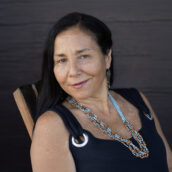
In this magical conversation, Dr. Ruby shares the launch of The Khonmadi Project, which was inspired by a dream. She has since discovered that Khonmadi is known to different indigenous cultures worldwide, as a term that relates to healing Mother Earth. Dr. Ruby also shares her personal and professional journey, which began at age 13. Learning about the emotional roots of physical pain, led her from massage therapy to somatic healing, and the creation of Somatic Archaeologyⓒ which considers the body a “walking library” of information which, when accessed, facilitates deep healing.
Dr Ruby explains:
- How her work supports people’s recovery from chronic pain, historical amnesia, cultural trauma, grief, addictions, despair and inherited repetitive familial patterns
- How we can support Mother Earth through mindfulness, respect, and offering prayers
- The role her grandmothers play in guiding her life and work
- How clearing our own internal “debris” allows for greater spiritual connection and contribution
Dr. Ruby concludes by suggesting that we choose to live our lives as warriors, lovers, or magicians. She explains why she personally identifies with the magician, who walks a path of continuous learning, transformation and building bridges that take people from where they are to where they’re going.
Episode transcript
00:00:01 Dr Ruby
So our body is like a walking library. It is full of information and many times we go to psychotherapy to solve our problems. That’s just about what we’re thinking, not about the origin of it. It’s the last step. And our minds can make us crazy going over and repeating certain thoughts indefinitely. The process of Somatic Archeology is the ability to slow down enough and get into your tissues. Everything in the body is symbolic. Those symbols are very important because we can translate them. What is your relationship to that? When people slow down, they can really feel it. It’s not about analyzing oneself, it’s about letting that information that you’re harnessing inside come up and be seen, to awaken the trail behind you. Between 7 generations behind us and seven generations ahead, we stand at a really important choice point. If we keep repeating the past, that’s what our children will do.
00:01:33 Rosemary
Welcome to The Gifts of Trauma by Compassionate Inquiry. I’m Rosemary Davies-Janes, and today I’m both honored and delighted to welcome Dr Ruby Gibson to our podcast.
00:02:02 Dr Ruby
Thank you, Rosemary.
00:02:03 Rosemary
Dr Ruby, I’ll start by introducing you to our listeners, sharing some key points about your work. Then I’ll invite you to add whatever is missing. Now you’re a seasoned humanitarian, an international educator and a certified somatic therapist. Your work focuses on transgenerational healing, generational harmony and historic trauma recovery. You authored, My Body, My Earth, The Practice of Somatic Archaeology, and I’ll add to that, personally, I’m finding it an amazing book. It has so much accessible and practical wisdom. I know for sure I’m going to be rereading it many times.
You developed Somatic Archaeology to help those in recovery from chronic pain, repetitive familial patterns, historical amnesia, cultural trauma, grief, addictions, and despair. Ultimately, your intention is to lighten the load for future generations and enable them to find the gifts within the wounds. And I will mention just briefly because we’ll… I’m sure we’ll come back to this. You run a nonprofit group called Freedom Lodge, which runs the Black Hills Historical Trauma Research and Recovery Centre in Rapid City, SD. Dr Ruby, your full bio will be provided in the show notes. So what would you like to add to those key points that I’ve just shared?
00:03:30 Dr Ruby
Thank you. We’ve moved Freedom Lodge from Rapid City to Colorado. Yes, we’ve been…. We were in Rapid City for 12 years working with tribal nations, and that was our funding. But that funding is ended and so we, we… shut down there and moved to Colorado.
00:03:54 Rosemary
OK. And whereabouts in Colorado are you?
00:03:57 Dr Ruby
West of Denver.
00:03:59 Rosemary
Wonderful. Thank you. Anything else that you’d like to add?
00:04:04 Dr Ruby
No, just that I’m the mother of four children and I have 5 beautiful grandchildren.
00:04:12 Rosemary
Wonderful. Thank you. That is important for sure. Now, my intention today is to provide a clear and open space in which you can share your presence, your wisdom and teachings, such that listeners feel your words and are inspired to seek out their own inner stories, wounds, and wisdom. And I’m wondering, what is your intention for our time today? Maybe you’d like to share a story, or a prayer, or a poem.
00:04:41 Dr Ruby
Yeah, I would like to start with a poem I wrote. This is a poem that I wrote a few years ago and it’s called I Am. I am the rock. I am the shore. I am the pulse, the ocean floor. I am the wind that sweeps your hair, the breath of love in every prayer. I am alone. I am apart. I am the vein. I am the heart. I am the sun that warms your back, the compassion that you lack. I am the womb, I am the cave. I am the woman, I am the brave. I am the water that you drink, the sound of peace in thoughts you think. I am the seed, I am the flower. I am the earth, I am the power.
00:05:55 Rosemary
I really feel that. Thank you, that was wonderful. I’d love to spend a few minutes hearing about your journey, especially after hearing that poem that was so representative of a journey. What led you to who you are today and to the work that you do?
00:06:19 Dr Ruby
I started being curious about healing when I was 13 years old and I was riding my horse home from work. And I know… it’s… we worked when we were 13, but I rode my horse home from work and got into an aspen grove and my horse stopped abruptly and I looked and there was a deer standing there just staring at me, staring at the horse. And I kept looking at her and she spoke to me. And I had never had that happen before. And she said, “Please don’t eat us, it’s not your way.” And I said, “Oh, OK.” And I rode home and told my mother I was going to be a vegetarian. And I haven’t eaten a piece of meat since that day.
It’s been a magical journey, full of all sorts of experiences like that and I found that the first thing I was interested in was colour, and they used colour for healing and the vibration of it. So I would fill bottles and put different colours, and make my family drink them to see if they felt different. And of course, there were many who thought I was a little crazy, so that didn’t happen.
But then when I was 16, I became a massage therapist and when I was 18, I actually went to massage school and got certified. And I found myself working for years with people, and these people would come in for a massage, and they would leave feeling so much better. Then they would come back the next week and they would have the same problem. I would relieve it, they would leave, they’d come back, it was still there. So I thought, I wonder why they can’t, like really let go! So I just started, I would apply pressure or just have them focus on that spot because I realized it was deeper, like deeper than the tissues. And when I would ask someone to pay attention to the sensation and feel into that part of their body, they always had some kind of emotional release that allowed whatever that trapped energy, whatever the story, let go. And it was foundational for me because it made me realize what true healing was.
I had a bigger role in mind than just doing the massage. But I had three children and I did that through when my youngest graduated. And, that was my income and life for many years. But it began to transform as I did that. And so I started working with people in different ways, more working with their energy, understanding the deeper concepts of what was going on. And it was a beautiful awakening.
When I was about 21, I was a foster mother with a group of people, another woman and I, and our husbands. When we were fostering, we had 8 children that we were fostering for Grandpa Frank Fools Crow, the chief leader of… the spiritual leader of the Ogallala Sioux, and he was just an amazing man. And but these children were living in abandoned cars and they were sick and they weren’t being taken care of or fed. So we took them in our home for two years. So for those two years I was birthing babies, but I was also feeding 19 people three meals a day and managing all of these children with my dear friend Rhonda. And we really had fun together. There was a joy to the whole thing. But it was the lot of work. It was a lot of hard work, but we got them healthy. It took a couple of years, but we did get them healthy and on… we both got pregnant at the same time. So we were… we’d go to sleep at the same time, wake up at the same time, do everything together. And on New Year’s Eve 1983, she woke up and she said, oh, I’m in labour. And I said I want to be in labour because we shared the midwife and I went back and I’m like, I’m in labour too. So we both gave birth on the same day in the same house with all of these children around us and with the same midwife, and it was a fantastic experience. I wrote about it and they got published in Massage magazine, oh no, in Mothering magazine. And it was just… a there was a lot of joy, there was a lot of hard work. And after a couple of years, their mother decided to take them back. And I learned how to be very resourceful and learned how to take care of masses of people. And it was a joy for me. I didn’t have any complaints really, but when that… that lasted 7 years and when it was over, that’s when I really dove into my massage practice, and it just… as a stepping stone took me to different ideas about healing and I began to do ceremonies with Grandpa Fools Crow. We would do sweat lodge ceremonies, Sundance ceremonies, Uwebe. I’m part Lakota or Sioux, and my mother’s family actually came from Italy and I have, I think, some Spanish blood in me too. So there I was a mix of all these things, but I really identified with that part of me that was Native and the ceremonial ways and the beliefs and all of that. So I spent a lot of time there, and then after the children left, I was able to pursue my dream of Somatic Archaeology because once, when my kids were young, I was the director of the Colorado School of Healing Arts. And so I spent a lot of years doing massage, teaching massage, helping people to understand it.
And we realized there were so many people coming in with trauma and that there was no way to address it in massage at that point. So we developed this program called, Trauma Touch Therapy, where we would incorporate some of what I was talking about with that, like just holding space and having someone tell you how it feels inside. Because for every physical symptom, there’s always an emotional counterpart. And we would find that those emotions came up and then, you know, how to manage that anyways. We spent years doing that and then eventually that all fell apart. And I decided to rename it Somatic Archaeology and they built it into a bigger model and I wrote the book, probably in three months. It poured out. And I had been, by self design, I meditated for an hour every day for 20 years, which allowed me to have a lot of spiritual connection as well as awareness. And it’s probably one of the best things that I did for myself.
And so I took my work, called Smatagalgauge and I knocked on every door I could try. I talked to people about historical trauma that this happens and we’re carrying it all and people would look at me like I was crazy and I went, oh, nobody really gets it. Like, why am I seeing this and no one else is seeing it? And then I decided to apply for this job as an Indigenous program coordinator to a large funder and they interviewed me and asked a few questions and what they wanted was a solution to what ailed Native women or indigenous women from Alaska to Mexico. They wanted a program that would help embolden them, and I thought, I know what that is. And I wrote this whole thing up about Somatic Archaeology and how to address the commonalities, because that’s a lot of different people, tribes, religions, cultures and languages. So I, I wrote this proposal and they said, oh, that sounds great. Thank you for putting that together. And then I thought again, I wrote a second proposal and they said, oh, that one’s good too. Wrote a third and they said, oh, what you’ve given us is plenty. We don’t need anymore. Like we… we’ve got you. We have you. And I thought, oh, okay, I feel like a flowering bush and it just keeps coming and coming.
So I went and interviewed with them in New York City and they asked me, Dr Gibson, why are you here? And I said the grandmothers drove me. And you said… they said, the grandmothers? And I said yes. Once I had a dream that I was driving down the road. There was a grandmother sitting next to me and a medicine man in the back seat with his dog and we were headed to a sweat lodge and on the way the grandmother kept saying, turn here, granddaughter. And I said, no, grandmother, I know where I’m going, just relax. And again, she said, I think you should turn here. And I said, no, it’s up ahead. I know where I’m going. Third time, I’m telling you again, you need to turn. I said, grandmother, just relax. And the next thing I know, the road turned to dirt and then crossed a creek and then went up a grassy hill to a park where there were people throwing Frisbees and laying on blankets. And I thought, oh, this isn’t the sweat lodge. Where am I? Like, where did we go? And we all got out of the car and I was scratching my head trying to figure it out, and the medicine man got out of the car with his dog and the police arrested him for having a dog in the park. And suddenly everything just went chaotic. And I was completely flustered, and I looked over at the grandmother and she winked at me. And so I walked to her, and she whispered in my ear. The moral of this story is to always let the grandmothers drive. And so I said okay. And it’s… it taught me a big lesson. So now I let the grandmother drive, and there, there seems to be many around me. They… they like my work, they help me all the time and they definitely direct things, yeah.
00:20:49 Rosemary
Beautiful. Thank you so much. And I’m guessing like what year was this? I’m guessing you were just way ahead of the curve talking about trauma. When did all this happen?
00:21:02 Dr Ruby
Let’s see, I got my doctorate in 2012, but by the time I got there, when I actually went to college, they said you’ve already done your Master’s. And I said, what? And they said your book is your Master’s thesis. You’ve already studied everything you need to, so we’re just going to bump you up into the doctoral program. And it took me a year and I was… because I had been so self-directed.
00:21:45 Rosemary
We’re taking a brief pause to share what’s on offer in the Compassionate Inquiry community. Stay with us, we’ll be right back.
00:21:54 Kevin
If you’re a current compassionate inquiry professional, training programme participant or graduate, you’re invited to see Eyes Experiential Intensive Retreat in the North of Ireland from September the 8th to the 12th. Deep in your personal and community connections in the beautiful natural settings of Corrymeela with beautiful views over the Irish Sea. Rest, reflect and partake in workshops, CI body and nature based practice sessions plus delightful evening community celebrations with home cooked meals, Irish music and dancing. Tap the link in the show notes to learn more.
00:22:36 Rosemary
You’ve had such a full life caring for all those people, raising children, taking care of foster children, doing this work, writing the book. It’s like you have packed an awful lot into your life so far. So that’s why I was wondering. And you were ahead of the curve on trauma. That didn’t really gain traction as a topic until close to 2020, you were on the leading edge for sure and that’s a tough place to be because no one knows what you’re talking about. So I’m really glad you had that special support around you that kept you on track. I’m glad you let the grandmothers drive.
00:23:14 Dr Ruby
Yeah.
00:23:16 Rosemary
Yeah, I… I wonder could we… since what you spoke about your book, I wonder if we could pause there for a minute just for a couple of questions. In the preface to your book, My Body, My Earth, you speak about cleaning the creek at the edge of your backyard and how you recognized as a young girl that the creek water represented your spiritual source and symbolized the present flow of life that connects us all. It’s a wonderful story. I wonder if you could share a little bit of that with our listeners.
00:23:46 Dr Ruby
Yes, I had two sisters at that time and they were very, we were very close, the three of us, and we would play all sorts of games. And we were living in Massachusetts and New York and just on the East Coast. And my father would rent these houses that were very beautiful. And this one happened to have this creek running by it and there was another property adjacent to it. It was a bigger property and they had it really tightly fenced. And so the creek ran through their property into ours and so as we would sit on these big rocks in the creek and call ourselves the Queens of the water, and we would do all these different dramatic, kind of, girl games. And it was super fun. But at one point I was so frustrated because the water kept getting clogged up and so I kept trying to clean it, clean it out, this stream, but there was always debris ‘cause they weren’t taking very good care of their strain and we were taking really good care of ours. We must have been seven years old.
00:25:15 Rosemary
Yes. And what they were upstream from you? Yeah. So it was coming from there. OK, thank you.
00:25:20 Dr Ruby
Yeah. So I was all about dislodging it so that we could have a free running creek. One time. I jumped over the fence to go and dig out some of that debris that was in there, and the woman who lived there saw me and she came running out with this big stick telling me to get off her property. And so I ran as fast as I could. I lost a shoe. I jumped over the barbed wire, but my clothes got caught on it and I couldn’t get away. So I had to RIP my clothes and make it to the house because my worst fear was that this woman would actually get me. And she was the witchy woman of the neighborhood. Yeah, it was. It’s a fond memory, it was my first relationship to Mother Earth, and to wanting to care for her and wanting to keep things flowing.
00:26:28 Rosemary
Traits that are with you and lifelong for sure. Now also in that book you introduced Somatic Archaeology by speaking of stories as the foot holes of the past that mold us. I love that term. You refer to them as teachers with hidden meanings for us to explore, and you say that we can find their origin, the origin of these stories with Somatic Archaeology. I wonder if you can say a little bit more just to frame that up for our listeners.
00:26:58 Dr Ruby
Yeah, so our body is like a walking library. It is full of information and many times we go to psychotherapy to solve our problems. That’s just about what we’re thinking, not about the origin of it. It’s the last step. And our minds can make us crazy going over and repeating certain thoughts indefinitely. The process of Somatic Archeology is the ability to slow down enough and get into your tissues, but it takes everything in the body as symbolic. You might feel something, and then once you breathe around it and get deeper into it, it might look like an anchor, like a box, something. Whatever it is, those symbols are very important because we can translate them. What do you remember about boxes? What is your relationship to that? And when people slow down, they can really feel it. It’s not about analyzing oneself, it’s about letting that information that’s your harnessing inside come up and be seen to awaken the trail behind you. We stand at the… between 7 generations behind us and seven generations ahead. We stand at a really important choice point. If we keep repeating the past, that’s what our children will do.
So we may have inherited really good things and maybe we’ve inherited some flaws, and I think a lot of it has to do with war, and how war has shaped our country. Men who were coming home from war back then, it was very difficult for the wives and for the families because especially Vietnam, there was so much pain and unresolved issues. And I’ve worked a lot with veterans over the years, because my father was a veteran and I just, I don’t know, I felt very aligned with it. And I took a year long course, master class, with Dr Edward Tick, who wrote the book War and the Soul, and that was so helpful. That has been a big part of my practice. But when we, like, go in and excavate things, what we do is we find things we’ve forgotten or things that we didn’t even know were there, that we may have inherited from our mother, grandmother, great great grandmother. So you go back 7 generations and to be able to experience their stories and life in our bodies. We get to recognize that we have a choice and we can choose to carry this forward or we can resolve it. When you bring it up, it may seem awkward or this isn’t mine, or it’s just something I’m carrying, but if you’re carrying it then you get to transform it.
00:30:41 Rosemary
Yeah, there’s such wisdom there. And you said in the book you explain that the search, the process of searching, is as valuable as the artifacts that emerge. So I have a personal question that many listeners will relate to. I’m a child who was adopted as a young infant, and I used to believe, just thinking purely with the mind, that my ancestral connections and stories were inaccessible because there was no paper trail. There were no family to share stories. And I know from your book that adoption has touched your family story, too. Can you talk to us a little bit about what it takes to remember when there’s neither family stories nor a paper trail?
00:31:25 Dr Ruby
If you don’t have access to your ancestors. You still have their DNA in your body, right? So that’s the trail. It’s not necessarily the DNA, right, which imprints us with how we look and our genetic makeup, but the epigenetics, which is what that DNA train carries EPA just means on top of. So epigenetics, right, on top of our genes. And they’re the more emotional, experiential, traumas, life blessings, all of that stuff, and how we individually respond to stress and to factors that are going on. So you can see it in someone who grew up in the Great Depression. Their behaviors and attitudes are really shaped around that, and that can get passed forward. Or, one of the probably biggest things that we see, is if a woman or mother or grandmother or great grandmother has been sexually traumatized or abused or raped, it leaves this trail where it keeps going to, to the next mother to the next mother to the children. And it becomes so ingrained in the system, it’s very painful. I work a lot with sexual abuse recovery as well, because we don’t need to carry that in our bodies.
00:33:12 Rosemary
Yeah, thank you for bringing that up. We had a guest on a month or so ago who had a three generational pattern of being abandoned by their mother as a child. And it happened successively to the grandmother, to the mother, to the person we interviewed. And it’s… when the stories are there, it’s very striking. So thank you for sharing that.
00:33:35 Dr Ruby
My father was adopted as well so I didn’t even know till I was in my 30s. I was giving my mother a massage and she said, oh, honey, did you know your dad’s adopted? No! We ended up going out to Boston and they had a… she was my grandmother was like in social services, and they had a file this thick, very thick on her, and it was like way up in the dusty building and this filing cabinet in a drawer and they actually pulled it out and make copies of everything in there. And gave it to us. And it was all her handwritten letters and the process that she had been through. But she had given her child up for adoption to a family that couldn’t have children. But they were also ashamed to not be able to… to say they adopted. And so they made up stories about birth and delivery, and they forged the birth certificate with their names. And so my father thought he was their child, but he always felt awkward with them. And then when he went off to Vietnam, sorry to Korea, he had to go through the process and they said there’s something wrong with your birth certificate. And that’s when he found out. He was 17 and he was so angry.
00:35:23 Rosemary
He’d been lied to all his life, for sure. Oh, I get that. Thank you. Thank you for sharing that. That’s yeah. It’s interesting what does get passed down when there’s no record of it. So that’s very helpful. Thank you.
00:35:39 Dr Ruby
We also pass down great things, artistic qualities, creativity, love, laughter. My mother just died last month and she was 93 years old and she was so beautiful and her mind was so clear. But she had this disease that just took her. And we had so many people show up at her celebration of life because she was loved by so many people. And I feel so blessed to have her as a mother. Her name is Gloria.
00:36:25 Rosemary
Of course, what a beautiful name.
00:36:29 Dr Ruby
Yeah. And she was just an amazing woman and I feel so fortunate to have her as a mother and my father, now his story. He was, he became an alcoholic after all that stress. And yeah.
00:36:49 Rosemary
Understandably, understandably, I’m watching the time, yeah. And I could speak about your book and Somatic Archaeology for another hour. But I know you are very excited and I’m very excited too, to speak about your brand new project. So I’d love to open the stage, if we can call it that, for you to speak about what’s coming.. your brand new project that’s launching this month.
00:37:18 Dr Ruby
Thank you. When you do a lot of Somatic Archaeology, as I have, and you clear away the debris that’s around you and you kind of shake off the past and you get more fully embodoed and you’re sober and you’re centred, it changes how you receive information. It changes how you identify yourself, right? And it changes… if you don’t have a lot of burdens to carry. You actually have more dreams and what’s, a more active kind of spiritual life. So I had a dream a few years ago and there were about 200 people standing in this cave holding hands and they were all chanting Khonmadi, Khonmadi, Khonmadi. And I was holding hands and chanting it with them, and I thought, what? What’s happening? It just seemed very natural.
And then I woke up and the word Khonmadi was like, right in front of me, KHONMADI. And so I looked it up. I Google searched it. I couldn’t find anything. I looked in The Woman’s Book of Myths and Secrets, by Barbara Walker and it said Khonma was a Tibetan word for Mother Earth. So I was thinking, khonma, khonma… this is like the heartbeat of Mother Earth. And the project is called Khonmadi, the Heartbeat of Mother Earth, because what they were doing and what I was being shown was the capacity to mother our mother, our Mother Earth.
And so a couple of weeks later, I was at a conference of indigenous leaders from all around the world, and they were from… just many places, and I was supposed to interview all of them for this book. And so I wrote a little mock up, Khonmadi, The Heartbeat of Mother Earth, so I could hand it to each of them so they knew what I was up to when I interviewed them. And the first person I went to was a man named Title Heidi, and he’s from the Ohtani or Olmec people, indigenous to southern Mexico. And he looked at it and he got it. No, you have it spelled wrong. It’s Kamadi. Kamadi is the word we chant in caves to bring vision to our people. And I said, oh, okay, so I was completely shocked because I’d never heard this word. Then I spoke to Orlin from New Zealand and she said, Oh no my dear, the word is kūmara. Kūmara is the sacred sweet potato that we have for sustenance, Mother Earth gives us for sustenance. Okay. And then like every person… there was a South American shaman, he said, no, Kumari is the Big Bear who stands up in Mother Earth and holds her up. And we happen to be in Big Bear, California, which is strange as well. But these wisdom keepers were from all around the world, and the next people that I interviewed were the Bushmen from the Kalahari. They had made their inaugural visit to the United States to raise money for their people because the government found a gold mine on their property. And then they moved all the Bushmen to a completely different environment where they didn’t know how to exist and their communities were failing. I asked the interpreter if she could… if I could interview him. And so I showed him and her the book and she said (you know) this is the Komani clan, don’t you? And I said Komani Clan. Wow! No, I didn’t know. And so during the interview, the elder said to me, to have Konmani in your dream is to mean that you will be a solution to what ails Mother Earth. And I said, oh, okay. And then this kept going. Every person I interviewed knew this word, and they were from different continents who… maybe had otherwise never connected and had completely different indigenous languages. And I was scratching my head trying to understand this. And on the last day, I was interviewing another man and I showed him the book, and he said, that’s very odd, Ruby. And he reaches in his pocket and he pulls out a piece of paper and it says Kumari and a phone number. And he goes, someone named Kumari called me and she’s coming here today. And I said what? Because I don’t know who she is. So about, I don’t know, 10 minutes later I hear Ruby, Kumari’s here, and I turned around and ran over there and she was this dark black woman. Black as the night and her skin was so dark and she had long dreadlocks like hair going all the way down to the earth. Her roots were so long. And she stood in front of me. She was round and just absolutely yummy person and she stood in front of me and she put her hands together and she said, I am Kumari. And I dropped to my knees and started sobbing at her feet because my dream had become alive. It was just so profound for me. And so I wrote this story and wrote this book, and now we’re about to take this work out. And what we’re going to be doing is going to sacred spots on Mother Earth, and we’re gonna come in a circle and going to chant, Khonmadi, Khonmadi, Khonmadi. And we’ll start here in the US and then just see where it goes. It’s like doing Somatic Archeology on our body. It’s doing it for Mother Earth. I just feel like it’s perfect timing because of everything that’s going on.
00:45:00 Rosemary
Absolutely, absolutely. I can’t wait to see how that unfolds, to hear, to witness possibly if I’m fortunate enough to do that, yes. Thank you so much for sharing. And do you have a whole route mapped out? I understand you’re launching this month. We’re now in July 2025, so how is it going to flow out?
00:45:23 Dr Ruby
We are just finalizing our… probably 6 months. I’ve been talking with some elders of different sacred sites on Native American tribal lands or off the tribal lands, and there’s some places that I want to go internationally, South America and maybe Europe, Romania. I am going to Africa. I’m going to The Gambia. My daughter and her husband own a home there. He’s from there. So we’ll see.
00:46:00 Rosemary
It’s so exciting, so exciting. I can only imagine when you heard that it’s your job, that… that was so huge and now you’ve figured it out. And maybe it’s your job to organize, but it’s not your job to undertake alone. And you’ve got all this wonderful company to support it, to support your dream in doing what it’s meant to do. Which… what a way to figure it out. That’s a beautiful story. Thank you.
00:46:30 Dr Ruby
Yes, you’re welcome and I don’t plan to go alone.
00:46:33 Rosemary
No.
00:46:34 Dr Ruby
Ever. It’s not meant for that.
00:46:36 Rosemary
No, definitely, definitely. Now I’m wondering. You’ve shared a lot with us about your journey, the development of Somatic Archaeology, and the Khonmadi Project. What can listeners consider doing? What do they need to learn about or who do they need to become to support Mother Earth in healing in general, and to support or follow your work specifically?
00:47:11 Dr Ruby
Supporting Mother Earth is easy, we just need to be mindful and walk in places that are somewhat untouched and not ruin them. Really respect the uniqueness of that place and the qualities of it. When you take a dirt bike through a forest, you tear out so much, like, just to be mindful that this is your Mother and without her you wouldn’t be here. She’s made of air, fire, water, and earth, and so is your body. And it’s the only four elements that exist. And when we destroy one, we destroy the entire complex organization of creation. And, like, recycle, don’t litter. Go out and say a prayer for the earth every day. Treat her like you would treat your own mother.
00:48:24 Rosemary
And maybe the self-care practices that you outlined in your book are helpful in that. You inspired me by
sharing earlier how when we clean out our mind of all the thoughts and clean, that takes me back to the creek. When we clean all the debris out of our mind, there’s more space for dreams such as you just shared with us. And that’s really inviting. You also say that you have meditated for an hour a day for many years now, so maybe if you could just share some practices that… ‘cause it seems, yes, we can care for a Mother Earth as if she’s our mother, but we also need to get ourselves in order, if I can use that term, in order to be able to do the excavation, to be attentive to ourselves because it’s who we be as a person that impacts others that we interact with.
Somebody who experienced your work actually shared that, and her comment really resonated with me. She is someone who experienced Somatic Archaeology and she said, …changes in me give changes to others. I can forgive myself and others. I can communicate and use the skills that I have learned on myself and others.
And so much about her experience is about healing first and then paying it forward. To create the communities that can follow the commodity project, we need to first do our own cleaning and support others in theirs, and probably alongside that, be taking care of how we approach the Earth. So in addition to meditation, what sorts of things can people do to start to care for themselves and clear that space, clean that space?
00:50:22 Dr Ruby
Certainly sobriety on all levels helps. It just keeps our mind clear. Being able to go to places that have been harmed by a drilling, or, there’s many ways… construction… and just say prayer. You can always pray to the earth. I love Dr Masaru Emoto, who wrote the book, The True Power of Water, and he recommends, like writing how much you love the earth on a little piece of paper and putting it in the creek, that he was able to unpolite a creek in Japan simply by putting blessings, these little blessing notes in the water. Because everything is energy. Everything. And if we understand how energy works, how we manage it, how we control it, how we contract it, how we expand it, our life completely changes. So being open to something other than your own way of thinking and really just looking at the ways that other people care for the Earth, especially our Native American people, It’s very available. There are many books, and so many ways, by prayer and ceremony are probably the best ways. Grandmother Earth also has a mother and a grandmother and a beautiful lineage. Her ancestors are pretty angry at the ways that we’re treating the Earth and we need to be mindful without the earth. We don’t exist, and with our new administration, it’s very difficult, but I see people still striving to make those efforts on their own, and that’s beautiful.
00:52:35 Rosemary
Yeah, and being in nature, just being out there and connecting.
00:52:39 Dr Ruby
Yeah.
00:52:40 Rosemary
Get away from the screen, get away from all of the propaganda that’s flowing, the misinformation on social media. Just go and be in nature. And that can do a lot to clean the flow of our minds.
00:52:53 Dr Ruby
Yes. Go camping. Go… We have a mountain here that sometimes I’ll go and I’ll just spend the night out there. I’ll nestle between some rocks, and.. Sometimes people who don’t go outside a lot are afraid. They think they’re gonna get eaten by something. You can create your own aura of safety. You can ask prayers to be protected, but you’ve got to be sincere and you have to be willing to receive that from where it comes. And I think that’s just very true of my journey with what I call my grandmothers, is they are so much a part of this beautiful collective system that is watching over the Earth and helping to combat all the distress and all of the war and all of the problems, because they’re escalating. And it’s just like… my greatest pleasure and blessing in life to have them by my side, or to be by their side.
00:54:13 Rosemary
Dr Ruby, thank you. I’ll just summarize the practices you’ve outlined and invited us to experience to create a bit of a list for our listeners. We can pray to Mother Earth and let her know how much we love her. We can remember that everything is energy. We can be open to different ways of thinking. We can observe how other people care for the Earth, especially the original peoples in our local areas. We can be mindful and respectful of the Earth and repair any damage that we’re able to. We can go camping, as you just so beautifully described, sleep under the stars and create an aura in which we truly feel safe and protected. We can welcome the guidance of the grandmothers and others who are offering oversight and protection. I’m just letting that land in me.
And now for my last question. Now this has become a bit of a tradition on this podcast. I’d like to close by asking, if you could whisper a few words of wisdom into the ear of the world, the ear of our listeners, what words would you like to leave them with?
00:55:34 Dr Ruby:
I guess I would say that I feel like there are three ways to live your life. Either as a warrior, she who fights for what she wants. As a lover, maybe she who holds space for everything to have, Or as a magician, and the magician part of us builds a bridge from where we are to where we’re going. And do you have an opportunity to shift around in those three ways of presenting yourself? I know for me, I’ve been living in the magician, doing a lot of transforming, and it’s a very powerful place to be, and I’ve learned things.
00:56:34 Rosemary
Dr Ruby Gibson, it has been so healing to speak with you.
00:56:38 Dr Ruby
Thank you, Rosemary.
00:56:39 Rosemary
Thank you so much for joining us on the Gifts of Trauma podcast by Compassionate Inquiry. I can’t wait to witness the beautiful healing and gift the Khonmadi project delivers as it flows out across the continents and into our cities and villages and communities and families. So thank you for birthing that and taking it out to the world.
00:57:02 Dr Ruby
Yes, you’re welcome.
00:57:10 Rosemary
The Gifts of Trauma is a weekly podcast that features personal stories of trauma, healing, transformation, and the gifts revealed on the path to authenticity.
Listen on Apple, Spotify, all podcast platforms, rate, review and share it with your clients, colleagues and family. Subscribe and you won’t miss an episode.
Please note this podcast is for informational purposes only. It is not a substitute for personal therapy or a DIY formula for self therapy.
Resources
Websites:
Related Links:
- Khonmadi: The Origin Story
- Freedom Lodge
- Somatic Archaeology
- My Body My Breath
- Colorado School for Healing Arts
Books:
- My Body, My Earth, The Practice of Somatic Archaeology
- The True Power of Water
- War and the Soul The Woman’s Encyclopedia of Myths and Secrets
Podcasts:
Articles:
- Bold Journey Magazine (2024)
- Enspire Magazine (2023)
- Social Impact Heroes (2022)
- Cultural Survival (2020)
Quotes:
- There are three ways to live your life… as a warrior. (She fights for what she wants.) As a lover.
(She who holds space for everything to have.) Or as a magician. (She who builds a bridge from
where we are to where we’re going.) You have an opportunity to shift around in those three
ways of presenting yourself… I’ve been living in the magician, doing a lot of transforming. It’s a
very powerful place to be, and I’ve learned things I never thought I would.” – Dr Ruby Gibson
Poem::
I Am
I am the rock, I am the shore
I am the pulse, the ocean floor
I am the wind that sweeps your hair
The breath of love in every prayer
I am alone, I am a part
I am the vein, I am the heart
I am the sun that warms your back
The compassion that you lack
I am the womb, I am the cave
I am the woman, I am the brave.
I am the water that you drink
The sound of peace in thoughts you think
I am the seed, I am the flower
I am the earth, I am the power.
– Dr Ruby Gibson, 2000