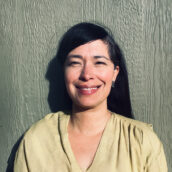
Season 03 – Episode 94: Relating to Our Wounds: The Medicine of Mythology, with Solea Anani
By The Gifts of Trauma /
Listen this episode here:
or here
Chiron, the greatest healer in the mythological world, could not heal himself, and so became known as, ‘the wounded healer.’ Solea opens this series with a myth, a prayer and an invocation to the wisdom of the wound. She presences Chiron as a living intelligence that’s alive in each of us, shaping both our wounds, and the shadows we can’t quite see.
Drawing on her training in Jungian psychology, somatic attunement, collective trauma, evolutionary astrology and the wisdom of indigenous ritual traditions, Solea explains:
- Why the ‘unhealable’ wound can only be tended in relationship
- The importance of relationality in shadow work
- Sincerity as the simplest and most direct path to healing
- The resources that our ‘more-than-human world’ offers to us all
Solea closes with a prayer, an offering to carry listeners through the weeks ahead. Quiet, generous and profoundly grounding, this conversation sets the tone for the episodes that follow.
Episode transcript
00:00:17 Solea
We find our breath sensing into that intelligence of the movement within the body. And gently orienting around the consistent movement of the breath, allowing the awareness to rest. And highlighting the areas of the body the breath is moving. And as the collaboration between breath and awareness continue to stabilize, bringing our attention to the way the body is modeling alignment by sensing into the spine it. And bringing our attunement into the head. And relating to the head as a magnetic pole within the body, receiving and transmitting information and light. And using the movement of the next exhalation to stabilize awareness within the heart.
00:04:32 Solea
With the next exhalation stabilizing deeper into the body. As we orient around the pelvis. And from here feeling the fullness and aliveness and the corridor of stillness inside of the body as. As we presence the pelvis, the heart and the head as one full system. And as we orient around the breath, being the center with our extra sensory capacities, opening to the space around the. body.
00:05:48 Solea
And finding the east point. With our awareness, finding the location of the sun and the east, Opening towards the south, Tuning to the west, Sending into the north. And re. Stabilizing in the center of the body, reattuning to the breath. And beginning to include our relational space. Sensing into each other’s hearts. And acknowledging that our souls have been born into the world. Taking a deeper breath into the body and with the exhalation, gently opening the eyes while keeping the gaze down. And introducing some subtle movements. It’s supportive to look around the space to reorient.
00:09:20 Rosemary
Welcome to the Gifts of Trauma podcast by Compassionate Inquiry. This is our first episode in the Wounded Healer series and in this episode we were going to be opening the container by presencing the Wounded Healer and invoking Chiron. Today I am joined by my beautiful colleague and co host, J’aime Rothbard and a guest whom we both know and love, Solea Anani. Welcome Solea. I’m so happy you could join us today.
00:09:58 Solea
Thank you very much. It’s very good to be here.
00:10:01 Rosemary
It’s great to have you. Now, I’m going to offer a very brief intro, then invite you to expand. So, Solea, you’re a woman of indigenous Dominican, West African, Chinese and Spanish ancestry. And in your work you use 11. This one is tricky. In your work, you use evolutionary astrology, somatic attunement, ancestral reverence. Sorry, let me try that all again. In your work, you use evolutionary astrology, somatic attunement, core and ancestral reverence to support the emergence of individual soul intelligence. And your attunement approach and foundational practices stem from eight different pathways. I wonder if you can say a little bit more because we could spend the whole hour today just talking about your background. It’s so deep and interesting.
00:11:01 Solea
Yeah, Naturally, having indigenous roots that are also combining the intelligence that came in with the Spanish blood and the West African blood, there’s naturally a relational component as well. So there’s the somatic, which is the body, is the ancestral, which is the recognition of the way that the soul is existing in multiple timelines at once and being supported by beings from those timelines. And then the evolutionary astrology is the cosmological umbrella that’s witnessing consciousness from that star stellar dimension back at us into the body. So, yeah, wanting to add that relational component, which feels important as well.
00:11:47 Rosemary
I am very happy that you did. Now, something that we do in compassionate inquiry sessions is that we begin with an intention, which is a way of focusing our conversation. And I would like to start with my intention, then I’ll invite you to share one. And my intention is simply to hold space so this conversation can radiate out nourishment and engage our listeners, hearts, minds and souls.
00:12:20 Solea
That’s beautiful. I feel like I’ve been called here by the archetypal intelligence and force of Chiron itself. So my intention is to provide the Earth for its intelligence to move through in a fresh, coherent way that’s relevant to our times and our evolutionary seeds as a collective.
00:12:43 Rosemary
Wonderful, thank you. And as we drop into this conversation, you know, you didn’t get into depth on the eight pathways that inform your work, but I would invite you to just lean into whatever shows up as wanting to be presenced in the moment.
00:13:05 Solea
Yeah.
00:13:07 J’aime
Before we get going, also, I also would love to add my intention as it’s been feeling like a really crunchy time to be alive as a human on this planet. No matter where one, since 10, no matter where one is finding themselves. I feel like we are Being handed like a fragment of something to digest that belongs to the collective. And I’m really looking forward to this opportunity to learn about evolutionary astrology and what it has to say about that invitation for unification that I’m sensing is calling us all right now.
00:13:57 Rosemary
Thank you, J’aime. Now, just to frame things up, this series looks at the wounded healer archetype through various lenses. There’s five parts. The physician’s wound is examined, the therapist’s wound, and the teacher’s wound. But I was thinking today, as we introduce this concept, perhaps we can start on a personal level and what the wounded healer, Chiron, how it can serve us in our life journeys on an individual level, because it’s not an intellectual concept, it’s a somatic, mythological, and spiritual concept. So I wonder, maybe we can just start by talking a little bit about the wounded healer, about Chiron, and helping people understand what that’s all about.
00:14:54 Solea
Right?
00:14:54 Rosemary
Yeah.
00:14:54 Solea
So my entry into Chiron is firstly acknowledging that Chiron is existing in our collective psyche. But also, as you mentioned, this individual component, we carry the essence of the myths that we have inherited just by the means of descending into a human incarnation. So this mythological piece that you’re referencing, it’s really important to reiterate, as it’s not Karen is not happening outside of us like the archetype of force. And the intelligence of Karen is moving through all of us in very distinct way, which is the beauty and the power of archetypal fields and mythology, that it has this adaptability, intelligence to work with our unique essences and the unique medicines we live, born with, and adapt to what we’re bringing into the world. So Chiron as a force, as an intelligence, and the wounded healer particularly, is known for being a. A force of immortality. Like a centaur was immortal and was struck by the arrow of Heracles during a quarrel. That was collective in its nature. The arrow was meant for somebody else. So I feel, emphasizing that component, that the arrow was not meant for Chiron is really important in relation to the wounded healer archetype, and that Chiron happened to be there witnessing a collective chaos, and he was struck by it. So in turn, he also becomes the sacrificial target that’s also representing the part of the collective that’s witnessing pain, that’s an individual pain that’s then amplified as a collective pain. And now the arrow and the poison is in Charon. And because he’s immortal, he lives with this pain and the complexity and the layers of living in pain for him, as an immortal and meeting the pain and meeting the. What I call the evolutionary pressure of living with pain means that you always have something consistently asking to be witnessed and asking to be tended to. And I would go as far as this asking also for offerings, offering of our presence, offering of our innovation capacity, which is the beauty of the mythology of Kara. Because the way he gets out of the pain is not by necessarily healing it, but by actually becoming relational. He opens a new structure in our ability to heal and calls on the gods to release Prometheus, who is also stuck in a healing wounding pattern in his own mythology and changes, offers Prometheus his immortality. And in so doing, Karam becomes immortal and releases the pain through death, which is another symbolic and direct piece to orient around that. The wounding gets released by something bigger than our humanity, which is the. The portal towards death, the portal towards the mystery, towards that which releases Paul. So at an individual level, I feel specifically relevant to our times. We are witnessing a cycle that we find ourselves in. The cycle of pain, the cycle of destruction. And the wounded healer and the Karen’s teaching, particularly this piece of looking for a way to heal the wound by becoming relational, by including someone else’s pain in the process. He also released Prometheus from his bondage and from his pain. So I. I’m curious about our ability to unite and collaborate and create a shared nervous system. I feel that is the future of humanity moving away from an individuated concept that feels fragmented and unsustainable into a troop, shared collective nervous system where we can restructure the pains that have been recycling over centuries.
00:19:18 Rosemary
Thank you. Wow. And one thing I will add is that Chiron in mythology was a gifted healer. So it was, you know, it was this magical wound that the most gifted healer could not heal. And you know, as you spoke of his support, you know, giving himself so that another could be freed that sacrifice it. It’s almost as if. And this is a question because it seems to me that there’s a connection between our soul’s journey and the wounds. And you know, you talked about moving towards death as a release and as a final healing of that wound. Is that a good connection to make or am I going out on a limb there?
00:20:10 Solea
I feel like death is the ultimate prayer that’s calling us, but also this emphasis on the wound, if you also is an entry into our humanity. Feel we all are born with a wound pattern. Just by the nature of descending into this realm, we inherit the wounds of our predecessors and come into fragmentation, which are a series of Wounds I know for my. In my own path, I’ve noticed the way that the wounds I both inherited and the wounds that were created along the way have really deepened my humanity. They have given me access to what it means to be human, not from a psychological mentalized perspective, but from a lived experience, directly falling into bouts of weeping and wailing and really making contact with the pain as a lived experience. I find also that the wound is conscious and the pain within the wound is conscious. And in becoming human, I. I find that we, in becoming human and entering into contact with the pain, we also bring in new information. Again, our particular essence is unique to us. That intelligence we’re born in also is renewing or introducing a frequency that has never existed in the cosmos. So we go from collecting, inheriting a collective wound that through our individual essence gets penetrated by our individual light and the wound changes. And in so doing we become human. So I feel like even at the entry of our time in the world, and I know I witnessed this with my children, there’s that initial grief cry. Most children coming into the world where Griff, where many of us are ridden by Griff grief and feel like the grief that supports us in entering the pain and the wound and also needing the tribe, needing the collective intelligence to stabilize the wound. And I feel like that’s missing in our times now. That tribal collective intelligence and to co host the wounds we were blessed with find that the pain and the wounds is also a blessing. But they’re meant to be held collectively. It’s unnatural to hold wounds at an individual incubated in an individual incubated vacuum effect. Thank you. Around tribal consciousness is essential.
00:22:51 Rosemary
Yes. And it’s so many things you said I’d love to dig into, but gosh, we are. We’ve had so many guests on the show over the months and years and everyone agrees that, that that collective is one of the greatest losses of humanity to date that, that we lost our tribes. However, the encouraging news is that we are forming new tribes. My tribe is largely virtual, but we are being creative and finding new ways to connect and work collectively. So thank you. You’ve given us a great answer to what is Chiron? What’s the wounded healer? Because it can be a little bit confusing. Is Chiron a planet? Is it a myth? Is it an archetype? So from a very embodied place, I’m wondering, you know, as a living presence, how can it feel to work with this archetype?
00:23:59 Solea
Yeah, Chiron is all of the above. It’s an archetypal field. When something becomes that big, it’s. It finds all these variant outlets to exist through. Yes. So how can you answer yes? No, I’m just, you know.
00:24:17 Rosemary
And I’ll preface this with a personal experience like we last spoke, probably very close to exactly six months ago when you did my transit reading with evolutionary astrology. And just in the act of stepping into this series, my own chiron wounds have been showing up big time, especially the last couple of days, which it’s been really interesting and slightly terrifying as some of these are around visibility, how my gifts are received and bringing myself forward into spaces where others influence how I see myself. So it’s created a kind of churn, if you will, like a certain level of emotional discomfort. So my question was, how can it feel to work with this archetype? That’s how it’s showing up for me. But I’m not going to say my experience is the universal experience. So, yeah, that’s the question.
00:25:18 Solea
How can it feel? Yeah. So I feel drawn to focusing on the wounded aspect of the wounded healer first. And from an astrological Lens, the first 50 years of our life, we are actually meant to orient around the wound, getting very intimate with the wounding patterns we are visibly in contact with. So inherited pain, both physical, emotional and spiritual. And it’s also important to mention that as we in this first 50 years, if we look at Karam from the lens of astrology, we’re also experiencing Karen, which is the wound, what wounds us. And that’s determined on the placement of Karen in the sky at the time of the birth and also the wound in relation to our experience of structure, which is Saturn. So from a planetary level, we have Saturn, Chiron and Uranus. It’s important to know that Chiron is in between these two very strong forces. Saturn is structure, is discipline, it’s devotion, it’s attention to matter. Like, we’re here, we’re in the world, we are embodied. So working with it individually first, starting these, these first 50 years is about landing, it’s about arriving, it’s about being witnessed in our arriving, but also being witnessed in our becoming, having the gifts of the essence we were born with, be nurtured by the people around us, by the forces around us, plants, animals, beings. So Saturn as a structure that supports us in orienting. Where are we? Yeah. And then moving past our gateway of 50 years of age, we are then ready because we’ve gathered experience of the wound, we’ve entered the wound or we’ve avoided the wound, which is the other polarity of the wound as well. When something becomes too much or we feel isolated as natural to disassociate and create some pain distance from the wound. But after 50, I feel like that’s really where the work of the wounded healer becomes more illuminated. Because the wound needs experience, it can’t be entered conceptually. It doesn’t quite work to think our way through healing. It really needs to be sincere and embodied. So after 50, we have our chiron return. So chiron in the sky returns to the same degree it was at the time of birth. And then we’re initiated into the healing aspect of the wound. We’ve gathered enough information to begin to turn our face and our love and our tenderness towards what hurts us both individually and collectively. So we go from witnessing the wound in front of us to in making it more internal, like inviting it more deeply in. And then the healing happens by way of paralleling our intelligence within the planet Uranus. So Saturn, Chiron, Uranus, and Uranus is the awakener archetypally. He’s also the trickster, the one that’s able to remain open and flexible in order to bring in new information. And that open and that flexibility is also connected to play. So when we’re in a state of play, we’re in a state of openness. When we’re open, then we can receive something new that we in stasis, we get to shut down to really receive the new. So working with the chironic energy in relation to the channel of astrology really teaches back again to relationships. The planets are in relationship to each other in the sky. So working with Karen can’t happen in isolation to happen in relationship to Saturn, structure and landing and Uranus, which is awakening through the collective consciousness. Uranus is also very relational and it’s connected to social intelligence as well. So all this to say we are. I feel like we’re revisiting the same detail over and over again in different ways, is that the wound is collective and therefore needs a collective presence as well.
00:29:49 Rosemary
Thank you. I love that you said you can’t think your way through this because. And it can’t be done in isolation because so many of us start there. It’s like, well, maybe I’ll just trust one therapist. And, you know, I can work this out on my own. And it’s ringing so true for me because there’s a group I facilitate weekly. And it’s. It’s like the synchronicities between what we’re working through are amazing, astonishing, and really supportive of each other. And you know, it’s. I think many people have not had this experience. Communities typically gather. Maybe people go to church, maybe they gather for a cause. But to work through our own, like just to. And work through is the wrong. You use the right word. To experience these wounds shifting in our bodies in a collective is an entirely different thing from the types of gatherings most of us attend. So thank you for sharing that and emphasizing it. Again, I think it really is important. Now, something you said six months ago that really stuck with me is that, you know, when it comes to chiron, these are wounds where our shadow gets trapped. Can you say a little bit about that?
00:31:24 Solea
Yes. The wound in relation to chiron oftentimes creates a mirror effect. And the mirror effect is reminiscent of the pain getting stuck. And I’m using pain and shadow interchangeably here. So. And I keep coming back to this piece of we need each other to reflect what’s inconsistent because sometimes we’re so in relationship with what’s normal inside, inside of us. And shadows can be become normalized inside of our own psyche. And that’s why this piece around the collective is so essential in relation to the chironic work, because we need the other to pull what’s static inside of ourselves. And I keep also sensing as we’re speaking that the wound and the shadow effect is non linear as well. So you use the word getting stuck or getting absorbed by the shadow effect and. The stuckness and the shadow effect. I find that is necessary as well. The turning towards the shadow and the turning towards what’s rigid, what’s inconsistent, was hard to look at. It’s really necessary. But in order to turn towards the shadow, we need a resourced interiority. And I feel like I have to go a little bit back before I answer that question, because as you were responding to the previous one, something also emerged in relation to community. And you mentioned people go to church and offering examples of how we do gather. And I know that there’s many human beings that don’t have that readily available to them, and that when I’m referencing tribe, I’m also referencing other than human existences as well. That part of innovating and restructuring our collective intelligence is also including the community of beings of. Of the earth directly, of the plant worlds and bodies of water. And there’s an immense amount of resource that we have available for us there. So tribe also has a bigger ecosystem because there’s a lot of loneliness, and loneliness generates numbness. So do you want to speak to the people that are feeling that the weight of that loneliness and the isolation of not having tribe readily available. So tribe as the natural world that’s there to witness becoming as well.
00:34:14 Rosemary
Thank you. Thank you for expanding that out because it’s so true. I sit here right now surrounded by nature. We’re surrounded by our ancestors. You know, the. It. There’s so many aspects to it. And I was, I was, I was staying at a very literal level. And it’s. I love that you’ve reframed that, because when you look at our culture, we are so trained to avoid pain. You know, if your head starts to hurt, have a. Take a pill. You know, it’s like pain is a flag that something’s wrong, but not necessarily. And there’s different types of pain. So, yeah, I’m loving where this conversation is going. And something that was also part of the inspiration of this series is Compassionate Inquiry, who sponsors this podcast. At the end of the first ever conference in Vancouver, Gabor was met on stage by one of the Compassionate Inquiry practitioners, who dubbed him Saint Chiron, the Wounded Healer, because his work has really sprung from his early wounds. So there’s, you know, when we look at physicians, when we look at therapists, I’m wondering from what you just said, if we don’t respond to our professional callings as a way to start working on our wounds, what are your thoughts on that? Because, of course, Chiron was the original wounded position, if you will.
00:36:02 Solea
Right. It made sense is that again, we are all carrying wound and wounding patterns within ourselves. And then some of us choose to stabilize the wound and enter into deeper intimacy with it. And when I say we choose to stabilize it, we also, in the choosing to stabilize it, we acknowledge that the wound is inside, that the wound is somewhere. So we enter into relationship with the location of the wound and feel like that turning towards the wound also begins a relationship of not making the wound wrong. I feel like inherited in the patterns of our language, we. We already have wounding structures of polarizing into this is right, this is wrong, this is good, this is bad. So that stabilizing of the wound and meeting it just as it is, without polarizing it, I think is really, really essential. And in so doing, I find even my own journey that as I turn towards the wound and I create internal altars of sorts to. To feed it and offer it presence, I notice that the wound begins to change. Like everything in the universe, it’s in constant movement, it’s in constant change. So wounds have a shape shifting dynamic, and in the change, space is created. So I feel the wounded healer or those that are, that become wounded healers and are selected by the tribe to become wounded healers also have a relationship with space. They’ve created a space inside for the wound. There they become a, an offering, direct offering for the collective in the world. And the wound begins to digest. And as the wound is digested through the service work, light is released and light can’t stay insular or incubated. So naturally I find people that are navigating wounded healer archetypal fields have a lot of capacity and see and sense the way that light wants to move and cohere and create webs and of relationality. So then the ones become nodes within these collective nets. As the light wants to move, it wants to be in relationship. So as the wound stabilizes, it begins to change. And as the change happens through the witness and capacity of the wound, simply presencing it without polarizing into injecting it or prescribing anything to it, or pressuring it to change, is simply holding it in stillness and in reverence. It has its own consciousness and it begins to offer wisdom. That wisdom can’t stay contained. So I see that the service aspect of the wounded healer is also essential. Thank you.
00:39:02 Rosemary
Wow. So much that you’ve just offered. The. The notion of the inner altar was really, that really captivated my heart. And then a lot of people were in such a self help culture, such a intellectually led culture. A lot of people would say, well, but how do I do this? And what you’ve just described is not about doing. It’s about noticing and being and surrendering and gathering and allowing, allowing our wounds to shape shift and just, you know, it’s, it’s, it’s, it’s an inner awareness that modern life leaves little time for. Yeah, and I love that, I love what you’ve described. And it’s so not a how to. And yet in a way it is. So thank you for that. Now we also touch on teaching, which I think is a little bit more of a stretch. The fourth. Is it the fourth episode in this series? Yes. It talks about the teacher’s wound. And I think on a surface it looks quite different to a physician’s wound or a therapist’s wound, but it’s probably very much the same thing. How do you perceive that?
00:40:39 Solea
I feel like the teacher is also appointed by archetypal forces, just like the therapist and the physician. And they’re all healers in their essence. And I find that the teacher is the host of the wisdom is the one that transmits the wisdom, oftentimes through words. Someone that’s connected to the mental channel and the intellect and also the ability to adapt to who they’re teaching. I notice that the best teachers have a lot of behavioral flexibility and rhythm variance and ability to co regulate with the rhythm of, of the field they’re teaching. So I find that the role of the teacher in relation to healing is to be the transmitter of the wisdom. And I find that the teachings mostly arise in between the words and the space. It’s more of a resonant field that begins to inform the collective. Thank you. It’s less direct than the physician and the therapist.
00:41:48 Rosemary
Well, it is. And it, there’s more scope, I think, with a teacher. If I think back to the teachers who were most inspiring in my educational history, it wasn’t just what they said, it was how they existed. It’s how they showed up, what they, you know, how they modeled being a human. So from that perspective, the teacher has a lot more range in their ability to guide and influence and support their students own inner development. Plus there’s a lot more exposure to a teacher typically than to a physician or a therapist. So there’s probably a whole lot more scope for creativity as well. Because physicians and therapists are constrained by ethics and practice guidelines. But teachers, they have those too. But I think they can take a little bit more license. So thank you. I am not asking you for how to’s. We’ve already covered that. But I just, I love, I love what you laid down for us in terms of practices being in nature, going inside, perhaps meditating. I’m just, I’m wondering if there are any other suggestions. You have some expertise on ceremony and ritual. So for those of us who are working from a very culture, culture adhering type of. Okay, the brain leads, it leads us. The brain is in charge. The body is the vehicle for the brain that needs nourishment and exercise. But they don’t go a whole lot deeper than that. I’m just wondering if you have any additional suggestions as to how people can start turning in and tuning in. And in means also spiritually, nature, you know, just allowing the environment and gatherings as well to evolve them, I guess would be the right word.
(10:55:15 on Video) 00:44:09 Solea
Yeah, yeah. I would like to offer a more simple approach. And that is starting with being sincere. Being sincere. And what I mean by that is saying, yes, I’m in pain, I guess this hurts. Yes, it’s here, I’m experiencing it. And I feel like that sincerity allows us to enter into contact with the wound and release the way we have inherited, perhaps patterns of ostracizing the wound, of keeping it somewhere far over there. So I would say starting with that sincerity that invites the wound closer, and that that level of sincerity doesn’t need us to cut out time or compartmentalize our practices to help the wound. And I feel it’s extremely effective because that step towards sincerity, towards turning towards the wound, will then begin to inform you what that particular wounding pattern needs from us. Needs from you. So it’s less around trying different things in a hurried, erratic way, and more about if you enter true intimacy with the wound, the wound will speak, the wound will guide you, and then naturally, through that attunement to the wound, then the knowing becomes easy and the knowing becomes accessible. Yeah.
00:45:43 Rosemary
So what we might refer to as intuition, the inner knowing, we strengthen that by.
00:45:52 Solea
Just.
00:45:53 Rosemary
Yeah, that’s beautiful. Thank you. And it’s easy and accessible. So. Yes, please carry on.
00:46:01 Solea
Sorry, I wanted to share that. There’s also a universality to the wound, an acknowledgment that we all carry a part of a collective wound. But along with carrying a part of the collective wound, we carry the parallel process, which is collective beauty and resilience. And everything that our ancestors have survived is encoded in us as resilience. So, yeah. Acknowledging that in that sincerity of turning towards the wound, this is part of our calling as well. It’s why we’re here, it’s why we’ve incarnated, is to tend to something bigger than us. And that’s. I feel like that’s where death. But death is about, like, making true contact with. There’s something bigger that’s influencing our experience. That’s mysterious. Yeah.
00:46:55 Rosemary
And with your practice, invoking the ancestors, support. Let me say that again. Invoking your ancestors, support. Or the ancestors. I’m not sure what terminology you would use, but everyone I know who follows that path, it’s. The support is really real. And so it’s a total state shifter.
00:47:27 Solea
Yeah, yeah. Back again to the relational attunement. Entering the ancestral field is an honoring and acknowledgement of relational strength. And invoking the presence of the wise and stable ancestors is a resource that’s available to all of us. And you don’t need to know how to do it mentally. You don’t need to descend from a lineage that’s doing ancestral reverence. We all have ancestors by nature of knowing that universal truth, we have access to, to these beings. And it’s not just accessing them as beings, but accessing the Intelligence they have accumulated over time. And that’s really what allows our resources for us to turn towards what’s painful, but to turn towards inspiration in a good and wholesome way that we’re tapping into a. An energetic battery of resources that has been accumulating for. For many, many years. So I feel like beginning to think in more of a holistic way around our human intelligence. It’s part of the beauty of making ancestral contact, because in that softening and slowing down enough to turn our attention towards beings that are existing in our dimensions, that pause in itself is already reorganizing. And the pain or reorganizing inspiration, that pause also allows an opening for something bigger than our human experience to come in and collaborate with us.
00:49:10 Rosemary
Thank you. Jim has a question for you.
00:49:15 J’aime
Yeah, thank you, Rosemary. Oh, oh, I’m not muted. Okay, thank you, Rosemary. Before my question, I would like to just do a little bit of presencing, all a compassionate inquiry style, and stay that. As I’ve been listening and contemplating, or maybe not contemplating, but orienting and appreciating this, that’s so much landing about the relationship to the wound itself. I’m feeling like my heart opening, like folds, unfolding, softening, and was curious about how the audience is doing as they’re taking all of this in. So I wanted to take a moment, a reflective moment for people who are listening to just, you know, because it is a lot to hear and to take on, to just make sure their body is here too, into presence. What am I feeling as I’m hearing this? What’s alive that I can feel inside of me? And is there a wound that I can maybe start to tend to as I’m listening to this new way? Maybe it’s a new way for some people. So I did want to take a moment. I hear, like, my voice crack a little bit even as I say that. This is just such tender, beloved territory that we’re. We’re exploring together. And my question, Solea, is what happens when we have a wounded itself, a wounded orientation towards ancestors, towards our ancestors? What if for one reason or another, maybe it’s like kind of immediate family wounding something we inherited about stories of our family that we never got to experience? So we have that narrative, or if it’s on a more collective level of knowing that your ancestors took part in genocides or, you know, something to that level. What happens when we have a wounded understanding and blockage to reaching out to our ancestors?
00:52:01 Solea
Yeah, as I hear your question, I’m sensing the ways that the calling towards the enters towards the ancestors happens through the acknowledgment of there’s a wound, there’s a blockage. And part of the beauty of relating to ancestral planes or other than human planes is that there’s plenty of space to receive the block as well. It’s an opportunity to allow us to enter into honest dialogue around, hey, I’m angry here, like this transgression happens. I am a descendant of colonizers that killed and did atrocities that we can bring the block into the dialogue. And if that feels too far fetched, then beginning with making contact with your own soul, always your. The resilience and the beauty and the magnitude and the resonance of your own being. And beginning by making contact with that, since that is accessible, we don’t need to go too far. It’s not about opening to another field of intelligence, but beginning here. And that’s another emphasis on simplifying our, our approach and beginning with ourselves and with the intelligence of the soul. Because the soul also is carrying intelligence from multiple timelines.
00:53:30 J’aime
If I apply that to the way I work with the wounds in my body that really tracked to what I heard you saying is that there’s an energy and a light that gets released in that practice. It gives me a different sense of possibility, just starting with naming the blockage and naming the wounds, that there could be some light released in this transmission, in this orientation, in this tending that could be very. That could create a lot of repair.
00:54:20 Solea
And I’m also sensing the way that the turning towards the block and the turning towards the wound without knowing what comes next, I find is also really essential because I hear the longing in you for repair, but also that the turning is not dependent on something being fixed or healed, that the turning itself is plenty and that we don’t know what the wound is going to do after it’s being witnessed.
00:54:53 J’aime
See, I find that very interesting and different because we are so based on intention in our healing work, especially at compassionate inquiry, that we feel like we have to have an intention to direct. And as soon as I say direct, I understand that, like, whoa, we’re maybe in a different place already. Yeah. Yeah. Thank you. Anything else you want to say about any of this curiosity that I’m bringing?
00:55:33 Solea
I’m primarily staying with word direct. Something gets directed and I get curious about that. And because as I feel it, I also sense the, The effort we’re directing, efforting, which also calcifies our individuation process. If there’s something that hurts and I need to heal it, on my own. I don’t know if this is directly relevant to what you were attempting to transmit, but that’s how it’s landing in me. And I come back to this. You live in folds, like a blossom that has many petals. And that the rose or the flower is made up of all those different layers, those different dimensions per se, so that the wound is also happening, enveloped by all those different layers and dimensions. And again, the wound and the blessings and the healing and the innovation, all of it is happening in co regulation and correlation with other forces. So I find that turning towards the wound and also acknowledging there’s other layers that are also feeding and informing the wound, then we create a space to allow what’s most right to move through. Then the effort of trying to make something happen, fixing something at an individual level can relax a bit.
00:57:07 J’aime
I would love to close this in. Like, as I’m listening to you, I’m appreciating the difference between indigenous wisdom and what a lot of us come from, which is like the quick fix, the make it go away, the direction if I do this, this will happen. And not appreciating the other realms that are at play. And creating space. Space just keeps coming up as an offering also just to keep creating space whenever, like, because the directing, it comes from the wound as well. The wound wants to heal the harm that it sees in the world. And that to me is like, oh, well, then there’s another place to turn with simplicity to. It’s like a infinity.
00:58:17 Solea
Yeah, I’m done.
00:58:20 J’aime
Rosemary. Thank you.
00:58:23 Rosemary
Thank you. Yes.
00:58:24 Solea
And it’s.
00:58:26 Rosemary
We are so armed by our culture. I’m thinking of someone with ptsd, maybe a war vet. And our culture teaches us to lock all that down, you know, push it away, push it down as far as we can. And what you’ve said is so is so much the opposite of that. It’s about leaning into the wound and just speaking to others, you know, gathering in community, gathering in places where physically we feel safe going in nature, invoking our ancestors support. It’s, you know, the, the lockdown, push it away is what keeps the wound unhealed, it sounds like. So it’s, it’s a real culture shift for most of us living in the Western world to create the spaciousness that you’ve described. And I thank you for that because, you know, we can’t go from post traumatic stress disorder to post trauma growth. We can’t go from PTSD to, oh, I’m not going to try that, I’m going to mess it Up. I need to see the acronym, but it’s. Yeah, we. So this. Our culture, as much as anything, our cultural beliefs and habits are what keep us from allowing the wound to shape shift. That might be the better way to say it. Yeah. Or inviting the wound to shapeshift. Allow. Who are we to allow a wound to do anything?
01:00:24 Solea
But. Yeah.
01:00:26 Rosemary
And I’m wondering this as we. As we close, as we wrap up, I wonder if you would be able to offer us a quote or a prayer or something that we can use. You know, this series goes on for five weeks. You’ll be back to join us in the fifth episode. But as people stay in this conversation, I’m wondering if you could offer something, a phrase, something that will. They can go back to, that’s easy to access. They can keep them in this space of openness and invitation and spaciousness and just noticing how things are shifting. Yeah.
01:01:17 Solea
I would love to offer prayer. And I also want to add one more thing before the prayer comes in. Is that.
01:01:25 Rosemary
Absolutely. Yes, please go ahead.
01:01:28 Solea
Because you mentioned the veterans and the visible pain that they come back with and in relation to creating space, that the wound needs space. And I want to acknowledge that there are some of us that are carrying a voltage of pain where there is no space. That space is not directly accessible for them. And it reminds me of a. A Mayan ritual when someone dies. The family members of the person that dies are left to wander the land and to wander the shorelines, and they’re crying and wailing and in between the worlds because the pain is so big and the community follows them to make sure that they stay out of harm and there’s someone there watching so that they can fully collapse. So for us, those are the veterans, those are the people hosting trauma. Those are the women that are raped and the widows and people that are carrying significant pain through which they don’t see or feel space. That I want to acknowledge their pain and also acknowledge that they don’t need to work harder to create space. That that’s our. Our work as anchors within their community and that we don’t necessarily. They don’t necessarily need to be family members. They’re in our streets, they’re in our neighborhoods, they’re everywhere. That we can offer a space of holding in our own energy field.
01:03:20 Rosemary
I love that. Thank you. Thank you for offering that.
01:03:22 Solea
Yes.
01:03:23 Rosemary
And we don’t even have to see them in our streets. We can do this energetically.
01:03:28 Solea
Right. Exactly. Thank you.
01:03:36 Rosemary
Would you like to move into.
01:03:39 Solea
Yes.
01:03:39 Rosemary
The holding prayer, if I may? Call that. Yes.
01:03:43 Solea
Thank you. Yeah. I would like to offer a prayer and allowing the prayer to be a non localized prayer that exists first as we open our hearts to praying, acknowledging silence, Becoming direct hosts of silence and stillness. Instead of feeling that stillness and silence with words invite all of us to allow the prayer to emerge as a feeling. Let the light inside of the stillness speak to us. For me and our bodies. Together, we can attune to where as a living body prayer, something that’s alive, existing inside of time and outside of time. Prayer is something that’s in action and movement, coming back again to the breath as prayer. Together here, existing in the synergy and all that are listening, we can collaborating, making our beating living heart a prayer in this very moment. You know, tune into the heart as a place we can come back to again and again. It’s a sacred place that’s hosting our light. And sensing the way. Our heart is aware of the stillness, Is aware of the wound, Is aware of the healing in movement. Thank you.
01:07:20 Rosemary
Thank you. Saleya Anani. We are so grateful for your presence here today as we open this series. It has been an absolute delight to have you with us.
01:07:38 Solea
Cherish this time together. Thank you.
01:07:43 Rosemary
Thank you. Sorry I spoke over you, Jim.
01:07:50 Solea
It’s okay.
01:07:53 Rosemary
I’ve got the separate track. Yeah, wonderful. Thank you. And I’m just going to do a little bit to promote next the next episode. Please join us. Stay with us for the second part of the Wounded Healer series, the physician’s wound with Dr. Karen Hill. And let me try that again. Please join us next week for the second episode in the Wounded Healer series. We are going to be joined by Dr. Karen Hill, who’s a Mohawk family position. Maybe I should. Maybe we should let Solea go and then just do this, Shem.
01:08:44 J’aime
Yeah, we can do that later.
01:08:46 Rosemary
Yeah, sorry about that. I thought I could just like slip it in, but my. My heart is too still with your prayer. So hard to switch back to head mode. And I don’t want to force that because it’s nice to be out of here.
01:09:01 Solea
I understand.
01:09:02 Rosemary
Anyhow, thank you, Cea. This has been beautiful. Really appreciate your time. Yeah.
01:09:08 Solea
If you need anything else from me, I’m here. Can stay in contact along the way.
01:09:13 Rosemary
For sure.
01:09:14 Solea
I just emailed you all of that.
01:09:16 Rosemary
I saw that just before we started. Thank you. And it’s no problem at all. I’ve got. I’ve still got lots of time to work with it, so.
01:09:22 Solea
Yes, thank you.
01:09:23 J’aime
Wow.
01:09:24 Solea
My heart is full.
01:09:25 J’aime
Yeah. Great. It’s such a gift that you are here with us and bookending the series. Thank you. Thank you for coming forward the way that you are. It’s so much, so much to behold and. Yeah.
01:09:43 Rosemary
And I’m so happy to see you looking so well. You look great. Yeah.
01:09:48 Solea
Yeah. Something has settled. Yeah. When I last saw you, I was still in the storm, so.
01:09:53 Rosemary
Yeah.
01:09:54 Solea
Yeah. And I appreciate now. Yeah.
01:09:57 Rosemary
I appreciate everything that you’ve said because, you know, there was a part of me that was looking at the last two readings with you and thinking I haven’t done what I should have done with those. And it’s like you just took off a whole load of unnecessary weight. That I was as part of one of my wounds is like beating myself up for things that I haven’t done that I think I should have done that I was never supposed to do in the first place.
01:10:23 Solea
So perhaps they’re getting done in other timelines.
01:10:28 Rosemary
Exactly. Exactly.
01:10:30 J’aime
Yeah.
01:10:31 Rosemary
So thank you. Thank you so much.
01:10:33 Solea
You’re very welcome.
01:10:34 Rosemary
I look forward to seeing you in a. In just a little bit under a month for the episode five. And a lot will happen between now and then.
01:10:42 Solea
Thank you. I’m looking forward to it and sending lots of blessings to the series. Thank you. Thank you. Bye. Bye. Bye.
01:10:50 J’aime
Bye. Wow, she’s so amazing. Oh, my gosh, she is.
01:11:05 Rosemary
It was so beautiful to be in her presence. And she is. She has shape shifted a lot since she and I last spoke, so I’m so happy. Just. What a gift. Okay, can I get that last line in?
01:11:24 J’aime
Yeah, one of those.
01:11:26 Rosemary
Yeah, yeah. It’s like, you know how people, some comedians can make their lips, like, flap? I don’t know how to do that, but if I could, I would. Right now. Yeah. There we go. Yeah. No. Join us next week for episode two in the Wounded Healer series. We will be focusing on the physician’s wound with Dr. Karen Hill, a Mohawk family physician from Canada, Dr. Gareth Patterson, a CI trained Irish general practitioner, and Ben Court, a CI trained British osteopathic and mind body medicine practitioner. We look forward to seeing you then. And please subscribe to make sure you don’t miss this episode and any others in this series. We’ll see you next time.