
Season 03 – Episode 95: The Physician’s Wound – Medicine as Sacred Practice, with Karenna’onwe (Dr Karen Hill), Dr Gareth Patterson, & Ben Court, Registered Osteopath
By The Gifts of Trauma /
Listen this episode here:
or here
What becomes possible when a wounded healer acknowledges their wound? To address this question, we brought together three diverse medical professionals whose practices and traditions span indigenous, osteopathic and allopathic realms. As they move from consulting room to ceremony, from the body’s symptoms to the soul’s message, from protocol to empathic presence, each reflects on the wounding that brought them into medicine, and the inner work that transformed how they practice it.
Together they explore:
- What it means to practise medicine as a sacred act
- How the body communicates what the soul cannot say
- What happens when a medical practitioner brings all of themselves to their practice
- How the healer’s own wound shapes the care they offer
- What becomes possible when two ways of healing are brought together rather than kept apart
This episode offers moments of deep vulnerability as our guests share their own stories of the personal healing they experienced when they finally turned toward their wounds.
Episode transcript
00:00:01 Rosemary
If you’ve completed or are currently enrolled in Compassionate Inquiry training, you’re invited to attend the third International CI Conference in Vancouver, Canada, from October 30 to November 1. Dr. Gabor Maté is returning as our keynote speaker and masterclass presenter. Enjoy engaging workshops and inspiring demonstrations with Sat Dharam Kaur, CI facilitators and practitioners. Whether you join us in person for three days of shared inquiry with CI cohort partners and colleagues from around the world, or attend virtually to focus on the teachings, tap the link in the show notes to learn more, take advantage of early bird discounts and secure your place. And yes, there will be dancing.
00:00:49 Karenna’onwe
When I was shown that I was the one who needed to change, that I needed to step into who I am as an Indigenous woman, as an Kanyen’kehà:ka woman, and lead from that place, even though I am a physician in the academy, that, it’s okay to still be who I am there. If I see one patient every hour, that is the way I will practice my practice, in that space. And for our people, it is okay for them to be who they are, wherever they are. And that’s the huge part of the healing that goes with the healthcare. Right? Because it underlies for us a lot of that trauma that our body is carrying, that our body is manifesting is that lack of being able to step into who we truly are and love who we are. It hasn’t been safe in this country to live in an Indigenous body, for centuries now. And so helping, helping people to reconnect with that has been a key underpinning of how I work as a physician.
00:02:03 Rosemary
This is the Gifts of Trauma Podcast, stories of transformation and healing through Compassionate Inquiry.
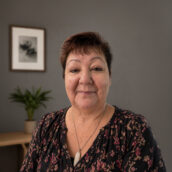
Welcome to the Gifts of Trauma podcast by Compassionate Inquiry. In this second episode of the Wounded Healer series, we will be exploring the physician’s wound, and, medicine as sacred practice. What happens when the healer is also the one who has suffered? Today, we’ll view the Wounded Healer archetype through the lenses of three medical practitioners, explore the difference between curing and healing, and what becomes possible when science and soul are in right relationship. So I’d like to welcome everybody. Nya:wen Karenna’onwe. Welcome Dr. Karen Hill, a Mohawk family physician practicing in her community at Six nations of the grand river in Ontario. Also a faculty lead in Indigenous Health at McMaster University and the creator of Two Row Medicine. Welcome, it’s such a delight to have you.
00:03:19 Karenna’onwe
Here today, Nya:wen for inviting me to be here. I’m really excited to be here.
00:03:26 Rosemary
We’re excited to have you and Your full bio will be in the show notes. So, considering that, what would you like to share about yourself with our listeners that perhaps isn’t in any bio, before we begin?
00:03:38 Karenna’onwe
Oh, my goodness. I guess maybe something that isn’t in my bio is that I’ve just finished writing my first book. It’s not a medical book. It’s really a story about my mother, and my mother having been born and raised at Six nations of the Grand River Territory. She was born in 1937 and she was born with spina bifida. So at a time when even in mainstream, there was not a lot of treatment or hope for children that were born with that condition. But how really the love of her family, my family, and our traditional ways, our traditional healing knowledge, and how that nurtured her in her life to accomplish so many things that the medical community had repeatedly told her or my grandparents, you’re not going to survive, you’re not going to live, you won’t become an adult, you’ll never have children, you won’t walk, you won’t all of those things. And to me, her story and her life is a message for the world right now. And that message is that we are more than our circumstance, we are more than the things that have happened to us. There’s a truth about who we are in our inner being that we need to get to and pull out. Because my mother would always say, don’t worry about me, I’m healed. And so many people couldn’t understand that. So that’s something, I think that is not in my bios. I have actually really said a lot about that.
00:05:15 Rosemary
That’s exciting. Yeah, that’s really exciting. Do you have a publication date yet or are you still waiting for that?
00:05:22 Karenna’onwe
It’s just waiting for the ISBN and then we can send it to print.
00:05:26 Rosemary
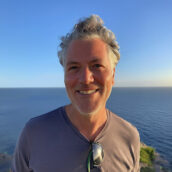
Wonderful, wonderful. And maybe that will happen before this episode is published. So if it does, we’d love to add that to the show notes. Thank you, Karenna’onwe. Now I’d like to introduce Ben Court, a CI trained British osteopath and mind body medicine practitioner based in Gloucestershire. In Ben’s clinical practice, he weaves together, or bridges, I’m not sure what’s the best word. Osteopathy, mind body medicine, somatic medicine and Compassionate Inquiry. And Ben, my question to you is the same. Your full bio will be in the show notes. So what would you like to share with our listeners about yourself?
00:06:05 Ben
Thanks, Rosemary. Yeah, I too am feeling the heat of being here today, a little bit. All those old trauma wounds of imposter syndrome. And what am I doing here? And am I enough for coming readily to the surface as we speak, especially in such, kind of rich company. I didn’t know that outside of my professional work, I have a thirst for life. I have two beautiful children and I had a practice and a life both in Gloucestershire and in Pembrokeshire in the west of Wales. I like dance music and used to DJ a fair amount. So that was a kind of first for life. But I really, I was just a lifelong learner, you know, I’m really into what I do and into the pursuit of trying to really get in touch with what really helps people be well. I do need to clarify that I’m not a physician, I’m not a GP. British osteopaths are just, we’re just osteopaths. Although we have extensive medical training, we’re not in general practice or in general medicine. We have osteopathic medical views which are allied in some way and maybe not in others.
00:07:06 Rosemary
That’s brilliant and I’m glad that you do bring a slightly different perspective. I’m sure there’s going to be a difference between our two physicians’ perspectives as well. So thank you, Ben.
00:07:16 Ben
Okay, thank you.
00:07:17 Rosemary
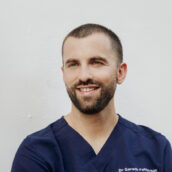
And now I’d like to introduce Dr. Gareth Patterson, a GP from Belfast in the north of Ireland, who works in the UK and is passionate about patient care, health promotion, disease prevention and well being. And you’re also, Gareth, very visible on Instagram and TikTok as the Irish GP. And I have the same question for you. Your full bio will be in the show notes. So what would you like to share over and about that with our listeners?
00:07:46 Gareth
Well, listen, thank you so much for having me here today. It’s such a pleasure, and as Ben said, definitely feeling a bit overwhelmed and a bit of an imposter amongst such company. But I think probably something that I’ve never spoken publicly about before, and only in private to those that are close to me, is my journey with psychedelic medicine and how it’s taken me on a most incredible journey over these last two years and has informed and taken me to places as an individual, as a human spirit. And doing so has greatly informed the work that I do with my NHS patients. So I haven’t had the opportunity or maybe the confidence or the bravery to speak about that before. But I’m so glad for what the medicine has given to me and for how it’s not only impacted my personal life, but my professional life also.
00:08:32 Rosemary
Thank you so much. It’s going to be a very rich conversation. I can feel that already. And before we go any further, I’d also like to welcome my co host, Kevin Young, who is back from a 10 day silent retreat in the US. Two weeks?!
00:08:48 Kevin
Yeah. My gift to the world was two weeks of silence. That’s my offering to the world for the year. I will be silent for two weeks. Thank you.
00:08:57 Rosemary
Please do bring your voice, Kevin. So I am going to start with a question that you were asked, Gareth, by the Royal College of General Practitioners and I found it in their blog. You were asked, in 2021, as we were coming out of COVID, if there was one message you could give to all other gps, and I’m going to expand that to healthcare practitioners, what would it be? Now, back then you said, look after yourself right now. It’s been a really hard year and we’ve absorbed the weight of so much and so many. So given that we are now in May 2026, would your answer to that be different, Gareth?
00:09:38 Gareth
That takes me back. I mean, I think my answer would probably be something similar, but I guess the answer comes at a different time still. We’re in a very tumultuous time in the world, but the circumstances are a little different. I think one thing I’ve learned as a physician is the ongoing need to tend to my needs and to look after myself. And I think that’s something that all of us as healthcare professionals need to be mindful of and aware of. I think if we enter into clinical space to look after others and our cup is underfilled, I think it greatly impacts our ability and capacity to not only utilize the skills that we have, but also use them in a way that’s compassionate and gentle and caring. I think that as healthcare professionals, we work in such a unique space where we can really meet in such a beautiful way. The tender vulnerability of another. And I think we both have a responsibility and we also owe it to ourselves to ensure that we prioritize our needs. Of course, those often will be met outside of the workplace, but I think they can be met in the workplace as well.
00:10:43 Rosemary
Thank you, Gareth. I’d love to hear from all of you on this question. Karenna’onwe, Ben… And I’ll repeat it. If there was one message you could give to other GPs or more generally to healthcare providers, what would you say? Who’d like to take a go at that?
00:11:01 Karenna’onwe
I guess I would start out with saying,Shé:kon sewakwé:kon. We usually would introduce ourselves in our language whenever we’re meeting with a group of people. So I just said, my name is Karenna’onwe. I’m Mohawk, Turtle clan from Six nations of the Grand River Territory where I live, where I’m also, like, from. When you asked that question, I kind of jotted down a few of the words, and I was thinking, oh, yeah, I do say this to people. I say this to my patients as well. But the things that we’re seeing right now happening on the Earth, I think are directly related to our own health. Right? We often don’t think of environmental health as equal to human health, and yet the two are very much intertwined. Right? >>>I was told once by my teacher that the spirit showed her that when we speak our languages, when we sing our songs, when we play our drums, when we dance our dances, that there’s a vibration that goes out and it goes into the earth and it actually heals the earth. So there is a very intimate connection between our health and the health of the environment and even the health of each other, because those vibrations are coming out and they’re impacting the people around us. And I would say to other health practitioners that healthcare is not healing care necessarily, and we need them both together. We need to address the healing in ourselves, support our people coming to us for care and their healing so that we can have that impact on the environment and on our mother, the Earth. There’s an intimate connection there. Right. And I say to my patients, you’re more than a breast. You’re more than your lungs, you’re more than your pancreas. You are a whole human being. And we need to help you as a human being to move through what you’re experiencing right now. But what you’re experiencing right now is not everything. It’s just a little piece. <<< So that’s what I would say to other healthcare providers out there.
00:13:28 Rosemary
Thank you. And I have a very strong feeling that once your book is published, your mother’s story will help people understand that message much more intimately. I guess that’s the right word. Ben. Please, go ahead.
00:13:44 Ben
Thank you. I’m always surprised by my patients that come in and my osteopathic colleagues, and they’re telling me all the things that are going on in the world. And I often say to them, I don’t know how you’re still standing. And they look at me, really surprised. They’ve just. They’re expected to keep their head and shoulders above water when the tide’s coming in thick and fast around them, whether it’s world politics or whether it’s their family dynamics or overwork, under work, whatever it might be. But there’s an expectation that we should just be okay with it all. And I think to just take time to check in and to be curious about how we are being affected and whether we’re acting normally to abnormal stimuli, would be really, I think Gabor says that, doesn’t he? Something along those lines would be really helpful. It kind of fosters a little bit more compassion for the pace that we find ourselves in. And from that kind of place of that little softening that happens, the health creeps in. So that would be what I would say.
00:14:49 Rosemary
I love how you express that, Ben, thank you. And now I’m going to invite my co host to step in and I’m sure you have questions for our guests. Kevin.
00:14:56 Kevin
Thank you, Rosemary. I have loads of questions already. And just listening to you all,. You know, Karenna’onwe, when you chatted, I was thinking of Dan Siegel, who talks about interpersonal neurobiology. And I’m a big fan of Buddhist studies and advaita and non duality. And we talk about the interconnectedness of everything. We can’t take care of anything unless we’re taking care of everything, because it’s all connected. And maybe a quick story before I ask this question very briefly. I was working with a client and she was at a stage where she was being advised to have her womb removed. She’d been through all sorts of treatments. And the medical model, our medical model, Gareth, the Western medical model, couldn’t find what was wrong with her. So they were suggesting, let’s just remove your womb. That’s the next thing that’s left, which is a really serious surgical procedure. And I spoke to her for about 15 or 20 minutes. And for us in this world, the world in Compassionate Inquiry, it’s not a great bridge to cross between gynae issues in a woman and sexual abuse. It’s not a huge bridge to cross. So she’d been through this medical model for 10 years, and was at the stage of having her womb removed. And I asked her, after just getting to know her, I said, listen, can I ask you a really personal question? Have you ever experienced sexual abuse? And this was the floodgates to her talking about her childhood and sexual abuse and then issues with her weight and all sorts of stuff. And so I’m not a medical professional. And we were 15 or 20 minutes into a conversation of understanding this client’s issue was not biological. There was nothing wrong with her womb. She had been sexually abused and was having that psychosomatic experience through what went on for her. And the question that arises is, then, I’d love you all to talk. I’m really interested. I look at you on my screen. And I see from Karenna’onwe through to Ben through to Garth, maybe a line of. From more ancient and well established medical models, maybe native, if you want to call them those, through to very Westernized. And that doesn’t make anyone right or wrong. I just say that. But I’d love to know your thoughts on those sorts of things. And maybe I would start with you, Gareth, and then from Ben and through to Karenna’onwe. How does it land with you when I tell a story like that, that someone might bounce around this medical model, our medical model here in the UK or the west or Europe or America, and no one ever, it seems that no one, that hardly any GPs or physicians would ask a question like, Hey, what’s going on in your life? Were you ever sexually abused? Have you ever experienced… They don’t seem from the outside to link a psychosomatic relationship. It’s all about, you know, you are a womb, or you are only a breast, or you are only a set of lungs. How does that land for you to hear me talk like that, Gareth? And I’d love to hear your thoughts and opinion on it.
00:17:59 Gareth
Yeah, I see it all the time. Kevin, as you share that story, I’m already thinking of some of my own patients that I see on a regular basis who present with somatic manifestations which quite clearly are coming from some sort of trauma experience in their past. I can think of one lady who has a multitude of physical symptoms. She’s got a huge amount of TMJ stuff going on. Lots of muscular soft tissue tension, joint swelling, pains. And she presents maybe once a month, which is relatively frequent for an NHS patient attending an NHS GP. And of course, in spite of the multitude of blood tests and scans and X rays and all the rest of it, no diagnosis over time has been made, other than a bit of emotionally unstable personality disorder, fibromyalgia, the usual list. And it’s really heartbreaking to meet and to encounter these individuals. I first got to know this one particular lady over a year ago, and I suppose with our NHS GP system, we get very little time with our patients, but in the practice, I work in we have 15 minutes, which is a real luxury in the UK, and that’s in the first few appointments, probably adopted quite targeted questions looking at singular systems of the body. And then over time, the more I got to delve into her history and her notes, the more I got to know her and understand her as a person, the more I realized that all of these physical manifestations were all linked. And she did eventually share that she’d had an experience of domestic abuse and childhood abuse as well. And I think for me as a clinician, I often experience a frustration when I see these patients who are seen by a multitude of specialists, but they’re all just seen on a system base. So they see the maxillofacial surgeon who only cares about the TMJ and after a few scans, investigations, determines that there’s no actual anatomical or functional issue and so is discharged back to me to refer to the pain clinic. The pain clinic is a common referral pathway now in the UK for these patients to see an anaesthetist or an orthopaedic doctor and to be put on a ream of sedating medications or neuropathic agents. And it’s very difficult for me as a GP in ways to know how to manage an individual like that because I have so little time and I, as a primary care physician don’t have much resource to my hand. You know, I often think, what would be the absolute ideal to be able to send this lady off to maybe a six month retreat where she would meet a multidisciplinary team of both clinicians and therapists, of healers. Opportunity to really connect in a safe and contained space with those memories and with that trauma and allow her body the opportunity for the first time ever to start to release that energy which she has stored up because of these traumatic experiences over the years. But of course nothing like that exists that would be accessible to a lower middle class or working class individual in the uk. So you try your best. You maybe mention things about a bit of breath work or you talk a bit about meditation, but it’s very challenging and I think all you can do is try to hold that individual and encourage them and give them what bit of support maybe I feel I can give as a result of the experiences that I have had.
00:21:16 Kevin
Gareth. Thank you, Gareth. Before we move on to Ben and Karenna’onwe I’m curious for you. You’ve just spoke beautifully there about your ideal, but I wonder what you’ve just said. That sort of conversation when you have lunch in your practice with your other GP colleagues and partners and stuff, does that conversation that you’ve just had happen around the coffee table or the lunchtime table with your colleagues and co workers?
00:21:40 Gareth
Not really, no. I think I’ve noticed maybe in the last while other physicians and clinicians may be more inclined to talk about trauma or that maybe a slight increase in awareness of what unresolved trauma can do to the body, but it just, it seems very limited and it’s not. There’s not many other clinicians or physicians that I know or I’ve encountered in my own work that indulge in those conversations or have had experience of or an understanding or have journeyed along those roads themselves. So yeah, that’s why I engage with communities like this. You know, I find people who are more aligned and who share the same understanding of the human spirit and the human body.
00:22:17 Kevin
Yeah. Thanks, Gareth. And there’s something in me at the minute just wants to. I am not anti medicine. Medicine is wonderful. It’s amazing. And the things that we can do for and with a human body is absolutely fascinating and amazing. It’s maybe just that there’s maybe a frustration in me when I speak to people that when our western medicine gets to the end of its knowledge, it kind of believes that there is no other knowledge outside of its knowledge. The medical model is wonderful. It’s absolutely amazing. And there’s more knowledge outside of western medicine. Thank you, Gareth. I’d love to ask Ben the same question. Ben, maybe you’re in a slightly different position that you can have these conversations. Are those sorts of conversations someone dealing with a thing and you being able to say, I’m not really sure this is your back or your legs or your neck. This might be something else, might be to do with your relationship with your partner or your mother or your children, whatever. How are you with having those sorts of conversations and maybe relating back to that story I had with the female client of my own.
00:23:24 Ben
It’s a great question. I’ve got the luxury of a private practice where people can come and see me. They have a half an hour, 40 minute follow up appointment, an hour as a new patient and my AGP friends, they’re up against it with that 10, I think it’s about 10 minutes where I am 15 minutes for you, Gareth. But it’s such a compressed amount of time that some of the stuff that I unpack in my practice, you know, I’m pushed at half an hour, 40 minutes to really hold that depth of kind of trauma patients come in with. So it is conversations like that I have. And it’s where Compassionate Inquiry was really the bridge. I was in practice a couple of decades ago, or south a couple of decades ago. And we really only talked about tissue trauma, right? People coming in with backaches and neck aches and all the rest of it. And we would always look for the thing. And most time, I could never really find the thing. And a couple of years in, I kind of. What I noticed a pattern in my patients was once they started to trust me and I had a relationship, they’d say, okay, yeah, now I still don’t know how I did my back or my neck or why I’m getting these headaches, but I have just got divorced and I have just lost my dog or I have just moved house and my wife left me. La, la, la, la, la. You know, so you’re starting to look at all of the, what we call a lifeache, not to dismiss it, but the stuff that is just hitting our community and these people day after day and how the body is taking that all in. In osteopathy, certainly in the tradition that I practice, which is a particular form of osteopathical, biodynamic, cranial, we look at that, that the lesion that a person comes in with isn’t some accident by the body. That health is maintained by the whole of that individual, and that includes mind, body, being one, but also how that individual isn’t an individual. It’s within the environment, that it’s the context of the family system, the work system, the culture. So this person has emotions and events that it cannot process, but the body is holding onto that. And we would call it a lesion, but it’s holding onto it so that the health of the whole of that individual and its responsibility or its connection with its wider community can be maintained. So we kind of look at it. Not that we need to attack the lesion as being bad, but it’s okay. The body has held that because it can’t process, can’t express the anger or the upset, the sadness. So it’s going to hold it. And in my clinic, that is. That comes in as any number of aches and pains and ills. And also in the mind, body, medicine world, I haven’t got ahead for numbers here, right? So please, I can’t. I don’t know whether I can find the research, if I could, that I can, then I’ll get it to you. But they talk about known medical causes. And I think I remember seeing a paper where, Gareth, you’ll probably know this, like 40% of GP appointments, no known medical cause. And coming back to your question with your gynae patient, I think the number was something like 70% of outpatient gyne appointments known, no known medical cause. So that means that they can’t find a pathology within a tissue or blood or whatever it might be that can explain why this person is presenting with these symptoms. So in my practice, we ask what’s been happening, like you said, what’s going on? And the work of Gabor Maté and Compassionate Inquiry is that bridge to saying, okay, the patient is presenting with X. How do we ask them compassionately what’s been going on? And hold a space. And what I found in my work is that when you do that, you can really get inside some of those lesions and understand what’s going on and slowly and safely unravel them. And, yeah, you get some really beautiful healing come through that process. Really profound work, really. Yeah.
00:27:20 Kevin
It’s fascinating to listen to you, Ben, and I’m really enjoying listening to you. It’s a beautiful conversation and I’d love to ask Karenna’onwe that same question. I don’t even know if it’s a question. Karenna’onwe. Just your thoughts on it and maybe on what Gareth and what Ben have already said, that this idea of when it’s no known medical cause and how that lands in your world and where you’re practicing. Karenna’onwe. Yeah, let me hear your thoughts on that, please.
00:27:45 Karenna’onwe
First, I’ll say that I was very fortunate that I went to medical school and became a family doctor by divine intervention. And so right from the very beginning, I have had a lot of helpers around me. And even when I finally finished my residency, it was a group of traditional medicine practitioners from my community that came and asked to meet with me. And when they met with me, they said, we’ve been watching you, and we’re ready now to work with the Western medicine system, and we want to work with you.
00:28:22 Kevin
Wow.
00:28:23 Karenna’onwe
And so from day one, I’ve had that support, I’ve had that teaching, I’ve had that perspective of being able to work collaboratively with traditional medicine practitioners and never have to chop a person up into their organ systems. From the very beginning in my practice, my shortest appointment was 30 minutes. And I often have my colleagues and, you know, people telling me, oh, you’ll never survive. You cannot practice medicine that way. And I’m like, you know what? Whatever money I make as a physician is going to be a heck of a lot more than I ever made doing anything else. So I don’t care if I see one patient every hour. That is the way I will practice my practice. Because I had already learned something about how we needed to practice in a way that’s not problem solution oriented. That is what is very foreign to my people, problem solution. Early on, I had been helping with ceremonies and that sort of thing in our community. And we had ceremonialists come from the states, from South Dakota, and I had the privilege of driving them to the airport in Buffalo. And I’m in Canada. I’m not far from Toronto, in Ontario. And during that drive, I said to the one, Mikey. We called him Mikey. I said, “Mikey, you know what? I hate diabetes. I hate it. I hate what it does to our people.” And he said, oh, Karen, you can’t say that. You can’t say that. And I said, why not? It’s true. It’s true, Mikey, it’s true. And he said, no. He said, if you want to help the people, do you want to help the people? I said, yes, of course I do. And he said, then if you really want to help the people, you will teach them to love diabetes. He said, these things come to us for a reason. And it’s like you were saying, Ben, the body sequesters that here so that we can function right? And he said to me, when we have a healing ceremony, we invite the spirit of that illness to come into the ceremony with us and we address it. He said, do you think that the spirit of diabetes would come into the ceremony with us if we said, we hate you and we can’t stand what you’re doing to our people? I said, no, no. He said, so instead, what we say is we say we see you and we acknowledge the work that you’re doing, and we love you and we invite you into this ceremony now. And this person that you’ve come to is ready to hear the message that you brought to them. So your work here is finished. And because now that your work is finished, you can leave. He said, we literally ask that illness to leave, and the person has to be open and ready to accept the teaching of why this came. And I think of COVID because when Covid came, I thought, what is Covid? Could we also say we give them a name because we have to be able to address them, right? And I thought, what is the name? What is the name of COVID What would I give it? And I thought, okay, I would give it the name Yat Dayang, which means it doesn’t have a body because of the virus. It doesn’t have a body. It has to attach to our body. And I thought, okay, If I give it that name, what does that mean to me? Right? If it comes to me, what does that mean to me? And I was like, oh, my goodness. Because I’ve had the same perception. I’ve been living in my head for so long. That’s how trauma manifested for me. Go to school. Be smart. Be a doctor. Get your shit together. I thought, that’s what the name of that illness is to me. And I best start learning how to drop into my body and be with my body. Because for me, I had just developed type 2 diabetes right around that same time. I’d been diagnosed. And I thought, there’s the message that Covid brought to me about me and my body and even why showed me how diabetes was manifesting in this body. And I’ve seen that time and time again at how, what our body is speaking to us. It’s just speaking to us. It’s telling us something that we cannot say for ourselves. Or we buried it so far that we’re not even aware of it anymore. And when we can think that way, especially as a physician, it’s not like your Western knowledge ends. It’s like, okay. And I tell people, as a physician, this is what my training has taught me as an indigenous woman. This is what I understand. Let’s put those together and find a path forward. It’s not. But it’s like these two are going to come together. And I have seen so many people, a woman in hospital who kept failing to thrive. And she said she couldn’t swallow. They couldn’t find a reason why she couldn’t swallow. So when I went to see her, I said, do me a favor. I said, I want you to put your hand right here on your throat, and I want you to close your eyes. And I said, I want you to just take three deep breaths and tell me, what do you see in your mind’s eye? What is in your throat? And she started to cry. She said, it’s my brother. We did not do a feast for him. When he died, we did nothing for him. And I said, how can I help you? She said, can you have a feast for me? I said, we surely can. So we had a feast with her here in the hospital, and voila, she starts to swallow again. So I’ve seen it many times.
00:34:28 Kevin
Thank you, Karenna’onwe.
00:34:30 Ben
I’ll just say, I love that story. Isn’t that amazing? And I just can’t imagine. Gareth, do you mind me asking a question on that one?
00:34:37 Kevin
Go for it. Go for it, then.
00:34:39 Ben
Karenna’onwe. It’s humbling to hear that. I just wonder, how would that go down in Ireland? There’s a culture, I’m assuming, in your part of Canada that’s taking on that ancestral lens. And I just wondered, would there ever be the capacity for our medical model and I include osteopathy in that. I think, Gareth, what do you think? Could we do that?
00:35:02 Karenna’onwe
This is what I was shown, because I. I really rely on our traditional knowledge to lead me in this life that we’re in, in this time. And one of the things that I did around that same time was I started to walk in the bush in the forest every day. And I just asked. I put my tobacco down and I asked Creator and I asked Creation to tell me, what do we need? Because I was asked to write a curriculum for cultural safety. And I thought if curriculum worked, we wouldn’t be where we are because there’s so many of that out, right? So I just thought, you know what? I’m going to rely on our ways and I’m going to do this. And so I did. I started doing that every day. And the first thing that Creator showed me in a dream was I saw myself. And I saw myself going to the university. And then at the door of the university, I changed my clothes. I took my own clothes off, and I put on the white coat and that stethoscope, and I walked in the door and I was speaking to the people in the university about me, about my people. But I looked just like them. And Creator said, you’re the one who has to change. You have to change. And so then I thought, okay, I get it. I get it. I have to be comfortable in my own skin. My is not just for when I’m home in my sheltered community with my people. I need to function from this place of knowing that is ancestral. And I think that is a true place for everyone, no matter where you are. We all have ancestral roots. We all have knowledge that is connected to that truth that eludes this system of humanity that we’ve set up by our human thought. We all have that. So I think that it starts there. It starts with us being truthful about who we are and not being afraid to step into that, because then that’s what limits us to only holding the knowledge that we learned from this book, that book, this person, right? When it’s much more than that.
00:37:10 Ben
It reminds me a little bit of my… one of the great teachers in osteopathy. And he would say that in his latter years he was trying to drop his IQ level every time he could to get his mind and his western way of thinking out of the relationship with the patient and let the spirits guide or the ancestral wisdom come through and. Yeah, sounds along similar lines to that. Take our IQ and our personal needs as a practitioner out of the equation and see what’s in front of you. Beautiful,
00:37:39 Karenna’onwe
Let’s put it here. Yeah. It doesn’t have to be central. Right. The relationship, the human relationship is what’s central. And that knowledge that we’ve learned is it’s here and we can access it, but it’s not between us.
00:37:54 Ben
Yeah.
00:37:55 Rosemary
And you brought all of yourself to work and that’s what you’re advocating. We bring all of our self.
00:38:01 Kevin
Gareth, you were asked a question here. Would you like to have a pop at that? How would it be for you to stand in your GP’s office and talk about these wonderful things that Karenna’onwe and Ben and maybe in our Compassionate Inquiry world we feel free to. How would it be for you to talk about asking someone to visualize what’s in their throat or hold their hand on their hip or how would that be?
00:38:24 Gareth
I actually get very emotional even just thought of that. And I’m just so moved by both about all we’re speaking about today. I think it’s just so tremendously beautiful. Ben, to answer your question, I come from Ireland, but I now live in London. And the one thing that I have grown to be so grateful for is to be from the island of Ireland. I grew up in a Protestant unionist community back in the north of Ireland. And by virtue of that, we weren’t encouraged or, if anything, we were discouraged from embracing and understanding and celebrating our Irish heritage. In fact, we were led to believe we didn’t have any Irish heritage to celebrate. You know, our loyalty was to the Crown and our language was English and we had no access to Irish cultural music or instruments. And so as I have gotten older, in the few years prior to leaving Belfast, but strangely more as I’ve come to London, I have indulged more and find myself becoming so much more passionate about my Irish identity. And I suppose the more that I do that, the more I become aware of what the story of our island is. That ancient Celtic wisdom, how that island existed before colonization, the druids, the lawmakers, the judges, that old medicine and the practices that when I learn now, about my curiosity and probably my algorithm on Instagram has probably connected me more to this stuff, but it’s. It’s still a blessing. And I see these things we’ve just celebrated beltane or the first day of Celtic summer on the first of May. And I had learned something off it before. But on the 1st of May, this stuff was all coming through on my Instagram and I read about this notion of in the whole island, every fire was extinguished and these fires were then lit on these holy hills or these places of cultural significance. And there were celebrations and there was rituals and practices and then people would take a piece of that fire back to their homes to reignite the fire in their homes. And so on Friday evening I lit a fire pit in my back garden, got some smokeless fuel because of course we’re in central London here. And I had the opportunity, a couple of friends, it was my birthday last week, a couple of friends had bought me some crystals. I’ve never had crystals, so I… It was a full moon as well. So I set the crystals out and I put a bottle of glass, bottle of water. I had to be charged by the moon. And I just had the opportunity to do something that is so alien to me and has never been part of my practice as a person from the place that I’m from to just to lean in and indulge and without someone to impart that wisdom upon me, the curiosity that just asks for that wisdom to come from somewhere else. And I’ve been doing a bit of ancestral work recently and it’s an opportunity to call upon our ancestors, wherever they be from, to, to guide us and to whisper and to leave and to teach. And so as much as what Karenna’onwe speaks of, I would collapse to the ground if I heard that was a practice that had been adopted in a GP surgery in West London, or if one of my colleagues had decided to give it a go, I would also be elated. But I understand that isn’t where quite where we are at, but it doesn’t mean that’s not where the human spirit or soul is at within all of us. And so perhaps maybe in my practices I’m known as the rhgp, both online but also in day to day practice, because that’s just how patients identify me. And I suppose perhaps some of the journeying I’ve done in this past decade has brought me to a place where I’m able to connect to the compassion of Celtic wisdom and the understanding of human connection and the idea that there are things that we can draw on that we can’t see and that we can’t hear or feel. So I haven’t maybe got to the point of asking the patient to put them their hand up to their throat. But perhaps I’ve maybe been able to say something kind or show a bit of compassion or even just in my own mind, send energy towards that individual. But who knows? Watch this space?
00:42:11 Kevin
We’ll get you back, Gareth. And you’re going to update us when you’re doing these things that Karenna’onwe is talking of.
00:42:17 Karenna’onwe
Can I just say, I’m the only one in Canada that practices like this. As an indigenous physician, we’re in the same place, right? Like in Canada, we had the residential school system, and we were told, you know, you’re going to go to hell if you speak your language, right? And maybe that’s why our creator chose me, because he knows I’ll just do it and ask for permission later. That’s me, right? You got rules. I’ll be like, yeah, not for me. That’s just my nature. You know what I mean? That was instilled in me. And now my colleagues, my indigenous physician colleagues are starting to step into those spaces as well, across the country, because it’s healing for, not only for our people, but for everybody. And now I’m working in a hospital. I’m in a hospital right now. And I no longer prescribe Western medicine. I only use traditional medicines. And the other doctors consult with me. And they’re like, we don’t know what’s going on with this person. Can you come and see them? And I’m like, yes, I will come and see them. So you realize that, like my colleagues, they feel frustrated with, this is where Western medicine ends. And then they have nowhere left to go in their toolkit. So they’re recognizing that there is more and that maybe right now, Karenna’onwe has something that could help. But it’s not just me, right? I think there’s so many of us that are in tune with this, that when we step into it, it’s ready. At least it is here, right? Like, there’s a readiness.
00:43:44 Rosemary
It’s physician, heal thyself. Your story is a beautiful illustration of that. You’ve brought all your parts together, and in you healing yourself, you are able to heal others. So I just wanted to reflect that back to you as a beautiful illustration of that point.
00:44:03 Kevin
It’s a beautiful segue. Rosemary. The question I had. I’m lucky enough to know a little bit about Gareth through a common friend, and it’s all been good. Gareth, just hearing a little bit about you. And I have worked alongside Ben, and I’m lucky enough to know a little bit about Ben, and I’m learning a little bit about Karenna’onwe today. And the title or theme, I guess, of this series of conversations is about when the healer has healed. And everyone I speak to that works in a helping facility, be that therapy, psychotherapy, GP, medical. And whether they know it or not, most of them have found themselves in that role because they have come from a wounded place. And I actually think it’s really dangerous when people don’t know it and they can, Gareth run themselves into the ground when they don’t know that part of them that is wounded is trying to save the world almost to save itself. And I’d love to invite all three of you to reflect on, as you sit where you are today and you look back across your life, And this, you know, post traumatic growth is the western way of describing this. Post traumatic growth does not dismiss the trauma, but it does recognize that from that trauma, from that difficulty, that good things can come. And I wonder for each of you as you look back through your own history, your own life and the things that went on for you, you don’t have to go into them in detail. Is that true for you? Are you a wounded healer? Are you coming from a place of knowing darkness that has helped you move into a place where you’re prepared to help others?
00:45:39 Ben
Oh God, it’s such a huge question, isn’t it? And I’ve been pondering on that ahead of trying to prepare for that one to come in and land. I argued with a with work colleague of mine who’s a beautiful osteopath, and she said for years, Ben, your patients’ problems are not your problems to solve. And I’m like, they are. You know, I’ve got all this training and they’re paying me all this money and then not only that, they’re investing their hope. And you know, I’ve been treating patients 25 years and it’s a beautiful work and it’s a privileged work, but I have self flagellation lashings all over my body as a result of not getting it as right as I could have done or should have done or might have done or really again, it’s working with Compassionate Inquiry and has really begun to for me to accept that I’ve arrived at this place trying to heal from an unhealed place and from maybe a particular person in my family that’s really close to me who has been unwell and still is, from me being eight-nine years of age and I’m now 51 and that heart pouring the frustrating place of seeing a loved one not well and not being able to be cured or helped. I think it’s driven me into the profession. I didn’t know it consciously, but what I do know now is that with a lot of work, a lot of inner work, and of which I’m really grateful for, I feel I can be more present with my patient, that I don’t need them to get well so that I can be okay with that, you know.
00:47:16 Kevin
We’re taking a brief pause to share what’s on offer in the compassionate inquiry community. Stay with us. We’ll be right back. Your journey with Compassionate Inquiry matters. Your work in the world matters. If you have a story to share about bringing compassionate inquiry into the world, we’d like to amplify your voice. Spotlight episodes are full length Gifts of Trauma podcast interviews offered exclusively to CI community members. You’ll not only share your story with 55,000 healing professionals across all platforms, you’ll receive a pre interview strategy session plus three promotional video clips. We’re offering only 10 Spotlight episodes per year and production realities require a financial contribution. Follow the links in the show notes to access full details and express your interest.
00:48:16 Ben
You know, and I and that is not a perfect score by the way. I’m still baffled with the fact that 10 patients can come in a day and everything’s seemingly there’s some ease somewhere and we’re getting some places and then the 11th one comes in and it’s… I forget all the other 10 ahead of me and that whole trauma wound kind of opens up. So but as I’m able to get a bit more space and relax a little bit and not take on theirs as mine to heal because I need to be okay, I seem to be able to be more present. And the more present I have, the more attunement there is, the more that wonderful human kind of opens up. The work gets deeper and more profound. So yeah, I get it. I get that we’re here. I like the fact that we are wounded healers, but we chose to heal rather than to pass on that trauma.
00:49:10 Kevin
Absolutely. Ben, I really appreciate your answer. I really appreciate your honesty and your willingness to go there. And I get this is a, it’s a difficult thing for someone in a medical profession to go, I’m not wounded. I’m the one sitting up here on this moral high horse dispensing my wisdom and my knowledge and curing everyone else and you think maybe you could have a look at that. So I really appreciate your willingness to go there.
00:49:31 Ben
There’s no doubt about it that we were told and taught in our training that you have all this wonderful knowledge. And there was always this hierarchical kind of, you know, patients are expecting you to be able to hold them, and to be this strength and this knowledge base and this thing, and that distance, that disconnect. I know it never felt comfortable with me, really. I like that connecting in that that patient in front of me is me. We are one, right? So meeting at that level, this feels really great, you know, it feels authentic and honorable for whatever process they’re going through. Yeah.
00:50:09 Kevin
Thank you, Ben. Gareth, would you take that question up and maybe just a quick summary? Just looking back through your own difficulties, trials and tribulations, does it make sense to you that you ended up being a GP, trying to help others and heal others and work with others?
00:50:23 Gareth
Yeah, definitely. Kevin. I grew up, as you’ve said, in Northern Ireland, which is a funny wee place, as we would say, at home. Kevin, the north of Ireland is referred to the Bible Belt of Europe. And it really, I think that’s reasonably accurate. We’re a split community. And if you’re from a Protestant background, by virtue, you grew up more or less in this sort of evangelical Christian environment. And so that was the environment that I grew up in. And it wasn’t long into my life as young teenager that I realized I was gay. And of course, being gay in an evangelical Christian environment, no matter where that is, isn’t particularly easy. And so I went through many years of silent torment and torture and that self flagellation Ben speaks of, and just perceiving myself to be so much less than those around me, because to me, to be perfect would be to be straight, and I would do anything for the Creator to make me straight. And so I threw myself into church activities and roles of leadership and all the usual stuff, the choirs and the committees and blah, blah, blah, all in an attempt to try and be better and do better in the hope that both that it would hide the truth of who I was from others, but also in some way might get me to a place where actually I could reform my sexuality. And then in my early 20s, I had come across or heard of an organization in the States that provided, what I now know now is called conversion therapy. So I reached out to them and they put me in contact with a psychiatrist in the UK and I went through three or four years of conversion therapy in various forms. And so through all those years of both being fully immersed in the church, the evangelical Christian environment, going through different iterations of therapy and conversion therapy, Bible studies and all the rest of it, I couldn’t but help feel like I was so much less. My sense of worth, my value. Constantly feeling like I had to be different, that I had to change, that I just. That I wasn’t a valuable individual. Thankfully, I, after a few years of immersion therapy, moved out of that. And I’m so grateful. For whatever reason and for whatever force in play, I was able to go through a journey of really starting to understand myself better. I moved away from the church. I established friendships with people outside of the church, relationships outside of the church. And I suppose I started maybe to see for myself what I believe the real truth to be. And I started to slowly start to accept who I was as a gay man and all the beautiful things that come with that. And I suppose having been so saturated and immersed in an environment which made me feel like I was less than others, it has invariably resulted in me being quite a, I think a humble individual. I find myself able to relate to so many others. That’s often what happens, I think, when we go through traumatic experiences, particularly when we in some way able to come through them, we feel like we can connect to other human spirits and human beings. And I think as a result of that, I never. I would not have done well as a surgeon or as an anaesthetist or one of exhaustible positions because I think sometimes those guys, it’s the ego that drives them. Often. Not always, not always, but that’s really been my experience often. So I think finding myself in primary care was no surprise because to be a family doctor requires you to be, I think, to have a gentleness about you, to have a want to understand other people, to want to be able to in some way relate to others, even in that doctor patient model. And my experience of trauma and how I was made to feel by other people for so many years has invariably made me much more compassionate and, and tender and loving of other people. My trauma definitely has played a part in guiding me to where I am today. And it’s made me into the person I am today. I can look back on those years, on those people with great love and gratitude because if it wasn’t for all of that, I wouldn’t be where I am now, and I wouldn’t be the person I am now. And I’m so grateful to be the person I’m now because it’s led me even to this conversation today with the most beautiful people and having this most beautiful conversation touching on these most divine things. So like any of us, we look back on those years of trauma we’ve experienced and we definitely wouldn’t say they’re easy, but I think perhaps a lot of us can look back at them with a sense of gratitude for where it’s brought us today.
00:54:37 Kevin
Thank you, Gareth. I could really feel a heart opening experience listening to you and Ben just chat. And again, it’s really important to recognize that we don’t wish traumatic experiences on anyone. But given that they can manifest into people like yourself, Gareth and Ben being in the world and doing what they’re doing, maybe there is a truth that trauma brings its own blessings and its own guidance and its own wisdom. The podcast is called the Gift of Trauma, you know, which doesn’t minimize the hurt and the harm that these things can cause. So thank you for sharing as well, Gareth. I really appreciate your honesty and your openness. And then Karenna’onwe, the first thing you talked about, just as we started, you talked about your mother being born with spina bifida. And you know, hearing that from you, I’m curious. And what you talked about, the wisdom of your ancestors. You kind of almost the hand from the sky pointing at you, saying, you know, you’re going to be the one. Can you see a relationship in your own journey? You know, I imagine that as a child there was much for you to do for your mother and you know, to be and of course I’m assuming, so correct me if I’m wrong, to be caring for her and helping her. Would you say a relationship between your own journey, your own healing, your own well being and being a person that sits then in a position of helping others.
00:55:57 Karenna’onwe
When I was a child, you know how people say, oh, what do you want to be when you grow up? I would always say anything. But a nurse or a doctor always read that right Because I never had any intent. I thought, who wants to do that, right? I never had the desire to do that. And yet I became a nurse first and then a doctor. So it’s interesting, I think, when I look back, like I said, in our culture we’re told that we choose our parents before we come here. And when we were children, our parents encouraged us to talk about things spiritual, our dreams, you know. And I remember my sister and I used to talk all the time and I remember her saying I saw them before I came here and I remember seeing how small she was and how she seemed so shiny. And I thought, oh, she’s beautiful. I want to go there and I want to help her. And we would, my sister and I would talk about that and we would talk about how she decided to come first, that we made that decision in the spirit world that she was going to come first and make sure that everything was ready and set for me to come. I chose my family. I chose my family. I chose where I ended up being. And I also chose an indigenous family. And I was born in 1963. You know, there’s something in Canada called the Sixties Scoop. So we had the residential school system here, where if you lived on the reserve, they had a right to take your children away. Even if they saw them outside playing by themselves and you were going pee, they could take your kids. And my mother, having grown up with spina bifida, they never allowed her to go to school. And education was so important to her. She fought to get an education. And so I did not grow up on the reserve at Six Nations of the Grand River Territory. We grew up very poor all over the place. But the Sixties Scoop was the children’s aid society in the cities. They also were empowered with the same power as the Indian agent, that they could take an indigenous child from a family if there was something deemed that the family was not able to take care of you. My mother having spina bifida was a reason enough for them to take us from her. And so we moved every two months, maybe three. Everything I owned as a child was in a cardboard box. But it never dawned on me that we were poor, or… My mother would sit us down and she would tell us, don’t forget, like, we’re living under the wire here. So you don’t tell them this, you don’t tell them that. You don’t tell us because the school wants to know all this information, right? Don’t tell them these things because don’t forget they could take you away from me. So we did live like that, right? But I was raised, like I said, by a mother who saw that we were more than just our circumstance. And so I didn’t realize that I had trauma until it was actually three years ago that I got a diagnosis of complex developmental trauma and ptsd. I always would say, I have a learning difference. I don’t learn that way. I can’t write and listen at the same time. I have to just listen. If I listen, then I can write down the picture that I have in my mind, different things like that. But the trauma, you know, you don’t address something. It just gets bigger and bigger, right? And then finally I was told, that’s what you’re feeling in your body. That’s PTSD. You describe it to the T, right? But I wasn’t having nightmares or flashbacks or anything. But what that trauma did for me and the way that my mother raised me to lessen the trauma is I became, and I see this now in my practice, that I became the person who does see that we are more than our circumstance, we are more than our situation. And I work solely with Indigenous patients. I do have some non Indigenous patients that come and see me if they’re married to an Indigenous person or something. But everybody that I work with is either from my home, community or other reserves that I go to, right? And so that’s how that trauma has driven me in my practice, really, is to demonstrate that to the people coming to me and really teach them how to, we call it stand back up, to stand them up again, to dust them off and stand them back up again. Because in the Indigenous community, that trauma is widespread. There isn’t one of us that does not have that. And it’s ongoing, so we live with it continuously. And I think that desire to see the nations of indigenous people in this country step into that same understanding that my mother had, right? She used to say, God doesn’t make no junk, and I can still be the person I’m meant to be even though I’m in this body, right? She would always say, I’m healed. Don’t worry about me, I’m healed. But because I saw that and because I learned that, then that’s the driver of how I work with my patients. And I think maybe also why it was so important when I was shown that I was the one who needed to change, that I needed to step into who I am as an Indigenous woman, as a Kanyen’kehà:ka woman, and lead from that place, even though I am a physician in the academy, that it’s okay to still be who I am there in that space. And for our people, it is okay for them to be who they are, wherever they are. And that’s the huge part of the healing that goes with the healthcare. Right? Because it underlies for us a lot of that trauma that our body is carrying. That our body is manifesting is that lack of being able to step into who we truly are and love who we are. It hasn’t been safe in this country to live in an Indigenous body for centuries now. And so helping people to reconnect with that has been a key underpinning of how I work as a physician.
01:02:21 Kevin
Karenna’onwe. Thank you. I see that Rosemary wants to ask something. I just want to say, though, that as I talk to the three of you, I love these conversations because for me, I get to sit somewhere and just learn a lot, and I love that. My curiosity and desire to learn is certainly fed by these conversations. You know, as I listen to the three of you Karenna’onwe to be an indigenous person, to be there as an indigenous physician, when we talked a lot, we talk a lot about role models and monkey see, not monkey do. And what we see each other do and we see each other model is a beautiful way to lift people up. And if I think of a young girl or young boy from an indigenous background looking at you and I see your tattooed arms and tattooed hands and how you speak and look at you and go, huh, I can be like her and be like me, be like themselves and be like you and Gareth. The same with. If I think of young gay men or women coming to you with their struggles and their stresses and their tension and their fears of being that person in that community, and then to look at someone like you having done what you’ve done and talking like you talk, and I can only imagine that being a great relief for a young gay person to go, shit, I could. I could actually be like him. And Ben, I think the last series of conversations I had was, how is it to be a man in the world today and for us heterosexual white men to be able to be like you and be deeply embodied and in touch with your emotions and to be able to have the conversations you’re having for a young white boy to be able to say, well, I can show up in the world like him. I can be compassionate and kind and educated and strong. It really gives me hope when we have these conversations, that this is why I have the conversation, so that people can listen and have something to live aspirationally towards. And it really warms my heart. So thank you all. Rosemary, please. I see you’ve unmuted.
01:04:17 Rosemary
What I’d like to do as we wrap up is invite each of you to offer a supportive message based on your own experience to other physicians and other medical practitioners out there. That refers to how you invite them to welcome all of themselves, to look at their wounds, to accept where they’re at, and you can respond in any order. I’d just love to get maybe a sentence or a couple of words from each of you to wrap up this beautiful conversation.
01:04:53 Ben
I’m going to dive in on that one then. Rosemary. I think the real work is primarily within us first, and that we spend so long, a lot of my colleagues and so long in academia in the mind, where we think our knowledge is the key to the health. And I just don’t think it is. It’s not a key to our health and it’s not the key to the patient’s health. Again, it’s there. I don’t want to dismiss it, but yeah, yeah, let’s lower our IQs and get in touch with how we actually are showing up in the world. Would be a good one.
01:05:27 Gareth
Yeah.
01:05:28 Rosemary
Thank you, Ben. Gareth?
01:05:30 Gareth
I think I would say do the work because you deserve to do the work. I did about six months of Internal Family Systems last year. And I can speak to those younger parts of myself and say how they so deserved for me to go on the journey that I have been on. And they were on that journey too with me. But we deserve to feel whole. We deserve to love ourselves. We deserve to accept all those parts of ourselves. And then, sure, once we do that, for sure, that’s easy, isn’t it? No, not really. Takes a bit of time. But once we get there, then you know how much more effective, compassionate, caring, kind, generous, loving, enthusiastic healers and physicians we and healthcare professionals we will become. So, yeah, do it because you deserve it.
01:06:15 Rosemary
Thank you. And I will offer just a reframe before Karenna’onwe speaks. ‘Do the wor’k can be misleading. We think of a to do list. We think of thinking. And as Karenna’onwe shared, walking in nature. So allow the work to be done to you. Invite the work, get outside this… Be the work, be the healing. I just. It threw me off for so many years because I was trying to do embodiment and that doesn’t work. Karenna’onwe, please, what would you say to all those wounded physicians and medical practitioners out there?
01:06:55 Karenna’onwe
I can only think of the elders. There was a project that was being done in Menominee in Wisconsin. They were being asked what is needed. One of the statements that I hung onto, because it’s true for everyone and that is that the people are beautiful already. That there’s something in that statement that I think if we just step into that, we are beautiful already. And being a healthcare provider, whether that’s a doctor or a nurse or a social worker, a therapist, whatever it may be in the system, that’s just a toolbox that you carry. And a beautiful person is carrying that toolbox. That’s what we have to remember and step into that. Right. We don’t have to have a high IEP. That’s not it. Right. But I think that’s often what is perceived or even taught. That’s the important part. Right. It’s just a toolbox. So those are my final words.
01:08:00 Rosemary
Thank you. Karenna’onwe, Gareth Peterson, Ben Court, and of course, my amazing colleague, Kevin Young. Thank you all so much for joining us on this episode of the Gifts of Trauma podcast. It’s been a delight to have you all.
01:08:17 Ben
Yeah, thank you.
01:08:18 Gareth
Yeah, thanks so much. What an honour. Thank you.
01:08:28 Rosemary
The Gifts of Trauma is a weekly podcast that features personal stories of trauma healing, transformation and the gifts revealed on the path to authenticity.
Listen on Apple, Spotify, all podcast platforms. Rate, review and share it with your clients, colleagues and friends, family. Subscribe and you won’t miss an episode.
Please note this podcast is for informational purposes only. It is not a substitute for personal therapy or a DIY formula for self therapy.
Resources
Websites:
Related Links:
- Incorporating Traditional Healing into Practice (Podcast)
- Two Row Medicine (Podcast)
- The Window of Tolerance (Video)
Social Media:
- @theirishgp (Gareth on instagram and tiktok)
- Instagram: Bencourt_thefamilyosteopath
- Facebook: The Family Osteopath – Ben Court