
What happens when we pause long enough to truly listen — not just to what is said, but to what remains unspoken?
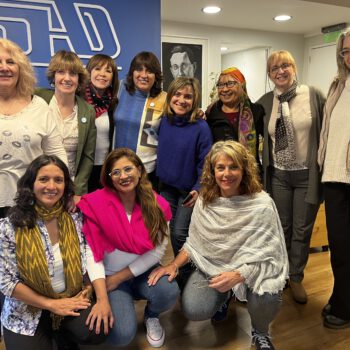
Sitting in the educators focus group, what struck me most wasn’t the content of the discussion — it was the courage in the room. Teachers naming their burnout, their longing, their care. The stories of students voicing what they need but rarely say out loud. Administrators caught in systems they didn’t create but are expected to uphold. Each person and story brought not just their words, but their nervous systems, their histories, and their hope.
And in the middle of that, something softened.
A possibility emerged — not because we had answers, but because we allowed ourselves to be in relationship.
Relationships Before Resolution
In Compassionate Inquiry, we learn that healing doesn’t come from quick fixes. It comes from attunement — from feeling seen, felt, and heard without being corrected.
What if education was the same?
What if before policies or pedagogy, we asked:
“How are you, really? What’s behind the behavior, the resistance, the silence?”
In the focus group, when an educator shared how her voice shakes every time she brings up equity issues in staff meetings, no one interrupted. No one tried to fix it. And somehow, that made all the difference.
The Possibility of Being Known
Change doesn’t come from data points. It comes from being witnessed in our truth.
When students are asked what helps them feel safe to learn, one said quietly:
“When a teacher just notices. Like when I’m having a bad day, and they don’t make a big deal about it — they just get it.”
It reminded me: possibility isn’t some distant reform — it lives in the micro-moments, in the relationships and in the nervous systems of those who share a space each day.
When we allow for presence, something new becomes possible — not because we made a plan, but because we made contact.
Change That Doesn’t Rush
Systems want us to go faster. But real change — the kind that sticks — moves at the speed of trust.
We don’t have to overhaul everything.
Maybe we just begin with questions like:
- What is this behavior protecting?
- What’s the story behind this shutdown?
- What need has gone unmet for too long?
From the CI lens, change happens when the body and mind feel safe enough to soften, explore, and choose a new path.
In schools, the same is true. If we want true transformation, we have to build containers of safety, not just containers of accountability.
When the System Feels Broken
It’s easy to slip into the space of seeing the system as broken — and in many respects, it is.
Society has changed. So have children. So has technology. So have the events shaping our world. And with all of that, it can be a challenge to stay hopeful.
After years of practicing Compassionate Inquiry, I’ve come to understand this:
Change moves at a snail’s pace.
But if there is one thing we do have control over — it’s ensuring students feel seen and understood. And that starts with us.
We can’t offer presence if we’re disconnected from our own selves.
We must attend to our own needs, our own healing and our own nervous systems.
The traditional classroom is evolving — and that can be a good thing.
But what never goes out of style is helping to raise young people who have compassion and empathy for themselves and others.
This is not just taught — it is modeled.
And while we may not always be able to function in the full role of a CI practitioner within schools, we can:
- Embody the qualities of CI
- Offer relationship
- Teach the language of presence, safety, and attunement — to ourselves and to those who sit with us every day
I’d like to offer an invitation
To educators, facilitators, students, and leaders:
What if the relationship became the foundation?
What if we allowed space for possibility, even if we don’t yet know where it will lead?
Change is not always loud.
Sometimes, it begins with quiet noticing.
Sometimes, it begins in a circle — in a focus group — when we stop performing and start listening.
A Closing Breath
Take a moment now.
Breathe into the last conversation that moved you — or challenged you.
What might have been left unsaid?
What might have been possible if there had been just a bit more space?
You don’t need to know the answer.
You just need to stay in the inquiry.