
A strategic funding expert known for her ability to make complex processes clear and empowering, Barbara’s compelling proposals enable impact-driven organizations to facilitate amazing social impact projects. By combining her Compassionate Inquiry® training with her counselling background, Barbara uses her trauma-informed, human-centered approach to help organizations both secure critical funding and align deeply with their mission and values.
This post is a short edited excerpt of Barbara’s healing journey from an untouchable sick baby to a fully regulated, self-compassionate adult and parent. Hear her full interview on The Gifts of Trauma Podcast.
Invisibility has been my lifelong theme. In Compassionate Inquiry® we often talk about the myth of the happy childhood. I was that person with a happy childhood. I had no trauma. I was totally fine. But through the pain of feeling invisible, I’ve realized in the past few years that there was medical trauma and early attachment issues. So now that I have done the work, both as a Compassionate Inquiry® client and through training in the year long program, the irony is, I am now a proudly invisible grant writer. I’m a ghost (writer) that people don’t know exists. And I’m happily invisible.
In 2020, I got sick. It was a very slow, mysterious demise. I can see now, I was in full denial of how my immune system was struggling. My GP said, “I need you to go to the hospital.” I asked, “Why?” When I look back, my blatant disconnect from my body was alarming, but I couldn’t see it then. When my GP phoned me with my test results she was concerned. Plus, she could hear my labored breathing. I had lived with it for so long, it felt normal, to me. She told me to go to the hospital, and I objected. “But my daughter has a friend coming for a play date this afternoon!” My GP insisted. “No, you need to go to the hospital.” And when I did, I was exhausted. My brain was still quite active, but my body was very tired.
I don’t know if it was the universe, my social media algorithm, or what, but that was when Gabor’s work, When The Body Says No, showed up in my world. In my hospital bed, I realized, ‘My body has said no.’ At that point in time, I didn’t have the mental capacity to be able to read the book or buy it on Audible. So I started to consume Gabor’s videos. I bought a course and thought, there’s something in this.
When I was exploring Compassionate Inquiry®, it was 2020, and there were no practitioners in Australia. (There’s an abundance of amazing practitioners now, but there was nobody back then.) Fortunately, there was a practitioner in Ireland I was drawn to, and as everybody was on Zoom, we began working remotely. My Irish practitioner held me beautifully, and as we began to explore Compassionate Inquiry®, memories arose from my very early childhood. Exploring them revealed so much.
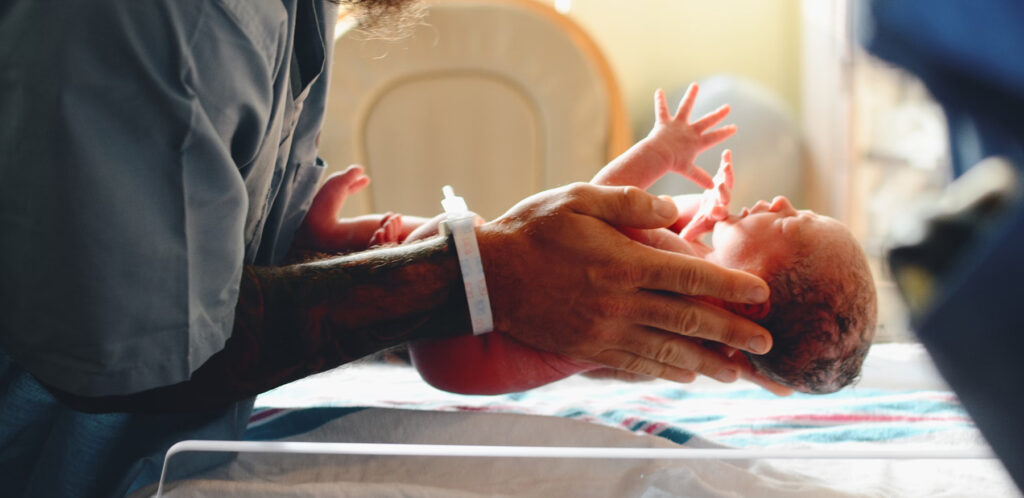
The biggest thing I realized is how sick I’d been as a baby. I had our family story of how I’d been in hospital a lot and almost died. I was really happy to have survived that. But during my Compassionate Inquiry® sessions, my memories were of being alone in hospital. Very alone. And very young, less than a year old. So for a long time I wondered, how can I have such a good outcome (in that I survived) and yet still have so much pain from that time? Through meeting that pain with compassion and joining dots between the story and the choices I subsequently made, much was revealed.
When I began studying Compassionate Inquiry® through the year long journey, I requested my hospital records from Ireland. When they arrived; a big, thick book landed on my doorstep. I knew I’d spent quite a few months in hospital, but the biggest thing revealed was that I was so sick that I wasn’t allowed to be picked up. There was concern about my immune system, and so I finally understood my memories of being on my back, crying, just wanting to be held. But my parents were hardly allowed to visit.
This was the late 1970s, and religious orders ran the hospitals in Ireland. Parents weren’t advocates or included in care. When they were allowed to visit, they had to put on suits and masks, like COVID gear. So I think that’s when that sense of isolation, of being invisible, was embedded in me. And my coping strategy for that was fierceness and extreme independence.
Back then, I didn’t speak of my pain. I was so young, I had no language. And my memory, when I close my eyes, is very much from the perspective of a baby on their back. That was a huge insight, and I truly believe that the biggest thing is knowing. Another beautiful gift from that therapeutic journey was becoming more regulated and connected to my body.
Therapy is still a part of my life. I call it my emotional gym. When my triggers show up, and mine still come from not being seen, or my perception of that. So what I now know is a running joke, in a very nice way, in my friendships. My mate was like, “Oh, have you been seen? Barb, have you been seen?” It’s talked about. We talk about these things. When I have that pain, I acknowledge it. When I’m being triggered, I acknowledge that it’s my original pain that’s been triggered and allow that to be. I find so often that the internal work of compassionately recognizing that pain, somehow makes the problem fall away externally.
I also want to acknowledge that this journey has completely transformed how I parent. I firmly believe that my daughters are a significant part of the reason I entered this space. It has allowed me to see where they trigger me and why. I see now that in their early years, I was quite dysregulated and easily triggered. Outside of our family unit, nobody would have known, due to my expertise with the ‘Swan syndrome.’ Everything looked graceful on the surface, but underneath, I was paddling hard.
And now we have deep emotional connections and enjoy deep emotionally present conversations. At one point, my daughters felt like they knew Gabor because I’d listen to his videos while I made dinner. We can allow space for sadness and happiness and all of that, because the feeling isn’t wrong. We just allow it to be there. This has changed me. It has changed us as a family. As a child, I didn’t have that strong emotional connection, or that emotional safety. So I recognize, with gratitude, that this is a gift that will keep giving for generations to come.
The Gifts of Trauma is a weekly podcast that features personal stories of trauma, transformation, healing, and the gifts revealed on the path to authenticity. Listen to the interview, and if you like it, please subscribe and share.