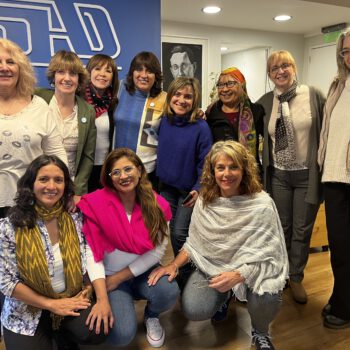

Inés Zabalaga holds a MEd, a MA in Systemic Therapy, is a Clinical Psychologist, Compassionate Inquiry® Practitioner, a Family Constellations Facilitator and Psychedelic Assisted Therapies Facilitator. She also leads Horse-Assisted Constellation workshops and co-facilitates retreats in Canada & Bolivia.
Kate Hazlitt, ND, integrates Eastern and Western philosophies of the nature and cause of disease to focus on the interweavings of physical, emotional, mental and spiritual health. Her tools are Asian medicine and acupuncture, clinical nutrition, botanical, homeopathic and auricular medicine, and more.This post is a short edited excerpt of Inés and Kate discussing various non-medicalized approaches to supporting women’s menopause experiences. Hear their full interview on The Gifts of Trauma Podcast.
“My wish is that we have such an open, honest conversation that we reach the corners where women are still hiding and bring them into the conversation about the darkness.” – Inez Zabalaga
Dr Kate Hazlitt: the Naturopathic Perspective
For some women, menopause feels like a dark period… Patients often come to my office asking, “What’s wrong with my body? What’s happening to me?” They’re in a dark place about what the process is unraveling, and there’s also disorientation. They’re arriving with a lot of unprocessed emotions that need to be metabolized. That’s always our jumping off point.
The brain is one of my favorite topics. I have two boys, one is in adolescence and the other is fast approaching that stage. I became aware of the term ‘pruning’ through Dan Siegel’s work on the adolescent brain. Dr. Lisa Moscone also talked about pruning, and I was fascinated. It’s a process that occurs when estrogen levels begin to decline in every organ system in our body, but most importantly in the brain. When this happens, our brain receptors start chopping away our outdated ways of thinking and being, just as they do in adolescence. While this ‘pruning’ clears space for more authenticity, while it’s occurring, we can often feel off-balance, unlike ourselves. Pruning also brings in a new identity, and shifts roles enabling us to be more in touch with our service and our sole purpose, and less defined by the roles we’ve taken on at different life stages. I’m in my mid-40s, and as my own estrogen levels decline, I can literally feel my brain pruning, as it chops all of that deadwood away.
For me, the experience of pruning is one of revisiting my past hormonal transitions, puberty, childbearing, postpartum…. It’s almost like watching a movie. And as I revisit those times I gain understanding. For example, there were times in my adolescence when I didn’t understand what was happening in my brain, but I didn’t tell anybody, I kept it secret. When I went back to that time I finally understood what was happening. It was the same with my childbearing and postpartum experiences. As a result, I’m not that same person. I’m upgraded in some way. And the pile of trimmings… I’m a gardener, so I imagine a pile of branches topped with deadheaded hydrangeas, skeletal blooms that represent specific times in my life. As I move forward in life, while I’m not certain where I’m going to land, I welcome the transition, and the opportunity to discover what still needs to be integrated.
The brain pruning process shows me where I’ve come from, so today. I’m creating new visions for myself that accommodate certain important parts of me. Repairing is also occurring, because, like in adolescence, there were times where I didn’t talk to anyone about what was happening. I either lacked the language, or perhaps, the safety I needed to open up. I’m going back to those versions of myself and witnessing these experiences through a lens of compassion, mothering and nurturing, integrating whatever needs were previously not met. This prepares me to enter my late 40s, and menopause, with more wholeness and harmony. It also repairs a lineage of women on both sides who I never saw relax. I only saw their anxiety and grief. That recollection revealed to me, Ah! That’s what I’m pruning! And not just for myself, but for everyone who came before me and everyone who will come after me. This process really demonstrates how nature is supporting us, as we move through life.
Inés Zabalaga: The Psychedelic Perspective
Women come to me because they relate to my work. More and more they ask, “What psychedelic therapy do I offer that’s different to what the medical/mainstream offers?” They want to know, “What can I do that’s sustainable and good for me?”
Perimenopause can start so early, in our 30s, when maybe we’re a new mom or in a new relationship. In our 30s we never wonder about perimenopause or menopause. It’s not on our radar at all. But once we find out that we’re in it, what can we do? I lead women’s circles where we talk about the impact of Psilocybin and LSD on a woman’s life and health. So I’m bringing in different solutions, and information about these approaches is not readily available. I offer them for 2 important reasons. First, because learning we’re in perimenopause so early can feel overwhelming. Secondly, because they offer these women the possibility to feel so much better.
Let’s talk about LSD, a most precious medicine that can take us all the way to the perinatal stages. It opens transpersonal opportunities for the holotropic mind to really reach what is inside of us. When our neural system surrenders to this beautiful open consciousness, the chemicals in our body transform. When we start relating to the opportunity in the sphere of hope and richness and surrender, our nervous system starts making new connections which enable us to become more authentic. Whether we’re microdosing or undertaking a major macrodosing journey, we come back as different people with new practices for life. We become new versions of ourselves and as such we need to eat differently, relate differently and sleep differently. We need to be supported in different ways. We also need to embrace the responsibility of providing others with a roadmap so they can relate to our new selves.
It’s the same with mushrooms, which are more for sadness and depression, but also affect our fear, our overall life experience and the transpersonal. LSD is more about expanding into the cosmic opportunity, and the spiritual realm. MDMA addresses anxiety and fear. After all, what human of any gender has not experienced enormous amounts of fear and sadness in life?
Those emotions get stored, so when our estrogen levels start to decline, we have to be prepared to make space for the new person by clearing out, or pruning, what we have stored. This makes room for our transformed selves to enter, to feel we’re back to being present and more alive.
The Gifts of Trauma is a weekly podcast that features personal stories of trauma, transformation, healing, and the gifts revealed on the path to authenticity. Listen to the interview, and if you like it, please subscribe and share.