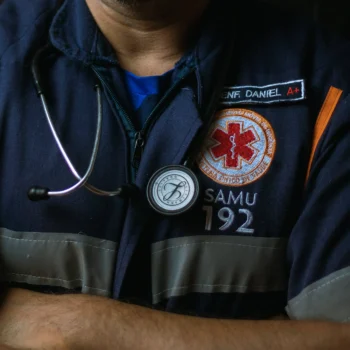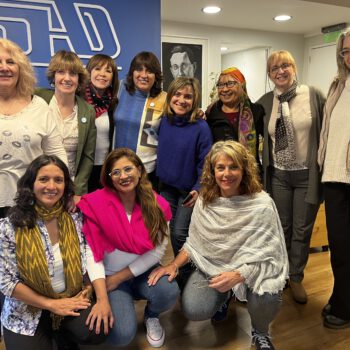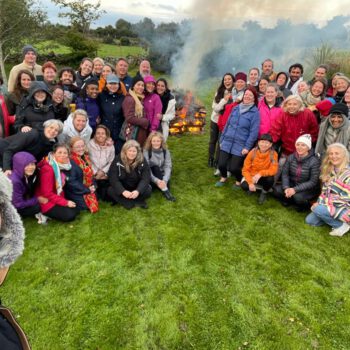

A founding Compassionate Inquiry® Facilitator, Practitioner, Hakomi enthusiast, and Relational Somatic Therapist, Tony has worked with individuals in the context of psychedelic-assisted therapy in ayahuasca ceremonies since 2005. He also held supportive roles in over 15 of Gabor Maté’s 9-day plant medicine retreats, from 2009 to 2017, helping participants prepare for and integrate their experiences.
This post explores Tony’s perspectives on the relationships between self-forgiveness, happiness, kindness, gentleness, courage, and healing. Hear his full interview on The Gifts of Trauma Podcast.
As we heal, self-forgiveness blossoms naturally and changes how we see the world. Often happiness blooms as well, another symptom of healing.
I was asked, “What is healing? How do I help people do that? What sort of healing do people find themselves getting when they come to me?”
My answer begins with my work with Hakomi. Compassionate Inquiry® and Hakomi are such good friends. My wonderful teacher, Georgia Marvin, holds the perspective that we don’t have to work to be in the present moment. All we need to ‘do’ is let everything arise naturally, treat it with kindness, and realize that all the ways we show up are there for a reason. They’re not random, and we’re not broken. Each of them simply needs an expression.
Her philosophy is very much in line with Gabor’s view of addiction. When I work with people experiencing addictions, I spend a lot of time inviting them to appreciate what that addiction does for them and the great relief it provides. I use this same approach to explore the crazy stories we all hold in our heads.
As part of my ayahuasca practice, I do plant dietas. Here’s how these go. I travel to the jungle, and when I arrive, I’m given a hut. I sit with myself in the hut, drink ayahuasca occasionally, and learn from a master plant. I sit with myself very quietly. There are no distractions. And what comes out of that process, from sitting so quietly, is that when a sensation arises, when a feeling arises, great courage may also arise to enable me to actually be with it. It is such an overpowering experience; sometimes the most difficult thing in the world is to just be with it.
What I’ve noticed, when I’m close to that point, is that almost instantly a story comes in. A story… some little drama about myself, maybe even directly related to the intensity that I’m feeling. And the story distracts me. It gives me something to put my mind on. But as soon as I start to use my mind to figure it out, or to explore it more deeply, or to justify this feeling inside, I lose my connection with the feeling. When that happens, I also lose my connection with my healing. But here’s the thing about these stories. They needed to be treated in the same way as our addictions, with a lot of kindness and tenderness and present-moment awareness.
Most of the people I work with experience that feeling, that little bit of mind discomfort, or that story. And quite often, more often than not, that discomfort pushes them to move. Because they’re not sitting in a hut in the jungle by themselves, that discomfort pushes them to move to the fridge for a beer or a glass of wine, or to the cookie cupboard, or to the television. Or it pushes them to move somewhere else to get away, to their cell phone, to go online, to access pornography, or whatever it might be.
A. H. Almaas points out that we tend not to notice the whole. We also don’t notice the deficiency. We just see the behavior the deficiency creates. So we notice the movement to… whatever it is that we chose to move to. I’ve also been asked, “How can we interrupt this pattern that we don’t notice?”
A British philosopher named the three most important things in life as, number one, kindness; number two, kindness; and number three, kindness. So when you’re moving to the fridge or the cookie jar, be kind to yourself. Many, many times I’ve heard Gabor say, “Let’s not shame the behavior. Let’s not shame the addiction. Let’s just be conscious of it.”
This invites the question. “How do I be conscious of it?” The answer is simply “Through kindness.” And by appreciating that, ‘This is providing me with relief. I am being kind to myself. It’s taking me away from something that’s uncomfortable right now.’
I’m really clear that when we get severe with our behaviors, for example, if we think, “You undisciplined loser,” as we reach for the cookie jar, this harshness is going to entrench that behavior. We’re going to double down on going to the cookie jar. So be really kind to that behavior. You might say to yourself, “Okay, I need relief right now. I’m going to take this cookie, and I’m going to feel this relief.” Then you can begin to tap into what is actually uncomfortable. This is awareness, being really conscious of why we do the things we do.
Years ago in Calgary I went on an art walk, visiting what seemed like a million little studios. I saw a painting in a little tiny studio. They just had a few paintings, and I’m still kicking myself that I didn’t buy this one. The painting was of a guy sitting in a chair in a simple room. He’s got one shoe and one sock off. His sock and shoe are meticulously placed beside him, and in his hands is a rifle. One pant leg has been rolled up, and he is looking down. The sight of his rifle is aimed directly at his foot. That image still sticks with me. Its depiction of the very, very careful, meticulous way I shoot myself in the foot points to all the ways that we look to have something outside distract us from what’s going on. So be kind to yourself. You don’t have to work at this. There’s nothing to do. Be gentle. Be soft. Especially be kind to all the parts of you that you feel with all of your core beliefs. ‘I’m too much. I’m not enough. I can’t be loved.’ This is why this healing work is profound. Compassionate Inquiry® has a wonderful way of bringing compassion to those difficult parts of ourselves. So treat yourself the way you would treat someone you love. See them as a really young person. How would you want to take care of them? How would you want to hold them? That’s how you need to take care of yourself.
The Gifts of Trauma is a weekly podcast that features personal stories of trauma, transformation, healing, and the gifts revealed on the path to authenticity. Listen to the interview, and if you like it, please subscribe and share.