
1. Introduction: Walking Into Capitalism with Compassion
We live in a moment where capitalism is the only system widely recognized as “functional,” yet its functionality comes at a cost: exhaustion, disconnection, loneliness, and a chronic pressure that echoes through our bodies and relationships. There is no ready-made alternative waiting to replace it.
So what do we do?
We stop waiting.
We enter the system consciously, compassionately, and with the intention to reshape it from within.
The aim is not to serve profit blindly but to place culture, humanity, and relational integrity at the center of corporate life, not as decoration but as the foundation of sustainable transformation.
2. Capitalism as Collective Trauma
Capitalism doesn’t just surround us; it shapes us. It teaches us to perform, prove, perfect, and produce, often at the cost of rest, authenticity, and connection. In this sense, it becomes a form of collective trauma.
Healing, however, does not happen by escaping the system.
It happens through presence, staying with what feels uncomfortable, and meeting it with curiosity rather than resistance.
This is where Compassionate Inquiry® begins: not in fixing, but in being present, grounded, and compassionate.
3. The Organization as a Living System
A company is not a machine; it is a living ecosystem made of people with their own histories, values, stories, and nervous systems. We do not enter the workplace as blank slates. We bring everything with us: our joys, fears, childhood patterns, relationships, insecurities, and quiet longings.
When something goes wrong in this ecosystem, the question isn’t “What’s wrong with this person or team?” but rather, “What happened to them?”
Overwork, micromanagement, fear of feedback, or a lack of psychological safety are not flaws; they are adaptations. They reflect a system doing its best to protect itself.
Just like individuals, organizations have memories, survival patterns, and trauma histories. And like individuals, they can evolve when met with compassion.
4. Core Beliefs: The Silent Maps Beneath
Each person carries deep beliefs formed in environments where worth, safety, and connection were negotiated:
“I must work hard to be good enough.”
“If I don’t perform, I’ll be rejected.”
“I can’t show my weakness.”
These beliefs shape how we approach tasks, how we handle authority, how we respond to feedback, and how we regulate pace and pressure.
When these beliefs are challenged, tension arises. People often soothe themselves through achievement, perfection, constant productivity, or the pursuit of external validation. This isn’t weakness—it’s a longing for unmet needs.
5. The Hidden Dynamics of Corporate Life: Addiction, Adaptation, Disconnection, Attachment
In many workplaces, people rely on subtle forms of addiction, not to substances, but to feelings that create a temporary illusion of worth.
Achievement, recognition, speed, or constant connection become ways to soothe unmet needs. Over time, the system starts rewarding those who override their limits, and people slowly lose contact with themselves.
When organizations can’t meet deeper needs for belonging, creativity, freedom, or recognition, adaptation takes over. Adaptation begins as intelligence; it helps people survive and fit in. But when it becomes chronic, it leads to disconnection.
People say “yes” when they feel “no.”
They hide emotions to maintain favor.
They adjust to a pace that doesn’t suit them.
And while this may look like success from the outside, authenticity fades on the inside.
Work also becomes a place of attachment.
“I can’t leave; they rely on me.”
“I don’t want to disappoint my team.”
Many employees remain not out of choice, but out of emotional loyalty. A system that keeps people through guilt or obligation cannot thrive.
When addiction, adaptation, disconnection, and attachment intertwine, the cost is profound. People stop listening to themselves. The system stops seeing them. An entire workforce begins to disappear beneath the weight of survival.
6. From Survival to Belonging
When people feel psychologically safe—when they are encouraged to bring their full selves to work—something meaningful shifts:
Innovation reawakens.
Collaboration deepens.
Defensiveness softens.
Presence replaces performance.
This is not “soft” work; it is structural and strategic. It nurtures the relational field that holds everything together.
7. The Wisdom Inside Resistance
Corporate culture often interprets compassion as weakness or emotional safety as inefficiency. Resistance is common from leaders, teams, and the system itself.
Compassionate Inquiry® offers another perspective: resistance is not opposition; it is protection. It illuminates where wounds live and where the system is afraid.
The invitation is not to push harder, but to listen more deeply—to move from control to coherence, from forcing outcomes to trusting the process.
8. A Lens of Understanding: The Role of Compassionate Inquiry®
During the Compassionate Inquiry® Conference in Romania, Lucia Randová and Merve Bodur recognized the same truth: CI has a natural home inside corporate culture.
Why?
Because it invites the questions most leaders avoid:
Not “Why isn’t this person performing?”
but “What do they need to be connected with themselves?”
Not “How do we extract more productivity?”
but “How do we create an environment where people don’t have to disconnect to survive?”
Performance does not grow from pressure. It grows from safety, presence, and authenticity.
9. Creating Change That Lasts
Sustainable transformation is not another workshop or inspirational moment.
It is a slow, steady reorientation of how we relate.
Good leadership today is not about dominance; it is about sensitivity.
Strength without empathy creates pressure.
Sensitivity with clarity creates direction.
Four foundational pillars support this shift:
Authentic Communication
For Lucia, authentic communication is not only limited to 1:1 settings. Through the CI approach, she helps individuals rebuild inner strength lost to old core beliefs, while also facilitating group spaces where people can truly see and experience one another in their authenticity.
In companies, she is naming and addressing essential topics that need to be opened within the organization. Every company is different, which is why she always looks for solutions tailored to the specific culture, structure, and nature of the work.
Her focus extends beyond individual development toward strengthening the entire ecosystem of communication within the organization.
Creating Safe and Boundaried Spaces
Merve offers one-on-one sessions for people across the organization, in every kind of role—many of whom never imagined themselves sitting in something that feels like therapy. Yet once they step into this confidential, nonjudgmental space, something begins to shift.
As they feel seen and heard, an inner sense of safety emerges. From there, healthy boundaries, clarity, and self-connection naturally begin to grow.
These sessions often become a quiet turning point. People start listening to themselves, honoring their needs, and showing up at work with more presence and less fear. And as one person reconnects with themselves, the system around them responds. A single transformation softens the atmosphere, influences communication, and creates ripples that touch teams, relationships, and culture.
At its core, Merve’s work is simple: creating a grounded, safe, and curious space where individuals can return to themselves. And when this happens, the organization begins to shift as well—subtly, steadily—like a domino effect of humanity returning to the workplace.
Compassion and Acceptance
Lucia often sees that people offer compassion to others long before they allow it for themselves. Using CI-based somatic practices, she guides individuals back into their bodies, helping them build enough internal safety to experience self-acceptance and a more compassionate inner relationship.
At the organizational level, she supports companies in creating cultures that make this inner safety possible. Lucia works with teams to introduce somatic exercises and practices that reduce stress, increase presence, and allow people to reconnect with their own needs.
Because each company has its own dynamics and pressures, she adapts her approach to what the system requires. Her work is not only about supporting individuals but also about shifting the entire ecosystem so that compassion, acceptance, and safety can take root and grow throughout the organization.
Curiosity Instead of Judgment
Merve began working as Deputy General Manager about a year ago in a magnetic machinery company established more than half a century ago, bringing a leadership style rooted in curiosity and trust.
When a process breaks down or a mistake occurs, she first seeks to understand the human reality behind it. She leads with the belief that everyone is here to contribute, to work in peace, and to do their best within their circumstances.
Every challenge becomes an opportunity to explore new possibilities.
If knowledge is missing, she supports learning and reorganization.
If communication needs strengthening, she supports rebuilding the channel.
If a pattern repeats, she explores its origins and its purpose within the system or for the individual.
In a long-standing organization, Merve knows that transformation takes time. She works patiently with those who find change difficult, meeting them with curiosity and compassion while honoring their pace.
By staying present and grounded, she helps people reconnect with themselves and with the organization. Over time, this approach inspires subtle but meaningful cultural shifts, creating a more conscious, relational, and sustainable way of working together.
10. A Collective Movement
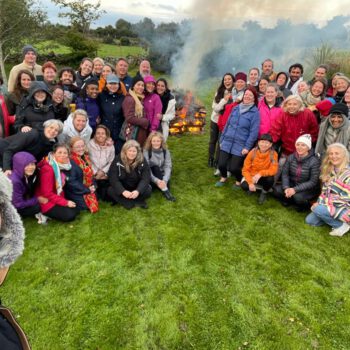
At the CI Conference in Romania, Lucía and Merve established the CI Focus Group: Integrating Compassionate Inquiry® into Corporate Culture. Together with CI professionals, they explored how CI can support individuals and organizations navigating complexity, pressure, and change.
Over the year, they gathered insights, clarified practical applications, and strengthened a shared vision: bringing Compassionate Inquiry® into companies as a pathway toward more human, connected, and sustainable workplaces.