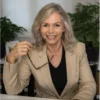

“One of the premier social, cultural, and psychological healers of our time,” Vimalasara is an award-winning author of 11 books, the new First Aid Kit for the Mind course, and a leading African Descent voice in the field of mindfulness approaches for addiction. Jordan is an international speaker, a Polarity Integration Consultant, Plant Medicine Guide, Accidental Activist for Transyouth Suicide Prevention and the creator of the HeartLine Approach to Gender Affirmation course.
In this excerpt, guests’ personal narratives address domestic violence in LGBTQ+ communities, plus barriers to safety and the loss of human rights. Hear the full interview on The Gifts of Trauma Podcast.
Jordan: To create safety, we have to really look at ourselves to find out where we don’t feel safe and why. I do that by unpacking my own stuff. I had a conversation with my mom before my grandfather died. For my whole life she wasn’t going to let my grandparents go into a nursing home. Then all of a sudden, she changed her mind. So when I got curious and asked her why, my curiosity touched her trauma, and she yelled at me. “Shut the f up!” I responded by saying, “Time out! I can see your emotional 5-year-old is driving your bus right now. Let’s let her take a breath, give her a hug, and come back to this conversation. I’m not questioning your reasons. I’m curious about your reasons.” Being able to hold my own inner 5-year-old when things get hard allows me to create a safe space for somebody else who’s in their five-year-old.
I’m neurospicy. It’s my gift, not my diagnosis, and what I know about myself is I’m honest to a fault. I’m overzealous around social justice issues. And I’m working on myself because I sometimes speak the truth in a way that’s hard for other people to hear. I don’t beat around the bush—and I’m learning how to impart that knowledge a little more gracefully. Asking somebody to take accountability for themself in a way that doesn’t sound like I’m asking them to take accountability for themself. It’s really having to learn to be neurotypical, to learn to put a filter on, because neurotypicals can’t always hear the truth without becoming defensive.
This year has been difficult—between the severe concussion in the collision and all the medication after the heart attack. The emotional component of a heart attack is heartbreak. I left a 21-year marriage for many reasons; my heart broke when I left, and I didn’t deal with it. I just shoved it down and ate all the wrong things, smoked cigarettes… So this was my body saying, ‘Hey, we have a heartbreak here. Deal with it.’ And what do I tell my clients? “You’ve gotta feel it to heal it.” So there’s been a lot of feeling of things I didn’t want to feel. There’s been a lot of acceptance of things I didn’t want to accept. I’m a beautiful partner. I’m a beautiful lover. I’m working on myself because I can blame my ex-wife for being a narcissist, but I was codependent. I was unboundaried. I gave myself away to her. I did all of that, and I stayed every day until I left. I kept giving myself away and hoping she would love me. What I learned through this heart attack is I am the cake. And if I find somebody else who also knows they’re the cake, and we want to share a little icing, that’s okay. But my need to be in a relationship to feel perfect, whole, and complete no longer exists.
Vimalasara: In regard to domestic violence and intimate partner violence, of course domestic violence is going to happen in queer and trans relationships. It’s a human thing. It’s not abnormal. It’s inevitable. There are so many reasons for domestic violence. Some people in our community are in the army and have PTSD. That can be one of the causes of domestic violence. And because queer culture, trans culture, has been so underground, there’s been a lot of alcohol and drugs in the community. If you’re under the influence of alcohol and drugs, domestic violence in relationships is more probable—not to say it’s inevitable, but it’s more probable.
I think the issue is it’s harder to speak out about domestic violence in our communities than in heteronormative relationships. And when it comes to places to go to escape domestic violence, when we get there, we might experience transphobia or homophobia or lesphobia. So it’s a lot more difficult to get the help we need. We also have to remember that children are involved in relationships in our community. It can be really difficult to leave a relationship when children are involved. I also think there need to be podcasts on race because it’s a double whammy if you’re in our community and you are BIPOC.
It’s happened that when somebody in our community calls the police because of domestic violence, they get arrested, or shot, or killed. It isn’t safe. So who do we call? To me, this is the issue. Domestic violence, unfortunately, will happen, because we’re human. It doesn’t happen in all relationships or even in a lot of relationships. But when it does happen, where are the places we can go?
If you’re in a heteronormative relationship, there are more places to go. It’s still difficult; it’s still hard. We know that many people in domestic violence relationships, as children, grew up in violent relationships. That’s what they know as normal. Nobody told them it would be different. This is just what happens in relationships. There are services, but there need to be more services and to make it safe for people to be able to go somewhere and say, this is happening in my relationship. I need help.
I also want to call out that the most heinous murders that happened are towards M to Fs, men who have transitioned to females. And the most heinous murders are in the Black, Latinx, Indigenous, and Hispanic communities.
A friend, a trans Black man, says if he’s stopped by the police, he shows his female ID, as that will keep him safer in that moment. That will keep him safer. We have to also talk about the tides of change. The US Supreme Court has stated that gender is just a biological thing.
Even in England, the Supreme Court is taking away the human rights of transgender people. So it’s become unsafe, because as the governments are saying, ‘You don’t have these human rights,’ people are taking that as permission to be transphobic. So where people were being woke, or politically correct, they no longer have to be. So, yeah, it has become unsafe to be transgendered this past year in places in the US and the UK. So who’s going to recognize domestic violence if we’re not recognized under government law? Who’s going to take it seriously?
The Gifts of Trauma is a weekly podcast that features personal stories of trauma, transformation, healing, and the gifts revealed on the path to authenticity. Listen to the interview, and if you like it, please subscribe and share.