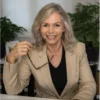

Karenna’onwe (Dr. Karen Hill) is a Mohawk physician who practices at Six Nations of the Grand River Territory and the Indigenous Health Service at Brantford General Hospital. She’s also Assistant Professor in the Faculty of Health Sciences at McMaster University in Canada.
In his private practice in Gloucestershire, UK, Ben Court offers traditional cranial osteopathy, mind-body medicine, and somatic psychotherapy, an integrated approach proven helpful for persistent or complex conditions that have not responded well to conventional treatment alone.
“The Irish GP,” Gareth Patterson, is an NHS GP and health educator based in London, UK. Known for his compassionate, patient-centred approach to medicine, his practice is grounded in the belief that trauma, environment, and personal narratives play significant roles in health. In this excerpt, our guests reflect on the wounds that brought them to medicine and the inner work that transformed how they practise it. Hear the full conversation on The Gifts of Trauma Podcast.

Stoica Adrian
In Episode 1 of the Wounded Healer series, Solea recounted that the poisoned arrow that struck Chiron was intended for another. How Chiron subsequently resolved this undeserved, incurable injury made him the greatest healer of his age.
In Episode 2, we are joined by three medical professionals. None of them planned to end up where they are. None of them chose their wounds. Yet all three agree that their wounds made them the healers they are today.
Ben Court became an osteopath in 2006. He’s thoughtful, embodied, and, in his own words, “covered in self-flagellation lashings” inflicted when his need for his patients to get well was driven by his need to be okay with himself.
BEN: I was trying to heal from an unhealed place. The frustration of seeing a really close family member who has been unwell since I was eight or nine (I’m now 51)… That they’re unable to be cured or helped… I didn’t know it consciously, but I think now that drove me to this profession.
Ben’s last sentence presences the Chiron wound. The arrow lands before we understand what hit us and the wound shapes everything: our career, our patients, our standards. But we don’t see it until something, or someone, shows us.
For Gareth Patterson, a GP from Belfast now practising in London, the wound arrived early. He grew up gay in an evangelical Protestant community in Northern Ireland and spent years in silent torment trying to become someone his faith would accept. In his early twenties, he even sought out various forms of conversion therapy.
GARETH: I felt like I was so much less. My sense of worth, my value. Constantly feeling like I had to be different, that I had to change, that I wasn’t a valuable individual.
He found his way out. He found himself. And in doing so, he found his medicine.
GARETH: When I started to accept who I was as a gay man, I also accepted all the beautiful things that come with that. Having been immersed in an environment where I felt “less than” others left me able to relate to so many others.
The Chiron archetype asks us to sit with the wound itself. To turn toward it with sincerity and stay there. Gareth could not have become the GP he is—tender, curious, and genuinely present with his patients’ vulnerabilities—without first spending years feeling “less than.”
Karenna’onwe’s story began long before she was born. Her mother had spina bifida. She had been told repeatedly by the medical system that she would not survive, walk or have children, but she defied every prognosis. So naturally, she taught her children that they were more than their circumstances and how to thrive in poverty and elude the Sixties Scoop agents. Today, Karenna’onwe is a Mohawk family physician and faculty lead at Canada’s McMaster University.
KARENNA’ONWE: When I was a child, people would ask what I wanted to be when I grew up. I would always say anything but a nurse or a doctor. And yet I became a nurse first and then a doctor. My upbringing drove me to demonstrate to the people coming to my practice that they’re more than their circumstances.
Her wound gave her what her medical training alone could not.
Early in her practice, a ceremonial teacher changed how Karenna’onwe understood illness. After telling him that she hated diabetes and hated what it was doing to her people, he said:
KARENNA’ONWE: If you really want to help the people, you will teach them to love diabetes. These things come to us for a reason. When we have a healing ceremony, we invite the spirit of that illness to come into the ceremony with us, and we address it. Do you think that the spirit of diabetes would come into the ceremony with us if we said, we hate you? So instead, we say, we see you. We acknowledge the work that you’re doing, and we love you, and we invite you into this ceremony now. This person that you’ve come to is ready to hear the message you brought to them. So your work here is finished. And because your work is finished, you can leave.’
This is Solea’s teaching from Episode 1 carried into Indigenous ceremony: the wound is not the enemy; it’s the messenger, but it will not speak until it is met with sincerity.
That teaching came home for Karenna’onwe personally when she received her own type 2 diabetes diagnosis. The illness told her that she had been living in her head, disconnected from her body. As she began the work of coming home to herself, she had a dream that transformed how she practised. In the dream she saw herself walking into the university, using her white coat to mask her true self.
KARENNA’ONWE: Creator said, “You’re the one who has to change.” I had to become comfortable in my own skin. My indigeneity is not just for when I’m in my home community with my people. I need to function from this place of ancestral knowing everywhere.
Three different wounds. Three different professionals. Three different paths to the same understanding. The training is the toolbox. The wound is the medicine.
By the end of this conversation, Ben landed somewhere he hadn’t been before. Not resolved, but clearer about why the wound matters.
BEN: I like the fact that we are wounded healers, that we chose to heal rather than pass on our trauma. That patient in front of me is me. We are one. Meeting at that level feels really great. It feels authentic and honourable for whatever process they’re going through.
Karenna’onwe closed with the words of the elders, offered to every healthcare practitioner listening:
KARENNA’ONWE: The people are beautiful already. That’s just a toolbox you carry. And a beautiful person is carrying that toolbox.
The arrow wasn’t meant for any of them. But here they are, each shaped by the wound it created, practising a medicine that goes far deeper than anything they learned in their training. This is the physician’s wound. And in this episode, it speaks.
The Gifts of Trauma is a weekly podcast that features personal stories of trauma, transformation, healing, and the gifts revealed on the path to authenticity. Listen to the full conversation, and if you like it, please subscribe, rate, review, and share.