
Season 03 – Episode 49: The Therapist’s Wound–Healing Through Shared Humanity, with Efu Nyaki and Rennet Wong-Gates
By The Gifts of Trauma /
Listen this episode here:
or here
The therapist’s wound is rarely just one thing. Our guests today shared that for them, it’s been a mix of childhood, educational, religious, ancestral, racial, colonial, cultural and systemic wounds, seeded through a lifetime. What turned these wounded humans into wounded healers is how they related to their wounds.
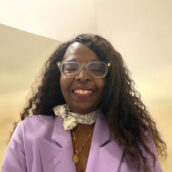
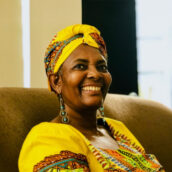
This third episode of the Wounded Healer Series is profoundly relational. Born in Guyana, Rennet Wong arrived in Canada at 17, carrying Russian, Japanese, Chinese, West African, Irish, Portuguese and Aboriginal ancestry into a country that didn’t know how to see her. Born in Tanzania and raised as a natural healer, Efu Nyaki carried her ancestral traditions into institutions that had little room for them. Undeterred, she travelled to Brazil, founded a holistic healing centre, and today travels the world to share her gifts of healing.
Their discussion of shared humanity in the therapeutic relationship explores:
- Why the wound alone doesn’t make a healer, and their relationship to it does
- What it means to sit in front of someone, and simultaneously, their 4,000 ancestors
- The difference between being resilient and being allowed to rest
- How colonial and racial wounds live in the body
- Humility, humanity and the healing power of presence
This episode closes with a poem written by Rennet for this conversation.Her words precisely capture what it actually means to tend a wound—our own, or another’s.
Episode transcript
00:00:00 Rosemary
Welcome to the Gifts of Trauma podcast by Compassionate Inquiry. I’m Rosemary Davies Janes, and I’m here today with two amazing guests to explore the therapist’s wound and healing through shared humanity, healing through relationship, healing through community, which are pivotal understandings in the practice of compassionate inquiry. And I’d like to welcome our two guests. Euphrasia Nyaki, who is currently working in Seoul, South Korea, far from her home in Brazil. So thank you for joining us as you wrap up your day in Seoul.
00:00:35 Efu
Yes, thank you so much. I’m so happy to be here this evening here, but I’m very happy. Honestly, I’m not even tired because I was so excited to join you.
00:00:47 Rosemary
That’s beautiful. Thank you. And also with us today is Rennet Wong, who’s currently working in Toronto, Canada, also far from her home in Portugal. Rennet, thank you for rising early enough to start your day with us.
00:01:01 Rennet
Thank you very much for having me. It’s a pleasure to be among all of you.
00:01:05 Rosemary
It’s beautiful to be here. Now, in Compassionate Inquiry, we have a practice of setting intentions at the beginning of each session to focus our exploration. And I sense this will be helpful here as we gather from around the globe. And. And my intention is simply to hold the space for the conversation to flow freely as we roam through Carl Jung’s concept of the wounded healer, in which, to quote him, the doctor is effective only when he himself is affected. So effective when affected, you know, that translates into a therapist who has grappled with their own shadow, anxiety or trauma. It gives them the ability to bring deeper empathy and compassion and intuition to the therapeutic space. So Efu. Do you have an intention that you would like to share for this conversation today?
00:01:59 Efu
Yes. My intention is, as we sit here, is that may we touch into the inner wisdom and the inner peace that touch people, that they receive a healing as they hear the words we utter here together. And may we be united in our souls so that the echoes of our sounds will also echo with humanity, with the nature, and that the healing may happen as we talk.
00:02:36 Rennet
Yeah.
00:02:37 Rosemary
Thank you, Rennet. I invite you. Do you have an intention you’d like to share?
00:02:41 Rennet
Yes. My intention is to share that my wounds didn’t make me a healer, but my relationship to my wounds did. And I saw. My intention is to really help, to understand that the wounds that I suffered along the way didn’t disqualify me from the healing work, but it just. I attended to it with more humility, reflection, and care. And from that place, I think, is where compassion flows for the people that I sit with. And as you called it before, the medicine. Yeah.
00:03:14 Rosemary
Thank you.
00:03:16 Rennet
Yeah.
00:03:16 Rosemary
Beautiful. As we begin, both of your full bios are in the show notes. So I’ll introduce each of you briefly and then invite you to share something about yourself that’s not in your bio, if you’re comfortable doing that. Now, Rennet, you’re a registered clinical social worker with a master’s in Health and Mental health. You use many talk modalities and body therapies, including emdr, compassionate inquiry, the trauma of money, and Somatic Experiencing. Your therapeutic approach is based on your belief that, and I quote you, building on a client’s strengths within a supportive environment is the key to enhanced mental health. So, Rennet, what would you like to add?
00:04:02 Rennet
Oh, I’d like to add, oh, my gosh, I right now in transition for the last year to be a digital nomad, living and working in Portugal and coming back to Canada as well, too. So I’m meeting new cultures, new ways of being, new ways of being in the world, and at the same time, continuing my own healing by changing the way, the place that I’m living, that their whole way of being in the world is different, and learning Portuguese.
00:04:28 Rosemary
That’s helpful. That’s very helpful.
00:04:31 Rennet
Thank you.
00:04:32 Rosemary
Now, Efu, you were born in Tanzania and raised as a natural healer. You’re a faculty member of Somatic Experiencing and a professor of Family Constellation System Therapy. You co founded afia, which is a holistic healing center in Brazil where you’ve lived for over three decades. You facilitate trainings, workshops, individual therapy sessions, case consults, and participate in summits, webinars, conferences, and podcasts, both in person and online, which means you do a lot of traveling. So, Efu, what would you like to share about yourself in addition to what I’ve just mentioned?
00:05:10 Efu
In addition to what you have just mentioned? I just say that our lives are amazing. Yeah, we never know. But the important thing, we put an intention there. I remember many people ask me, efu, how did you get to travel so much every month, every week, you are somewhere else in this planet Earth. I said, you know what? Actually, I just remember I prayed for it. I prayed for it because I remember saying when I was at AAFIA in Brazil, AAFIA Holistic Healing center, and praying for God to send us people who need healing. We are here for this purpose of healing and therefore send us people for our mission to do that. And so every day people come and I told the other women that are working, they said, you know, every Morning, you wake up before you leave home, ask God to send people for you to do your mission. If this is what you learn, what to do, talking to people, connecting to people. With that, then I said, and not only here in Afia, all over the world, everywhere in the world, may you take me to places where there is a need for healing. I remember writing that prayer and putting it behind my door. So every time I go out I saw it. So I just want to share with the world that sometimes people feel like, isn’t that too much in the traveling? I want to tell the whole world that it’s not too much because there is a purpose and intention that actually becoming like a nice breeze as we travel because there’s a purpose.
00:06:51 Rosemary
I love that I am going to adopt that because I have not had the best attitude when I and facing a long haul flight. So I think that totally shifts your whole being as you get ready to jump on an airplane where you will be for like 12 or 14 hours. So thank you for sharing that. beautiful. The therapist’s wound is a relational one. Most often something that happens in the space between self and others. So I’m curious before I start asking specific questions, (05:34:30 Video time stamp) I’d like you both to consider the archetype of the wounded healer, the therapist’s wound. Is there anything rising you’d like to share before we get into specific questions?
00:07:37 Rennet
The wounded healer, just in listening to the words, feel deeply sacred to me, deeply sacred to my lived experience and speaking from the I. But it feels deeply sacred in terms of the experiences that I’ve had, as a rite of passage, as something that I was supposed to travel on in order to do the work that I do. And so whilst it’s been hard, it’s also like been a blessing because in the African wisdom, I was born under the sign of six. Six, which means the sign of a healer. And six is supposed to be the sign of a healer. And I was born with two sixes. And I consider it an honor to be able to understand that. For me, being a wounded healer is a person who has been through a lot, but a person who again has this sacred pain and has this trauma past, but has learned to dedicate their work not to leak into the room, but to become in a place of deep humility and compassion and awareness and support and responsibility to the people that they sit with. Right? So the true care comes from the presence of, comes from the bridge that we bridge between people and hold with awareness and humility. And so I love what Efu does and she brings in the whole universe. And it is really an honor that we don’t have to be perfect or untouched by pain. We just have to hold that sense of presence and compassion and honesty and shared humanity. And for me, that wounded healer invites all of that as something that right away comes through for me. Yeah.
00:09:18 Rosemary
Thank you. Thank you.Efu?
00:09:19 Efu
Thank you. That’s beautiful. Thank you, Rennet. That’s beautiful. For me, the wounded healer, it constantly remind me of being humble. Yeah. That touch me, touch my own weakness, my own fears, my own doubt. But then when I meet the other person, because it’s relational, as I sit in front of them, I’m holding the space for them. They say a word, I’m like, well, that’s me. But I don’t get lost into that. I’m able to actually see what they are bringing up. But at the same time, I know they have touched my wound as they spoke of a word or whatever they are bringing up. And then it helps me to become more compassionate because I have been there. I know what they are talking about, not just from my cortical brain, but with my whole being and my soul. And so with my whole being, I’m able to actually sit with them. And then we both come up with the intuitive way of actually finding the ways of healing together. So the word I would like the public to hear here is the humility.
00:10:41 Rennet
Yeah, yeah, yeah.
00:10:43 Rosemary
Very well said. Efu, thank you. Wow, what a rich way to start. I’m curious what brought you to the moment or the person or the loss that first showed you that healing was what your life was going to be all about. I wonder if you can go back to that place.
00:11:02 Rennet
Yeah, yeah, yeah.
00:11:05 Efu
For me, I was always. When I was back in Tanzania, before I traveled to Brazil, I was always searching. I’m not sure why, but there was something always haunting me, asking why God created me as a little gift. Why was I created? And you say, well, I need to do something. And I remember as a Christian, also Catholic, we used to go to church and then they will say, good Friday. You’re supposed to do something so that you can offer to Jesus as he suffered, especially that time of suffering, of charisma they call it. And I remember thinking of what to do to contribute into Jesus Christ pain and suffering. That’s very old way of thinking. But as a little child, can you imagine that I already thought of that, of how can I help Jesus in his suffering little. I knew that. I said, no, Jesus already took on the suffering. He’s done he doesn’t need help. He came to help us. But I was already thinking of helping him because I think he had suffered so much. So it is just not one moment in my life that brought me to where I am today. But I think there was a lot of little moments like that in my life. Remembering that I was always in touch with pain, but not going in there as a victim, but going in there always wanting to help, wanting to help. And then it took me to see the women all over the world that are always suffering with a lot of violence and not having way out of their city situation. In the secondary school, education, when it was boarding schools, the same thing. You see, some of the colleagues came, they don’t have money to buy, not even pads for their menstruations. So I didn’t have money either. But I will do what I could, even go around to other and beg. It was just something that pushed me always to look at the people who have pain and suffering. And I evolved too, as I become more mature that not to swim in the suffering, but to come out of it as you’re helping others.
00:13:21 Rennet
My experience was many moments too, but not able to connect them till later on. So, for example, my grandmother seemed, now that, I look back, was a healer. But I thought she was torturing me because she was teaching me so much about plants. She was teaching me so many things about life and about the butterflies and how to connect things and things that she was simmering together for me to drink and to offer to the universe and to humanity and to always connect to people that needed help. And I was so young, I didn’t understand all of the messages together and visiting we would do to other people. And my mom continued that legacy as well. And then when I came here to Canada, I felt that being alone and not understanding the country that I was in, I understood that I needed to be in community. And it was through my doctor who led me to my first therapist, who then let me know the parameters of a lot of the things that I had been through, that there were names for it, for what things were ought to be called. As she named things for me, I started to settle into like, oh, this is what this is. And this has also happened for this other person. And then I did not know that there was anything like a therapist. I was falling into experiences, I was meeting people and I was getting curious of my own experiences, not being like overshadowed as, oh my gosh, please God, I can’t handle anything else. It was just so overwhelming to be 17 years old in a country, all by yourself. And so there were many people who showed up for me. I remember the bus drivers who would help me to get to a place. There were always someone somewhere, and in me, they always saw something different. And it was only until one day I actually went in to see my doctor, and I said to him, I had a bad cold. And he led me to another place of healing. And in sitting in that place, I felt a sense of belonging and in fellowship with other people in the community. I started to understand what this healing was and that it was a very active process of me being compassionate to myself, which I didn’t understand. What do you mean, compassion? I was just taught that you work hard, you have to work harder. And as a woman of color, and that I didn’t know that meant that I needed to do more healing. So as I did my body of work with healers, indigenous work healers, with people who spoke to me every single time I did that, I realized that, oh, there’s wisdom within me. There’s wisdom that they’re showing me that I have, and that there must be something within me that they see, but I wasn’t sure what it was yet. And so that came within years later of people reflecting things back to me. And then for me to go, oh, when I sit in connection and community with people, not only the humility and as Efu mentioned, just the fact that they were trusting me to be able to hold space, the humbleness, the humility with which I could sit with, that created some space for something else to happen. And that compassion for our womb from the my womb became this kind of source of not fixing, but just like making space, like I said, a bridge between people and between myself and the womb that I had. I was then able to be able to see their womb in another way and to offer space, to be able to sit together with the wisdom they had and the pain that I also had. And together there could be a new meaning, a new beginning and a new way of being that God created as we sat together. Yeah.
00:17:11 Rosemary
Thank you, Rennet. One of the reasons I’m so excited to have you both here is because I see some parallels between your experiences. Like, Rennet, as you said, you were on the Gifts of Trauma podcast before, I think, back in 2024, when we were just starting out, and you shared some stories then. So I know a little bit about your history. And at 17, which you just referenced, you arrived in a country that did not know how to see you. And Efu you carry a Healing tradition that the world nearly forgot. And so I’m curious. Rennet’s wound seems more relational and racial. And Efu, your wound seems to be more in the ancestral and spiritual realm. But what does it cost you and what has it given you? To be unseen, Rennet, and to be unrecognized. Efu and from the perspective of people who come to you, like, how have you taken those experiences and turned them into service for your clients? And maybe let me just add one other layer, and you can go wherever you’d like within this. Both of you know what it’s like to be far from home, geographically, culturally, ancestrally. And I’m wondering if that feeling of being lost is perhaps a necessary part of becoming someone who can find others. So I’ve given you a little bit of a stew there, and I’m wondering what that brings up for you when.
00:18:44 Rennet (05:49:00 – video marker)
You were talking about a lot of my racialized experiences. But the wounded healer, from a racialized lens is not simply someone who suffered and now helps others. It’s not just that simple. I think it’s important to know that the parts of my pain belong to me. And there were parts that were affected by many different systems that didn’t see or didn’t see my full humanity. Because it matters that how we not individualize the wounds, but we can shame people for pain that was socially produced. Right? Our bodies remember exclusion. Our nervous system learns when rooms are unsafe, when voices are dismissed, or when our authority has harmed us before. Strength then can become a bit of a, like a costume that we wear. I know from my experience of having to work and overwork so that I would be enough. But many racialized people are praised for resilience while never being offered being able to rest and have softness or protection. And that’s something that I really had to learn. The ability to rest. That as a wounded healer, that my body needed to feel a deeper, deep sense of rest, and that the healing had to include a form of dignity. For me, it’s not just that the nervous system is still being harmed by racism, poverty, sexism, colonialism, or institutional betrayals of one job after another job where there’s some experience of racism. But how all of these experiences, the wounds become wisdom that should not be romanticized at all. You know, as we’re sitting here, oppression is not a gift. The gift is what we reclaim from it, our voice. And having to learn to use my voice, having to learn to create boundaries, having to learn to speak truth, or sometimes not being able to. But the connection of compassion and finding some kind of collective care. Like Efu has mentioned all those things, she’s developed some kind of collective care where my wong can become wisdom, but also meet other people who had that wisdom. So the wounded healer isn’t required to bleed publicly to be believed. Our story has to have choices, has to have consent, has to have boundaries. So for racialized people, healing is not only about becoming calm and resting and doing all of that. It’s also becoming free enough to stop abandoning ourselves in order to belong. And that’s something I still am working on, is learning not to abandon myself, to be able to still continue being a healer for others when my body also needs rest. So I also have to continually check in with myself and have deeper insight that it’s the wound is something that becomes a source of compassion, not shame. Yeah.
00:21:40 Efu
Yeah. Wow. Yeah, that’s wonderful. Just you’ve said there Renat is wow. Okay. I totally resonate with you. And for me, it’s like coming into the US through the religious organization which has majority been white people, and carrying something on my head of my own tradition, my ancestors, and saying, we’re going to celebrate liturgy where I am, it’s a ritual of being received into the congregation. And I said, I want the liturgy to be a little bit more African. I want to bring some things that are more of my culture. And then, of course, you know, all of these rules and stuff that no, a liturgy has to be this way. It has to be Roman. It has to be white. It has to be, because the bishop of New York, if they know we might be in trouble. And I thought I said, I’m going to carry a pot with all kinds of stuff inside of it, because if you’re going to accept me, you have to accept me with my culture and my everything and who I am. You know, I remember fighting like that, so that times we end up have to do that every night, like, we have to really fight. And it’s exhausting, it’s tiring. And I remember coming to a moment, of course, I managed to get a lot in there. But still, when you look around, everything around you is very different from who you are and what you are. And so that the moment I thought, I’m not sure, all that fighting, it’s healthy for me. And yet it’s amazing, though I’m not saying no, I have to leave. This is not my environment. That’s the mystery of this oneness and connection. What brought me to New York, to that congregation with so many religious people who have done wonderful work everywhere, helping others too, healing others in different ways. That’s the institution that created colonialism, created all racism and all of that. It’s there. There was something holding me there that I couldn’t say, no, I’m going, I’m leaving. That’s it, no more. I cannot stay here. It’s not my place. I’ll continue. I have to keep saying I belong here. I belong here. And I remember saying one time to the formators and all those will question everything we do differently. I said, the woman who started the congregation, he’s a very big woman actually, because Mother Mary, Joseph, Maria Jose, she has her hands extended from one end. You cannot see me here. It’s. This is. Yeah, from one end to other. And I say, some of us can stay on this edge of her fingers and some of us can stay on the other edge of the fingers. We all belong somehow. Because she was very open and very receiving. That’s why I’m here. Otherwise I would not be here. So I keep emphasizing that thing I belong as I belong to my family and my clan and my people and my ancestors. I belong here too. Who decided that we don’t belong. I belong. So keep emphasizing that. You have to be a little bit stubborn almost. Yeah. And so with that, I think it was so beautiful because it led me to Brazil where I learned somatic experiencing, where I actually was able to be. I was already very much body oriented kind of a person. But with somatic experiencing, I really learned how to be present in my body where I know when I’m fighting too much and I go back in to take care of myself. So learning how to balance that so I don’t waste too much energy fighting for people to understand me, rather than quietly or slowly helping people understand what is important and claiming my belongingness and yet taking care of myself and yet not keeping quiet and helping with wisdom. Helping people understand that we need to evolve because we all belong here and we all are equal and that this is it, we are teaching one another this wisdom. And I’m very happy I stay and I’m very happy I’m here because through them too, I was able to come to Brazil then. Now I go all over the world. It’s part of all that journey. Yeah.
00:26:15 Rosemary
Thank you. And it’s, you know, it’s a pattern that’s only increasing. People are being more mobile and moving and changing countries. So you’ve touched on this a little bit. But I’d like to dig into the legacy of colonization. You both Carry that in your bodies, in your ancestral lines, your communities. And I’m wondering how does that wound live in the therapeutic relationship? And what does it mean to offer healing to people whose deepest wounds were made by systems that are still in place?
00:26:50 Efu
That is very big because most of the people we are attending for healing, really, it’s like we are all tasked by this system. The way we relate with one another, the way we say what is beautiful. For example, in terms of humanity. I attend people who feel so ugly, who feel that they are too fat, who feel that they are too dark, who feel like nobody sees them. There’s so much whole question of self esteem that when we are attending people we find that. And I say that what I can do is to constantly helping them to go back into their soul and connecting back to their soul, the human that they are. Rather than this artificial way of looking at white and black and one on a lighter color or less light and all that. The long hair and. Or no, they don’t call long hair, we call it ugly hair and ugly hair and good hair. In Brazil, that’s full of all of that. It’s most of the time people really fight against this worklose, you know, ugly hair and good hair and all of that. But the ugly hair, it’s a kinky hair. So. So that make people suffer from that. Like, why was I. But I remember visiting hotel, I remember visiting one family in Brazil and this little boy, gosh, he was only three years and a half years old and he had gone to kindergarten already, to a little daycare school. And he comes home and he tell his mother, his grandmother, when he was raised, he said, grandma, I don’t want this kind of hair that I have. I want another kind of hair like this. Then the grandmother said, like what? He showed the picture of Jesus and long hair all the way to the back. I want hair like this because the other student in school in the class told me that my hair is ugly. And so I don’t want that, I want this. And then the grandma was trying to explain to him, and I was also trying to explain to him that, no, I think we have to help your colleague, but your hair is so beautiful. So then he actually said to grandma, then let’s just scrap it all. Maybe when it grows up again it’s going to grow like Jesus hair, like white hair. And I look at that, I’m like, oh my gosh, can you imagine? This little poor kid already is growing up with this. Yeah, so we work with this all the time. Women that I work with all the time in Brazil, in village, in places, different places, this is all I work with. Building health. Health and self esteem. When you have self esteem, you have health. Yeah. And even the people you work with, sometimes they get lost again. They go back into making jokes of this, looking down on one another. The way that we are working together. I have trained all of them and we are working together and all of a sudden the one said, oh, we are having lunch. So, oh, do you remember that young woman who came to our course the other day? And the other one said, what woman? She said, the one with ugly hair. And then I said, you people are amazing. We are working with this, but still we cannot get out, away from making all these separations and dichotomies and ugly and good and all of that. She looks at me like, well, anyway, it’s ugly anyway. And then for me, it’s very frustrating, especially when you feel like your work is advancing. So getting into somatic experiencing. For me, it was very helpful because I don’t have to keep talking all the time. When it comes to that moment, I just stop and pay attention to my body, to my breathing. Then I did, as a bird, come and make a nice light, a nice noise, and it changes everything. And we see or we hear another word that make us way forward into the healing. Yeah, but it’s a big one. Colonialism is into education system, it’s into health system, it’s into political system. It’s in everywhere. It’s like the water we drink, the air we breathe in, it’s that how big it is. We just need awareness all the time.
00:31:19 Rosemary
Yeah. Thank you. Efu and I can feel how helpful that would be for someone who is battling with a system. Like, they need to continue to function in this oppressive system. And I can’t think of anyone better than you or Rennet to support them in that. And probably what you just suggested is something you suggest often to clients. It’s get out of the head and into your body.
00:31:47 Rennet
I just wanted to add that it brings up a lot of moral pain because for me, having been raised in a convent from when I was four till I was 16, you’re taught to carry it quietly, not to name, not to talk about it, not to translate our pain, but to be polite, to achieve things and to be of service. And that’s where you gained your strength and ability to be seen. But as Efu pointed out, and doing the somatic experiencing, when I did it, my body throughout everything was remembering everything. And I didn’t understand at the time before that. All of these things, these systems collectively coming together, the vicarious trauma, the moral injury of systems that I couldn’t change, not in my lifetime, But I could still use my voice, but I didn’t know I had a voice. So all of those things of coming together to understand was not something that just happened overnight. It was something that I had to work out, work through with the guidance of others, with the community. I had to actually learn that a lot of the things that my grandmother was teaching me was something I didn’t realize, that was interconnected. I didn’t realize that I didn’t have to walk into these things alone. That every single time I could call on all my ancestors who were appointed to me for good to surround me, and that I wasn’t alone. And I have to sometimes still remind myself that as my body remembers and as the legacy of racialized trauma leaves marks in your bodies and pains that you carry in many different ways what the world has asked me or my country or the places that I live in to swallow. I had to learn how to speak. I had to learn how to actually not become so resilient. And I remember a time someone said to me, you’re so brave. And I said to them, I’m done with being brave. Because it’s like I’m expected to be brave. I’m expected to be resilient. And I don’t want to be seen like that. I don’t want to be seen that I have to be so brave and resilient all the time. When I don’t feel it, I feel like I have to acknowledge the pain. I have to acknowledge what’s happening in my body and that the womb sometimes has history with it and it has language. It needs things from me. It’s parts of me that want to say something, that want to speak, that have needs. And it also has borders, it has names. Even though I was told not to speak, I still have to gather myself and to find my voice. And also sometimes to understand why I couldn’t find my voice and what that meant as well. All of these parts of me, oh, I still have to gather myself sometimes. And it’s over the 26 years that I’ve been doing this, it’s easier because as I see someone sitting in front of me and I hear their story, as I see myself, and I also then have more tools and everything to bring into the conversation from different places, from my ancestors, most importantly, as my eyes wake up for my original self to asking for the guidance, to ask for my ancestors to come be with me, to ask for the Great Spirit to join me as well as one of the streams of grace to come through me. And so it isn’t with those kind of beliefs and with those kind of community and with that kind of coming to know myself. It’s not only the suffering, but also through healing. And the ways that I choose to heal myself will be very different. And others choose to heal themselves. And so I do this healing because I was wounded, but I heal because I choose. I choose to heal myself and not to let the wound have the final say, not to let the wound know that I can’t make space for myself and make space for others. That presence is more powerful than we having to fix someone. You know, that presence for myself is also something that I can give myself. And I loved what Echo said about a bird just flickered by. And that happens to me often is that I do see a bird flicker by. And I remember my parents and I remember the wisdom that they taught me and the words that they taught me, that no one can take those away from me, no matter what system I encounter. And so those are the things that the wisdom that I bring with me as I sit with people that I already bring with them myself. The self that I’ve come to know, the self that I keep healing. And it’s an ongoing journey. As I sit with people, I learn with them. And it’s this continual back and forth process. There is still beauty in the humanity of knowing that. Sure, there is racialized experience, but there’s also beautiful people all around the world, everywhere we are. And so we just still have to allow ourselves that opening, to see that there’s those possibilities still for all of us to come into some common humanity with each other and the universe and the animals and the birds and all of it. That is the sky, the sunset, the love between people, the love from children, from all over that the wounded healer still has. In this case we’re talking about, the marginalized wounds are not only personal. Right. But it has, as we said before, dignity and sense of justice that we can bring.
00:37:18 Rosemary
Thank you, Rennet. And it sounds like a really key piece for you and perhaps for clients you work with, is that ability to give yourself permission to step aside from being strong, being brave, being resilient. And it’s okay. It seems like almost a mental version of what Efu spoke of is leaving the mind and going into the body. I think that’s so necessary because what you’ve described is like an ongoing battle from the moment you open your eyes in the morning until the time you shut them in the evening. And I can only imagine how exhausting that must be. So I’m really happy that you found your voice and that you’re able to give yourself permission and suggest to clients who are battling this, too. It’s not necessary. You know, you’ve both spoken about how, as a woman of color, you have to. You have to work twice or four times as hard as others to gain the same recognition as them. So thank you for sharing that. That was beautiful, Rennet. I’d like to really touch the heart of this conversation by asking each of you to answer in your own way. I’m curious about what your wound gave you, what your wound equipped you to be able to do as a healer, as a human being that nothing else could have.
00:38:45 Efu
Okay, Fantastic. I can say, yes, what my wound had given me. But I always question myself. What took me out of my community, where I was so comfortably in Tanzania, was a teacher I was working with. Of course, I was already. My world was already taking me to so many different directions within my own country. Yeah. But then all of a sudden, it’s like I’m led into this place where I come to join the Mariner sisters. Then I go to New York, then often Brazil. One really led me that my wound, which made me feel uncomfortable all the time, especially to see women, how women were. I grew up in a patriarchal society. The way you also hear things and jokes about that were brought with colonialism, about nuts and indigenous is the same also as women. Women are stupid. Women cannot do that. Women cannot do this, Women cannot do that and that. And again, for me, I took that pain in my heart, in my body, and seeing so many women. I mean, my father will say things which is like everybody will say about my mother. I remember one day he told me I was stupid like my mother. I said, no. Many people tell me that I look like you. So if I am stupid, not like my mother, I’m stupid like you because I look like you, like little girl. I was already kind of. I just don’t want to keep hearing that. You know what I mean? And our neighbor, he used to always go drinking, and he will beat his wife the whole time, and we will run over there. Being a woman also in the patriarchal society, where you hear these women being put down and then girls and all these things, you can imagine that women and girls and how they were treated and the priority of who has to go to school who cannot go to school and all of that. So I took that to hurt. And that was, for me, that’s the pain. Yeah. That actually took me to all these journeys. And then all the time is trying to look for how I could help these women. And I think all this effort, for me, it culminated to Brazil, where I started the center where women came into it. And I will go to their houses and bring them to the center, and we’ll do this work of healing. And I remember also that their husband coming later, one woman was healed at our center, and then she got to empower them to hold the space for them to become powerful. And so when she goes home, she’s able to say to her husband, no. And she said, no, don’t touch me. And then actually, he was surprised. So once he comes, he said, please take me to that place to go, because I also feel I need to stop. She brought him. She said, could men come to idols? I always use a lot. I remember telling her, I said, half of the population as women and the other half are the children of women. So we cannot say no to them, to our children. So let him come in and we will also help him. And today he’s no longer drinking, and two of them are well together. So for me, the transformation of not being bitter, not thinking of revenging, including because they do something wrong, that for me, it was a big transformation of helping people, actually being able to begin to heal the whole society. Because you cannot just do work with women and exclude the entire community of men together. Yeah. I really think that my wound, that coming all the way from that of patriarchal society led me through all this, and I found the other. And that where I found this center, then maturity is coming into it. And now we start healing the healing that happens and help everyone else to heal. Yeah, you heal one, you heal all.
00:43:08 Rennet
You asked, what did my wound give me? And I thought at the time I was experiencing my wounds, that it was just me, like, it was just like some kind of, like, personal thing that I was going through through. And as I did over the years, come into this wounded healer role, One of the things that I really developed is that when I sat in front of someone, I sat in front of 4,000 of their ancestors. Like his ancestral mathematics. There was so much people that I sat in front of, and the losses, the pain, the history. And that made me really compassionate, but also very centered to know that it wasn’t only myself and my ancestors that I was sitting with. It was also that I was sitting with their ancestors as well in the room. Things that didn’t start with that, but have come through them. And so that made for me, in my heart, a bigger piece of compassion, Huge piece of compassion that I had a way of offering this presence. And for you, knowing me in the past, also hospitality in the way I would offer food and all of the things to generate hope. That hope had to be part of the connection as well. And as a healer, I’m human, but I’m also vulnerable. I’m also unfinished, and I’m still growing. And the awareness that I had to hold that when I sat down in front of someone else, had to be with a huge amount of humility and curiosity so that I could create space for their rebirth or their healing or whatever word would come in there. But I had to do it in such a way that was so respectful that not jumping in or jumping ahead to fix, but to be able to kind of really hold myself into really awareness of presence, not superiority, but great humility, and allow people to face their own pain honestly. Right? So without needing to kind of like, do something about it, but just allow and allow. Right? And so for this kind of work, the ongoing work that I had to do to really understand and reflect about my own career and from a place where compassion can grow, it has to be, for me to be more authentic, that I had to choose authenticity over other things, attachment over other things that wanted to come forth. Because as a healing profession, sometimes we can sit in a place where we’re like, we’re the experts of the other person, and we’re having to remind ourselves that there for the grace of God go I, but that we are there because someone decided to trust us with their story and their journey. And it is such a place to be able to sit with such humility, reflection, and care. But we also have to do it with our own supervision, our own therapy, our own consultation, you know, our own community. We can’t make our clients responsible for our own unhealed places. So it was with deep reverence that I had to be able to hold space, to understand that as someone speaks, I look at them, I look in their eyes, I look at what’s happening for their body, and I am there with them. And so my womb has helped me to have a greater capacity to do that and a greater capacity sometimes to be curious to myself and to understand that as I awake and as I take my first breath, it begins right there. That is where I start with my pain or my woundedness, to be able to Acknowledge and do my work before I could sit in and start in the day with someone else. And so it has to begin at the beginning of my day, my wound. And it has to end at the end of the day, my wound, to be able to bring that genuine care and capacity to myself so that I can hold a space and that I have the resources available to be able to kind of like hold space with someone else in a way that’s respectful, but in a way that I don’t cause further harm. So our own pain can become wisdom when we tend to it. We have to tend to our own pain. And if we don’t, it can become projection or over rescuing or burnout, so I don’t have to be perfect at it. Healing is not about being perfection, but it’s also about our humanity and the goodness and our belief in ourself that we can help others and sit with others. But it’s more than that. We also have to have our skills. We also have to do our work.
00:48:10 Rosemary
Yeah, absolutely. beautifully said, Rennet. So humanity, humility, and the healing power of presence.
00:48:18 Efu
Wow.
00:48:18 Rosemary
beautifully said. Thank you.
00:48:20 Rennet
You’re welcome.
00:48:21 Rosemary
I’d like to move on, because we are coming to the end. Rennet, if you could say one thing to every therapist, every healer, every person who has given their life to holding others, what would it be? I know you’ve written a poem that might be what you think.
00:48:37 Rennet
That’s exactly what I was going to say. I wrote this poem and I thought it captures what you’re asking, and it’s called A Wounded Healer. I do not come untouched. I come with places in me that have known silence, loss, and the ache of becoming. But I have learned not to hand my wounds to another person and call it healing. I have learned to sit beside pain without rushing it, to listen for the wisdom beneath the survival, to honor the body that carried what words could not. The wound is not the gift. The tending is. The compassion is. The humility is. And perhaps this is healing, not arriving whole, but arriving honest. Soft enough to feel, steady enough to say, and human enough to say, I know something of pain, and I will not leave you alone with yours. So I just wanted to end it there.
00:49:33 Rosemary
That’s beautiful.
00:49:34 Rennet
Thank you.
00:49:35 Efu
Yeah.
00:49:36 Rosemary (06:26:31 in video code)
And Efu. If you could say one thing to every therapist, healer, every person who’s given their life to holding others, what would you like to say?
00:49:47 Efu
What I would like to say to each one of them is that of them, including myself, is like listen. Listening with the heart, listening with the whole body, listening to the other person in front of us with reverence and also that person’s. You know, when I look at the person in front of me, I always see that they have also their own ancestors behind them and I have my own ancestors behind me. So we all have the same dignity. And therefore, I’m not going to fix you. I’m not going to do anything. That’s why we want to make sure we settle them. But I’m sitting here with you so that you can learn something from you as I learn something from. From you. But I’m holding space. And then with curiosity, maybe curiosity even as I look at your ancestors and I’m able to ask right questions that will help unite our ancestors and then create a bigger space of expansion where both of us are healed in that space. So just remember that there is resonance, there is that presence, there’s compassion, and there is that whole question that I see you as you see me, and that’s what I will really share with them.
00:51:11 Rennet
Yeah.
00:51:12 Rosemary
Thank you. Efu wonderful. Ranit Wong, thank you so much for being with us today. Euphrasia Nyaki.
00:51:20 Efu
Yeah.
00:51:21 Rosemary
Thank you so much for joining us today on the Gifts of Trauma podcast by Compassionate Inquiry.
00:51:28 Efu
Thank you so much.
00:51:29 Rosemary
And if you’ve enjoyed this conversation today, please join us next week as we explore the teacher’s wound and go beyond the therapy room. Thank you.
00:51:40 Efu
Thank you.
00:51:43 Rosemary
For having. It’s been a pleasure.
Resources
Websites:
Related Links:
- Compassionate Inquiryy®
- Somatic Experiencingy®
- Family Constellations
- Healing Asthma in Adults (Podcast)
- Somatic Experiencing and Family Constellation Healing (Podcast)
- Branches of Wisdom (Podcast)Rennet’s 2024 Interview (Podcast)
Quotes
- “My wounds didn’t make me a healer… my relationship to my wounds did.” – Rennet Wong-Gates
- “Oppression is not a gift. The gift is what we reclaim from it.” – Rennet Wong-Gates
- “I do not come untouched. I come with places in me that have known silence, loss, and the ache of becoming.” – Rennet Wong-Gates
- “The wound is not the gift; the tending is, the compassion is, the humility is. And perhaps this is healing, not arriving whole, but arriving honest.” – Rennet Wong-Gates
- “When I meet the other person, as I sit in front of them, holding the space for them, I’m able to see what they are bringing up. I know they have touched my wound and it helps me to become more compassionate because I know what they are talking about, not just from my cortical brain, but with my whole being and my soul. Then we both come up with the intuitive way of finding healing together. So the word I would like the public to hear is humility.” – Efu Nyaki
- “I’m not going to fix you. I’m sitting here with you so that you can learn something from me as I learn something from you.” – Efu Nyaki
- “You heal one, you heal all.” – Efu Nyaki“Humanity, humility, and the healing power of presence.” – Rosemary Davies-Janes
Social Media:
- Efu’s Instagram: @afyaorg
- Efu’s Facebook https://www.facebook.com/efu.nyaki/
- Rennet’s Instagram: https://www.instagram.com/rennetwonggates/
- Rennet’s Facebook: https://www.facebook.com/RennetWongGatesPsychotherapy
- Rennet’s TikTok: https://www.tiktok.com/@rennetwonggates