
Listen this episode here:
or here
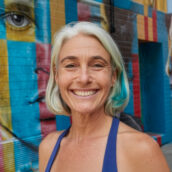
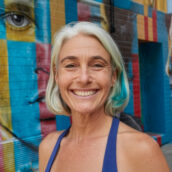
What happens when we stop performing and start being? Cat guides us through her transformational journey from codependent conditioning to embodied authenticity. With wisdom drawn from 30+ years of yoga practice, plant medicine journeys, and navigating her own healing from Breast Cancer, Cat reveals why the answers we seek aren’t outside ourselves, but waiting to be uncovered within.
Cat reflects on:
- How shedding her protective layers enabled her to access her true strength
- Her expanded her capacity to be present, hold space for others and become a conduit for transformation
- How humor helps her navigate life’s challenges, as everything is funny… eventually
- The importance of receiving—from others and ourselves
Through humor, vulnerability, and profound insight, Cat shares many life lessons, including how learning to trust her innate healing capacity revealed the ease that comes from truly holding ourselves from the inside.
Episode transcript
00:00:00 Cat
First, acknowledging it’s a lot, not just in our personal interactions, but the world at large. We’re all in a big WTF moment.
00:00:13 Kevin
Yeah.
00:00:15 Cat
And having compassion for the parts of ourselves, and I don’t mean to use parts work, but like the aspects of ourselves that might reach for whatever self soothing thing will help us get through.
00:00:29 Kevin
Of course.
00:00:30 Cat
Utter, utter compassion for that.
00:00:33 Kevin
Of course. Yeah.
00:00:35 Cat
And knowing that it’s not sustainable, but it certainly helps you get through. It’s really looking in and realizing that we all have the healing capacity. We all can tap into the quantum field. We can all get these downloads. It’s not about doing more. It’s actually about letting more and more of these layers, this armor, these protections, all these things that we have created to get through life, letting them go, one by one, and trusting that there is going to be a strength and a resource inside that might need to be mirrored from outside, but it ultimately is an inside job.
00:01:27 Rosemary
This is the Gifts of Trauma Podcast. Stories of transformation and healing through Compassionate Inquiry.
00:01:46 Kevin
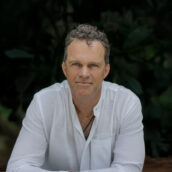
Welcome to another edition of the Gifts of Trauma Podcast from Compassionate Inquiry. My name is Kevin Young and I have the privilege and the joy to be here with someone who, I’m really looking forward to speaking to, Cat McCarthy. Cat, hello. Welcome.
00:02:03 Cat
Thank you. Thank you. I’m very happy to be in this convo with you.
00:02:06 Kevin
Let’s see where we go. We were just chatting before we started that you’re an interesting cat. Cat. Oh, I’m so happy I thought of that joke. And I want to talk a little bit about you, who you are, how you got to be where you are and what you do. I’d love to talk a lot about the work that you do and the people that you work with. And through that, my hope and aspiration for this conversation is that people can listen and pick up something that’s useful for them. Might be a 10 second breathing technique, it might be a 2 minute yoga pose, or it might be something deeper, that would be useful for them. And Cat, I have a lot about you on my screen. I get to stalk the people that I’m chatting to, and read all about them. But I would rather not tell people who you are. I think that’s a privilege that belongs to you. Would you be willing to take a few minutes and in whatever way feels right for you, tell us who you are.
00:03:04 Cat
Thank you. That’s a big open question. Who am I? And my first answer is, I am, and leave it at that. However, that is not necessarily going to be the most descriptive, but I will say that I am a work in progress and constantly becoming a more essential version of myself. I have had a very circuitous path in life. I have had various incarnations of careers, of interests and thinking that they are seemingly disparate and very different. But looking back, of course, hindsight, we have more perspective. There’s so many things that I have done that have informed what I’m doing. And there is a thread that I’ve noticed about myself, which is interesting because most people ask, what do you do? And I’m not really interested in what I do. I’m interested in who I am and whatever I am doing. And I’ve done a lot of things. But if we were to zero me back into the bigger picture, I have always been an extremely curious person and I love learning. And that is never gonna end. I think that’s what makes me tick. And I also love the idea of storytelling and the stories we tell ourselves and the concept of being able to continually be rewriting our self narrative with a sense of agency, certainly a sense of humor, whether that’s working in film or yoga or nonviolent communication or CI, or in the somatics of sound and breath work, all of that is possible in these different realms. And I will say that I am constantly asking myself the exact question, who am I? And the answer also is, I don’t know exactly. And yet I’m curious to constantly find out and be surprised about who I am being in whatever moment shows up. So that doesn’t really answer your question, does it?
00:05:07 Kevin
You would be surprised, Cat, at how much that answered my question. And how much I can learn about you already from your answer. So this… I hadn’t intended, having a spiritual conversation with you. However, given the answer that you’ve just dropped, it would be remiss of me not to get curious around that. So I hear you, and I hear that it’s heartfelt when you say, who am I? The answer is, I am. And I hear you talking, just in your language, just in how you’re holding yourself. There’s a spiritual aspect to your being. Are you willing to talk about that?
00:05:49 Cat
Yes. And it’s been a very resistant part of me for a long time. So you’re picking up on something that I didn’t mean to put down. However, it is something that was not part of my upbringing. And in my deconditioning process, these things are becoming more and more revealed to me because I have been very participatory in life and been very, quote unquote, successful, whatever that means. And it’s been somewhat of a performative way, working in the entertainment industry and teaching and having to hold space and facilitate and do trainings. There is a certain amount of performance and. And that part of me, especially with a lot of plant medicine work that I’ve done, has gone away. There’s been a crack in that and I’m not really interested in being in that place anymore. However, it got me very far and I have appreciation for everything that has brought me to where I am now. Even if it’s been very painful and compounded loss. Yes.
00:06:58 Kevin
Thank you.
00:06:58 Cat
Sure. This will be new territory for me. So yay.
00:07:01 Kevin
I’m fascinated by it because of my own interest in that. So I hear you talking in an Advaita Vedanta, non dual kind of way. Is that true for you?
00:07:12 Cat
Yes. I would say in all the yogic philosophy that I have studied over the years, I’m definitely a non dual/ I more fall in the Tantadiga tradition. But the right handed side of the gift of embodiment, the fact that we’re not trying to transcend and get out of the body like The Animal’s song. We gotta get out of this place if it’s the last thing we ever do. That’s more of a classical perspective and I’m more of let’s go further in and see what the inner landscape, inner space is because it’s a reflection of the larger space in which we are living.
00:07:48 Kevin
I heard a young woman online just recently and she was, I don’t know, maybe a young woman in her early 30s. On screen she looked very beautiful. She was young, she was a white woman, but she had a little bendy on her head and she was talking about spirituality and she was saying, sometimes you can be there…. She speaks really slowly and she has these big blue eyes and you have to really mind your mind. And she was talking about, you can be in a space and you can notice that the mind is judging. ‘These people are less conscious than me, I’m more conscious than them.’ And you got to be really careful of that. And I agree with her in that. But then she said, you can change that. You can recognize that, wow, this is just bad energy and trust your inner being and your inner being will ask you to leave. And that’s where I thought, oh well, hang on, that’s bypass. That’s not spirituality. Because what I hear you say is that you’re inviting. When that arises in me, when I’m embodied, I can then drop into my body and get curious, rather than, this is bad energy and I need to leave. It might be dangerous, and you might need to leave. But rather than leave, I hear you. Inviting an exploration inwards, which for me is true spirituality as well. That’s embodied spirituality, I like to call it. What is going on for me right now. Would that be true what I’m saying to you?
00:09:14 Cat
I do appreciate the wisdom of embodiment. The physical body in which we live is one of many bodies. We have an emotional body, the mental body, energetic body, spiritual body, all the koshas. I am not identifying with just one body when I talk about embodiment. There is that. I would say for me. I’ve been practicing yoga for over 30 years, and primarily, there are eight limbs of yoga. It’s not just asana. The physical practice is the only one. But people usually think, oh, that’s yoga. There are eight lpossible ways of getting into consciousness or being able to access that. So the stronger my physical body is, the more I can create a capacity to contain more and to take in more and to be so open that I can get more and more downloads and become a conduit. And whether I’m directing something on a set ,or whether I am leading a yoga class, or whether it’s a nonviolent communication mediation situation or with a client with CI, my job is to be so present in many ways and be aware of noticing and tracking where I go, whether it’s my nervous system or my thoughts or where my attention is going, so that I can actually open the space and be that strong container in which something will come in and be present. It’s not about me. However, there is a certain amount of effort involved, including the ego in order to be able to go to that kind of capacity or holding.
00:10:54 Kevin
Yeah. Thank you.
00:10:55 Cat
Yeah.
00:10:55 Kevin
I really like what you said, Cat. I need to be so present in many ways, and it’s not about me. And this is something I’d like to lean into later when we talk a little bit about healing. Ron Kurtz, who developed Hakomi, the Hakomi model, he talks about, “We are not the healers. We are the space in which healing is inspired, or we are the facilitators of space in which healing is inspired.” And I say this because I’m keen for people to know that the healing that they’re searching for is in them. It may need inspired out. It may need a little coaxing, a little coaching, a little…. A little help to emerge, but that they’re not going to a healer to be healed.
00:11:44 Cat
That’s outsourcing right there. If you think you’re going to be healed by someone else and they’re going to do something to you. First of all, you are not an agent. You’re more of a… I’m not going to say victim, but you’re not empowered. And it’s putting the onus and the responsibility on someone else when really it’s in our capacity. And yes, we might need to have a little play date to invite these parts out with people or these aspects. And the healing that I have had, of course I know when I outsource. I’ve done it my whole life. I grew up in a codependent and narcissistic family system. So I was trained and groomed to do that. To always look outside for answers, to always look to others for validation. That was my upbringing. And knowing that now – and it never sat with me, it never was something that I felt comfortable with – but I didn’t know anything else. So it’s really looking in and realizing that we all have the healing capacity. We all can tap into the quantum field. We can all get these downloads. It’s not about doing more. It’s actually about letting more and more of these layers, this armor, these protections, all these things that have created to get through life, letting them go one by one and trusting that there is going to be a strength and a resource inside that might need to be mirrored from outside, but it ultimately is an inside job.
00:13:24 Kevin
I love that there’s something very special about empowering other people. Cat, let me maybe finish this little section of this conversation because I have to because my mind just loves this and I would talk about it all evening.
00:13:36 Cat
We’ll just do a five or six hour one.
00:13:39 Kevin
Yeah, yeah. And Cat, don’t even joke. Don’t even joke. So I’m not going to give you any background to the next thing I’m going to say. I’m not going to balance it. I’m just going to throw it out there and see how it lands with you. All sickness is spiritual sickness. Discuss.
00:13:58 Cat
I have not heard that before. Let me let that land.
00:14:03 Kevin
You may not have heard that before because it’s mine.
00:14:05 Cat
Okay. It just. It is live hot off the presses.
00:14:08 Kevin
It is live hot off the press.
00:14:10 Cat
I think the word that I feel most comfortable with, and not to split hairs, but dis-ease, disease.
00:14:17 Kevin
Okay.
00:14:18 Cat
Because I think that it’s helpful, in the sort of flip side of that is ease flow. Things that are impeded… the disease. I don’t know. I’m not quite sure how to respond to that. I will say this. When there is dis ease in one of the many bodies, it can’t not affect the other bodies. And the spiritual body is one. It’s considered the most sort of inner of the koshas, which are these various layers. I don’t know if you’re familiar with the koshas, but in the yogic tradition, they’re like little lampshades that we have and our culture and what we can measure in the gross body is the most tactile. And that’s the one that we can figure out. Okay, you have a cancer diagnosis. This is what we’re able to measure and it exists. Right? And as I know from my work with Compassion Inquiry and Gabor’s books, and particularly when The Body Says No, looking at the origins of the disease that is… maybe shows up and indicative on the outside has a lot of origins of what was going on. The inner. These inner layers, these other bodies. Maybe it’s a spiritual origin, I’m not sure, but I like to think about how all of these bodies do work in tandem and all together and pick up slack for the other ones. And I will say that the spiritual is probably the most subtle and the physical body is the most gross. And just because we cannot measure something in these other bodies doesn’t mean there isn’t some thing to tend to. So it could be that there’s maybe a lack of resolution in a spiritual sense, that shows up in a denser vibration in the physical body or emotional and mental [bodies]. I don’t know.
00:16:22 Kevin
Yeah, I think that’s where I’m coming from too. And it’s interesting chatting to you because I kind of like to imagine that my spiritual body contains all of the rest. As in it’s the outside layer, it’s the container for everything else. So therefore, and I’m again maybe splitting hairs or being contrary, I think that anything that’s happening within that container of the spiritual body is spiritual sickness. And I think that our traumas, which may manifest as dis ease, our traumas are something that separate us from self. Capital S. Self. I’ve been really thinking about this and I thought, I want to ask Cat about that. This idea that as we separate from self, because we have to, we’ve had to, then that creates illness. So I’m going to stick with it, Cat. I’m going to land on it and say all disease. I like how you phrase that. All disease is spiritual disease. Yeah.
00:17:15 Cat
I do appreciate the idea of also how it contains everything. Yes. It depends on if you’re looking from the outside in or inside out. I completely agree. And ultimately the deepest trauma and that disconnect we have from ourselves is the most painful. And the one that, because it happened for a reason, for good reason, for survival. There’s also that reunion that can happen which is so beautiful. And I have had experiences where it’s a mix of relief, like, ‘Ah, there you are.’ And grief of, ‘Wow, you’ve been there the whole time and yet I’ve been looking elsewhere” or I haven’t been paying attention, or I’ve had to be dealing with other stuff that has been at the expense of that connection. Yeah. And it sometimes takes a big health crisis or something big in one’s life to wake up and realize these things. So it’s a gift. All that I’ve been through has been just an ongoing gift. Unfortunately, it doesn’t come with a return receipt to trade it in for something better. Something you’d prefer.
00:18:31 Kevin
Yes. Maybe the statement, sometimes we just have to suffer enough before Cat, we do anything about the thing. Are you okay with leaning in a little bit to your own illness, your own dis ease? Are you willing to talk about that? And you’re welcome to say no.
00:18:50 Cat
I’m more than happy to share that. I think one of the things that I came into this world with is I really love to share my process because I learn when other people share theirs. I love that. But I will say that before going there, I can give a little bullet point of how I might have gotten there.
00:19:12 Kevin
That would be really beautiful
00:19:13 Cat
Because I think that has some value.
00:19:17 Kevin
I think it does too. I would be really delighted if you would share as much or as little as you want to share. Cat.
00:19:22 Cat
Yeah. Yeah. Where to begin?
00:19:24 Kevin
Maybe beginning with…You talked about the family of origin that you grew up in. Would you start there?
00:19:28 Cat
Okay. There we go. Thank you. Let’s go way back. So I grew up in New Orleans, Louisiana, which is a very festive, everything is welcome, carnival-esque environment. It’s a great place to grow up in many ways. There’s a strong sense of play, and people dressing up, and it’s gumbo of sorts… of all sorts of cultures that have been there. On my father’s side, I come from multiple generations, from New Orleans. On my mother’s side, my mom’s side, British. She was an immigrant, essentially, who moved to the US So I grew up in New Orleans having somewhat of a splintered experience where I am one foot, very much from this culture in the south. And then British, which is very different.
Kevin: The opposite, you might say
Cat: The opposite in some ways. Right. Because like when you go to a funeral in New Orleans, there’s a funeral dirge. You play somber music when you come to the internment in tombs, we’re buried above ground because of the being below sea level. And then there’s celebratory music right afterwards where you walk away and everyone’s celebrating one’s life. It’s called a second line. The family is the first line and then everyone else is the second line. And it’s a very embracing way of looking at death. British side, sweep it under the rug. We don’t talk about it, not going to discuss it kind of thing. So I grew up with these two influences and then went away for college and traveled around. I lived in Europe. I had a Fulbright scholarship for a year and I ended up in Greece. I was supposed to go to Yugoslavia, the war that was happening at the time. So anyway, I lived in Europe, I traveled around. And it was such an empowering experience to travel by myself. At that time, I was 23. And it prepared me to then move to New York City, which was never my plan, but it’s just what happened. And I went to the NYU graduate Film program, which is. There are a few film schools in the US and that was one that in particular is thought of very highly. And I didn’t really think I would move to New York. It was never my plan to live here. And then it just happened financially, scholarships, whatever. The universe was like, you’re going to New York, moved to New York, went to grad school. And I had started working in the film business when I was 18, although I was introduced to film in fifth grade. And I’m still in touch with my fifth grade teacher. So it was something that. A seed that was planted very early on. That’s why I mentioned that. And then working in the film business for a few years before going to grad school. I started when I was 18. I was in this industry that’s, I would say, more male dominated at the time. And I had to prove myself as a female. And I worked in the technical department and the camera department. And I wanted to be a director of photography. And I was always the photographer. And I, through a variety of circumstances, I ended up focusing more on directing and producing and writing and editing and doing your own sort of auteur theory of films. And I really burned the candle at many ends. I don’t know how I worked professionally while I was in grad school. And I did it. And then I continued after that, started working as a director and a producer and things just started to flow. And I. I love working in production because it’s very interdisciplinary. It’s not a solo thing. It’s very communal. We all work together. We’re all creating this thing. And it’s long hours, and it’s stressful, and it’s exhausting and constantly having to prove yourself. And ironically, and I will mention this, I did a television show I produced called Trauma Life in the ER. I had no idea that I would be back in the world of trauma, just in a very different way. It was a show that I was nominated for an Emmy. So it was like my career was starting to keep building and building, and it’s a very hierarchical structure in the film business. Work your way up. However, being from New Orleans, Hurricane Katrina happened, which devastated my hometown. It was flooded, People left. And I also was very acutely aware of how my practice of yoga and yoga communities were so valuable in holding people during this time, because 911 in New York, it was the same thing. We all were… what to do. And you just would come to practice and be together and process together. So I spent a lot of time back in New Orleans. I shot a lot of footage, documented my family, friends, people who have lost everything, to be with them on their journey as they were. Real time going through something very unprecedented. And so all of the film stuff that I was doing was still very active, but I wasn’t as interested in doing gigs out of town. I wanted to stay there. So I also had been teaching yoga as, like, my hobby, something I love to do, and I had connections with some studios there. So I made a point for 10 years of going back and forth between New York and New Orleans and helped build a community as people. There was a huge diaspora of people who left New Orleans, a lot of yoga teachers as well. And I had this energy and impetus to come back. And we started building because it was a cheaper way to deal with the loss that had happened than taking Prozac, practicing together, being together, and having communal spaces that then started to continue on into me teaching locally, regionally, nationally, then internationally. And all of a sudden, it started. I was not traveling for film anymore, and I was traveling for yoga. But I’ll pause for a moment because I know that was just a lot of download to begin with.
00:25:27 Kevin
And if it’s okay, Cat, you just said something really beautiful there. And when we think about the podcast that we’re on, the Gifts of Trauma from Compassionate Inquiry, and we talk about stories of from trauma to healing, inspirational stories from trauma to healing, and you’ve Just said something really beautiful. You’ve said a lot. That’s really beautiful, and let’s come back to it. But you just said something there for me, which was one of those little nuggets of how and the methodology that people may use to heal. And you said, practicing together, communal spaces, building communities. If that isn’t a recipe for healing, that’s what every retreat is that people go to. It’s practicing together, communal spaces and building community. Yeah, I just want to bookmark that. And quite often people say to me, I don’t have that. And my answer is when. Build it. Get four people together to practice yoga or a book club, or drink tea together, or walk together or play guitar or knit or take photographs or whatever it is. Practice together in communal spaces and build your community. And isn’t that the very opposite of what’s happening in the world right now?
00:26:44 Cat
Yes, I think there’s been a lot of isolation, myself included, as all of my work evaporated in 2020, after I was in Japan for the first three months and then came back and everything changed and having to pivot. And it’s been very. I don’t want to say lonely, because that’s a judgment, but I have spent a lot of time alone, and it has actually given me forced downtime to look at some things and for me to also realize how much I miss in person, sharing, holding, being held, and ultimately realizing that we’re not in it alone.
00:27:29 Kevin
Wow. Thank you. Cat, can I just check in with you? Your eyebrows just changed. How you doing? Your eyebrows just dropped a little bit, and I’m just curious how you are.
00:27:41 Cat
I’m fine. I’m fine. I think that the collective grieving that’s going on is a lot you’re picking up on. That’s a big topic. Then I’m interested in learning how to. How to be with that.
00:28:00 Kevin
Yeah.
00:28:01 Cat
Yeah.
00:28:02 Kevin
It’s a focus of Thomas Hübl, hasn’t it? We’ve had Thomas Hübl come talk to us in our Compassionate Inquiry community, and he talks a lot about collective trauma and collective healing and collective grieving. Cat, I’m just going to give a book that I’m reading a little plug. It’s a fascinating book, a wonderful book. It’s called The Wild Age of Sorrow by Frances Heller, and I can highly recommend it because there is. There’s a lot of suffering. There’s a lot of pain, or in American English, I should say pain. There’s a lot of pain in the world. And just as another little bookmark, in a few weeks we have Sat Dharam coming back and she’s going to talk to us about her ideas of bridging the gap between that, the grief, what seems to be a crumbling world, and what’s next. How do we cross? How do we cross that? Hey, Cat, please continue your beautiful stories about New Orleans and New York and. Yeah, please continue.
00:29:00 Cat
Yes, for a 10 year period, I was back and forth again. Maybe it’s not new to me to be living in two different cultures concurrently. I’m able to somehow do that. Maybe it’s my flexibility of doing Hanumanasana. The splits right from anyway won’t get into the mythology. However, in my yoga community, there was a bit of an implosion that happened at one point and it was not pretty. And during that, and actually even before it. But I could sense that something was coming down the pike was our inability to deal with conflict. And I took it upon myself to learn nonviolent communication. It was something that I personally wanted to have more tools for myself, for my own connections with people, but also for the community in which it was a very challenging time. So what I realized in learning nonviolent communication is that it’s named after… there’s the yamas and niyamas, which again are part of the limbs of yoga. And the first one being ahimsa, which is ‘no intent to harm.’ And so nonviolent communication is named pretty much after that term. And I learned so much about…. Because I’m in a communications field with film and with education and with entertainment and storytelling… the words we do use do matter. And learning so much about how much judgment and interpretation of perception is packed into word choice, first of all. Secondly, I also learned about feelings and needs. And having grown up in an environment where my needs were not important or they were on the back burner, reclaiming that I have needs, being able to communicate what they are, and also having a wider vocabulary for what I’m feeling that expanded my ability to communicate. And it changed not only how I relate to other people, but it really changed how I related to myself. And the essence of nonviolent communication is everything we do to meet a need. So can we be curious about what need is being met in whatever we do? And with that curiosity and practicing an empathy muscle, that I actually learned from my dog Mulligan, growing up. He was the one entity, one sentient being in my household who had empathy skills and showered me with them. That was an amazing practice of going to the empathy gym, and building that muscle, so that I can engender more compassion, which is really the first stepping stone of Compassion Inquiry, right. Is having that empathic abiding presence, right?
00:32:04 Kevin
That’s the one. Yeah, that’s the one.
00:32:06 Cat
I call it eeping just for short. I just have to remember what it stands for, because that capacity to be present, to be attuned, to be curious, and to track where I am going at any moment. Because when we’re having conversations with people, there are multiple conversations happening at the same time and being able to track where I go. So I. I then created a program which was nonviolent communication or compassionate communication and yoga. So it was reorganizing the physical, mental and emotional, habitual and conditioned ways we are posturing ourselves. And that was a wonderful yoga off the mat for me. And being able to teach that in different languages and different cultures is also really exciting because it varies according to where you are and what is typical. In Japan, they have very active listening. They’re taught that they’re very communitarian. Us is very individualistic. So it was such an interesting mix to be in all of that. So I guess I could leapfrog forward that to the beginning of 2020. I was in Japan. I was doing a residency, traveling around, teaching these programs. And I also was teaching embodied anatomy. And I teach these courses not as dry anatomy of Here’s a bone, here’s the muscle, but what’s the relationship between all of these systems in our bodies and how again, you can’t have one part of your body like a community not affecting another part. So I loved teaching in a relational way, these things about relationships, which my films are also about relationships about human interactions and what’s really going on in the subtext when we have the text, the ticker tape below. And that’s when Covid began. And I wasn’t quite sure when, if I was going to be able to fly back. I completed all of my commitments, but came back a little bit early and then came back to New York and landed and then didn’t seem to go anywhere for quite some time as far as physically. But I went to many, many places on the inside and the CI I was introduced to Compassion Inquiry. Let me just say this. I had Gabor’s book on my shelf of when the Body says no. For many years I was told about this book I knew about, wasn’t until. And I’ll jump back just slightly in time. I was diagnosed with breast cancer in 2017. It happened to occur about a week or two after my mother had just come up to have Surgery for her cancer. And so I shifted gears from holding space to her to then having to deal with, okay, I’m a yogi. I’ve been healthy. I. All the narrative. Right. And going through that process was humbling and life changing. And the part that was the hardest was that right after my. I had a double mastectomy right after it, literally, I’d had my drains taken out, and I was free to be able to move about with more ease, although I couldn’t pick up anything more than £5 for a while. My mother then entered into hospice, so I flew to New Orleans to be with her until she died. And I couldn’t really focus on my own stuff because I was there for her and wanted to be.
00:35:55 Kevin
Can I pause you just a little second, Cat?
00:35:57 Cat
Yeah, yeah.
00:35:59 Kevin
I’ve just noticed that I’m just holding myself.
00:36:02 Cat
Yeah. Okay, let’s take a few breaths and.
00:36:06 Kevin
Gripping myself and noticing. I’m fascinated. And noticing just how quickly that the sea bomb dropped into our conversation there.
00:36:17 Cat
Yeah. Yeah.
00:36:19 Kevin
Maybe we can just honor that a little bit and just hold a little bit of space for. That’s big, right? For anyone in their life to be diagnosed with any sort of cancer.
00:36:30 Cat
Yeah.
00:36:31 Kevin
Hey, I haven’t been diagnosed with cancer, but I know plenty who have and know that it’s a scary time. It’s a time of uncertainty. And I hear you talk about the mind chatter. You know, I’m a yogi, and I’ve done this and I’ve done that, and I’ve looked after myself and maybe why me and what’s going on and. Yeah, maybe we can just give that a little space. I’ll just relax the grip I have on myself.
00:36:54 Cat
Yeah.
00:36:54 Kevin
Yeah.
00:36:54 Cat
Thank you. Yeah.
00:36:56 Kevin
I just want to say I’m sorry and I don’t mean that in a, I don’t know, sympathetic or condescending way. I just mean. Yeah. I just want to say I’m sorry, Cat. That was your experience.
00:37:07 Cat
Yeah. Thank you.
00:37:08 Kevin
You’re welcome.
00:37:10 Cat
Yeah. And just so you know, I think there is a certain element of when you get a diagnosis, there’s a tendency, or. I’ll speak for myself. I jumped into, okay, what am I. How am I going to handle this? What am I going to do with this? And I was very active and participatory with it. Never did. I think, oh, poor me. At all. It was like, okay, let’s figure this out. And I am going to be participatory in this process. I am not angry with my body. I don’t have to go into battle mode. None of that because my body is a gift and my body is telling me something that I’m not listening to. And it’s the final frontier. And my mother’s diagnosis came out of left field as well. And what that revealed brought up so much dysfunction family wise, that it was just a lot to handle and not to like drop a few more little bombs in there, but there was a divorce that happened as well before that. And the divorce was not just me uncoupling from a marriage, but also having to divorce my parents perspective, which again goes back to a codependent type of system that I just wasn’t willing to replicate. So there was a lot of loss that happened. So I think my system was just worn out and finally my body was like, hey, we’re done here, we need to regroup.
00:38:50 Kevin
No, Cat.
00:38:56 Cat
I think it’s, I think it’s no shit, Sherlock.
00:39:02 Kevin
Yeah, Sherlock or Cat or yeah, yeah, yeah, I hear that, I hear that.
00:39:09 Cat
And it did propel me into a whole other. Like just when you think the floor, you’ve hit terra firma, then another level and then you fall down and then you think, okay, I’m on solid ground. And then even further. So there was a lot of that. And perhaps it was allowing my nervous system to titrate to then be able to handle the next thing and the next thing. And because of my yoga practice, I had a very loving and affirming relationship with my body and with my meditation practice and with all of my self study the svathantraya of it all, I could handle it. It’s amazing. And still, yes, it was a lot.
00:39:57 Kevin
We’re taking a brief pause to share what’s on offer in the compassionate inquiry community. Stay with us. We’ll be right back. If you’re not a therapist or a. Healer, but you heard our guest describe the personal transformations they experienced during their compassionate inquiry journeys and wonder what might. That be like for me? There is a program that is offered to anyone who wants to experience the power of Gabor Mate’s approach to trauma healing. I’m Kevin Young and I’ve been facilitating CI circles since 2020. I’ve seen people transform in many ways. I’ve seen people change beliefs, relationships. I’ve seen people change how they show. Up in the world. I have seen people literally change how they look in front of my very eyes. There are many, many ways that people change during compassionate inquiry Circles. Circles is a 10 week small group experience. Click the link in the show notes. That’ll bring you to A web page that gives you all you’ll need to figure out if this is for you. Cat, can I ask you a question?
00:41:20 Cat
Sure.
00:41:21 Kevin
And then I’d love to continue on with this. So. With watchnai. With when the body says no. No doubt you’ve read Hungry Ghost, Close Encounters with Addiction, and I’m sure you’ve read Bessel’s book, and I’m sure you’ve read the Myth of Normal, and I’m sure you’ve read Peter Levine, and I’m sure you’ve read et cetera, et cetera, et cetera, et cetera, et cetera. I’m sure you have. They’re probably all just sitting there behind you, actually.
00:41:44 Cat
Yeah, they’re all. Yeah, I have many of those. Yes.
00:41:47 Kevin
Yeah. So I’m curious. Oh, I just. I don’t want this question to sound crass. I mean, but I’m serious. With that knowledge and your own illness, do the themes running through when the body says no, the body keeps the score, waking tiger, etc. Etc. Do those themes seem true to you when you look at your own story and your own illness and what landed in your body?
00:42:14 Cat
Now they do.
00:42:16 Kevin
That’s what I mean. From this point. Yeah.
00:42:18 Cat
Yeah. In the middle of it, I didn’t know anything else.
00:42:22 Kevin
Okay.
00:42:23 Cat
So that’s where the deconditioning process, I think, has been extremely revelatory. And I have such clarity. It’s like. There’s so much clarity about it. And also it’s like clarifying and horrifying at the same time of, wow, how did I not know all these things? How did I not know what I was storing in my body and not to beat myself up, but just like. And wow, I did so much not knowing. And I do believe. And I don’t mean for this to sound all Pollyanna because I couldn’t say this in the midst of it all, but on the other side of it, I think my cancer diagnosis and what was found in my left breast in particular was protecting my heart. The heart’s on the inside of the rib cage. It is on. In this very protective basket, if you will. The breasts are on the outside. And it was a way, in some ways, to help me pay attention and also to protect anything going further into my heart, physically and philosophically.
00:43:41 Kevin
Sure. Yeah.
00:43:43 Cat
Because I think going through the divorce and my mother’s death and a lot of just unsupported experiences really broke my heart. But as my. One of my teachers says, the heart has to break for it to open.
00:43:56 Kevin
So are you saying that all disease is spiritual disease.
00:44:02 Cat
Do you have bumper stickers already created that you’re going to be passing out? I would say that I watched my mother die. Not of the cancer, but of a type of resentment and grief about having to live, choosing to live a certain way when there weren’t too many options for women. Also, my mother, growing up in England during the war, I think had PTSD and was never diagnosed.
00:44:35 Kevin
Yeah, I’m sure.
00:44:36 Cat
I think she held a lot in her body that also helped somewhat protect us from certain things that she took on. And I saw her go through a process that I was not going to do myself. And it was a beautiful thing to be able to be present with her and sing to her right before she died and to be bear witness to her last exhale, considering she was there at my first inhale. Like, it was a beautiful, devastatingly beautiful experience.
00:45:17 Kevin
Sure, I hear that.
00:45:18 Cat
And it also reminded me of. I’m not going down that path because my recovery, my physical recovery from. So I had my double mastectomy, my mother died, and then I had to go back and forth between New York and New Orleans to prepare for a funeral while I was starting to get my treatment for the next surgery.
00:45:41 Kevin
Geez.
00:45:42 Cat
And I was at her funeral and sang at her funeral, but nobody knew anything about what was going on. For me, I couldn’t. It was just that we were there to focus on her, but there was just so much that I was holding, and I don’t know how I did it. I really don’t. And yet there was some fortitude in me, something galvanized, strong enough that I could do it. However, it’s when we get to the end of something, the ptsd, the. After the post. It’s the post that is when I could fall apart.
00:46:14 Kevin
Yeah.
00:46:15 Cat
Gabor’s book, when the Body says no was something I read when I was in Japan. Finally, I was like, all right, I’m gonna bring a book with me. What book am I gonna bring? And that was the book that I wanted to read because not only did the physical stuff, that was easy peasy for me. I had amazing surgeons. I had amazing team of women. My capacity to move in my body and have the proficiency that I have of all the yoga really helped. That was the easy part. The hard part was all of the emotional and mental sort of from all of that. So being grounded, Covid couldn’t leave my apartment, couldn’t go anywhere. All my work dissipated. Had to pivot, do something else. Did a podcast, Was creative. All that also allowed Me to be still and not be on the go and hyper vigilant, always on the move because that kept me safe for much of my life. That is when I actually began to let everything, all those layers start to unravel and release. And concurrently, I was doing 2020 May CI. So collectively, as a whole group of us all over the world were going through the pandemic at the same time in very different ways. And how amazing it was to be able to do that through zoom. And I was isolated and didn’t have the support, didn’t have all of that in person. Hug, eat with, have a meal with someone. All those kind of things. Yeah.
00:47:49 Kevin
I’m just going to lean us back a little bit to those three things you said earlier on. And I know it was online. But practicing together, communal spaces and building communities. And I think that’s what our compassionate inquiry community certainly offered me to speak personally. And maybe that’s what we’re trying to. Not maybe. I know people come here to train and learn, but I think what we’re doing is practicing together, building communal spaces and building community. That’s what we’re doing. That’s why we do what we do. Cat, can I pivot a little bit?
00:48:22 Cat
I’m really conscious time wise. Oh, my goodness. Okay.
00:48:25 Kevin
Exactly. Compassionate inquiry time. We’ve only been here for five minutes and already an hour’s past. I don’t know how that happens, but there you go. The reason that I want to speak to you and the reason that I want to move the conversation to where I hope it goes is that there are billions of women, mostly women. Maybe not exclusively. There are billions of people. Usually women are identifying us who are doing what you were doing in a roundabout way. Looking after family, working full time, keeping home, looking after aging parents. Being really busy, doing all this stuff. What can they do? What can they do? How might they best look after themselves? Particularly some women that are there now going, that’s me. That is me. Probably a chest full of anxiety. Probably. And I don’t mean this dismissively. I mean it very kindly. Compared probably a fridge full of wine or a store cupboard full of sugar and trying to cope and trying to survive and trying to get through and working too hard and being stressed out. And what do they do?
00:49:36 Cat
First? Acknowledging it’s a lot.
00:49:40 Kevin
Yeah.
00:49:41 Cat
Not just in our personal interactions, but the world at large. We’re all in a big WTF moment.
00:49:50 Kevin
Yeah.
00:49:51 Cat
And having compassion for the parts of ourselves. And I don’t mean to use parts work. But like the aspects of Ourselves that might reach for whatever self soothing thing will help us get through.
00:50:06 Kevin
Of course.
00:50:07 Cat
Utter utter compassion for that.
00:50:10 Kevin
Of course. Yeah.
00:50:12 Cat
And knowing that it’s not sustainable, but it certainly helps you get through. I have, I’ll tell you what has helped me is I sing with a Brit Pop choir.
00:50:29 Kevin
Okay, so let’s just pause on that one. So I sing with a Brit Pop choir.
00:50:35 Cat
Exactly.
00:50:36 Kevin
Yeah. Give me 10 seconds. Description of what is a Brit Pop choir.
00:50:41 Cat
It’s a group of us, a little over 50 of us that come together once a week and we choose collectively whatever Brit pop songs we’re gonna do. I personally, I pushed for Waterloo Sunset, the Kinks, but I’m of the old school part of the group. And we have someone who breaks all the different harmonies apart and creates a new composition that we all learn. We sing together once a week. We have a performance by the end of it all. And it is so incredibly healthy for me. First of all, I’ve always been a singer, but you don’t have to be a singer. But there is such incredible benefits if you were to look through the polyvagal lens of how singing and when you sing and your voice joined, your exhale, it lengthens your exhale, that brings you into the parasympathetic part of your nervous system. And because it’s playful and because we’re in a group and collective, it’s ventral vagal for me. And I love music and the vibration of it because that’s also. We’re all vibration. Everything is vibration. And so all of my somatic training and breath work and sound work comes together. I lean into the music, I hear the harmonies. I cannot read music, but I hear harmonies. I always have where I know exactly where my part fits in when I hear the whole. And it has been something that I wish I had done sooner. But because I was traveling and always out in the world and busy, I didn’t have the stillness that came from the pandemic and shifting of gears. And then it just was one of these things where my antenna was open and I found this group and it’s such a joy. And I come home every Monday night so excited. My body feels like I’ve had such a nourishing meal that I can digest. I go to sleep and I wake up feeling very complete. So finding something that connects you to yourself, that’s playful, that is not work related, that feeds you and it might be going back to something that you loved to do when you were little and maybe put away one of the things I love about yoga is I do handstands. I’m upside down all the time. I hang upside down when I can. Why do we stop doing that? So I think it’s a reclaiming or reunion, not only with these parts of ourselves that we might have disconnected from in some ways internally, but going back and playing with things that really spoke to us. Like, when I sing, I feel so present. I feel so in my body. And I feel. I know those aren’t feelings. I’m fully aware. I experience my authenticity, my essential self. So whatever it is that does for you, I think, is going to be a key in changing the narrative, shifting the gears from the self soothing. Let me get just through this moment to what is something that’s going to be a sustainable practice of self connection.
00:54:15 Kevin
Thank you, Cat. And again, those three things that you said earlier on are popping up for me again. It’s practicing together in communal spaces, and it’s building community. Yeah, yeah. And if I was being really playful and teasing you a little bit now, I would be stamping on the desk going, sing, sing, sing, sing, sing, sing, sing.
00:54:36 Cat
You’re gonna have to come to our concert. I. I love singing. And there’s so much more when there’s multiple voices. Right? And. And it’s so hard because I want to do that harmony. And I want to do that harmony. I’m gonna do that harmony. And yet I’m like, no, this is my contribution to something much larger. And I will say there’s one element that is very, very important, is safety. And not just, okay, I’m perceiving safety, but really knowing how that is experienced and embodied, because that has been part of my practice as well, is learning to trust myself. Because I didn’t have much experience or practice of that growing up. I had to trust situations or people or relationships that did not have my best interests at heart, although I assumed they did, because why wouldn’t they? And learning to trust something that is not only as myself, but that outsourcing to other people is also putting my trust into some limited form. And I have a limited form as well. But can I trust something that is limitless in me? And that is what I place the trust in. This is a new muscle for me. And that, I think, brings about my experience of safety in a very different way than what I might have defined it as before?
00:56:17 Kevin
And, Cat, I’m going to read you a little something. I also think what you’re speaking about there, this might sound a little radical. I think that is the new revolution. I think it’s the new revolution. To be able to be safe, to be able to trust without a heightened state of awareness. To be practicing together in communal spaces, building communities, sharing, caring, supporting. I think that’s the Viva la revolution. Bring it on. Bring it on. I’m going to read you, if it’s okay, just a few words. I often get stuck on a beautifully stuck. Enthralled by is maybe a better word than stuck. And it just leans into. It just leans into what you’re speaking about. I think a little bit you might guess it’s by John o’. Donoghue.
00:57:09 Cat
You’re consistent, Kevin. You’re very consistent.
00:57:12 Kevin
If anything, I am consistently boring about harping on about John o’. Donohue.
00:57:17 Cat
I love his words.
00:57:18 Kevin
Yeah, me too. It’s in a beautiful book this time called Divine Beauty. And I’ll read you a little tiny bit, but there’s a nine word sentence that I want to focus on. In this little passage he says, for Aquinas, beauty also included the notion of integrity integrators. He understands that each thing is alive and on a journey to become fully itself. Integrity is achieved when there is a complete realization of whatever a thing is supposed to be. And in this nine word sentence that. I’d love to just chat to you a little bit. Integrity is the adequacy of a thing to itself. Integrity is the adequacy of a thing to itself. And the word adequacy is interesting in there for me. It’s not brilliance. It’s not. It’s not a real superlative. It’s adequacy. Integrity is the adequacy of a thing to itself. And I had to go look up the word adequacy because adequate usually means meh. All right. And it is just sufficient. Sufficient. So integrity is the sufficiency of a thing to itself. Can you imagine how life would be for us if we were all adequate to ourselves, Sufficient for ourselves, able to trust in ourselves, lean on ourselves, that we didn’t need to prove anything, get anything, take anything, win anything. I need to get anything from you. I don’t need you to be any different. I don’t need. Because I am adequate enough to myself.
00:59:00 Cat
Yeah, that’s beautiful. I was thinking the word of nuffness.
00:59:03 Kevin
Enoughness.
00:59:03 Cat
Yeah, yeah, enoughness. Right. And I’m reminded of the word poorna. In Sanskrit it means perfect. But it doesn’t mean perfect as in perfection. It means complete unto itself.
00:59:20 Kevin
Absolutely.
00:59:21 Cat
Yeah. So that’s where the. These beliefs that I held to be true that I’m not enough. There must be something wrong with me. My opinion doesn’t matter. I’m alone in the world. All these things, interpretations that really helped me get very far are not true. They never were true. But they needed to be true then. And how to. This is where I. This is where my storytelling and film comes in, is how are we rewriting these narratives? What is true? And again, it doesn’t mean that the belief is going to be true, but it’s true for this moment, for me to believe now for what’s to come, because it may change. And what if we came into this world having that be the set point from which we start? That’s why I’m amazed at how much I did, knowing so little. And I’ll probably a year from now, we’ll say, oh, my gosh, Kevin, I can’t believe what I didn’t know. I hope so at this moment.
01:00:24 Kevin
I hope so, Cat.
01:00:25 Cat
Yeah, I hope so, too, because it’s a constant unfolding and enfolding in a beautiful hide and go seek.
01:00:34 Kevin
That little passage just said everything is alive and on a journey to become fully itself. And that’s an ongoing process. Right, Cat, before I let you go, jeez, sorry. I signed. I said that like I had imprisoned you.
01:00:48 Cat
These handcuffs are really, really comfortable. Just so you know.
01:00:52 Kevin
Before we end our conversation, talk to me a little bit then about your work right now. So what’s going on with your work? Do you love to do. You said earlier it’s not who you are, it’s how you’re being in the space that you’re in at the work that you’re doing. So what is your work right now? Who are you in that space? What are you putting out into the world?
01:01:10 Cat
That’s a good question. Big picture. I don’t know. And it is emerging and having the trust that it will emerge exactly as it is in its enoughness will. So a few things. I still teach and facilitate nonviolent communication. I am seeing clients as a compassionate inquiry, sort of trauma informed, somatic coach. I also teach to a spinal cord injury group. And we do a lot of work on the first limb, which is the spine. So there’s breath work and sound work. And I’m integrating all of these aspects and creating an offering that brings in all of these ingredients. I’m not quite sure what the dish will end up being, but I’m adding the ingredients in a way that seems to be emerging is the biggest word right now for me. Ironically, after taking a huge break from working in the film business, I am more equipped and feel a lot more comfortable working with actors and interviewing people in documentary and nonfiction projects because I understand human motivation from a very different perspective now. And I’m intrigued by how I am developing a program which is using a lot of therapeutic approaches to character development and working with actors and bringing it into that realm. So it’s not just in the therapy world. And also working at a ketamine place has been very interesting to hold sort of be a bookend for people on their journeys because I’ve done plant medicine work myself. Ketamine isn’t necessarily my medicine, and yet it has. I have seen, I bear witness to people having a shift in perspective, having another view. Right. Of not only themselves, but of the world. And so I think all of this is expanding at the moment and I don’t know how it’s going to turn out. And I’m okay with that. And if you had asked me that probably even a few years ago, I’d be like, well, I don’t know what I should be doing and who am I and what sort of placard do I put out as to what I’m doing in the world? I guess I want to do a lot of things and bring in all these elements into whatever I do. So in whatever capacity, whether it’s film, whether it’s yoga, non valley communication, CI somatics, sound work, breath work, I think my focus is supporting people in rewriting their self narratives so that they have more tools so they can continue to evolve and rewrite their own stories.
01:04:07 Kevin
It’s really beautiful when you couldn’t name, when you said, I don’t know what the dish will be with all the ingredients, I really hear those things you’re mentioning. The link I think you named it is that is the relationship. It’s helping people. It seems to be that you’re extremely good and extremely well versed in being in relationship with people and offering that space that we talked about earlier where healing is inspired, where rewriting of that story of who Am I Is inspired by the work that you do. Cat. I also love the passion, keeping it.
01:04:42 Cat
Big and open, I think. And this is something I’ve gotten from a lot of different perspectives, but it keeps getting affirmed over and over that if I am in my space, in my body with ease, then I am able to be in relation in a relational space with others with that ease and moving in the world with that feels so healthy.
01:05:12 Kevin
Feels like a breeze. That ease feels like a breeze.
01:05:15 Cat
Oh, I like that. We can re. Rewrite Breeze B R E A S E Because I think that I’ve been holding on tightly, trying to hold it all together and keep it going and all this kind of effort, and people say, oh, just let go. The only way I have felt comfortable in letting go is knowing that there’s something inside of me that can hold, because I’m trying to hold it so much on the outside, but to be able to really hold myself on the inside. And the term like hold my own has been very resonant with me so that I can be doing that myself, helping support people do it for themselves. And as you said, in a collective, relational, hopefully safe space that we can all be modeling for one another. And when I fall down, it’s so great to have other people there to help me back up.
01:06:15 Kevin
Hallelujah.
01:06:16 Cat
Because I can’t do it all on my own. And that belief that I held to be true and you have to make life happen and all that is not accurate for me anymore. And it’s really a practice of receiving. And can I receive the gift of myself?
01:06:32 Kevin
Cat, thank you.
01:06:35 Cat
Thank you.
01:06:36 Kevin
Is it okay if we land our conversation?
01:06:39 Cat
Let’s press the pause button because I’m sure we could go on for many more hours and perhaps. To be continued.
01:06:45 Kevin
To be continued. Actually, maybe one final question, just very briefly. So you’re. You’re well and you’re healthy and you’re.
01:06:51 Cat
Yeah, thank you. Yes. Yes. And there’s always that little part of, oh, if this test comes back. If and when that part shows up, I can hold her and let her know it’s all good. And I got this. And humor has been so integral in all of this. So, yes, I would say I am healthy and I am just getting started.
01:07:17 Kevin
Wow. Yeah. I will join you on the journey, wherever you’re going. Okay. Let me ask. Can I ask you one more question, Cat? This is the old Columbo, the Columbo tech. The Columbo technique, when you thought that you could relax and.
01:07:29 Cat
Oh, of course, that’s when he sees the crack in the scene.
01:07:33 Kevin
Just one more question before you go.
01:07:37 Cat
With his cigar, his trench coat.
01:07:40 Kevin
May I ask you one more question, Cat? A playful yet serious question that I like to ask people. Thank you. You’re nodding. So the question is, if you had the ear of humanity right now and could whisper something into the ear of humanity, what would you whisper?
01:07:59 Cat
Am I supposed to whisper it?
01:08:01 Kevin
You can’t. You can whisper if you want. Yeah.
01:08:04 Cat
The first thing that comes up is everything eventually will be funny.
01:08:11 Kevin
I like that.
01:08:12 Cat
And it’s not personal.
01:08:14 Kevin
That’s also true. Everything eventually will be funny. And it’s not personal. Thank you, Cat. I really appreciate you taking that final question on the spot again.
01:08:26 Cat
That’s a fun question.
01:08:27 Kevin
Thank Cat McCarthy from every one of the team at the Gifts of Trauma podcast from Compassionate Inquiry. Thank you.
01:08:36 Cat
Thank you, Kevin. Thank you for your curiosity, your presence, and most of all, your humor.
01:08:51 Rosemary
The Gifts of Trauma is a weekly podcast that features personal stories of trauma healing, transformation, and the gifts revealed on the path to authenticity. Listen on Apple, Spotify, all podcast platforms. Rate, review and share it with your clients, colleagues and family. Subscribe and you won’t miss an episode. Please note, this podcast is for informational purposes only. It is not a substitute for personal therapy or a DIY formula for self therapy.
Resources
Websites:
Related links:
- The Upside of Over Podcast
- Center for Nonviolent Communication
- Compassionate Inquriy Year-Long Training
Books:
- When the Body Says No
- The Body Keeps the Score
- Waking the Tiger
- In a Different Voice
- The Myth of Normal
- In the Realm of Hungry Ghosts
- Divine Beauty
Social Media:
- Instragram
– Cat’s Instagram - Facebook
– Cat’s Facebook