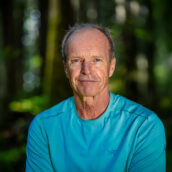
Season 03 – Episode 23: Psychedelics, Hakomi, and the Gift of Self-Discovery, with Tony Hoare
By The Gifts of Trauma /
Listen this episode here:
or here
Tony shares his personal journey, from growing up gay in the 60s, to experiencing sexual trauma and seeking healing in his 50s. He views safety, kindness, and gentleness as essential for healing, as they invite us to lower our shields and ‘just be.’ Having worked in the psychedelic world for 2 decades, Tony stresses that profound psychedelic experiences are only valuable if they lead to a greater sense of ease and conscious awareness with which we can navigate our challenging world.
He also recounts:
- The development of gentler, more supportive psychedelic assistance approaches
- How ketamine can deliver an eternal quality of love, akin to AH Almaas’s concept
- The pure self-observation available through 5-MeO-DMT
- The alignment between Hakomi and Compassionate Inquiry®
Tony also mentions his photography of Iboga ceremonies in West Africa and an upcoming project with an Ibogaine treatment center. Moving forward, he plans to reduce the intensity of his medicine work, pursue photography projects (including documenting coming-of-age rituals), and train psychedelic therapists in integrating Hakomi principles.
Episode transcript
00:00:00 Tony
Do not give your power away to these psychedelics. For 12 years, a reasonable part of my life was supporting these Ayahuasca retreats. And I’d see some people come and they’d drink ayahuasca, they shudder, they scream, totally dysregulated, and the ceremony comes to an end. And then they come back a few weeks later, a month later, and they do it again. They have the same thing. And it was like, okay, this is not helping. This is not helpful. It’s overwhelming their nervous system. And that inspired our practice, which is safety, which is kindness, which is gentleness. For everybody listening to this, imagine if you felt absolutely and completely safe, held in a way that you could lower all your shields, let go of all your hyper vigilance, and just be. What would that look like? What would show up? We have a funny thing. I think every psychedelic retreat provider I’ve ever been with always asks you to come with an intention. We say, no intention. Don’t come with an intention. Don’t come with a notebook. Let all that go. Let all that working go. Come and be held. Come and be safe. Come and trust. Whatever needs to show up is going to show up. And if there’s been a hallmark to the way that we practice, this is it. That ultimate safety. People being kind to you, people not trying to fix you, people trusting that inside of you, there’s this… There’s everything you need to heal yourself. And it just needs the right container, just the right holding.
00:01:33 Rosemary
This is the Gifts of Trauma podcast, stories of transformation and healing through Compassionate Inquiry.
00:01:52 Kevin
So welcome to another edition of the Gifts of Trauma podcast. From Compassionate Inquiry, or inquiry, as my Canadian and American friends like to say, I’m here today. I’m very excited. Tony. I’m here today with Tony Hoar. I’ve known you a little bit from a distance and have always really enjoyed your presence. Just the way about you. I just enjoy the way about you. And I’m keen to explore that a little bit further. If you’ll allow me to ask you some questions and poke and prod around in the life and work of Tony. I would love to do that.
00:02:34 Tony
Yeah. Excited, Kevin. And put it on your list. I love the name of your podcast.
00:02:40 Kevin
Thank you.
00:02:42 Tony
The Gifts of Trauma. I have some thoughts around that if you want to bring them up later.
00:02:47 Kevin
I would. Yeah. Okay, let’s talk about that. I’m just going to jot that down. Tony. Yeah, I’m really excited. I sent you a little email before we were chatting and kind of laid out playfully and seriously, what I would love to talk about, you know, you, your work. I’d love to know a little bit about your past, only revealing what you feel comfortable revealing. I’d love to know a little bit about your dreams, your aspirations, you know, what’s going on in life. I mentioned to you as well that we are becoming men of a certain age, and I would consider you to be a wisdom keeper. Yeah, I hear you laughing.
00:03:39 Tony
Yeah, well, this is, this is you not saying. I, I see you becoming an old guy.
00:03:46 Kevin
Aren’t we all, Tony? Aren’t we all?
00:03:48 Tony
No, we aren’t, but some of us are. And to step into it with grace and courage. My mom had a great saying, growing old… Growing old is not for the faint of heart, you know, it takes courage.
00:04:03 Kevin
And Tony, what I like to do at the start of a podcast, I could read. You sent me a bio and I could read it verbatim and people would get very bored quickly of my voice. I would love you to take a moment, as many moments as you like, and let us know who you are in this moment, in this version of your life. Who are you?
00:04:26 Tony
Well, with a big, beautiful opening, I was thinking about it. I went for a run this morning. I was thinking about this life I’ve had. It makes me laugh, makes me giggle because it’s gone through so many iterations to bring me here. I just turned 70 in early July. I’m married to a 42 year old guy, an ER nurse Ben, kind of the love of my life. My life has taken such twists and turns. You know, back when I was a kid, I imagined I’d have a wife and a career and a bunch of kids. I’d live a life pretty much like my.. like I grew up in. You know, that was kind of my vision for myself. And maybe we’ll get right into the gift of trauma.
00:05:11 Kevin
Thank you. You’ve set a question up. You just mentioned the life that I grew up in, and I think you’re maybe going to go there. Well, tell us a little bit about the life you grew up in.
00:05:20 Tony
I had by all measures a wonderful life. I had parents who stayed together. We didn’t suffer, we were middle class. Yet I was this young gay kid. I sort of knew I was gay by the time I was 8 years old. There was such a knowing of that. And that would have been in the 60s, right? Being queer was illegal, like illegal. And so no, parents, that would be an unfathomable thing. But that had, a whole imprint of me growing up. Even at age 8, there was, you know, this… This thing that was wrong, and then there was some sexual trauma as well. And the. The way that. That showed up was my mom catching me with a boy. And then she didn’t know what to do with it. And so she didn’t speak to me for a couple of days. And it was then that I decided I could have my sexuality or I could have my mother’s love. And that sort of overlaid things for the next few decades. I clearly went with my mom’s love, and then I had a fairly happy life. This was just one part of it. It was a hidden part that I had to keep hidden. Now, I went through school and some other stuff there, but then I went on to university and I had a bunch of jobs, and I found adventure.
I really touched into the safety and excitement, the camaraderie, the beauty and the presence of doing adventuresome things. You know, mountaineering or climbing or hiking or being on the water in a kayak or sailboat. And all these things bring me right back to the present moment. I’ve gone through lots of stuff, and I’ve acted very unconsciously throughout my life as well, because of this sort of sexual part. But the. The outdoors, the beauty of that, that was a steady thing that was there throughout my life. Very grateful for that. And then my unconsciousness showed up a lot. I had a lot of different girlfriends. And, you know, you can imagine that I presented very well. You know, I was a pretty sane person, didn’t have any real addictions. But I had this piece underlying everything. So when I got too close, then I would split up, causing a lot of suffering, tremendous amount of suffering. And that just played out again and again, again. And then it got too intense. And it’s like that Almaas quote, you know, all the difficult things are pricking you in the side, making you suffer greatly. If. If you don’t look deeply into yourself, if you don’t connect completely with yourself. And that happened just into my 50s. And there are a couple things that. Ways that that showed up. One was I got involved in ayahuasca. So drinking ayahuasca, there’s a. A sense of presence of self, There’s a. An aliveness that comes out. There’s nights of very deep suffering as well. As you look at all the painful things in your life, all the ways that unconsciousness played out, how it affected people, how it affected you. But there was also an aliveness and a zeal. But anyway, involved in this ayahuasca practice, a guy named Gabor Maté came in and sat with us back in… I forget what year? 2007, 2008. I remember helping him set up his mat. That was one of the. Either first time. The first times that he participated. And he liked the guy that led our ceremonies. And after he got to know us, he proposed doing these retreats. So it would be him bringing a very early version of Compassionate Inquiry into a talking session during the day and then leading people into Ayahuasca, having my group lead people in ayahuasca in the evenings. And he did that because, you know, by then he had spent 10 years working in the downtown east side, and he had spent a remarkable amounts of time with people who were really suffering. And everyone has heard that story, the people in the downtown east side. And he could. He worked with them enough that they could tell their story backwards and forwards. He worked with them enough that they. He really took them to a compassionate place of knowing why this was presented, why their lives were presenting the way it was. But he didn’t see the change that he was hoping for. I was like, what is missing? And I think that’s why he started. And that was his first interest in exploring Ayahuasca. Anyway, getting back to me early on in those retreats, I was invited to come and support. And I think they had done a couple of retreats before I got my invitation. It was up in Nelson. I didn’t know him, but he took sort of one look at me and he sussed me up and he said, okay, Tony, you can, you know, you can be the sport person, but you’re also a participant. You have to participate fully in this retreat. I was like, okay. At one point, I told my story. I put it into words. And I remember the shaking in my body, the pounding in my heart. It was overwhelming to be in front of a group of people and speak my truth.
00:10:28 Kevin
Tony, was this the first time you’d done that? Was this the first time you’d sat in front of a group of people and spoken your truth? Early 50s.
00:10:35 Tony
Yeah, early 50s. Incredible, eh? Wow. Yeah, it must have been I guess 2009, something like that. And then I think I sat in on 16 or 17 of his retreats. Quite a few. Sometimes we did a couple a year, three a year, something like that. And there was a lot. I mean, during the day, I was in the circle with Gabor, listening to him work with people. It was like… And I think everybody listening to this recognizes that in almost every conversation, it speaks to us. No matter who he’s talking to, there’s something there that really resonates. And so I was getting this intensive holding just by being a supporter, supporting these retreats. I really felt connected to people with remarkably different stories. And I think the point of connection is the loss of connection within. That’s what we all share in common. And we are kind of a tribe. The gift of trauma, besides this tribe, is if I had had a more normal life, if I didn’t have this sort of gay thing, this current that caused me such grief, such anxiety, and such decades of painful disconnection from myself, it could be there in a lesser extent through a lesser trauma, and I’d never get to it. And I saw that kind of through the people in my greater family and the. There’s kind of a collective group unconsciousness around family, because family is such a strong. You know, we want to belong so badly, willing to give up parts of ourselves. As Gabor speaks of, you have that choice. Do you want to be yourself or do you want to be loved and accepted in your family? Because this part of me was so wanting this interconnection to own myself and who I was. That’s when it gave me the strength to. To step into that and not give up myself, just to belong alone. My group of friends and my family, society, all of that. But it sure took a long time. And then things changed so quickly. So where do you want to go from here, Kevin?
00:12:38 Kevin
Thank you, Tony. I was conscious that you were talking, and I was very willing to listen. And what I’d love to do is give, just what you’ve shared, just a little moment. Thank you for sharing it. I would like to honor that because I guess for you now, I mean, it seems now that you’re very comfortable with telling this story. You know what I’m thinking? I’m close. I like to say I’m close to 50 on the other side, actually, on the upper side of 50, but close to 50. It’s still a trip, but I’ve just turned 50, and I’m thinking of myself as you tell that story and thinking, shit. So if I had to do that now at my age, with all the social structures that are built around me and the family structures and the friend structures and all of that, and how I built my life, if I had to do that now, that would be a big deal, for me. And I just really honor that you’ve done that. And where I’d like to go, Tony, is before we started recording the podcast, we were having a brief conversation and you were talking about this theme that has run through your life. And as I talk to you, and again, it’s probably the reason that I like to do so. You know, I’m listening to you talk and I hear you use words like connection. You’ve used the word grace, you’ve used the word love. You know, you’ve used the word tribe. You’ve used the word self, You’ve used the words connecting to self. And I love your prose and your language. It is of a spiritual nature, which really tickles me. I really like that. That’s where I like to be. Talk to me about that. So my guess is, and please correct me, that this spiritual understanding that you have. I’d love you to talk a little bit about the recent trainings that you’ve done. The word that came up, opening to grace, was a training you’ve done. You’re very invested in Hakomi and Ron Kurtz’s book. Consciousness and Healing is a bible to me. I love it. You obviously know Gabor and you’ve done the compassionate inquiry training, but I’m guessing that all of those things are in the latter part of your life. But you talked about this theme of love and connecting to people, how people make you feel, how you make people feel. Talk to me a little bit about why is that present for Tony? What is that? And why is it running through your life?
00:14:58 Tony
Well, you take it right to the heart of it, Kevin.
00:15:00 Kevin
No point messing around, Tony. No point messing around.
00:15:03 Tony
No point messing around. You know, the. So I’ve been involved in psychedelics. I’m going to take this a little bit of a different direction.
00:15:10 Kevin
Sure.
00:15:11 Tony
I’ve been involved in psychedelics through the ayahuasca. The beginning, and that was six, seven, eight, hundred ceremonies there, participating and supporting, and then a lot of other psychedelic work as well. But where I want to get to is recently I began exploring the use of ketamine. I’d stayed away from it for so long because it’s a horse tranquilizer. My husband Ben gives it in the ER department pretty much every day. And so it was like, no, I want something. You know, ayahuasca’s got the indigenous roots and the traditions and the spirituality. And by the way, spirituality is something that I felt was. Has been so elusive. People talk about it. I have no idea what they mean. I’ve never been a spiritual person. Any mention of religion or spirit is something that’s like, okay, I don’t get what you mean. And through my psychedelic use through my work with Shipibo people. And I’ve had experiences that could be nothing other than a spiritual experience. But I’ve come to it kind of kicking and screaming, come to it quite reluctantly. And then as I got into it more and more then was like, maybe I can honor this. Maybe that’s the work that my psychedelic work will take me closer towards. But in any case, a friend suggested a ketamine session and I went in and It was my first time and it was a nurse practitioner who was providing it. It was a very safe environment, just three of us. The friend that invited me was doing a large dose via injection and I decided to do the same. What I found was after it came on, it’s a dissociative as most of you know. But I found myself on this foreign planet and there were two moons hanging in the sky. There was a vast yellow plain stretched out for as far as I could see and just endlessly like a gigantic planet. And then there was a red hillside like a Mars red colored hillside. And I was sitting on that hillside and there was no memory of my siblings, my parents, then of Compassionate Inquiry, of my work. Outdoor adventures. Absolutely not. It was just gone. That’s I guess the dissociative part of it. And I had no idea how I got there. I was utterly alone in this vast, vast place. And I was content. There was no panic. There was a momentary wonder, I wonder what happens next. But I quickly let that go and there was a profound sense of connection to Tony, that Tony was showing up in such deep connection. And that went on for quite a while during the experience. It’s about a 45 minute / hour long experience. And after it came back into life, that is what stayed with me. And it was, it was very profound because I just felt close to myself. And then I’ve done it for another half a dozen times since then. And it’s built on this theme. And the next sessions were all about love and feeling this deep connection to me in subsequent session. Just doing it on our own now because Ben and I are very experienced and we do this kind of work. So Ben and I would be there and each in our own space and doing it together. And the love that I felt for him transcended our actual romantic relationship. There was kind of an eternal quality to it, a knowing that this would transcend my life on this planet. And if you read sort of deeper into Almaas, his, his, his deeper readings, I, I think there’s One of his books where he talks about love as being a portal into another creation that it’s so hard for us to access. And love. Not a romantic love, but this sense of love can actually open the door. I got a sense of that by… Through these experiences and with Ben there, who I love dearly and what it. How it affects me. So this is great. You know, in all these psychedelic experiences, you know, we can have profound experiences. We can have that, as Merton says, that taste of victory in a psychedelic experience where we really see ourselves and we see our. See our way through all our angst. But what’s incredibly important with these psychedelics is how we show up in life afterwards. And this is the integration part. That is where the rubber hits the road. Otherwise, we can use those substances, that beautiful altered state, just as a bypass.
00:19:40 Kevin
And, Tony, maybe we might add a little caveat here that many, many people do.
00:19:47 Tony
Yeah, they do it with psychedelics. They do it with Compassionate Inquiry, spirituality. Akomi. With spiritual expressions of all types.
00:20:00 Kevin
Meditation.
00:20:02 Tony
Yeah, exactly. All these different practices. So for me, what’s shown up is a sense of. A greater sense of ease in life now with this deep connection to self. It’s almost like I went back into the. You know, that great scene in the Matrix. Red pill, blue pill. And so it’s like taking the pill to see the world actually. It is seeing the world actually as it is, seeing all the unconsciousness, the dysfunction. You know, it’s a crazy world to be in. In 2025. I feel very afraid for so many people and myself and everything else. What steadies me is knowing that a lot of that is an illusion, and that’s just people being in their unconsciousness. You know, I’m a pretty simple guy living here in Vancouver, and I don’t have a lot of influence, and I’m not gonna change the world on that sort of grand scale, but a lot of people can. But tapping into this, not getting carried away in the panic, not getting carried away in the paranoia, not making up crazy stories, to somehow feel. Feel safer in this. In this whirlwind of difficult times, that’s how I can show up. And I can tap into this. That same love that I am now beginning to tap into. And in medicine and also in Hakomi, and also in Compassionate Inquiry, and I can feel the steadiness there. And then I can show up with broader shoulders. And I think that’s a way that. That’s the greatest thing I can do for the people I love. And for my community. That’s how I can make a difference.
00:21:39 Kevin
Tony, can I. Can I pause you there? Can I interject a little bit? You reminded me of that Ram Dass quote. “The greatest thing that I can do for you is work on me. And the greatest thing that you can do for me is work on you.” You know, Absolutely. And it’s not a belief. This is a knowing for me and the work that I do and the work that I do with people. That’s a truth. I was talking to a client today, and this is going to lead me to ask you something. Talking to a client today. She came on the call and one of those calls where, oh, I’m really good. I’m really good. I’m really good. And things are great. And this thing happened, and that thing happened. And our conversation went towards the idea that forgiveness for me, and forgiveness for me is a way of how we see the world. But forgiveness for me is the flower or the fruit on the tree of healing. So when we heal, then forgiveness seems to blossom. It seems to arrive. And that forgiveness then, for me is. It kind of changes the glasses that I wear, you know, it just changes how I see the world, you know. And I was reflecting that back to her. She’s done a lot of work. She’s working really hard on herself and doing a lot of good stuff. And now she’s noticing this forgiveness arriving in her life, and I’m like, yeah, well, forgiveness is the symptom of healing. You know, it’s the Brucey bonus. It’s the freebie. It’s the freebie that comes with healing.
00:23:09 Tony
Yeah. You know, it strikes me you can also throw happiness in there.
00:23:14 Kevin
Absolutely.
00:23:15 Tony
Yeah. Like, it’s. It’s really hard to pursue happiness. It takes you into really crazy places.
00:23:22 Kevin
I’ve been there.
00:23:23 Tony
Yeah. And maybe forgiveness as well. You know, I have to forgive. I have to forgive. But you’re right, the way. The poetic way you put it, it’s the blossom on the tree of healing. It’s something that naturally arises.
00:23:40 Kevin
Yeah. And what I want to ask you, referring back to that, given that you’re close to 70, that’s also a truth and tapping into your wisdom. So if forgiveness, if happiness, if you’re settling into yourself, if your own spirituality through medicine and different practices, what I want to ask you then is, for people listening, tell me a little bit more about what is healing from your point of view. How do you help people do that? What sort of healing do people find themselves getting when they come to you.
00:24:09 Tony
Well it started with my work with Hakomi and why I’m so drawn to it. Compassion Inquiry and Hakomi are such good friends. They really are. I have a wonderful teacher here in Vancouver, Georgia Marvin. I’ve been working with her for five years or so. The words, you know, her sentiment on that is we don’t have to work. We don’t have to work for this, to be in the present moment, to let things naturally arise, to treat everything with kindness, to realize that all the ways that we show up are there for a reason. They’re not random, and we’re not broken. Each of them need an expression that’s very much in line with Gabor’s view of addiction. And as I work with people with addictions, it’s spending a lot of time having them appreciate what that addiction does, you know, the great relief that it provides. And it’s the same thing with all the kind of the crazy stories in our head. As part of my ayahuasca practice, I do these dietas. Plant dietas. So you go down to the jungle. You’re given the hut. Then you sit by yourself in the hut, and you drink ayahuasca occasionally. And you learn from a master plant, and you. And you sit with yourself very quietly, fast, and have no distractions. And what came out of that was to sit quietly enough when a sensation arises, when a feeling arises, the great courage that it takes to actually be with that. Sometimes that is the most difficult thing in the world. It is such an overpowering experience. And what I’ve noticed when I’ve gotten close to that is almost instantly a story comes in. A story, some little drama about myself, maybe even directly related to the intensity that I’m feeling, it distracts me. Now I have something I can put my mind on. And as soon as I’m starting to use my mind to figure it out or to explore this more deeply or to justify this feeling inside, I’ve lost connection with the feeling, and therefore I’ve lost connection with my healing. But the same thing with these stories. They needed to be treated in the same way an addiction is, with a lot of kindness and tenderness and a lot of present moment awareness.
00:26:30 Kevin
Tony, can I pop a little question in there as well? And if I can’t, please just bat the interruption away. Feel free to do that because I’m loving what you’re saying, and I’m also thinking of. So for most people, the people that we work with, ourselves included, there is that feeling, that discomfort, or that story, that little mind discomfort. And quite often, more often than not, that pushes people to move. So we’re not all sitting in a little space by ourselves. So that pushes people to move to the fridge for a beer or a glass of wine, or to the cookie cupboard or to the television, or it pushes people to move somewhere else to get away, to our cell phone, to online, to pornography, to whatever it might be. And I think it’s Almaas as well that says we don’t notice the whole. We don’t notice the deficiency. We just see the behavior that the deficiency creates. So we notice the movement to the thing, whatever the thing is. And I would love to hear from you as to how we might help or instruct or advise is a clunky word. You know, just give some instruction around people who are new to this haven’t done dozens and dozens of ceremonies and have this experience. They’re noticing this pull towards the cookie jar or the needle or the wine glass or the beer, whatever it is. How could you help them track back and could you give them a little gift that might help people just sit with that feeling, that thing that you’re describing, long enough, that maybe they don’t go to the cookie jar so often, or they don’t fill the wine glass so often, or they don’t smoke the cigarette so often. Could you do that? Is that a fair thing to ask you to do?
00:28:16 Tony
Kindness. There’s a British philosopher who said the three most important things in life, number one, kindness. Number two, kindness. And number three, kindness.
00:28:28 Kevin
Thank you for that.
00:28:30 Tony
And I think when you’re running to the fridge or the cookie jar, to really be kind to yourself. I’ve heard Gabor say this a lot. You know, let’s not shame the behavior. Let’s not shame the addiction, whatever it is. Let’s just be conscious of it. And I think the only way. But the question is, well, how do I be conscious of it? Yeah. And that is through kindness. That that is through this is providing me with relief. I am being kind to myself. It’s taking me away from something that’s just uncomfortable right now. I’m really clear that when we get severe with our behaviors, “you undisciplined loser” that kind of sentiment as we reach for the cookie jar is going to make that behavior stubborn. It’s going to entrench it. You’re going to double down on going to the cookie jar. But to be really kind to that behavior, Okay, I need relief right now. I’m going to take this cookie and I’m going to feel this relief. Then we can begin to tap into what is actually uncomfortable. This is awareness, really being conscious of why we do the things we do. This is a little bit of a side.
00:29:34 Kevin
I would love you to please.
00:29:35 Tony
There was a painting from years ago in Calgary when I went on an art walk. And we’re going in, you know, you’re going to a million little studios and stuff like that. It was a little tiny studio and they just had a few paintings. But I’m still kicking myself, I didn’t buy this one. The painting is of a guy sitting in a chair, a simple room. He’s got his shoe off and his sock off. Sock and shoe are meticulously placed beside, and in his hands are a rifle. And his pant leg has been rolled up. He is looking down. The sight of the rifle aiming directly at his foot. That still sticks with me in my life about the very, very careful, meticulous way I shoot myself in the foot. That painting points to all the ways that we look to have something outside distract us from what’s going on.
I want to talk a little bit about Hakomi and what and why actually Hakomi and our medicine practice. So when people come to us for medicine or in the intro part, I tell them, you know, profound same things can happen when you have medicine experience. Do not give your power away to these psychedelics. Give it away to Ben and myself. What happens here, the great relief or the great clarity about how you’re shooting yourself in your foot, all of that, that comes from you. But in our regular waking life, our personality, our ego, our default mode network, it’s really hard to have that clarity to really see ourselves. I really feel that a lot of psychedelic assisted therapy is a benefit is the altered state. There’s nothing that, you know, magic that happens in that. It is the altered state that we’re after. In my Hokomi practice with skilled people, I felt the same altered space that I do on medicine. And in this altered space, altered state, we really see ourselves, we really get ourselves that clarity that diving through. All the personality stuff is what can affect change. And it comes from, you know, for those people listening, who don’t know about Hakomi, it’s a very simple practice. It means sitting with someone that you really feel has your back very much the same way it happens in Compassionate Inquiry. There has to be this attunement and so a lot of time can be spent on that. And that’s done through therapists contacting the person, contacting what’s, whatever’s going on. And at some point with close observation of the words, how the person holds himself, their mannerisms, that you begin to bring present moment awareness through experimentation to your client. The idea with psychedelic medicine, I believe with Compassionate Inquiry with Hakomi, is that we have everything we need within us to heal. And we just need the right container for that wisdom, that essence to show up and just kind of transcend all the, all the angst, all the difficult things in our lives.
00:32:38 Kevin
I have sitting beside me here somewhere, Tony, excuse me while I do a Gabor Maté impression. And I have, it’s not going to appear for me, Consciousness and Healing by Ron Kurtz, there. And if I can’t find it, I will paraphrase it terribly. And he talks about in Hakomi, he talks very seriously that the practitioner is not a healer, you’re not doing any healing. And he seems to be very serious at wanting you to know that, you know, the founder of Hakomi, you are not a healer. Get it out of your head that you are a healer. That is not what’s happening. But he does talk about what you are, is the person who sets up. And again, I’m referencing the language that you use, this loving, compassionate, kind, non judgmental, safe space where people can heal themselves. I think that’s the same for psychedelics as well. It worries me a little these days, you know, I see people going and taking psychedelics in the morning and then, you know, hitting the club in the evening, you know, and I’m like, whoa. Or I see people doing a lot of psychedelics with no therapeutic support, you know, no, no prep, no integration afterwards. Once a month, let’s go take ayahuasca once a month with nothing in between except more of the same life that they’re already living. And I really like how you’re talking about how you and Ben help people find that within themselves, so that when the rubber hits the road, they’re resourced, they’re connected. Is that true how I’m paraphrasing you?
00:34:11 Tony
You know, for 12 years or whatever, that was a reasonable part of my life, was supporting these ayahuasca retreats. And I’d see some people come and they drink ayahuasca, they shudder, they scream, totally dysregulated. And the ceremony comes to an end. And then they come back a few weeks later, a month later, and they do it again and they have the same, they have the same thing. And it was like, okay, this is not helping. This is not helpful. It’s overwhelming their nervous system. And that inspired our practice, which is safety, which is kindness, which is gentleness for everybody listening to this. Imagine if you felt absolutely and completely safe, held in a way that you could lower all your shields, let go of all your hypervigilance, and just be. What would that look like? What would show up? We have a funny thing. I think every psychedelic retreat provider I’ve ever been with always asks you to come with an intention. We say, no intention. Don’t come with an intention. Don’t come with a notebook. Let all that go. Let all that working go. Come and be held. Come and be safe. Come and trust. Whatever needs to show up is going to show up. And if there’s been a hallmark to the way that we practice, this is it, that ultimate safety. People being kind to you, people not trying to fix you, people trusting that inside of you, there’s this. There’s everything you need to heal yourself. And it just needs the right container, just the right holding.
00:35:46 Kevin
I can imagine that for a lot of people who would come to have that experience, whether they be 20 or 30 or 60 or 80 years of age, that that. See just what you described there. I was just tracking how it was landing in my body, doing a little Hakomi experiment on.
00:36:04 Tony
I watched you do that, Kevin.
00:36:06 Kevin
I’m just noticing as I listened to your words, you know, I could feel just this slight lowering and softening of my shoulders, and my shoulder blades just slid down my back just a little bit. And I can imagine that for a lot of people coming to work with you and Ben, that will likely be the first time that they’ve ever been anywhere where the people that were with them didn’t want anything from them, didn’t need anything, wasn’t pushing anything. There was no directive, There was no… nothing to achieve, nothing to get, nowhere to go, nothing to prove, you know, no intention, no notebook. Safety, acceptance. Am I projecting onto you, or is that. Is that true? Would that be what would that be what… How it is for most people.
00:36:56 Tony
That Is the way we want to show up, that is. And Ben and I have a very loving relationship. And when we hold people, that really comes through. So there’s that safety relationship, too, by the two people that are holding them. Even as… when people went through some ups and downs during an experience, we used to say, oh, we trust the medicine. Don’t say that anymore. We really do trust the people. We trust people. We trust this essence, that’s they’re complete and whole. It has not been compromised or damaged, it doesn’t need repair. There’s just these things in front of it. The disconnection. Gabor talks about all the stuff.
00:37:46 Kevin
How is that? I’m keen, Tony, could you tell me. I’m conscious that I’m asking you to imagine how other people think and feel it, so please forgive me for that.
00:37:54 Tony
No, no.
00:37:55 Kevin
How is that received by the people that work with you? Because, again, I can feel my body enjoying it right now. And I’m just wondering, how do people receive that?
00:38:06 Tony
I mean, Ben’s a much better… He’s got a real affinity and a real belief in this method. He’s a really good Hakomi person. I’m a little bit of a… Sometimes people surprise me. Thay have a really gentle experience. Doesn’t proceed. I don’t perceive much as happening. And I’m thinking, well, they came here, they made this… Well, I think I should be showing up better. I think I should be creating an experience for them. I think I should be doing… And it’s so wrong. And it’s the same thing in Hakomi. It’s my limitation in Hakomi. That’s why I’ve been studying it hard for five years, and I’m still such a learner, is to trust that in this experience in itself, people will find profound healing. And we have had people that have done, you know, all the psychedelics, and they’ve done it a lot, and yet they’ll come and they’ll have an experience with us, and it will be profound, and they will touch into something in a way that they’ve never touched into it before. And we’ve also had people that have never, never touched a substance before. They’re in their mid-70s, and they’ll come and have an equally important experience. And Georgia Marvin, our teacher, who’s never touched a psychedelic, but she knows enough about our work, she can take people there as well. Through the very power of that kind of attunement, creating that kind of safety, touching into the person’s experience in a really soft, gentle, mindful way, and just inviting the person – once all the defenses are down, all the shields are down, all the hyper vigilance is gone – then we can really study ourselves. We can show up in a way of kindness and gentleness. And in that space, profound things can happen. And it gets back to our conversation about love being the portal to another realm. And I think these are connected. And to give people a taste of that, that is where healing happens. And I think the same thing in Compassionate Inquiry. You know, I. I should be recertifying for Compassionate Inquiry. And I did a session with Sat Dharam and, and, and then I’ve gotten away because just life has been so busy in that. But I was really struck when I did my session with Sat Dharam. I did a couple and one, she just did a session on me and, and what I saw is a quite a shift from the way Gabor originally taught Compassionate Inquiry. And she’s very much now into working with the body, with gentleness, with safety. When things go off a little bit to come back to the body, to come back to that safety. This is where I felt a strong alignment between Hakomi and Compassionate Inquiry. Now in Hakomi, a skilled therapist, we’re all taught never ask a question and if you spend an hour with me, I won’t ask you a single question. And I’ll also give you all the space in the world to spend with yourself self studying. What I will do is I’ll experiment through careful observation of all the ways that you show up. In this realm, you can go into an altered state that is as profound as a psychedelic experience. And I’ve been there.
00:41:18 Kevin
Thank you. Tony. Tony. I’ve kind of feel called to share something with you and then I’d love to bank right, swing the conversation up, and I don’t want to go into these too much, but yeah, I’ve used Ayahuasca a really limited number of times, but the first place I went to use Ayahuasca, we sat in ceremony in the first night. And on reflection, I was a couple of years, maybe a year into CI, Compassionate inquiry at the time. What I could really see was that the person leading this retreat for me, in my humble opinion, all of those words that you just used, kindness, grace, love, tenderness, compassion, a space, you said the healing’s in me, not in her own reflection. I can now see that she was the opposite of all of those words. She was telling me what my experience was. She was wanting to heal me. She wasn’t patient, she wasn’t kind, she wasn’t gentle, she wasn’t any of those things. And my body obviously just said, nope, I ain’t going anywhere, I’m staying right here. You know, and I want to just mention that around the idea of ‘set and setting’ and then with another dear friend of mine, Warren McCaig, who’s involved in CI, and I did a little bit of work with Warren in psychedelics and the experiences I wanted to share with you were around using 5-MeO-DMT, using Bufo and such a different experience because Warren, like yourself, he’s a big, beautiful, kind…
00:42:49 Tony
I know Warren. He’s, he’s a friend. Yeah, yeah.
00:42:52 Kevin
Big, beautiful, kind, Canadian, gentle, funny, non judgmental, compassionate guy, you know, And I had the most profound experiences using Bufo with Warren. I kind of describe it as all the books I’ve ever read, from the Bhagavad Gita right down to the Power of Now and Gabor’s work and Ron Kurtz’s work and all of those, all of the spiritual texts and Advaita, Vedanta and Buddhism that I read in the back of my bookshelf. It was like all of those books were given to me in a 20 minute experience. Not a knowledge and experience, but I can remember the second time in this, what I want to share with you before we move and maybe get your thoughts on it. The second time I used Bufo, I had a really, really deep and beautiful experience. But just on the landing, let’s call it towards the tail end of the experience, I was crying my heart out. And the reason I was crying was, you know, all I could say was, why are you all hurting yourselves? Why are you doing that to yourselves? Please stop hurting yourselves. And I had a real open heart for the suffering of humanity. And at the same time recognizing that most of it was self inflicted, not self blamed, you know, I don’t mean that. But caused by our lack of connection to ourselves.
We’re taking a brief pause to share what’s on offer in the Compassionate Inquiry community. Stay with us. We’ll be right back.
00:44:26 Rosemary
If you’ve been listening to our podcast and are curious about the Compassionate Inquiry approach developed by Dr. Gabor Mate and Sat Dharam Kaur, consider joining the professional training program. It’s open to all healing professionals, including naturopaths, physicians, bodyworkers, coaches and therapists. In addition to learning how to use compassion to support your clients in their most vulnerable moments with greater empathy and authenticity, you’ll also deepen your own internal process. If you’re interested, look for the link in the show notes.
00:45:03 Kevin
And I cried and I cried and I cried, that why? what? Please stop hurting yourselves. Yeah, I just, those two stories came to mind. I just wanted to share them with you. Can I ask, have you anything to say about them? And you don’t have to. Before we move on.
00:45:18 Tony
Lots. Okay, so first of all, your Ayahuasca experience, Kevin. I mean, you’re barely into CI, but there’s a guy who loves himself. There’s a guy that knows himself and your awareness, the container wasn’t right, your wisdom, your… It’s a strength. It’s a guy who knows himself and likes himself. So a lot – in terms of medicine – especially in the beginning, those hundreds of ceremonies that I supported, I’d always drink ayahuasca. After a while I got pretty good at it where I could be helping this person and going to that person and then the room would get quiet and I’d go and I’d lie on my mat, go down, just lie on my mat. And ayahuasca would open. Remarkably, the plants would come. I would be in this profound state and then I hear someone, “Help.” And I’d get up off my mat and I’d go over and I’d provide whatever support was needed, or take them to the bathroom and then I could come back to my mat and go right back into the experience. And that is the power of our mind, as you did. This is not safe. I’m not opening up. And it, you know, it brings us right back to the ‘set and setting’, the Hokomi experience, the Compassionate Inquiry experience. We have to feel safe and held. We have to lower our defenses, our hypervigilance for really any true healing to have. So that’s the first comment. 5-MeO-DMT, it’s a beautiful substance. The reason is, LSD and the mushrooms and Ayahuasca we have visions, we have stories. You know, some people go out there with the star people or they’re visiting something and they have all these stories to tell you afterwards. 5 Meo is your no nonsense, psychedelic. It is purely kind of a self and to see yourself without all the stories. And for me, and I have a beautiful journey on it, I see the path that I was meant to walk on this earth, and it’s very clear about the things that I do to support that path. And it’s very clear about the ways that I shoot myself in the foot, just like the guy in that painting. With painstaking precision, not a lot of judgment there, just observation. I also see the cost, you know, of all that soothing that I go after, whether it’s behavioral or substance or whatever. Yes, I can be grateful for it, yes, I can be kind to it. And it costs me, and it really costs me. And to have that kind of present moment awareness during a 5 Meo experience comes out with just so much more clarity and a caution. So 5 Meo, it’s not even scheduled in Canada. It has legal status in Canada. It’s also requires such respect. I would agree. You know, the beautiful thing is it comes on after 10 minutes and you use such tiny amounts and so you can titrate in people beautifully to a sweet spot. If you’re a little aggressive or you have a little bit of ego, you want to take someone deep, it can be very overwhelming, and it needs to be exercised with such restraint, such respect, and never… sort of just a lot of respect is required, because people can go to a very, very deep place that can cause harm.
00:48:57 Kevin
Thank you for acknowledging that, Tony.
00:49:00 Tony
Yeah, just a caution there.
00:49:01 Kevin
Yeah, I just wrote down, “caveat of safety” in a little scribble that I wrote on my page. And the reason I wanted to tell those stories, Tony, is because. And I’m very conscious of your time. The reason I wanted to tell those stories is because we are speaking about your work, the beautiful work you do and the beautiful experiences people have, because of who you and Ben are. And I just really want to emphasize to people, if this is the type of healing and there are many others you’ve talked about, Hakomi. I’ve had those deep experiences through psychedelics, sorry, through meditation, and I’ve had them through spending time in nature. So if this is the type of healing that people would like to pursue, to be very, very gentle and kind and clever, and do the research and find out who they’re working with and talk to people who have also worked with them, et cetera, et cetera, et cetera, I just wanted to offer that, Tony. I’m conscious of our time. What’s the future hold? What’s the lighting your light?
00:50:01 Tony
Yes. 70. What a… It’s kind of a watershed, isn’t it? You know, it’s a real funny thing. Before I met Ben, I was traumatized about telling anyone my age. I was traumatized about my birthdays. I didn’t know, want anyone to know how I was growing older, and the change that could come over us with love, with being in relationship. And as soon as I met him, that disappeared like that. But anyway, so here we are at 70. You know, I have a practice, therapeutic practice, and we have our medicine practice and I do want to shift things up. Ben just started at ubc. He’s taking a two year nurse practitioner program. And so that’s changing a lot for us, getting sort of more structured as he goes to classes and does all that sort of stuff. And it’s also inviting an opening for me. You know, in our medicine work, we’ve never had a website or we’ve never had a business card. And it’s all on referrals, but it’s been way too busy. Takes a lot energetically, so we’re really slowing down on that. It’s just too much. And when my…. When I. My body feels the best is when I’m in the mountains and hiking and climbing, and I want to keep that up. You know, Gabor swims at least four times a week. He’ll do his kilometer, 2km in the. In the pool. I think for all of us, you know, you now, beginning in your 50s, that’s actually the magic age. How to stay active every day. This is how to grow older gracefully. And also. So, I put aside my photography. That’s what I was doing when I came into this Compassionate Inquiry. And I sort of lucked into it because I had a connection to Sant Dharam and to Gabor. And they asked that I, you know, be the first cohort to test out the program. And then I never planned on doing any of this therapy stuff, but I kind of fell into it. And I love people, and it was a really great way to connect with people. And my photography kind of dried up. And I did a project in West Africa on Iboga back in 2018. So now I’ve got a friend, the same one who invited me to West Africa to photograph Witi ceremonies. The use of Iboga among people in Gabon and Cameroon primarily, they now have a treatment center. And this is like the kind of a changing world. So there’s… They have a treatment center in Tijuana, ibogaine. There, they’re using the synthesis of iboga, ibogaine. And it’s a big deal. You go into quite a deep experience for a couple days. And their programs run from, I think it’s seven to 30 days. If you have a substance addiction, it’s very remarkable for that. And they’re having 130 people come through their treatment center each month. And that requires doctors and nurses. And it’s a big deal if you have an irregular heart, acute heart interval, iboga can be fatal for you. Anyway, he liked the photographs I took, so he’s invited me to come down and photograph that. And I find it scary because I’m 10 years away from that. You know, it’s dusting off cameras, getting right back into it, lights and the whole bit. So that’s going to be a big adventure. And then the other thing I want to do, I want to provide a training for psychedelic therapists in integrating Hakomi. So that’s a kind of a passion. It’s. It’s a vision right now And I’ll tell you in six months how I’m doing with that. Luckily, there’s this wonderful woman, Georgia Marvin. I’ve talked about her a couple times. She just turned 77 yesterday. Her energy is remarkable. Her capacity. She’s a born teacher. There’s also something else that I’ll leave people with. To have someone that believes in you, to have somebody who really sees your… Sees almost what you don’t see is such a powerful force. And that’s Georgia for me, she really does believe in me. You know, part of my trauma is I’m not capable. I’m not enough. I’m not this. And she’s steady and kind and loving. She just embodies it. And the somatic effect that that has on me is. Is quite remarkable. So she’s volunteered to partner with me on this. I will have an offering in the spring.
00:53:53 Kevin
Well, I call that illumination. When we illuminate, it is amazing what happens when we have someone who will illuminate us. Someone who can illuminate you and just say, yeah, you can. I know you think you can’t, but you can. That’s such a powerful thing as well. And also to be that for other people. I get a great… I’m holding my heart here, you know, a great somatic experience when. When I illuminate the other I get from that too. And then I playfully wanted to say that should you need someone to, you know, like just run along behind you with a little cart or anything when you’re heading off to go into West Africa, like a little bag or someone to hold something, or if you need that guy, I know a tall, skinny Irishman.
00:54:37 Tony
That’s kind of why I like photography. Not like videography. Videography, you need a crew. Photography, you only need a guy running behind you with a little park, you know, preferably a tall, skinny Irish guy. Okay.
00:54:49 Kevin
I’m just saying I might happen to know one.
00:54:51 Tony
Kevin, then you can envision everything. Like, what I loved about my photography is I went a lot to Bangladesh. And in Bangladesh, my first time there in three months, I saw one white person from a distance. Like that does not happen anywhere on the planet. And the immersion into that kind of culture to be frequently with people who have studied English all their lives. And the first person, you’re the first native born English speaker they’d ever spoken to. And to see 170 million people live in a tiny space and I know, I’m not romanticizing this, there’s a lot of hardship and how well they get along. Anyway, I find it’s as strong as any medicine, any therapy, any psychedelic. If you love people, there’s that kind of travel. So I wanted to start doing some more projects again. I’ve done a couple of projects – here in Canada. I just thought of this with a. Talking about it with Ben and a friend a couple of days ago. For young people, there’s no ceremony. I was really struck when I went to Gabon in Cameroon. In these Iboga ceremonies, there’s 4 year olds, 8 year olds, 12 year olds and very cool teenagers and parents and grandparents and aunts and uncles all eating Iboga, all participating and supporting the person who’s going really deep with it. When kids there turn a certain age, then there’s special ceremonies for them, there’s acknowledgement. And I think this is very comforting to people. And here in North America, I don’t see that so much. Sort of the coming of age experience is getting really drunk with your friends, throwing up at the toilet. It kind of makes me sad. And so in this conversation it was, how about the project documenting the way that certain groups in North America actually create these coming of age experiences for people? So a simple idea and then you get to run with it. You have to do a little bit of research. You get an invitation to come in. People that are comfortable. Can I photograph this and just put a few words to it? Bring a life to the. To everybody else, a sense of wonder about what’s around us all the time. There’s so much doom and gloom, but there’s also so much beauty, the light in people. I, I believe in, I do believe. And you mentioned this earlier. If everybody was conscious, if everybody was deeply connected to self, if everybody had that deep connection to themselves. Much of what we, the craziness of the. What we see in the world just wouldn’t exist. It wouldn’t exist.
00:57:15 Kevin
Yeah, I want to end… I’m not going to read you at all, but you’re reminding me. It would be remiss of me if I let a podcast episode slip by without mentioning John O’Donoghue, who’s my favorite author and Irishman. It’s not that I hold any bias with the Irish authors or anything, but he talks about ritual. He was talking about how in Celtic traditions, stages of life, I think he says they were always clothed in ritual. And he talks about, you would be wise in your own life to recognize the times that needed to be clothed in ritual. And he talks about that ceremony, ritual, that same thing. That we don’t do that anymore. And it’s really sad that we don’t clothe those special times in our life with ritual and community and connection. Yeah, it saddens me that that doesn’t happen. I just wanted to hear you and what you’re saying there. It was beautiful. And then if I might ask you a final question, and I wonder if you would take a moment and if you had the ear of humanity, and if you could whisper a little sentence into the ear of humanity, what would you whisper?
00:58:23 Tony
Be kind to yourself. You don’t have to work at this. There’s nothing to do. Be gentle. Be gentle. It would be like, be an encouragement for that, especially be kind to all the parts of ourself that we feel with all those core beliefs. I’m too much. I’m not enough. I can’t be loved. And that’s why this, this, this healing work is profound. Then Compassionate Inquiry, using the logic, Hakomi just gets in an alpha state. But Compassionate Inquiry has a wonderful way of bringing compassion to those difficult parts of ourselves. I think kindness, gentleness, softness. To treat ourselves the way we would treat someone we love, to see them as a really young person, how would we want to take care of them? How would we want to hold them? That’s how we need to take care of ourselves.
00:59:11 Kevin
Tony, thank you for your wisdom. I didn’t mention the word elder.
00:59:16 Tony
Good for you.
00:59:20 Kevin
Thank you for your wisdom keeping your wisdom sharing. I have thoroughly enjoyed myself. Tony, thank you for coming on the Gifts of Trauma podcast with Compassionate Inquiry.
00:59:29 Tony
Yeah, I wish you lived next door or down the street.
00:59:31 Kevin
Me too, Tony. Yeah, me too. Yeah, genuinely, me too.
00:59:39 Rosemary
The Gifts of Trauma is a weekly podcast that features personal stories of trauma healing, transformation and the gifts revealed on the path to authenticity.
Listen on Apple, Spotify, all podcast platforms. Rate, review and share it with your clients, colleagues and family. Subscribe and you won’t miss an episode.
Please note this podcast is for informational purposes only. It is not a substitute for personal therapy or a DIY formula for self therapy.