
Season 03 – Episode 11: Shining Authenticity’s Light into Corporate Leadership, with Lubna Forzley
By The Gifts of Trauma /
Listen this episode here:
or here
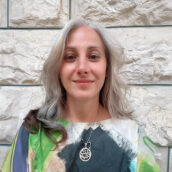
This passionate conversation begins with Lubna’s upbringing in war-torn Beirut. She recalls seeing bombs falling and people dying and wondering, “What is the point of this? How do we find purpose?” Her mom told her, “It’s okay, everything’s replaceable except you, the people you love and the story (or purpose) you live by.” After 15 years of corporate work Lubna launched her own business, Stories. Its name acknowledges the intertwining of our purpose and personal brands, and the alignment of our internal and external stories. She also links misaligned stories with depression and other issues.
In this episode, Lubna highlights:
– The role of purpose in personal fulfillment
– How leaders’ trauma can affect their authenticity and decision-making
– The workplace transformation from, “Doing Leaders into Being Leaders”
– Why corporate leaders are “the nervous system of their organizations”
– How leaders’ emotional states and level of personal development directly influence their organizations’ cultures and employee engagement
The interview concludes with Lubna’s vision of Compassionate Inquiry’s universal capacity for healing, facilitating new growth in global organizations, leaders, families and individuals.
Episode transcript
00:00:00 Lubna
I think a lot of us wear a mask every day, and especially in the corporate workplace where I specialize. Yeah, like a lot of my work focuses on the corporate space. And in the corporate space, everybody pretty much is wearing a mask. And so that external story that you’re living with is most often in mask because it doesn’t match the internal story. When these two are not In sync, that’s when you feel uncomfortable, that’s when you feel depressed, you feel stressed, you feel like, burnt out. And so I really want to help people match the two together. But it’s the same person. And when they come to a Compassionate Inquiry session, they’re saying something to the external world. But behind these digital screens, they’re sharing something completely different, and that speaks to authenticity or the lack of authenticity, and it speaks to attachment, which we talk about very often in Compassionate Inquiry. And so I think it’s really important that we operate as one person at work and at home as much as possible.
00:01:06 Rosemary
This is Ihe Gifts of Trauma Podcast stories of transformation and healing through Compassionate Inquiry.
00:01:24 Kevin
Welcome to another edition of The Gifts of Trauma podcast from Compassionate Inquiry. My name is Kevin Young and I am here with Lubna Forzley. Lubna, I’m really keen to get into our conversation. First of all, I’m just wondering, how are you doing?
00:01:41 Lubna
Hi, Kevin. I’m good. Thank you for asking. And how are you?
00:01:46 Kevin
Yeah, I’m really good, Lubna. I’ve had a good day today. I’ve had a slightly quieter week, so I managed to squeeze in a sauna and a couple of walks and it’s Friday night where I am. Lubna, I’m very conscious that before we get into your work and there’s a lot of work to get into, you are a busy woman. you’re doing a lot of wonderful things, and I’m also aware that you’re speaking to us today from Beirut, and you would need to be a blind and deaf man to not know that the world is a little bit crazy right now, and particularly in the part of the world that you are. How is it for you being in Beirut?
00:02:24 Lubna
I’m actually very happy to be in Beirut. This is my home of origin. I was born here. I was raised here up to my teen years. But as much as I know everything is happening in the world, I’m actually very happy to be home. My nervous system is very calm to be at home among my family and friends. Just really happy to be here, genuinely.
00:02:48 Kevin
Good. I’m happy to hear that. And I know Lubna, you spend a lot of your time in Canada and would you say Canada is your home right now? I think your kids go to school there. They spend most of their time. It’s kind of, I know home is always home, home is at home is always where you’re from. But is Canada your main residence? Is that where you spend most of your time?
00:03:07 Lubna
Yeah, I would say that. And I also spend a lot of time in the Middle East overall, mainly in Dubai. I used to live in Dubai and have very strong connections and roots in Dubai. So I spend a lot of time between Canada and Dubai and also come to Beirut usually in the summer with the family.
00:03:25 Kevin
Yeah, cool. Thank you. Thank you for sharing that Lubna. Lubna, my thoughts with this conversation or to help our listeners understand what you’re doing in relation with trauma work with Compassionate Inquiry and where you take that into your professional arena. And I want to read a little bit about you. And hopefully this isn’t too embarrassing. I know when people read stuff about me it’a a little embarrassing. So you’re the founder of “Stories,” which we’re going to talk about later on. It’s an element of your work and stories helps entrepreneurs get their inner and online story right through a unique portal. You’ve worked for more than 20 years in leadership and consulting roles with international blue chip organisations across lots of industries. E-commerce, banking, fast moving consumer goods. That was a new phrase for me. FMCG’s and human development. And you’ve managed your own consulting firm Stories, worked with Coca-Cola, UNDP and many others, and it goes on to say developing a track record in creating and implementing integrated internal and external marketing and communications plans. Tell me a little bit about what that all means and the professional sphere that you sit in.
00:04:42 Lubna
Sure, happy to. I mean, if I was to introduce myself, I’d say first and foremost, I’m a mom. That’s like the number one title that I live by. And then beyond that, I’m the founder of Stories. So Stories was born out of my own personal story, because I was raised in Beirut in a war zone. And maybe I could share the origin story behind that before I tell you what we do, if that’s OK. Or would you prefer I tell you what we do?
00:05:06 Kevin
That would be wonderful. What I love in these interviews. I’ve a set of questions that I want to lean into, and you’ve just chosen to answer the first question that I haven’t asked you yet. And I always just find that amazing. So the question I had was, your work blends storytelling and relationship. Can you share how your own personal experiences with trauma shape the direction of your professional life? And you’ve just said that you’re going to answer that question already. So thank you.
00:05:32 Lubna
Amazing. We’re in sync..
00:05:33 Kevin
Yeah, we’re doing it, Yeah.
00:05:36 Lubna
So basically I spent about 15 years in the corporate world and after doing that I wanted to start my own thing. And when I wanted to start my own thing, I really wanted to call my company Stories and I wanted to call it Stories because that stems from my own personal story. So I was born and raised in Beirut in a war zone. And from the minute I was born into the hospital, I experienced war up to the age of, I would say 11 or 12, when I immigrated to Canada. And I remember as a child, every single day of my childhood, I’d look outside the window and see bombs falling and people dying in front of me. I would ask so many questions, I was very curious. I’d actually sit there and say things like: A) “What is the point of this? What is the meaning of life? And then, “What is purpose in the first place? Like how do we find purpose? What is purpose? What is the meaning of life? And then the other thing that I would always ask is, “What happens, like, after all of these people die, what happens after? What remains of all of this?” And I really came to a conclusion when I was small that almost everything is replaceable. My mom would say a sentence in Arabic that says something like, “You know, it’s OK, it’s OK, this is gone, it’s OK, it can be replaced. This is gone, it’s OK, it can be replaced. Whether it’s your home or your car or your belongings, almost everything is replaceable except, you know, your mom and dad, the story you live with, the purpose you live by.” So that was the reason I called it Stories because I had this thing in me that I questioned, also after I started with Compassionate Inquiry, that after we’re gone, the only thing that remains is that story that we’ve lived. And I had a very strong background in marketing. And that, kind of, the name Stories linked with my story of origin and the importance of, you know, your purpose and your personal brand, but also the importance of projecting your story externally in an effective way, but also making sure that your internal story is In sync with your external story. Because I believe that when they’re not In sync, the wider the gap, the wider the depression. That’s how this whole thing originated. I started initially consulting and doing digital storytelling with corporate leaders, and I noticed that they share a beautiful story externally with people, but it doesn’t always match the internal story. And so I started getting really curious about the internal story. I became a certified coach, I joined Compassionate Inquiry and I started going deep into that internal story and rewiring the internal story.
00:08:23 Kevin
Thank you Lubna. Lubna, tell me a little bit more that when you said that line just now about internal story and external story, the greater the gap, the greater the depression. Elaborate a little bit on that for me.
00:08:36 Lubna
I think a lot of us wear a mask every day, and especially in the corporate workplace where I specialize. Yeah, Like, a lot of my work focuses on the corporate space. And in the corporate space, everybody pretty much is wearing a mask. And so that external story that you’re living with is most often a mask because it doesn’t match the internal story. And when these two are not In sync, that’s when you feel uncomfortable, that’s when you feel depressed, you feel stressed, you feel, like, burnt out. And so I really want to help people match the two together. For example, if you spend an hour every day on LinkedIn, where I spend a lot of time, you notice that people share certain things on LinkedIn. Everybody’s excited. There’s a new promotion and they’re so excited to be featured in ABC, but that same person, if you actually track it, that same person if you look at their Instagram account, and what they’re liking on Instagram or what they’re commenting on Instagram, because that’s not trackable. It’s very different, these two stories. Yeah, so, but it’s the same person. And when they come to a Compassionate Inquiry session, they’re saying something to the external world. But behind these digital screens, they’re sharing something completely different, and that speaks to authenticity or the lack of authenticity. And it speaks to attachment, which we talk about very often in Compassionate Inquiry. And so I think it’s really important that we operate as one person at work and at home as much as possible. I know that’s hard. I know that people need a paycheck at the end of the day, especially if they’re working in the corporate space. But it’s important that we operate as a whole person at home and at work.
00:10:23 Kevin
Yeah, thank you, Lubna. You know, it’s making me think. I was having a conversation recently with someone and I was sharing that I think my greatest, for myself personally, my greatest view of healing is that I am mostly the same person. Most of the time, So when I show up here with you, or when I’m talking with J’aime, our producer, or when I’m talking with my friends, my family, my clients, I’m mostly the same person. For me that’s a real indication of healing and I’m really interested. I’m fascinated actually about this corporate world because it’s not a place where we would imagine or envisage a lot of compassion. When I worked in the corporate world, it was all about KPI’s, it was all about profit, it was all about margin, it was all about footfall, it was all about retention, etc, etc, etc. And quite a lot of it was fueled by alcohol, a lot of rewarding with alcohol and parties and that sort of thing. So talk to me then about… so when we have people whose inside story isn’t the same as their outside story, particularly leaders, how does that then show up in an organization or in the corporate world in your view?
00:11:37 Lubna
If I was to summarize it in 2 words, toxic workplaces. If I was to make it simple and summarize it in 2 words but it shows up as lack of productivity, it shows up as burnout. The burnout costs today are 322 billion. That’s a lot. And so that’s how it shows up. It shows up as lack of engagement in the workplace, like the rates of engagement are very low and the rates of disengagement are very high. So you’ve got employees who are showing up to work because they need the paycheck and they’re not necessarily stepping into their power, stepping into their purpose and living authentically. And I really believe that it’s important to step into your purpose and power. And that doesn’t mean that I’m advocating for people to become entrepreneurs and start their own thing and become healers and drop the corporate workplace. You can have both. You can have workplaces that are very compassionate, you can help workplaces that are very authentic. And it really starts with the leader themselves. I really believe that the leader is the nervous system of the organization. We talk about ourselves, we have our nervous system, but the leader is also the nervous system of their organization. And so when you’re managing the business, you’re not just managing the profit centre of the business, you’re actually managing nervous systems around you. You know, you walk into a room and sometimes you walk into a room and you can sense the energy is completely off or you walk into a room and you see everybody like, so happy together. That’s largely dependent on the leader’s nervous system. And so I really think it’s important for the leader in the organization to work on themselves, or to be open to working on themselves because when they work on themselves, then they heal themselves. That’s contagious and that transmits to everybody else. So we talk about intergenerational trauma. There’s also intergenerational healing, right? When you’re healing, everybody else around you is healing. And so I really think it’s important for the leader to work on their own nervous system, first and foremost, and to heal so that others around them can be comfortable and can be at their peak productivity.
00:13:50 Kevin
We’re taking a brief pause to share what’s on offer in the Compassionate Inquiry community. Stay with us, we’ll be right back.
If you’re not a therapist or a healer, but you heard our guest describe the personal transformations they experienced during their Compassionate Inquiry journeys and wonder what might that be like for me, there is a program that is offered to anyone who wants to experience the power of Gabor Maté’s approach to trauma healing. I’m Kevin Young and I’ve been facilitating CI Circles since 2022. I’ve seen people transform in many ways. I’ve seen people change beliefs, relationships. I’ve seen people change how they show up in the world. I have seen people literally change how they look in front of my very eyes. There are many, many ways that people change during Compassionate Inquiry Circles Circles is a 10 week small rubber experience. Click the link in the show notes that will bring you to a web page that gives you all you’ll need to figure out if this is for you.
Kevin: Yeah, that’s really fascinating, Lubna. A lot of the conversations we’ve been having on the podcast recently have been around this idea of collective, so collective trauma, collective healing. And of course, we can look at that as a family system, we can look at that as a societal system, and we can also look at that as an organizational system within a corporation or a company that, as you say, that that collective illness, will show up through the organization, or that trauma, and so will the healing. So talk to me a little bit, then get a little bit more specific about the work that you do. So I’m coming along, my name is Kevin and I’m managing a multinational organization. And I’m a little bit wired, maybe a little bit angry. Maybe my organization is making millions of dollars a year, but my family life is a little bit off the rails. What are you going to do with me?
00:16:07 Lubna
Hmm. Hi, Kevin. It’s so great to meet you. Kevin, what I would do is I would meet you where you’re at. That’s where we always start with people, especially with leaders in the corporate space. When leaders come to us, you know, we have two sides in my business. There’s one side that focuses on digital storytelling, which is mainly focused on your external world, and another that’s focused on digital coaching, which is your internal world. Most of the time they come through the digital storytelling side, they don’t come through the digital coaching. They come through the other window, I would say, or the other door. And so we meet people where they’re at, we look at what’s happening in their life, What do they want to work on? If they want to work on their business, it usually starts with, I want to work on my business, I want to grow more, but I’m not growing. I’m not able to grow my team, I’m not able to grow my revenue, I’m not able to grow my team, etc. So we start there and then we go into their own internal world. Why are you not able to grow? We look at that basically, and if it’s because they want to look at their family life because they’re so focused on their work and their family life isn’t so much In sync, then we deal with that. It really depends on the leader and what they want to focus on. But the majority of the time, the people that come through the door, mainly start with something not working in their company, something that working with their team, there’s something off in their company. They’re more comfortable starting in the corporate world, starting being vulnerable when they’re talking about their company rather than the other deeper stuff.
00:17:50 Kevin
I don’t know this to be true, but I would imagine like anything else, Lubna, that company will be a reflection, or the issues of that company will be a reflection of their inner world? Would it be true to say that? And I’m totally pulling that out of thin air, but I just imagine that would be the case.
00:18:06 Lubna
Absolutely, most of the time.
00:18:08 Kevin
When I read about you Lubna that this idea of moving from doing to being crops up a lot under your name and I hear you’re leaning into that right now and when you’re working with people. What is this? And specifically in the realms of trauma, inner world organizations, corporations, leadership, what is the idea of doing to being?
00:18:34 Lubna
Well I think if we focus on the corporate space, there is a lot less being and a lot of doing. And so it’s really important to shift people from doing to being, or at least doing intentionally. Let’s start with doing intentionally.
00:18:52 Kevin
Lubna, can I pause you here? Because what I’m conscious of is that I know what both of us are talking about. And as sometimes happens when we get into these conversations, I’m familiar with this term doing to being, break it down a little bit for me, for people that are listening to this and maybe they’re heads of their own organisation or small business or they’re entrepreneurs. Talk to me a little bit about before moving from doing to being. Talk to me about what each of those is. What is a doing leader? What is a doing leader doing?
00:19:20 Lubna
I think in general terms or what I see as a doing leader is very busy, always busy, always on-the-go, always achieving, always striving for bigger and better and nothing is ever enough. And they’re very busy. Like they’re constantly on the go. Yeah, OK. And they’ve got a long To Do List. If I was to describe a persona of a doing leader, they’ve got a long To Do List and that long To Do List… there aren’t many pauses to step back and say, do I really need to be doing this? Is this really aligned with my purpose, with the purpose of my organization? Are we all going in the same direction? There aren’t many reflection points and pauses. Whereas a leader who is being, that’s a leader that’s more grounded. That’s a leader that’s more taking care of themselves, taking care of their nervous system. They’re focusing more on doing things with intention or being, just being in the world. Resting when they need to rest and also achieving with intention, or at least that’s what I would say. At the end of the day, they do have targets and they have… an organization does have targets, and they need to make profit. I acknowledge that, but it’s doing it with intention, and doing it in any way that is aligned with their own purpose and their corporate’s purpose and making sure that the why, the how and the what are always aligned. Because I always believe that when your why and your how and your what are not aligned, there’s a lot of disconnection and there’s a lot of burnout.
00:21:07 Kevin
Maybe we should bookmark that, Lubna. That’s… I’m sure you’re familiar with the Simon Sinek video, The how, the what and the why. And I’m just going to bookmark that here. If anyone hasn’t watched that to just go look up, “Simon Sinek. Why?” I’m also thinking back, Lubna, to my own time in the corporate world. I worked for a telecommunications company and there wasn’t very much space for being. In fact, if I wasn’t doing something, then I was doing nothing. If I wasn’t doing something, then there was space for more responsibility, more tasks, more jobs. And in your opinion now, how does that show up then? If the leader is a doing leader, always busy, long To Do List and never getting that list achieved, not aligned, how does that manifest in their organization? What would you be seeing in an organization with a leader like that?
00:22:00 Lubna
I see not optimal productivity because everybody is running around, doing the same thing as the leader and just running around with a long To Do List, rather than working in a way that’s intentional. And they’re not necessarily always working in the same direction or towards the same direction. And it shows up as lack of engagement, I would say, because the employees are just doing, for the sake of the paycheck, but rather than doing because they believe in what they’re doing and they’re aligned in what they’re doing. And so everybody’s running around all the time. And I think that there are better ways of doing that. Regular pauses, regular reflection points, making sure everybody is aligned, everybody’s going in the same direction, making sure there’s breathing space, making sure that the leader cares about the other employee, cares about the needs of the other employee. I remember Dr Gabor Maté spoke at a conference that we organized, and he mentioned that we walk into the corporate workplace and from the minute we walk into the corporate workplace, we’re already walking in with trauma. We’re already walking and wounded with trauma, and then we get more triggered and there’s space for even more conflict, and that creates stress. And so I think the more we work on ourselves, first and foremost, the better it is for everybody. If everybody worked on themselves, I think we would be all doing well.
00:23:29 Kevin
Geez, Lubna, I think if everybody worked on themselves, I think the world and every family and organization and society in it would be a much better place to be.
00:23:39 Lubna
Absolutely. That’s why we need to get Compassionate Inquiry to every corner of every village of every part of the world so that people can work on themselves. Because I think it’s, it’s so deep. I have personally benefited so much from Compassionate Inquiry and I think corporate workplaces can benefit as well. I think not only corporate workplaces, but I see that every corner of the world can benefit from Compassionate Inquiry.
00:24:03 Kevin
You’re doing that again, Lubna. You’re stealing my questions. I think I must have sent you that one telepathically as well, because I definitely want to talk about the idea of your future and the future of CI and how they might merge. And I know that you’re working a lot about… you have this big dream of Compassionate Inquiry being in every household in every organization. And you kind of said, like Coca-Cola, like Coca-Cola is so visible around the world. I want to just take it back a little bit bit now, because I’m really fascinated when you described a doing leader, and a doing organization over busy big long To Do List running about distracted, triggered, maybe passive aggressive, more conflict. You’re describing that for almost from a coaching point of view as being a doing leader, But that also sounds like someone who is living with trauma. From our Compassionate Inquiry lens, that very same description, we would describe as someone who is acting from reactive, from trauma. Would you agree with that?
00:25:08 Lubna
Yes, I would. I would. Then I would add to that that I think we live in a society, as Dr Gabor said, that rewards this and B), I think people who work in the corporate world also are working in the corporate world to provide for their families. There are many who work in the corporate world because they love the corporate world and they love their job and they love what they’re doing, and that’s great and that’s wonderful. And there are others who don’t love it so much. And they’re there to provide for their family. And so some of it is trauma, yes, I agree with that and some of it is just people working for the sake of providing for their family. Am I getting my point across, or not really?
00:25:53 Kevin
Sure, of course. I think what you’re saying is that working in the corporate world isn’t their purpose. It isn’t their goal in life. It’s not their, it’s not their higher purpose to be working in corporate. And they have to pay the mortgage and pay the bills and feed their kids and put them through school. Yeah. So then I’m keen then on the idea of trauma in your work right now. So when you’re taking people through this process of doing to being, this awakening process, or this coming back to yourself process, how much is Compassionate Inquiry playing a part in that part of your work?
00:26:28 Lubna
Compassionate Inquiry plays a part. There is a part that’s Compassionate Inquiry and another part that’s not Compassionate Inquiry. I do both. I would say Compassionate Inquiry has helped so much in that whole process. I have had cases where the leader comes and they have such a difficulty connecting with their body because when you’re doing, you’re not really connected to your body. And so they have a hard time with Compassionate Inquiry. And I have had others that are OK with that whole process. So there are some people that come to us because they want to be aligned with their purpose, they want to discover their purpose. So we have a purpose discovery process in our company and we do that. And there are others that actually want to experience Compassionate iInquiry and we go through the full Compassionate Inquiry process and it has worked for some and it hasn’t worked for others. But personally, I think that Compassionate Inquiry has added so much to my practice. It has made me so much more aware and it has made my clients so much more aware, especially those that were open to connecting with their body and that were open to that whole process.
00:27:40 Kevin
You’re making me think a little bit more then, when we think of compassionate leadership, when we think of authentic leaders and saying that will work for some or maybe some people are more inclined to do that work. I noticed a game when I read about you. There’s a lot of talk of authenticity and authenticity as a leadership tool, or authenticity as a methodology for guiding and leading organizations. And I’m just curious then. So we have a leader and they want to be leaning into this authentic leadership style, and maybe then there’s a fear of doing that from the trauma of their past. Talk to me a little bit then of how do you help people lean into their authenticity whilst being sensitive to the trauma that they might be carrying in their bodies.
00:28:39 Lubna
I think, before they lean into their authenticity, I think they need to make a conscious decision that they really want to do that, and that will come with consequences. Because not all of them are OK with that. So there are some that are open to going on the authenticity journey, and are open to the consequences that come with that, because that means that they may lose investors, they may lose board members, they may lose shareholders, they may lose employees and not many of them are OK with that. Or, they may go on that journey and the marketing of the company, or what they start saying about the company externally does not sync up so much with their client base. But I really think that at the end of the day, you start when you are authentic. You start attracting people who believe in your shared thing. They believe in what you believe in. They believe in shared purpose. And so I encourage people to be authentic, because yes, you will lose some people, but you will gain others on that journey. It… there’s always that path that ….I know that going on that journey is going to be difficult because I will lose, but I will be more aligned and I will start attracting more of the right people, more of the right investors, more of the right clients, more of the right shareholders, more of the right employees. And then when I do that, we’re all going to operate in a way that reflects shared purpose. I’m really big on purpose. It’s almost like looking at a tree, the makeup of a tree. There’s the roots of the tree and then the branches and then the leaves. And if you imagine that the roots of the tree is an organization’s purpose or your own purpose, that needs to connect with the branches which are shareholders or your investors or all your stakeholders. And then it needs to connect with each employee, with each leaf, because that tree, if it’s not fully aligned, it doesn’t flourish.
00:30:54 Kevin
Lubna, I’m really fascinated because as you’re talking and let me know if I’m projecting this, but as you’re describing organizations or organizational leaders going through this change and how it might impact their organization, it seems to me like that’s a very similar story to when I help an individual person through Compassionate Inquiry. Some relationships change. They may not like going to these certain places anymore. Some friends will drift away, but some new friends will come in and they’ll be having different conversations with different people. And it seems like the individual doing this Compassionate Inquiry work is almost like a little microcosm of when an organization does it. Is that true? Am I projecting that onto you?
00:31:39 Lubna
100% I just don’t know to be honest, which is a bit more painful. So to give you an example, I’ve worked with leaders that have lost investors, and that’s painful. It’s very painful when you have paychecks to pay at the end of the month, to lose lots of money, to lose investors to… Yeah, So that’s very painful. Losing friends is also very painful, but the process is the same. It’s very similar. You’re losing something and you’re gaining something and you’re gaining something that’s more aligned. But the process of loss, the grief is tough and the loss is tough.
00:32:16 Kevin
Yeah, I, I can imagine you then doing almost grief work with organizational leaders on grieving the loss of those shareholders or stakeholders or board members or clients or customers, investors, which is the same as the, the work that we do with people saying, you know, I can’t relate to those people in my life anymore. I can’t accept how they speak to me anymore. Yeah. Like, I can imagine you doing that grief work on a larger scale with organizational leaders.
00:32:46 Lubna
Yeah, yeah, very much. And I think that grief needs to be witnessed.
00:32:51 Kevin
Lubna, can I take a right turn right here? Something you mentioned earlier through stories and it was last year and you had the Grow Virtual conference. You had the 2024 Grow virtual conference and Gabor Matei spoke there and Sat Dharam Kaur, our other chief executive officer of Compassionate Inquiry, or Queen Bee as she, as she likes to fondly be known, though I think that’s her title, the Queen Bee. And what I was noticing on there when I looked through the speakers was you had a lot of women, a lot of women speakers on there. And again, when I read a little bit more about you, that seemed to be an important part of who you are and what you do, in the supporting of women in leadership roles. Would you talk to me a little bit more about that and why it’s important to you? Apart from the obvious. I can see that you’re a woman. So apart from that, what’s driving that for you?
00:33:46 Lubna
Yeah, I noticed when we organized the conference closer to the day that there were more women than men. I suppose we could… we could be more intentional next time to have a bigger mix. It wasn’t really intentional to have more women than men. It just happened. But I really believe in women in leadership positions. I’m a mother myself and I think that women should step into their purpose and I don’t believe that you have to choose either/or. I think you could do both. I believe that I have been able to do both. There were times on my journey where I definitely confirmed that I should have been more present at home, and that came at the cost of my external success and achievements. But I think that there is room for both, and I encourage women to step into their purpose and to achieve whatever they want to achieve because it’s doable and it’s possible. Maybe not all at once, but in stages. But the GROW conference wasn’t really done intentionally to promote women in leadership. The original story behind the Grow conference was to support a friend of mine who has leukemia, and I really wanted to put on a conference to raise funds to support her. And I put together my network and Abracadabra brought my magic to put it together really quickly. And it worked out really well. Sometimes you have this big vision and the universe supports you, especially when it’s a good cause. And, and that’s what happened on that journey. And we managed to bring amazing speakers and it just happened. I think, maybe, that we had more women, perhaps because I leaned into my network, which is… obviously which has a heavier weight on the woman’s side, I would say.
00:35:41 Kevin
So then talk to me about that, then. Talk ot me about the heavier weight on the woman’s side. Is that intentional from you? Is that something that you’re very keen to promote and grow?
00:35:50 Lubna
Actually, if you look at our client base, I would say it’s 50:50, but my network is heavier on the women’s side. Do I focus everything in the stories on women? No, I don’t. It’s 50:50. But I really believe in my heart. Like I actually do make an effort to promote women in leadership positions. I speak in conferences to basically encourage more women to step up and to step into their purpose and to live their magic. So I make a very intentional effort to do that. I make an intentional effort to do that not only for women, but also for teen girls and for girls, young girls. There was a tech program for girls, to encourage girls to create tech apps and tech initiatives. So I do that on an annual basis. I go and I’m one of the judges of the projects, and that’s specifically for girls. And I do that intentionally. So I do some things that are intentional for women, but my company serves both.
00:36:52 Kevin
OK, thank you. Lubna, now I have a few questions formulated in my mind that I hadn’t intended asking you. And I wonder, can we spend a few moments on a certain part of a conversation? And if we can’t, that’s OK. Particularly because I’m talking to a woman and I’m talking to a woman who works a lot in the corporate world and within organizations and I’m talking to a mother. So I’m talking to a woman that’s had to balance those things and try to get that right and do all the things that you talk about provide, have a career, have some access and raise your kids and and be a mother. And I wonder, is there a little bit of a conversation around supporting women? And I’m keen to get your opinion on the idea of traumatized workplaces. We have been replacing the word toxic with the word traumatized recently. So rather than a toxic workplace, a traumatized workplace, and rather than toxic masculinity, traumatized masculinity. And then how that impacts women, Because you said that it doesn’t have to be one or the other. Quite often for a lot of women, it seems to be it does have to be one or the other. But you can either become, and I’m speaking generally, you can become CEO or leader of a large organization if you decide to take less of an active role in the raising of your family. Or you can be the best mother that you can be if you decide not to follow career or a workplace. And I’d like it that it wasn’t, but it seems like it is, for women. We know that women don’t rise as quickly through organizations. We know that they take time off for… for raising families. We know that there’s a gender pay gap. We know that women don’t show up as often in those senior roles. From your point of view, talk to me a little bit about that, within the framework of trauma.
00:38:48 Lubna
If I go back to my personal life perhaps, and share an example, I would say there were times when I had to do one with more intensity than the other. And that is tough and it creates trauma for the children. And there were times in my life when I did both. I would say when I was in the corporate workplace, I had 45 days off to have maternity leave. I lived in the Middle East at the time when I had my 3 kids, all three of them, and in all three cases I had 45 days off. That’s not a lot of time off.
00:39:24 Kevin
That’s six weeks.
00:39:25 Lubna
Yeah. And I remember with my daughter on the 50th day, I was on a plane to Paris. So I don’t know if I want to call that a traumatized workplace or the policy of the workplace, or the policy of the countries that I lived in the Middle East. And that’s changing. Thank God. It’s changing really quickly, because I think it’s now 90 days in the Middle East, but that’s really hard for a woman. It’s very hard. So in my case, when my kids were younger, especially my oldest daughter, I was more present at work and not as much present at home. So my home took a hit. And I acknowledge that, and I acknowledge that every day in front of my kids, I say this is what happened. That’s why it happened. I explained all of that, but at the same time, if I was to think of things differently, if I was to ask you today, Kevin, could you go fly a plane today? What would you say?
00:40:27 Kevin
I could not do that Lubna.
00:40:29 Lubna
But Kevin, if you went to a school and learned how to fly a plane, could you fly a plane?
00:40:36 Kevin
Yeah, I’m pretty certain I could do that.
00:40:37 Lubna
So you can fly a plane. It’s not that you can’t.
00:40:41 Kevin
I can fly a plane, Yeah. I just don’t know how to right now.
00:40:44 Lubna
And that’s the same case as a woman in a leadership position. You can have a family and live your purpose and do great things in the world, but you need to learn how to do that. And you may not get the perfect balance, but you can do that. And you can learn time management. I’ve had to learn time management. I’ve had to learn that there are times when I’m 100% focused on my work and I’m explaining that to my kids. And there are other times when I’m 100% focused on my kids and I’m explaining that to my work. I’m saying to my team, I can’t do anything in the next 5 days or in the next 2 days or in the next whatever, because I’m going to be present with my child in XYZ. And so you can in life, you can achieve many things, but you have to learn how to achieve these certain things. You have to build your muscles, you have to learn certain things, you have to communicate. And so I wouldn’t say that I have the perfect balance. I wouldn’t say that I’ve got it right. I’m still struggling with that.
Compassionate Inquiry is helping me with that. That has been… when I came to Compassionate Inquiry. If I look at, well, my therapy sessions, they weren’t focused on work. They were more focused on my family and the things that I didn’t do at the times that I wasn’t present. They were focused on balance. So I’m still learning and I will always be learning, but I don’t think that it’s fair or right to say to a woman that you can’t, because you can.
00:42:20 Kevin
Yeah, and I’m the father of two beautiful young women, 22 and 20 years of age, and I would certainly not want to be telling them they can’t. What I’m surprised about in your answer, Lubna, and this doesn’t make it right or wrong. I’m just surprised that I didn’t hear you ask for support. And for me, it’s as a male, a man in this world. And when you talked about 45 days and then 90 days and I know in the US there, I don’t even know maternity leave is a thing. It’s certainly not a very strong thing. I’m wondering about your opinion on how well women are supported in the corporate world to enable them to have both, to enable them to have purpose and family, career and success, and happy and contented family life. How well are women supported in that and do they need to be better supported?
00:43:19 Lubna
The authentic answer is they’re not very well supported and there’s a lot of corporate workplaces that offer a lot of amazing lip service, but that’s all it is in my view. I think that it’s improving and that’s wonderful and I see a lot of progress, but I think that we need to do better for women and we can do better for women. And if I look back on my life when I was in the corporate workplace, I don’t think there was much of an option. Like we’ve got 45 days, that’s the law and you’re either in or out. There’s no, there’s not much conversation, basically. And things are changing. And I think that’s wonderful that it’s changing. And I happened, at the time, to work for a wonderful boss that was very nice and very supportive. I remember at the time I made a case because where I worked, there was a big women in leadership program, in which I was very active. And because I really believe in this and I asked for them to dedicate a room in the workplace and create like a nursery. And they accommodated that. We bought a crib and toys and many other things. And they allowed, I had the nanny at the time, they allowed for the nanny to come and be there with my child so I can come and visit in the same building. So that… that was a wonderful example, and I would love for more workplaces to do things like that. But at the end of the day, it all depends on the boss. Yeah, it just happened that at the time I had a wonderful, wonderful boss that accommodated this. So it really all depends on the leader. That’s why the leader and the relationship between the leader and the woman, or the employee.
00:45:03 Kevin
That’s a beautiful example, yeah. And do you think that a less traumatized or a more being leader is more likely to support women through that process?
00:45:11 Lubna
Absolutely.
00:45:13 Kevin
Yeah, it’s interesting. Again, just that thing of when we work with our own trauma and when leaders work with their own trauma, then we are more likely to be collaborative, communicative, safe, understanding, compassionate, patient, loving, caring. We’re more likely to be all of those things again, even in a corporate organization. Can I tell you a funny little quick story before I ask you the next question?
00:45:42 Lubna
Go for it.
00:45:43 Kevin
It’s just, as you were chatting there just about your kids and having your kids and how your boss helped you with that nursery. I can remember when my kids were very, very, very young. So maybe 2 1/2 and six months old and they were both sick. And they’ve been sick for, you know, how kids get sick. And it’s just like they’re sick for a number of days. And I can remember phoning my boss at the time to say, Hey, listen, I can’t come in. My children are sick, and my boss said to me, can’t your wife look after them? And it really just hit me of how that … he was a he, obviously, and that expectation that that’s women’s work. So even for a man in an organization wanting to have leave with his children, wanting to take care of sick children, wanting to do the right thing by his family, that wasn’t even afforded to me either. And it gave me just a little insight into the… the thought processes of organizational leaders around women and work. Yeah. That, that was 20 years ago. I don’t know where that little story came from. I’m keen as well. So I want to talk if it’s OK with you about the idea of your future and how Compassionate Inquiry ties in with that. So the Arabic speaking world. It’s a big world. What’s your vision for that? Where do you see that going?
00:47:02 Lubna
We will be going to Dubai in November with Sat Dharam to do a CI experience in Dubai and open to the Arab world with the idea of promoting CI in the Arab world. And I look forward to also doing some independent circles. I’ll be starting an independent corporate circle and we also want to do CI circles in Arabic starting next year. So I really feel that there is a lot of potential to bring CI to new audiences. And I think that’s wonderful because I think that if I look at the Arabic world, for example, I think there’s so much need for healing. And I think that Dr Gabor Maté has spoken so much about the Middle East, about Palestine, and there’s so much trauma that’s happening in the Middle East. And I think that there’s so much need for Compassionate Inquiry. And we really look forward to, Yeah, for bringing Compassionate Inquiry to the Middle East, and not only to the Middle East, but in my world also to the corporate space to see if that lands. Yeah. And we’ll see how it goes.
00:48:14 Kevin
Thank you. I’ve also, just as you were chatting, I’m also conscious that when our unintentional bias or blindness shows up, and I’m talking about the Arabic speaking world, like it’s, it’s the same the whole way across the Arabic speaking world. So it’s full of cultures and full of different places and different peoples and different countries. And how does that work out for you? How are all those cultures and countries and continents across the Arabic speaking world? How do you work Compassionate Inquiry into that?
00:48:46 Lubna
The technique is the same, right? So you’re bringing in the Compassionate Inquiry technique and it’s the same across the different countries. The language, there is one common dialect I would say across all the countries, but then each of them have a different way of saying certain words. So that varies. I don’t know how to explain it really in English, but there is something that is consistent across all of them. And the way you read certain sentences and write certain sentences is the same across all countries. But each country has its own way of saying certain things. And in terms of cultures, some cultures obviously are experiencing more severe trauma than others, a lot more. So the intensity of the trauma is significantly higher than others and they would need a lot more, more space. The level of trauma that you’re dealing with is very different. So for example, if we look at Dubai versus Palestine, it’s very different, right? What they’re experiencing is very different. So, the Compassionate Inquiry technique is the same but what is being discussed is very different and the level of trauma is very different and the type of trauma is very different. Then, for example, if I look at Dubai, Dubai is a place that is thriving, that is growing, that is wealthy. The level of stress in Dubai is very high because of the, you know, the growth and because of the culture. And so the type of topics that we’re going to get in Compassionate Inquiry are going to be very different to the topics that we’re going to get in Compassionate Inquiry in Palestine, in Lebanon or in Syria, for example. So the technique is the same, but the topics are very different and the level of trauma is very different.
00:50:46 Kevin
Thank you. And again, I don’t know if this is a question. Lubna, and I’m just thinking of this as we speak now, what when I speak to my either clients or my Compassionate Inquiry colleagues who are in India, for example, how people are raised in their families in certainly where women sit in that culture and how women are treated in that culture and how free people feel to speak about their trauma. So in India, some women might be less inclined to speak about their trauma, or even see it as trauma because of how they were raised. I’m wondering, do you have any thoughts about that sort of thing in the and again, I know I’m saying that Arabic speaking world and it’s a very big place, but just with religious influences, cultural influences, geographical influences, does that pose a problem for you with your vision and desire to bring Compassionate Inquiry into that part of the world?
00:51:43 Lubna
I think we’re trying something new, and just like anything in life, there are some things that are unknown and some things that are known. I think that women will be in the Middle East and in the corporate space. Both will be more open to trying Compassionate Inquiry, but it remains to be seen. I’ve had some clients that I’ve tried to work with, and to do Compassionate Inquiry with, that had a hard time. I remember one CEO that backed out that couldn’t continue. He said “This is too much for me. I can’t. This is too. I can’t. The level of trauma is too much. Connecting with my body is too much.” And so I think it remains to be seen. We’ll see how it plays out. It’s something new, so we’ll see how it goes.
00:52:35 Kevin
I just noticed, I felt a little tinge of sadness when you said that about that person you were working with, Lubna. That’s really sad for that person, and I’m particularly sad for the people that if they’re managing people are leading an organization that I can’t do my work on myself because it’s too big.
00:52:55 Lubna
It’s too hard. And I’m not ready.
00:52:57 Kevin
Yeah.
00:52:58 Lubna
And I need to continue growing and bringing in money and operating and I’m not ready now, and we have to say, OK.
00:53:08 Kevin
Of course we say OK, yeah, of course. Yeah, it’s certainly not to judge people, but just noticing… that how sad that makes me. Yeah, I was reflecting recently just that through my work, I think what I want most people that I work with to be is at peace, and to recognize that some people just aren’t ready to move towards that. It’s just too big. It’s too difficult. Yeah. Thank you. And what about personally for Lubna Forzley? How’s the future look for you personally? What are you hoping to achieve for yourself?
00:53:38 Lubna
Oh, I would say on a personal level, I want to be more present as a mom. I think that’s really important for me because I wasn’t, as I mentioned, super present when my kids were very small. So I acknowledge that, I recognize that and I’m working towards being more present. I’m continuing to build my muscle on balance. So I think that’s a work in progress for me. So these two would be my biggest, especially the presence part. I have a teenager who will be in university in two years, so I think just spending time and making sure that I build deeper connections is really important for me. And then work wise, I would say in my company, I would love to build what we call an emotional operating system for corporates. So we have a framework for that we hope to bring to life. I hope to get to a place where I have a… a really cool, innovative product or service that does amazing things. And then in Compassionate Inquiry, I hope that I remain active and present with Compassionate Inquiry that has brought me so much healing and love and a beautiful community with lots of friends. And I really hope that Compassion Inquiry gets to a place where it’s so large and so big and so visible and helping with so many people like it has helped me.
00:55:10 Kevin
I’ll second that Lubna. Yeah, for me too. Are you writing right now? I was reading just a little bit about you, around what you’d previously written, and you’re either very humble or you’ve forgotten. And I’m thinking the title is Cracking the Egg, Breaking Limiting Beliefs in Business. Is that what you’re doing right now in your writing career?
00:55:27 Lubna
Yeah. The final title we landed on is, Crack It.
00:55:31 Kevin
Crack it.
00:55:32 Lubna
Crack it, Let’s Crack It. And yes, we are in the process of writing that. And it will also, the book will also summarize all the interviews that we did in the GROW conference and beyond. We did 40 interviews last year with amazing people. And so the book will summarize these interviews and we’ll have my own perspective on the corporate space. So hopefully that will be out in public next year. I don’t foresee it to be out this year. I’ve also written for UNDP. I worked for the United Nations Development Program for about 5 years and I wrote a book called Enhancing Business Community Relations. So that’s something that’s already out and that was published many years ago and my past life when I was in the corporate space. But I think that Crack It book, it will be actually, a package. It won’t be just a book, it will be a book. It will be a podcast and we will have story cards. So they’re like playing cards. On one side, it will show Crack It, and on the other side, it will have a question that will inspire leaders to. Yeah, to reflect on certain things. And the idea behind it is that the light shines through the crack. So we want to encourage leaders to look through the crack and look at the light that shines through the crack.
00:56:53 Kevin
Sounds really beautiful. I really love Lubna, when you answer those questions from my perception…, when your purpose and what you’re doing and what you want to do and your vision or all l, you definitely light up. When I just saw you talking about that. Also, when you were talking, I was imagining workshops, seminars, Crack It workshops, Crack It seminars, Crack It retreats. Yeah, week long workshops and conferences around. Yeah, that, that sounds really beautiful, Lubna.
00:57:24 Lubna
Thank you. And the symbol for it is a. The symbol for it is an egg. Like you crack an egg. Originally it was called Crack the Egg, but then after a lot of discussion we landed on Crack It. But the idea behind it is that change comes from the inside out. And like an egg, when an egg cracks from the inside out, life begins. But when something is cracked from the outside in, life ends. And so that’s the whole vision for it that you need to change from the inside out. You need to see the light through the cracks.
00:57:57 Kevin
Yeah.That’s really inspiring. It sounds really inspiring Lubna. I’m wondering, can I ask you one little question then? And I think I need to change this question because I’d like to ask it as a surprise. And I ask it that often now that I don’t think it’s a surprise anymore. But the question that I like to end my conversations and thank you for the conversation Lubna. It’s been lovely to sit in your presence and hear all about your world. The question that I have is, if you could deliver a little message of wisdom out into the world, if you had the ear of humanity to whisper something into, what would you say?
00:58:38 Lubna
I would say, live with purpose at every opportunity you get and make sure that you create a beautiful story worth sharing. Every person comes into this world with a beautiful purpose, and I think it’s really important to step into it and do magic with what you’ve been given.
00:59:00 Kevin
And, Lubna, I know that you and I have spoken before, and there’s a really fascinating and interesting link between your own story and Gabor’s story. Would you tell our listeners a little bit about that?
00:59:17 Lubna
For sure. I remember when I first got hooked on Compassionate Inquiry. I saw a video of Gabor and, you know, from that moment forward, I looked at every video and then researched him and found out about Compassionate Inquiry. And basically, I remember in Gabor’s story something that’s very, very central to his life. And his story is that his mom gave him away when he was around, I think, 19 months because she wanted to keep him safe. And she gave him to someone to keep him safe because of the war they were experiencing. And in my case, I had a very similar story, except in mine, I was the mother who gave my daughter away when she was 18 months old, also to keep her safe. I remember at the time, I lived in a country called Bahrain, and I was experiencing war for a short period of time. And I was working at the time, and my husband was working in a neighboring country. He was not with us. And I wanted to make sure that my daughter was safe. And so I asked a lady, a coworker who worked with me to please take her on a plane to my parents, to Beirut to make sure that she stays safe. And she agreed. And she did that for a period of three weeks. So for three weeks, I did not see my daughter until I went back to Beirut and brought her back. At the time, I thought I was doing something perfectly great and normal and sound. And then when I came to CI and started hearing or Compassionate Inquiry and started hearing Gabor talk about his own story and the effect of that on him, that’s when I actually. I felt so guilty. I felt like I did the wrong thing. I started questioning myself. And as I was going through compassionate inquiry and watching all the videos and coming to all the sessions with Dr. Gabor Maté, I started having such a hard time with parenting, I would say I started thinking, oh, I did that wrong, and I did that wrong, and I did that wrong, and I did that wrong. And it was really, really tough for me to go through that and question myself. But that was also a moment of awakening for me, I would say, because I think I was living through life blindfolded. I think there are moments in life that are defining moments, and there are many in my life. But if I could pick some that were very, very defining, I would say there were two. Motherhood, where when you step into motherhood, there’s no going back, right? It’s defining. There’s no before or after. There’s. That’s it. You’re a mother now. And compassionate inquiry is the same for me. When you step into Compassionate inquiry and go through Compassionate Inquiry, there’s no unseeing. There’s no before or after. There’s. That’s it. You’re in a Compassionate Inquiry, and you’re now awake. And you are. You’ve seen so many things and. And you just need to live life with intention. There’s no going back. It’s almost like looking at a life through the lens of a story or a book, because I relate everything to a story. And imagine that you’re going through that story, but you can’t turn the page backwards. You could only turn the page forward. And that’s life. You can’t turn the page backwards, but you can look, you can reflect. And you could say, I’m going to do it differently after Compassionate Inquiry. And that’s my case.
01:02:44 Kevin
That’s really beautiful. Thank you. You reminded me I have a song, and there’s a lyric in it that says, “Don’t leave your words inside your head. Don’t let your story go unsaid.” And that sounds like what you’ve just said.
01:03:00 Lubna
There’s a quote, maybe I’ll end on this quote, but there’s a quote that says, “A story untold is a story unhealed.”
01:03:09 Kevin
A story untold is a story unhealed. Lubna, thank you. I really appreciate you coming along to the Gifts of Trauma Podcast and. Being authentic and open and allowing me to ask these questions, Lubna Forzley, thank you very much.
01:03:24 Lubna
Thank you so much, Kevin.
01:03:26 Kevin
Take care.
01:03:34 Rosemary
The Gifts of Trauma is a weekly podcast that features personal stories of trauma, healing, transformation, and the gifts revealed on the path to authenticity.
Listen on Apple, Spotify, all podcast platforms, rate, review and share it with your clients, colleagues and family. Subscribe and you won’t miss an episode.
Please note this podcast is for informational purposes only. It is not a substitute for personal therapy or a DIY formula for self therapy.
Resources
Websites:
Related Links:
Videos:
- 2019 TEDx talk
- Speakers Bureau Profile
- Simon Sinek, Start with Why.
- Framework Leadership Podcast
- Let’s Have This Conversation PodcastNasdaq Entrepreneurial Center Interview