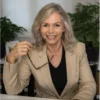

Kosha Joubert, CEO of The Pocket Project is an expert international coach and facilitator whose work in systems regeneration, organizational development and intercultural collaboration spans over 48 countries. She works closely with Thomas Hübl and a global team to grow a culture of trauma-informed care by focusing on the emergence of collective wisdom, trauma-informed leadership and post-traumatic growth.
This post is a short edited excerpt of Kosha’s life journey which led her from dissonance and separation into the harmonics of healing within community. Hear her full interview on The Gifts of Trauma Podcast.

My whole life has been dedicated to healing separation in different ways and on different levels, a quest that alerted me to, “the sand in the system.”
Growing up in South Africa’s apartheid system, I experienced a deep discrepancy between what I was seeing in the world around me, and what I was told I was seeing. The feelings created within me—deep discomfort, a sense of injustice, a sense of fear—came from the brewing of change. There was a palpable misfit between what the separation the apartheid system was creating, and the flow of life. As a child that dissonance caused great discomfort in my nervous system, in my interactions at school and with adults in my family. As a child, I had nightmares, as I didn’t know what to do with it.
As a teenager, the discomfort grew into explicit protest, then it became anger. As a teenager, I dreamt of terrorist acts. At that time I was very attuned to Nelson Mandela and the militant Mkhonto we Sizwe, but it was still very strange to experience those dreams. Ultimately the discomfort took me on a pilgrimage.
It takes courage to overcome separation, especially in warlike societies. I was told that to support the other side would betray my people and send my own family to death—the rhetoric told to people in war zones everywhere. If you open your heart to the other side, if you speak up for the other side, that’s betrayal. Growing up with that took courage, to say the least. It also took courage to go and see for myself what was happening in my country, without any protection. When I did, I came across something I had no idea existed; a community in one of the homelands where white and black people were living together. That community was a living healing movement that I decided to follow, as I could feel how it was laying a foundation for a future society where white and black people could live together in a peaceful way.
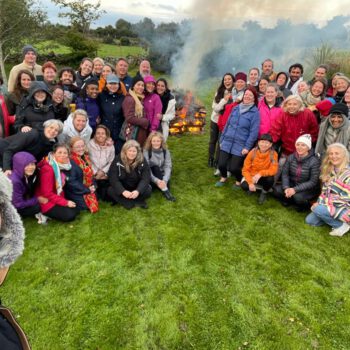
That path led me to the Eco-Village network where I was sent to indigenous communities and Eco-Villages around the globe. I was introduced to a world full of magic that I had known nothing about, and made friends in almost every country dedicated to restorative work. Coming from the apartheid system, this was absolutely transformative. Through witnessing people dedicating their lives to building physical healing communities, I fell in love with our world and humanity. Together we provided healing to the natural world; the social systems between us, the cultures we come from and are embedded in, our connection to the subtle worlds, to the spiritual world, and our economic systems. My life itself became dedicated to restoring the broken relationships and healing the separation I had grown up in.
In these communities I also discovered something that could not be fully addressed. I found it wherever I went, and came to call it, “the sand in the system.” It was made up of small, very fine networks and particles of conflictious material, of resistance to what is, to what we meet in ourselves, to what we meet in each other, to what we meet in the collective sphere. We are resistant because it’s too painful to meet fully.
It wasn’t until 2010 that I used the word “trauma” to describe that sand. Trauma exists where presence meets unconscious levels of reality and we’re unable to see what’s happening clearly. We need each other’s eyes to see into the fields of trauma, to see into the places we’re not able to see clearly ourselves. This sand creates separation, distancing, and loneliness. Because if we cannot fully see each other, we can’t be fully seen by each other. Our communication misses the point again and again, because we’re not able to see the point together. This is what the sand in the system creates, and this is where we sit. We come out of centuries of trauma piling upon trauma, on individual, ancestral, and collective levels, without the tools to see it or address it. And it’s only in the past 200 years that humans in the Western world have been able to look at the unconscious material we carry.
I believe that we carry inner nervous systems—an individual nervous system carries my personality and my attachment trauma and my potential—and an ancestral nervous system connects me to my grandmother and feels how healing my relatedness to her can heal a place in me, but also heal a place in times that seem long past, that are still alive now. This fabric that weaves us into the global sphere is real. And the space between us is full—not in an abstract way, but with real nervous system resonance.
I often ask myself whether we shouldn’t pick a bigger name for The Pocket Project, because it sounds strangely small. But the closer I get to it, the more I understand that it is about creating or recreating intimacy between us. It starts in the intimacy between me and myself, between me and others, between me and the world. This intimacy happens in pockets. It doesn’t happen in big spaces. Intimacy can be huge—between me and the divine, between me and the universe, between me and outer space, when I look up at the stars—but there is also always that intimate closeness.
If we heal in any one place within that complexity of different levels, it has a healing impulse on the others. I find that my intimacy with people from other cultures deepens as my intimacy with my own inner child deepens, as my intimacy with my great grandmother deepens, and that the apartheid melting into connectedness is something that happens simultaneously. It is one movement that’s like coming home to the essence of who we are and melting back into the stream of life. And the beauty of this is that wherever we start in our healing journey or adventure, all of life starts coming home to us.
The Gifts of Trauma is a weekly podcast that features personal stories of trauma, transformation, healing, and the gifts revealed on the path to authenticity. Listen to the interview, and if you like it, please subscribe and share.