
Season 03 – Episode 45: This World Was Not Built for Us: Unburdening & Building Brotherhood, with HawaH Kasat & Reggie Hubbard
By The Gifts of Trauma /
Listen this episode here:
or here
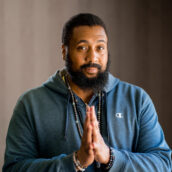
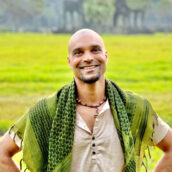
In addition to the personal weight of masculinity that all men carry, brown and black skinned men are burdened by additional collective weights that must be carried while navigating a world not built for them, in bodies that are policed, feared, criminalized and often murdered. In this episode, co-hosts Kevin and J’aime are joined by two remarkable men: HawaH Kasat and Reggie Hubbard. Together they explore the experiences of BIPOC men, and address:
- The male loneliness epidemic
- The alchemy that can occur through sharing burdens in community
- What it takes to disrupt systems of oppression from the inside, and what it costs
- How to hold the moving targets of hope, absolute and relative truth as they constantly shift
While all men are healing from patriarchy, the layers of that healing are not the same for everyone. This conversation begins in the specific—the daily reality of being a brown or black man in a world that views confident black and brown masculinity as threat, not strength—and moves towards the universal. One of the most important conversations in this series, this episode asks more of the listener than the others. It gives more too.
Episode transcript
00:00:01 HawaH
There’s a layer of masculinity, then there’s a layer of, like, BIPOC men, being pressed underneath an extra layer of needing to figure out how to come out from under the weight of living in a world that was not built for us. How does patriarchy, masculinity, impact brown and black men? Which is. It’s another layer of complexity, right? Because we’re all healing from patriarchy. All men are healing from patriarchy. White men, brown men, black men. We’re all healing from patriarchy. Part of what Reggie and I do is we try to bring feeling and emotion and love…. We try to bring forgiveness back. We try to help men grieve because we’re grieving, you know, and that work is critical work. Yet the layers of the work that needs to happen with brown and black men, is a different level of entanglement, than what white men are working with.
00:00:54 Reggie
Being an outcast has been a blessing as I’ve gotten older because I never had a home in the system in the first place, so I would have to create home for myself everywhere that I went. So my refuge has become my spiritual practice. My refuge has become the communities that I build and or minister to.
00:01:16 HawaH
I would say part of what we’re healing from, too, is the loneliness that men experience from being isolated. Isolated from connection. Isolated from each other. Isolated from brotherhood that is authentic and real brotherhood.
00:01:35 Reggie
If you think you’re the only one going through something, then you’ll never find a solution. But when you realize that you’re not the only one going through something and you share that with other people, solutions emerge from that. There’s wisdom, there’s magic in Sangha, there’s magic. One of the prompts that I have in Sangha is just like, “How you doing, though, really? How are you really doing?” You lightening your load in a community of other people who are also lightening their load, there’s an alchemy to that, synergy. There’s an alchemy that comes from bearing your burdens in community.
00:02:15 Rosemary
This is the Gifts of Trauma podcast, stories of transformation and healing through Compassionate Inquiry.
00:02:34 Kevin
So welcome to another edition of the Gifts of Trauma podcast from Compassionate Inquiry. I am here today with HawaH Kassat, Reggie Hubbard, and my colleague and dear friend, J’aime Rothbard. We’re here to have a conversation today which I think is important, hopefully meaningful, possibly challenging, hopefully educational. And just as we were starting HawaH invited that the conversation may be of benefit to all beings everywhere. And Reggie sounded a beautiful bowl and asked for guidance and help for what is beyond words and what is always there, and I really welcome that. So Hawa, Reggie J’aime, welcome. I’m not going to read both of your bios, Reggie and HawaH, because if I was to read all of your bios, all of your accomplishments, all that you do, that would be a podcast all in itself. But I do want to appreciate what you both do, so I want to read a little bit. And this is probably the last time I’ll read through this podcast, so forgive me for doing this. HawaH Kassat is an internationally celebrated humanitarian, authority, educator, nonprofit leader, TEDx speaker, and Yogi. For over 25 years. He has taught violence prevention, social emotional literacy, conflict transformation, yoga, mindfulness, the healing arts, and trauma informed care to diverse communities around the world. And Reggie, you and I have spoken before. We had a great deal of fun, in my humble opinion, during our last conversation. Reggie Hubbard is the founder and chief serving officer. I love that name, of Active Peace. He’s done many things, but what he’s most proud of is being a caring human, a stroke survivor, a teacher, wisdom steward, strategist, organizer, spiritual advisor, minister of sound, and devoted seeker of truth, compassion, health, well being and justice for all. And through Active Peace, he teaches all walks of life through wisdom, movement, meditation and sound, ways to cultivate well being as a foundation rather than an afterthought. And I also want to let our audience know that with your work together last summer with Men of Color at Kripalu. Am I saying that right? Kripalu, yeah. Joining forces, lineage approaches and music to shift perspectives. So that’s my script reading. Thank you very much for hearing that.
00:04:52 J’aime
I’d also love to take this opportunity in the beginning to let people know that HawaH is also the host and creator of one of the best podcasts out there. It’s called Everlutionary, which is a culmination and distillation of his life, work and service. He has incredible guests and we will definitely put all of that in the show notes.
00:05:16 Kevin
Yeah, we’re going to put a lot of stuff here, your websites and those different things in the show notes. I’d like to get curious about you both individually, as men, as men of color, in the world as it is getting curious about you both a little bit about your personal stories and then moving on towards the work that you do. So I’m really keen, how for you, as you move through the world as a man, as a man of color, what are the realities that you’re carrying that you wish people knew? Maybe people that don’t have your experience. What would you like people to know about the reality of being you?
00:05:47 Reggie
Wow.
00:05:48 HawaH
You know, thank you, Kevin, and thank you, J’aime, for having me on the show. Brother Reggie, always a blessing to be in space and to be incarnated here in presence with you. Peace and blessings to all the listeners. Really important conversation and I’m excited to jump in. I would say to begin, you know, part of my life has been just straddling two worlds. The world of the East, the world of the West. Being born in the United States as a person of color, as a brown man with South Asian ancestry, spent many summers in Mumbai and growing up in India, amidst pretty dire poverty, very little electricity, running water, coming back to the US and finding myself in a predominantly white suburban town in a middle class home in New Jersey. So I just had this really ping pong childhood of culture shock and a lot of questions around, “Why does the world have to be this way? Why is there so much poverty? Why do some people have no food to eat or no medicine and other people are throwing food in the trash?” Like, this is just, this is what shaped my thinking at a really young age. And I went to DC for college and DC became my home for the next 20 years where J’aime and I know each other because I helped us start. And I led a nonprofit organization in D.C. for about 20 years called One Common Unity. I did work in some of the most marginalized neighborhoods in the city, including living and working in Berry Farms, Southeast D.C. as a AmeriCorps member, as a Big Brother community organizer. When I was 20 years old, I was mentoring third and fourth graders in Berry Farms and working at Bernie Elementary School. So I’ve always been just driven by trying to figure out what my life purpose is and how can I contribute to creating some sort of fairness on a planet that at a young age I thought was just unfair and broken. And that just guided me in my life, education, and the will to understand why young, young boys in particular. So the first neighborhood I worked in, which was in Anacostia, I had five or six mentees that were in third and fourth grade that were young boys who were all black and didn’t know their fathers because their fathers were incarcerated. I mean, I was there to teach literacy and to teach and tutor math. And I spent most all of my afternoons and time in the classroom breaking up fights and trying to make sure these young, these young men, young boys, had sustenance and food in their bellies. That that was my entire year of AmeriCorps. I realized really quickly at that time that teaching math and teaching English and tutoring English was not the only way to create this sort of learning that these young people needed. And they needed really like support around what it means to be human, to be able to deal with emotions and deal with racism and deal with all the pressure of living in a world that is not built for their success. I’ve been there, living at that intersection my whole life, feeling like in terms of my own place as a brown man, I think that there’s a deep desire that I have for supporting my brothers and sisters that often are not prioritized and not given the same opportunities in this world. And so my life has just been living at that space. I’ve been really curious about how to solve violence and heal trauma through education. And that’s what I’ve been doing.
00:09:35 Kevin
Thank you. HawaH. Reggie, I’m going to ask you the same question in just a second. Something that’s piqued my curiosity. How, you know, I shared with you both at the start my vulnerability and my desire to be respectful around terminologies. And I noticed that as you chat, you have used the term brown man, black man of color, BIPOC, you’ve used all of those. I’m just curious about that. Those are interchangeable for you. Those are all respectful and just curious that you’re not landing on one or there isn’t one that seems to be the right one. You’re happy to bounce around amongst those terms.
00:10:09 HawaH
The right ones 5 years ago are not the right ones today. The right ones today will not be the right ones in three years. And the right ones 20 years ago were definitely not the right ones five years ago. So I come to all this with a level of humility, and I trust that people know my heart is one of love and desiring to lead with love. I’m curious because it’s interesting, sometimes I. I find myself in positions where I’m with people that are not of color. So people of color, we, I think we’re able to, whether a brown man or a black man or whatever BIPOC community. I just feel like there’s a space and a way for us to be able to talk with one another that is not particularly the same when there are white people in the room just naming that. There are certain conversations that are just more natural and easy because we have a shared life experience. Of course, Reggie is a black man, I’m a brown man, Reggie’s mixed. He’s got native blood in him too. Right? I know Reggie’s background. So we in some ways are… We’re a little bit more amorphous. I’m often labeled as a black man. Most people think I’m a black man. I spent 20 years in D.C. everybody thought I was a black man until at some point I would correct them. And if I didn’t correct them, they thought I was half black, half white. So for me, I live a little bit with some easefulness in those conversations because I’ve just accepted that I’m a brown man in this world. And with that comes a certain amount of responsibility and a certain amount of baggage and a certain amount of consequences, right? Brown men are not treated the same as white men. Black men are not treated the same as brown men. There’s layers to this, right? There’s layers to this. There’s light skinned privilege, there’s dark skinned, different types of ways that we have to interact. So I’m aware of all that and I’m just, you know, I’m just holding space for it. But yeah, I don’t know if that helps answer your question, but I have ease in talking about it because I spent so many of my years dealing with racism in my own ways and having to deal with discrimination that I just, I don’t care anymore. I just don’t, like I’m gonna say what I have to say.
00:12:10 Reggie
Yeah.
00:12:10 Kevin
Thank you. HawaH.
00:12:11 Reggie
Yes.
00:12:11 Kevin
Maybe just my own. I notice a real tension and the desire to get it right, you know, to get it right. And that’s just where that curiosity comes from. And you know how I agree with you that if our heart is right, I think forgiveness will come easy. So thank you for that. HawaH. Let’s bring Reggie in. Reggie, that same question. You know, as you move through the world as a man of color, what are some of the realities that you carry that people who don’t share that experience might not easily see or understand?
00:12:40 Reggie
So as HawaH mentioned, American society sees me as black, but my ancestry is Nigerian, indigenous American and Scotch-Irish. It’s like, so I’m all of it, right? However, in this society, I’m black. I know the story of my ancestors, in that there is a lineage of freed people of color. There is a lineage of enslaved people of color who found liberation through political struggles. There is a lineage of privileged white people that took advantage of enslaved humans, right? So all of that is coursing through me, right? Genetically and psycho spiritually. My grandfather, Robert Hubbard was a light skinned black man who, if he was in… if it was the wintertime, you wouldn’t have called him black, right? His skin was that light. My grandmother Hubbard, who I still have with us 99 years young, she’s dark skinned black. So they came together to form the rainbow coalition. Like all the colors are in my family line. However, American society has created this system that if you have one drop of black blood, you’re black. So it has created this almost impossible system to navigate if you play by their rules. So I say that to say another aspect in my experience of being black is looking at the system and being like, “Oh, you weren’t for me in the first place. So I’m gonna just create my own rules.” And those rules have been rooted on disrupting systems of oppression either through my fierce example or through my words. Disrupting conditioned behaviors through my activism or lately my sound. And I occupy an interesting space of being this color in a society that calls me black. However, I went to Yale University. Yale University is not black. Right? Like, at all. And I’m a Yale graduate. I went to graduate school in Belgium, right? So this dude has problems that many white folks don’t have in terms of access to opportunity and access to networks, right? So I occupy an interesting Venn diagram of people who were marginalized but found a way out and around. And so at this stage of my life and career, you knowHawaH and I’ve done work with places like Kripalu and I do a lot of work with the Omega Institute. So because of my experience with institutions that are white led, I have been able to use my skin color to disrupt unconscious levels of bias that are within these institutions. Because I can speak truth in a way that is understood by majority non-BIPOC because I had to speak that way to be accepted when I was younger, right? So there are ways of speaking that I have with my family that you wouldn’t catch me speaking to you, but there are ways that I can speak with you that my family is like, what’s up with this dude? Who does he think he is? Being an outcast has been a blessing as I’ve gotten older because I never had a home in the system in the first place. So I would have to create home for myself everywhere that I went. So my refuge has become my spiritual practice. My refuge has become the communities that I build and or minister to. And so I think that in the concept or especially in the conversation that we’re having today, because I have been an outsider and had to look in to not fit in, but to unlearn ways that I was being oppressed, so that experience has allowed me to help all people find liberation from levels of conditioning and oppression.
00:16:46 Kevin
Thank you, Reggie. And maybe a comment on that, what I notice is this podcast, what is it like to be a man, open brackets of color, closed brackets, in the world today. But maybe just asking this question of you both as well, and it’s a very open question. What is it like to hear that question? What is it like to be a man? Open brackets of color in the world today? What comes up for you when you hear that?
00:17:09 HawaH
Jumping off of what Reggie said… Reggie, you were in Yale as a black man living in a white institution. And I think part of what comes up for me is in my own experience too, being in D.C. and like having to fundraise and raise money for a non profit organization for all these years, trying to go to philanthropy and sit down with people and get their trust to give me money and seeing other people that were not BIPOC oriented, getting a lot of money and me being like, why is this so hard for me to get some money? Like, you know, I’m doing all the same things, if not, I’m even doing it better and it’s still like I’m not getting the same results. And I think part of that is because as a BIPOC man or as BIPOC men, like we’re not navigating the same masculinity as a white man is navigating, like for example, our masculinity, it’s often perceived and policed and feared, right? So like a really confident white man is celebrated, right? But if you’re a brown or black man, a really confident brown or black man will be seen as aggressive, you know what I’m saying? If a white man is assertive, like that’s a positive trait, it’s celebrated. But if you’re a BIPOC man and you’re assertive, that could be seen as a threat by many people. It’s like these pieces of needing to calibrate what it means to be a black man that’s under surveillance or a brown man. We’re constantly under surveillance, we’re constantly being policed. So masculinity is in and of itself not the problem. It’s how masculinity is being expressed. Right? Masculinity is masculinity. But like, how’s it being directed? I think that’s the real question around there. There’s a layer of masculinity, then there’s a layer of like BIPOC men being pressed underneath. An extra layer of needing to figure out how to come out from under the weight of living in a world that was not built for us.
00:19:00 Kevin
And tell me how that is… How Is that. Tell me how is that experience to live under that extra layer of stuff, you know, What. How is it?
00:19:08 HawaH
Yeah, it’s complex. And complexity is often something demand. So we could talk about masculinity, patriarchy. We could talk about what that means, and then we could talk about how does patriarchy and masculinity impact brown and black men? Which is another. It’s another layer of complexity, right? Because we’re all healing from patriarchy. All men are healing from patriarchy. White men, brown men, black men. We’re all healing from patriarchy. Part of our work, part of what Reggie and I do is we try to bring feeling and emotion and love. We try to bring forgiveness back. We try to help men grieve because we’re grieving, you know, and that work is critical work. Yet the layers of the work that needs to happen with brown and black men is a different level of entanglement than what white men are working with. It’s just different. Not saying it’s better or worse. It’s just like we’re all living and healing from patriarchy, and we need to figure out ways to redirect and to reimagine what it means to be a man in the world. But brown and black men in particular, we’ve been policed, feared, criminalized for hundreds and hundreds of years
00:20:16 Reggie
And, murdered, murdered, murdered.
00:20:18 HawaH
And murdered, enslaved in the United States of America and around the world, you know, so it feels shitty. It sucks. You know? What else can I say, Reggie?
00:20:28 Reggie
Yeah, that’s funny. One thing I will say, and you can tell that yoga and meditation and dharmic practice have done a number on me because the frustration of being told, if you do this and this, you’ll be led into a system only to find that you do this and they change the locks on the door, Right? Like, that level of frustration is maddening. And I’m grateful for that frustration and that hypocrisy because that’s made me so creative. You know what I mean? It’s made me, like I said, look at a system and being like, the system sucks. I don’t want to at this stage of my life and career. Oh, you want me to play that game? Don’t play that game. It sucks. What’s doper is like, the stuff I’m doing, right? Because whether it be creating retreats for men of color at a white institution, people that’s not possible. I’m like, it is in my world, right? I work so hard. I’ve had really interesting conversations with my family about this. So when we talk about masculinity I’ll mention two things. So the Permission and Refuge Franchise that I’ve created through the Kripalu Institute. Most of my co teachers, Hawa’s been one of the few exceptions, have been queer because like I have centered the queer BIPOC experience and elevated the teachings of queer BIPOC teachers given the homophobia and queer transphobia that exists in BIPOC community. So by design, like I created a masculine environment that has nothing to do with heterosexuality, right? So like me being in a system that didn’t make place for me once I got into a position of influence, I was just like, oh, this misfit comes with me and this misfit comes with me and this misfit comes with me. And these misfits are going to go into the establishment and buck, right? So that’s one thing. And the second thing is that I grew up in a really strong conservative southern family where when you would ask for advice the response would be, “Be a man.” And I’m like, what the hell are you? Like, you know, I was a philosophy major, I’m just like, so what specifically does that entail? And so I would have to hear that, intuit what that meant. But also be a man at one point meant get a job, work the same job for 30 years and suck it up and do all the things, which I think is not specific to black and brown people. I think that all men have been taught like be a man, suck it up, swallow your feelings, those sorts of things. The caveat becomes that in communities of color, applying and living under the conditioning of a patriarchal system requires you to not only suffocate your emotions, but it requires you to not feel your rage. Or like it requires you to not validate your rage, your grief and your anger. And so that juxtaposition of not being allowed to feel and the justifiable anger and rage that you have at a system that has been lying to you your whole natural life, like you can’t feel that anger that shows up in like fighting other people is how I talked about with those young men. Like they don’t have the emotional vocabulary or the emotional sophistication or the trick that you have been conditioned to. What you mad about? Or I’m mad because I can’t get a damn job or I’m mad because my father’s in prison that you over-police my community. So like people don’t have those words, they just have the emotion, but you’re told not to feel. And so that emotional rupture creates conditions for a spiral that the work that HawaH and I do try to redirect. So the spiral isn’t the problem, that’s the way that the system was created. The problem becomes when the spiral isn’t acknowledged because if you don’t acknowledge the demon, you can’t defeat it.
00:24:26 Kevin
Just take a few breaths. Just what you both shared. HawaH and Reggie, I really appreciate. And.there’s a lot in there as I sit here in real time. I’m already looking forward to listening back, which is an interesting step of my mind.
00:24:42 J’aime
Yeah, I agree with what HawaH is presuming that we are all here healing from patriarchy and would venture also to say that any of us engage in whatever healing modality that we have chosen. Ultimately, I believe that it all boils down to healing from patriarchy. That’s the source point where we lose our connection to ourselves and then we lose the capacity to have an authentic relationship with others. And so my question goes back to what HawaH was originally referencing about ping ponging. And I’m thinking about these two men who, who are yoga masters, decades deep yoga masters, everybody moving through these spaces, navigating primarily white bodied spaces. Yale, the nonprofit sector in DC early childhood experiences, ping ponging. I sense that this capacity, this ping ponging has given you that secret ingredient to start to begin to rewrite scripts long before other folks were met with that challenge. So I’m hoping you can talk a little bit about that.
00:25:59 HawaH
Sure, I’ll jump in right quick. I love Reg, what you said about having to be super creative. I think about how hard I’ve seen a lot of the people in our community I’ve seen working, how motivated, how strong the effort, the creativity needed. It’s because of this, like the band of resilience has to widen. That widening is the birth of a lot of beautiful ingenuity and strength and wisdom is cultivated through that. I think where I’m seeing the world hit because it’s all of us, like you said, J’aime, all of us are healing from a system of privilege and domination and it impacts all of us. Right. It’s also impacting the oppressor as much as the oppressed. We can’t ignore that women are healing from patriarchy. A lot of what we see on the planet right now, globally, the war, the violence, the leadership, examples that we have from world Leaders, it’s all about flexing power. It’s all about domination, destruction, the annihilation of civilizations. This is all talk rooted in a patriarchy that is destructive to, not just humans, but to the planet. Right. And that that’s something, too, that we need to really lift up and remember. Like, the feminine wisdom and leadership is something that is deeply missed in this moment. And it’s not to say that men cannot lead with feminine foundations in their wisdom traditions. It’s just the men that we have that are leading are so overly polarized to a toxic masculinity, and they have not found a way to tap into their emotional, feeling, compassionate, empathetic selves. In fact, the word empathy, it becomes also, you know, hijacked as, like, a word that is, like, a bad word. And, like, we shouldn’t be empathetic. Like, you know, it’s crazy how much patriarchy tries to erase compassion from the planet. And I think that’s a lot of what we’re healing from. And for me, like, my ping ponging has been allowing myself to grieve, allowing myself to cry, allowing myself to just rest. This year has been about rest for myself. I’m just like, Reggie knows. I started this year not doing anything. I put my podcast on pause because I’ve been running nonstop, thinking that somehow I can change the system. But maybe part of changing the system is me resting for a moment, too.
00:28:28 Reggie
Yeah. I just have to say HawaH. I don’t know if you remember in March, that thing that we did with Noor, and you asked my advice on something. I was like, you need to sit down. So that you have been resting this whole year. Thanks for listening. Anyway, so peace and love. Yeah. So to answer your question, J’aime, one of my favorite books and one of my intellectual heroes is W.E.B. Du Bois. He wrote a scholarly treatise called the Souls of Black Folk. And this text is over 120 years old. And he talks about the dual consciousness required to be black in American societies. So you have to be consciousness of black history, oppression, threat of death, in an environment that is not only patriarchal, but white supremacist. And the blessing of me finding yoga and dharmic practice later in my middle age. Is that so… Philosophy major at Yale, existential philosophy major with an understanding from a very young age of this dual consciousness. So you throw in the Upanishads on a dual consciousness. I have this quadratic understanding of the nature of time, reality, and all these different things. And so ping ponging went from two dimensional to multidimensional, especially in the context of my stroke and recovery. Like, so the biggest ping pong lesson I’ve had is coming back from the near death experience of stroke, where I realized that the thing that I thought I was, the overly reliance on egocentric identity has nothing to do with what I actually am. That, like, what I truly am isn’t even black or gendered. It’s actually energetic. And I’m just playing this role in service to the healing and liberation of all beings. Like, once I realized that, my ping ponging went from, like, bidirectional to, like, I felt almost like having all these different arms and, like, playing ping pong in a way that just use all these different arms and appendages because those are the different realities that are happening simultaneously. So I have the ability, and let me tell y’all, like, I understand surrender to supreme being as a way that I play ping pong now. So the racist experiences that I had early in my age, the anti black man experiences that I had early in my age, have created the conditions for me to create a healing program for all men of color that even addresses transphobia and homophobia in black and brown communities. That only comes from, like, the dumb stuff that I dealt with in my early age. So my return of serve has been from, like, the stupid stuff that I received early in my life. So, like, yogic, dharmic and sonic practice have given me just the capacity to be like, oh, that’s the serve. Here’s the volley. Oh, that’s the serve. Oh, I’m going to put a little headspin, you know, like, so I can play the game in a way with the focus on liberation. I’m not playing the game, like, when I return serve, I’m trying to liberate. I’m not trying to return the serve like, you’re playing for points. I’ve already won the match. I’m just perfecting the way that your serve is returned.
00:31:42 Kevin
Yeah, again, let me breathe in and hear all that. It’s really beautiful stuff. And I had a little wry smile as well. Reggie, watching you, thinking, I wish this was a video podcast. I’m imagining a character from Spirited Away. There’s a Japanese anime. I mean, it’s Spirited Away. And there’s a character with lots of arms and he operates this machine and I’m imagining that, but, well.
00:32:05 HawaH
I just saw Reggie as like one of those, like, Durga Ma goddesses with like, eight arms coming out of him. Ping ponging with all the arms. Reggie.
00:32:14 Kevin
When I hear Reggie and have a chat and I’m really interested in all that we’ve talked about with the communities that you’re serving, the communities that you’re working with. How is it for young men, young men of color, what is the outworking of them living in this world? What is the manifestation? What’s happening for those young men living in the world that they’re having to live in right now? You’ve named lack of leadership, you’ve named lack of feminine energy, you’ve named having to straddle and ping pong, living in a black America world and rules being different. What’s the result of that?
00:32:51 Reggie
Well, I think first of all, there’s a socialization of violence, whether it be through video games or whether it be through sport. or all of these different things. And most young men and boys are socialized to seek violence as a primary option. They’re not socialized to seek conversation or expressing their feelings, or instead of being like, I’m really upset right now, that’s viewed as like sissy or weak. So there’s a socialization of violence that I think is ubiquitous across the world. That’s 1, 2. Specifically, in the American context, there’s a lack of access to opportunity for all young men, not just black and brown young men. And access to meaningful opportunity has been eclipsed in the past decades, specifically. So that lack of access to opportunity with the socialization of violence, that equation writes itself, right? So you don’t think that you have opportunity, you think that your life is less meaningful than your parents or grandparents. What are you going to do? You’re going to be hopeless and likely take it out on somebody else. And specifically to your question, Kevin, I do a lot of grief work in addition to grief work for all people, in addition to healing work for men of color. Not acknowledging the violence that you or your community has been through epigenetically is a disaster. Right? So if you don’t acknowledge that you have been through X, Y or Z and you have it in you and you just expect people to just be all right, like, you’re like, no. I mean, so one of the deep learnings that I’ve had to do in my personal life is reckoned with the fact that there is a legacy of free people in my genetics, but there’s also a legacy of trauma. Like my grandmother’s grandfather, his first family was sold from him. Sold, sold. Oh, to punish him, they were sold. So there is a legacy of trauma that my grandma told me about. So, like in my bones, like when I heard that story in the first experience with the Trump administration During the late 20… 20-teens, I talked to my grandma and I was like, grandma, we’re working on family separation. And she was just like, that reminds me that our grandpa Moore’s first family was sold. And I was like, oh, my. Us? Whoa! So it isn’t just like immigrants, like, they sold us. Yikes, right? So I had to deal with my reaction to that. And in so doing that healing made me a better advocate and activist because I was able, through hearing from my grandmother what happened to us, liberate myself from that suppressed trauma and then create conditions not just for my own healing, but to be of better service through my activism. So we as a culture writ large as it pertains to hetero focused masculinity, we don’t talk, we work too much. And rather than take a break, people drink or overindulge in various substances. And so there’s just a culture of masculinity that is rooted in overwork, exhaustion and self destruction that hasn’t been articulated as such. And as a result of that, over generations, we have a cascade of problems that emerge from that.
00:36:22 Kevin
HawaH, what would you add to that?
00:36:25 HawaH
I would say part of what we’re healing from too, is the loneliness that men experience from being isolated, isolated from connection, isolated from each other, isolated from brotherhood that is authentic and real brotherhood. I think there is a loneliness epidemic. There is high suicide rates and depression amongst men. It’s been encouraging to me to see over the past five, seven years to see a resurgence or an emergence is probably a more accurate word. An emergence of men who want to do the work 10 years ago. I mean, I’ve been as. As you all. I’ve been in this field for a long time. Ten years ago, men’s work was not popular. There was no men’s work happening 10 years ago. I remember when it first started kicking off right around the time of COVID like a year or two before COVID. We started like really starting to see it beginning to enter the zeitgeist. It started to enter the sort of archetype of what healing work is. And men started to form circles because women have been doing it for forever, for a long time. Twenty years ago, I had women in my circles that were going to have their women’s circles, but there was no men’s circles happening 20 years ago that I was tapped into. And I was pretty tapped in. So it’s been inspiring to see that men are becoming more and more aware that we are needing to lean in and needing to do the work independently of women, just like I was saying, there’s certain work that we as BIPOC communities, we need to do together. It’s no hate, it’s no shame on white people. It’s just like, yo, we healing. And there’s certain spaces we need to be able to do that. And frankly, I think white people need to come together and do some of your own work as well. And there needs to be more white people being like, we should get together and talk about how we’re perpetuating implicit bias and how we’re perpetuating internalized depression and internalized racism. I think white people need to do more of that work themselves. And it’s inspiring to see men right now coming together and to see men galvanizing around these circles. I hope more and more men take up the opportunity. Create your own circles. Whenever Reggie and I finished the Permission to Refuge retreat, and there was at least two or three brothers that left, and…
00:38:44 Reggie
They were like, man, that was so much fun.
00:38:46 HawaH
We’re going to start. We’re going to start our own men’s circle in Boston or in New York. People are like California people coming out of one of our retreats and being like, excited to get a circle of men together in their own community. Because men, we need to gather. It doesn’t have to be. You don’t have to exactly know what you’re doing. None of us really know exactly what we’re doing. We’re just out here, like, literally coming together and playing some gongs and facilitating conversation around, what does it mean to be alive right now? And how do we show up better? How do we be better uncles? How do we be better dads? How do we be better lovers? How do we be better partners? How do we be better, better sons? So I think that’s really what men have to do right now.
00:39:26 Reggie
Yeah. Two things I would add is, and I wrote this in, the coolest thing in our work, HawaH, individually and collectively, is the intergenerational connection and the collaboration that exists in the men’s healing circles. Like, the most recent permission and refuge at Kripalu was in February. And we had someone there who was in his 70s and someone there who was in his 20s. We had a Palestinian brother there. Like, we had just like a half black, half Jewish brother. Like, it was all aspects of the diaspora and intergenerational, intercultural men, from all identities coming together to talking about, hey, I’m kind of messed up, what about you? Right. Like, so that has been inspiring. Another thing that has happened recently that I’ve been pretty inspired by is that especially if this happened in Maryland, there’s a lot of black male healing. Because I’m from Maryland, I would be pissed. I was like, yo, why did my black male healing circle start in Massachusetts? Like, there’s millions of brothers in Maryland. Like, why I gotta go to Massachusetts to do black healing work? There have been several large grassroots black male healing groups showing up in Maryland. And I’ve reached out because, you know, I’ve been waiting for this. I’m just like, is there any way I can support? And folks are like, no, we got it. I’m actually excited that folks said, no we got it because that means that I can do A, less work, but B, that it’s happening. Like three years ago when Permission and refuge started, there was none of this, really none of this. So that it has now become like grassroots. The organizer in me is just like that, you don’t need me. I’m excited because that means that it’s happening on its own. There are seeds that I have helped plant in some way to start this, but that it is starting to germinate and blossom on its own is very exciting.
00:41:13 Rosemary
We’re taking a brief pause to share what’s on offer in the compassionate inquiry community. Stay with us. We’ll be right back.
00:41:23 Kevin
Your journey with Compassionate Inquiry matters. Your work in the world matters. If you have a story to share about bringing compassionate inquiry into the world, we’d like to amplify your voice. Spotlight Episodes are full length Gifts of Trauma podcast interviews offered exclusively to CI community members. You’ll not only share your story with 55,000 healing professionals across all platforms, you’ll receive a pre interview strategy session plus three promotional video clips. We’re offering only 10 Spotlight Episodes per year and production realities require a financial contribution. Follow the links in the show notes to access full details and express your interest.
00:42:12 Kevin
Thank you again both as HawaH and you were chatting there, you remind me very much of the Resmaa Manakem’s book My Grandmother’s Hands. It’s about that we have to go heal on our own because bringing rather than toxic masculinity, or I like to call it traumatized masculinity. But before any two groups that are traumatized and hurt can come together, they need to be do the do their healing separate. And I agree that we men and white men need to be, we probably need to be shouldering a large part of this healing work because there’s a pretty good argument that we are responsible for a lot of the hurt. And then there’s something else I wanted to Name and hearing that in Jerusalem. So I’d love. Then I really hope that there’s young men listening to this somewhere. Be they black or brown or white or whatever, they be listening to this. In your experience, how might they know that they need to do this work? So what would let a young black or brown or white man know that he needs to do this work? And if he came to that realization, if he said, oh, shit, that thing that Reggie said is true about me, what would he do about that? How might he set out on that path?
00:43:26 Reggie
We all need to do this work is what I would start with. The human, like, part of the patriarchal myth is that there’s a standard of perfection. So there is an essential part of the spiritual path is unlearning the things that you thought that you knew. So we all have our work to do. But what I say to especially the young folks that come to the retreat work that I do, and I was like, look, I didn’t get my act together for real spiritually till I was 40. And from then on, I just exploded, right? So I tell young men, I was like, you ahead of me. Congratulations. Because that level of encouragement, maybe because another thing that exists, not this isn’t necessarily a gendered comment, but it’s like a cultural comment writ large, is that no one talks about the work as essential, right? It’s like, optional, right? Everyone’s like, all the results. I remember one time I gave an interview and someone’s like, it’s not fair that you have all this results. I was like, I’ve been working for 15 years. How the hell is this not fair, right? Like, this stuff don’t happen overnight. Stop playing with me, right? Like, but if someone young realizes they need to do the work and are inspired by something, HawaH or I says, one, there are plenty of resources online that you can find, whether they be podcasts or videos or those sorts of things. And the sooner you realize that unlearning and connecting with others is the nectar of liberation and healing, the sooner you can be not just your truest self in service to your healing and liberation, but your truest self in service of the healing, liberation of all being, right? The fallacy of patriarchy is that I pulled myself up by my bootstraps. I did this. Now we doing things right? So you doing your work connects you to the fabric of our shared humanity. And that connection to shared humanity heals not just you, but the rest of us. I can say that the work that I did on myself led me to want to hold spaces for other people. So the work that I did on myself has impacted 120 people that I individually know about. I don’t have any idea what that has manifested, but I know that I did my work and then that helped other people. And my spiritual imagination tells me that’s helped thousands of other people, but it had to start with me first. So if you’re young and you realize you need to do the work, welcome, we’d love to have you and help you. And you’re not alone. There are many of us that want to and need to do this work. And the last thing I would say, and then I’d love to hear what HawaH says about this, is embrace the inelegance of spiritual transformation. It ain’t gonna be pretty. You’re gonna make some mistakes, you’re gonna probably ugly cry a few times like you might be mad for no reason a few times. But like that inelegance is the shedding of dead weight to give birth to the you that we need in the world right now.
00:46:19 Kevin
Thank you. Maybe before you just. Maybe I’m just dropping titles in here for our listeners. It wasn’t so long ago I also read Francis Heller, Deep Side of Sorrow, whatever it was called and talking a lot about. Mostly that book was about the idea of ritual, ceremony, collectiveness, doing it together, finding those places and spaces where you can cook food or plant trees or camp out or meditate or make music.
00:46:41 Reggie
Sing, right? Dance.
00:46:43 Kevin
Sing, yeah, dance, Paint. The idea of ritual. And I think that’s something that’s really missing for young men in general and I guess young men of color. But the getting together doesn’t really matter what you do, as long as it’s heart centered, maybe somatic, maybe has a psycho spiritual element to it. To do something, find some people and do something. And maybe one other thing as well, how something that I love, Reggie, about doing this work. There are very few people that I have worked with that haven’t then went on to help others. And it’s something that really fills my heart about doing this work, that it seems to be a natural movement along the line of when I have been helped, when I heal. There’s something in me that wants to return. That that’s a spiritual thing, isn’t it? That there’s just that desire to want to do that. I just want to name that as well. Howa please. What would you say? Maybe back to that original question. A young man, he’s thinking, shit, these guys are talking about me. I need to do this. What would you say to him?
00:47:44 HawaH
Yeah, I would agree with Reggie. I think everybody, we’re talking about everybody, we’re living as interdependent beings. None of us are living on islands. We’re all interconnected, we’re all needing to do work. No matter how spiritually evolved we think we are or are not. I think we all got work to do. What we’re experiencing on the planet is a combination of forces that are psychospiritual. They are manifestations of our inner thoughts, our inner imaginations that are expressing themselves in this physical world. And it’s not just a few people that are responsible for the war, the famine and the poverty. We are all interconnectedly a part of what’s taking place. I think for anyone that’s in a space of survival that is often thinking about survival, thinking about safety and BIPOC populations, we are typically more marginalized. We have less access to wealth, we have less access to resources, financial material, healthcare, healthcare, education. So whenever you put a group of people in a position of scarcity and where there’s a living paycheck to paycheck, I would first say, please remember, this is not, it’s not your fault, it’s not your fault. Be able to bifurcate and to just see the complexity of the global pressure cooker that we’re all under and allow that pressure to stoke compassion for yourself to begin. Number one, self. Compassion, I think is critical. And no matter who you are, no matter where you are, if we don’t have compassion for ourselves, we will not find compassion for other people. And so I think that’s mission critical. No matter who we are and where we are, because the demons we’re fighting are inside of us and because of this creative expression that, that we found ourselves in on this planet, like BIPOC people in particular, we are often suppressing our emotions because historically that emotional shutdown was intelligence, right? That was how survival was passed down. I, me and Reggie are talking about, oh, we’re like disconnected from our emotions and this and that. But we’re not saying that is fundamentally, oh, you’re doing the wrong thing. It’s just like we have to understand the historical reasons why that is the case. It’s not anybody’s fault. It’s like, yeah, we BIPOC people especially, we are, we’re like armored because we’ve been in survival for so long, dealing with racism and systemic injustice. So when you become armored, when you become shut down, when these conditions of survival are always present in front of you, and in our face, in every living moment. Then of course, it’s really hard to lean in to the complexity of the narrative. It’s really easy to get down on yourself. It’s really easy to fall into depression. It’s really easy to fall into deep loneliness and despair. Right? This is what the system preys off of. It preys off of capitalism, preys off of our despair and our sense of there’s nothing we can do. And so start there, begin there, begin in understanding that, like together what we can do. Like finding other people, surrounding yourself with people who perhaps have a wider, deeper imagination of the human potential. Find these people in your community. Find them, as Reggie said, online. Find them and allow that to become your Sangha. Allow that to become your community. Because it’s really important to have a community of other like minded practitioners. We are more, we are more resilient, we are more powerful, we are more wise. When we have people around us that have also been doing the work, some people may have been doing the work for a few more years or a few more decades. It doesn’t make anyone better or worse. It just means like, we’re all at different parts in our path. But find these people, coagulate with these people, organize with these people. Organize with these people. Did I say organize yet? Organize your fucking ashes people. Organize. You know, Reggie and I are organizers. We’re teachers, we’re these people that are out here. But Reggie is a political organizer. I’ve been a community organizer. Organize, organize yourselves. Organize the groups, organize the sessions, the circles. Make it accessible. These are the things I would say, you know.
00:52:28 Reggie
Yeah, I was going to say the beauty of what HawaH just said to pull the thread a little bit longer is that we’re all going through something. So by virtue of that we’re all going through something, then that means that we can figure it out. If you think you’re the only one going through something, then you’ll never find a solution. But when you realize that you’re not the only one going through something and you share that with other people, solutions emerge from that. There’s wisdom, there’s magic in Sangha, there’s magic in, I mean, Hawa can attest to our individual and collective experiences, especially with the healing retreat for men of color, is that just like we just be throwing like one of the prompts that I have in Sangha is just like, how you doing though? Really? How are you really doing though? And then people just sharing from the heart, actually I’m terrible. And this is why, or actually I told so and so this, but I’m not like, so you lightening your load in a community of other people who are also lightening their load. There’s an alchemy to that synergy. You know what I mean? There’s an alchemy that comes from bearing your burdens in community. Because we remember that we’re not alone. That the programming, the conditioning to think that we’re alone is the key to keeping us oppressed. But remembering that you’re not alone is not just about, like, psychospiritual liberation. It’s about liberation for all of us. Right? So remembering that we are the ones we’ve been waiting for, whether we like it or not, like, Permission and Refuge came into existence because I got sick of being by myself. And I was just like. Kripalu asked me, bless their hearts. They were like, we’ll help you do anything. And the organizer activists, I was like, oh, really? You’ll help me do anything? Like help me heal black and brown people with white people’s money? And they said, yes. And then I was like, “Oh, wow, okay.” Because what I learned in that moment is me expressing my frustration, creating conditions for Kripalo to meet their needs. They wanted to be of service to other people. They wanted to create conditions for not just black and brown healing. But what that ended up doing, Howell knows this, is that just when we come together on that campus, like, all people are impacted by that. Like the joy that exists when men of color come together and lay their burdens down, like that laughter in a dining hall to people who have been conditioned to be small and like, provincial. Like people just laughing from the soul because they just had a session that gave them an opportunity to be free. Like, that heals all of us. Right? So remembering that you’re not alone, that we’re in this together, and the sooner we get about our healing together, that helps all of us. That is the thing that motivates me in all of my work. Like, the more people that realize that we’re gonna do this and we can do this, that fuels our collective healing and liberation, regardless of race, gender, or identity.
00:55:30 HawaH
Yeah, Just say one more thing here, Reggie, because you made me think about this. I was part of starting a men’s group in D.C. back in the year 2019. And the person I started this men’s circle with was a white man. And very quickly, I realized over time, that the work that the co founder of this men’s circle had to do as a white man was different than the work that I had to do as a BIPOC man, over and over again, what kept coming forward and what became like really clear was that the group that we were creating together was really. Was really white heavy. And it really needed like, like these white men needed space for themselves. And I kind of felt tokenized often in this circle, tokenized as like this brown man that was creating some safety for the white men to be like, oh, yeah, see, we’re doing this. And so what was really important for me in this moment, and this is part of that evolution, it’s like we also have to know how to create boundaries. And I had to create a really clear boundary with my work and my energy because I felt like I was giving a lot of effort to bring people along in conversations. And ultimately it just became really exhausting for me because there was a level of validation and acknowledgement and empathy just that wasn’t present. It wasn’t possible. And so I just have to create some boundaries around my participation. And, you know, it’s going to happen when you organize people. Like, this is just the reality of the work. It’s not always going to go great. I mean, when you’re bringing 20 people together, 30 people together, when you start working with other personalities, other people holding space, it’s not always going to go like you planned. And at some point it’s really important to. To work in those intersectional spaces. But it’s also important to, when needed, to know when you got to pull back and know when you got to create some boundaries. No, I mean, we work with a lot of institutions around the country, Reggie and I do, and I think we’re always trying to encourage these institutions to do more, to do better, and we’ve got to create boundaries to protect ourselves too. It’s really important. And that’s as an individual organizer, that’s as somebody working in a system that is inherently preying off of like free labor and free emotional labor, free intellectual labor. So, like exploitation is just built into the system. And so if we don’t create boundaries and know when we are being overly exerted, then we’re going to burn out. And so as organizers, as activists, if you are diving into this work, whether you’ve been around for 20 years or whether you just started, make sure you pace yourself, make sure you know how to create healthy boundaries, make sure you know how to say no, because everything isn’t a yes. Sometimes you got to say no. And that’s also important to be successful and to be here for the long haul.
00:58:43 Reggie
Yeah, the phrase that came to mind based on what you just said, HawaH, is the mess is the medicine. The mess is the medicine. Right? So like coming together and being in community, warts and all, like rashes, warts and all, is the medicine. Right. So us being in spaces where you just, like, I don’t know, that boundary emerges from that. Right. Or us being together and realizing just, I’m not the only one like that mess. The harmony arises from cacophony. Right. So when we bring noise together, you know, you and I did this together, like the noise of hurt individuals coming together yields the harmony of healed souls.
00:59:26 Kevin
I can recognize it in myself as well. I’m thinking about again, just where I live. And there’s a frustration in me that sometimes the people that are doing the best work are often the bottom feeders. They’re community organizations, they’re collectives. And they’re working on six monthly budgets and 12 monthly budgets. And it kind of really pisses me off. You know, they’re all. They can never forecast that far in front because we don’t know if we’ll have money. And yeah, there’s. I just recognize the frustration in me that for me this should be top level work, But I guess it’s the top level that’s causing the harm. And asking them to provide the funds to create the solution might be… ah…
01:00:03 HawaH
Hey, Kevin. I would just. I would say that we were making progress. There was actually some really important movements happening in the Social Emotional learning, the inclusion in curriculum of conflict resolution and casel, which is like the Social Emotional learning national standards that were all being built into curriculum. A lot of work around, like undoing racism and teaching implicit bias and teaching teachers in public schools and institutions and private institutions. All that work has been upended and unraveled in the last year and a half, two years. So, like, we were making significant progress and we were working on from a top level. We were working as organizers in creating these spaces for young people to be able to learn in these ways. And all of that has been lost in the past year and a half.
01:00:51 Reggie
Yeah. How you mentioned Jordan. I mean, out of all destruction, rebirth comes next. Right. So leaning into the timeless wisdom as there’s creation, destruction and rebirth. Right. Some of these systems need to go away. Right. So I am not dismayed at the destruction that we’re bearing witness to. I’m actually quite inspired because again, the lessons I’ve learned over the course of my life is that like, some of these systems were never meant for me in the first place. Right. So hooray. Bye. So now that you’re leaving? I’m gonna come in and create some stuff, right? The destruction of ways of being that are rooted in the marginalization of all people, especially if you’re not like a rich white dude like that. What we’re bearing witness to, I believe, is the last throws of a world order that is on its way, if not out, to be diminished. So I also know from my experience with stroke and recovery that bad news ain’t the end of the story. Like, I had to look myself and Hawah and I’ve talked to…, Kevin, you and I talked about this a little bit too. Like, the bad news of my neurological devastation gave me the news, the discipline, and the impetus to shift all my stuff, right? So when I look at, you know, in my part of the world, it’s springtime. The shoots of life, of new… Like I said, those healing circles of black men in Maryland, they’re just shooting up, right? The opportunities for people reaching out to me that I never thought they knew I existed kind of thing. Reggie, can you do this? Can you help me with this? So there is an awakening to, not just black healing, but healing that is only made manifest by the abject disaster of current circumstance. So seeing what is going wrong and being in a position to offer a counter to that gives me hope. Because as something else falls away, I and people like me are offering something new. So as one thing passes, another thing rises, that spiritual truth, right? So seeing things as they fall away inspires me to be even more radically creative, to form either more radical partnerships or in a case like this, be more open with my truth. Because me sharing from my lived experience. I lost a client earlier this week because they said I was a little too loud. And I was like, thank you for that. Because I don’t need to be working with you anyway, right? Like, if you can’t take my truth from the heart, then I don’t need to speak here anymore. I need to speak other places. So I would say that what gives me hope is that things are in such disarray that things are being disrupted, because that disruption from a spiritual sense shows me that something new is trying to be born.
01:03:50 HawaH
I think back to the ping pong analogy. And J’aime, you brought this up earlier because I’d mentioned it in my opening when I said I was ping ponged. And I think hope can be like a ping pong ball. I don’t want to create any inauthentic false perspectives around the ping pong of my emotional mental landscape around the two truths that I have been taught about and learned about through my spiritual studies. There is the absolute truth, which is the truth that many of us know when we hear Bob Marley sing about one love, and we hear All blood runs red and we’re all human. And there’s the absolute truth that we’re beyond this planet, that we will never die. You know, there’s an absolute truth that is mystical and beautiful. And then there’s a relative truth. There’s the truth of being on this planet. There’s a second truth that is also real, that there are people that are dying. There’s poverty. Poverty is real. People die of malaria, people die of diarrhea. People die because we invest trillions of dollars into militaries. People die because wealth has been concentrated in the hands of like 2% of the population. And the other 98% of the population has no access to any resources. Physical. That’s also a truth. It’s a real thing. You can’t bypass that. That’s like spiritual bypassing. So I am always in this negotiation with myself around not wanting to bypass one truth or the other truth. And for me, part of my nexus of coordination spiritually and emotionally is navigating that ping pong ball of hope. There’s been moments where I feel more hope, there’s been moments where I feel less hope. It feels pretty despairing to me when, when I read the news and I see all that’s happening. But some of that is, what do we choose to concentrate and focus on? Right. But I also don’t subscribe to the, well, let’s just not pay attention to that and let’s just focus on all the positive things. I don’t subscribe to that ideology either because I don’t think ignoring the bad news and just focusing on the good news is going to make the bad news better. I actually think there’s a place in between the binary and the complexity that is required for any spiritual aspirant. That curiosity and that willingness to face the really dark and ugly parts of our humanity. And to me, hope is taking the time to face the dark and ugly parts of our humanity. That is hope. So if you’re willing to do the work and look at the shadows and look at the demons and think about how we’re all contributing in some way, shape or form to this global situation that we’re in, then I can have some hope. So, I mean, I’m feeling hopeful when I’m in those spaces with those people. I can feel less hopeful sometimes when I’m not. My hope is up and down, right now. And I don’t just stay rooted in hope alone. I think I am. I’m a being who understands that my life is transitory. I understand my life is a blink of an eye. I understand that I’ve descended incarnated because my purpose right now is to support the liberation of all beings. That’s my purpose. That’s why I’m here. I’ve known that since I was very young. And I am also a human that sometimes can feel like liberation for all beings is more possible on one day and less possible on another day. It’s okay for me to feel that way too. Thankfully, I’ve got people in my community. I’ve got people I could call. I can hit up Reggie if I’m really down, I can hit up people to lift me up, to give me some inspiration. I can create the boundaries I was talking about earlier when I need to. Maybe I need to take a little break from some source of news for a little bit so I can get my shit together. And then I can like, really do a deep dive into getting my… myself rooted and anchored again so I can come back out and start swinging and fighting and doing the work that I know is a part of my dharma. So it’s not black and white, y’all. There’s no silver bullet. There’s no formula that like a one size fits all formula. I think all of that is just. It’s a part of the illusion. And to. The question around hope to me is also similar. Like, I think hope is a moving target. And I think it’s important to acknowledge that.
01:08:05 Kevin
Thank you, HawaH. Maybe a final question. The question that I ask, intend to ask is if you had the ear of humanity right now, and if you could whisper something into the ear of humanity, what would you whisper? And Reggie, I’m going to come to you first because it gives HawaH that extra minute or two to think of his answer. You’ve heard that question before. What might you whisper, Reggie, if you had the ear of humanity?
01:08:28 Reggie
Let’s go around. If I had the ear of humanity, I would whisper, it’s okay. I love you. Keep going. We got this.
01:08:38 Kevin
Thank you, Reggie. And HawaH would you today? You know, the last time Reggie answered that question, I’m pretty sure he just rang his bell. You remember he just rang the 350 roll bell. I said, this is what I’d say. I was like, yeah, that’s it.
01:08:50 HawaH
That’s funny because I was about to turn around and hit my drum. That’s so funny.
01:08:55 Kevin
You can hit Your drum.
01:08:56 Reggie
Yeah.
01:08:56 HawaH
That was your first time.
01:08:57 Kevin
You can do whatever you want. Please.
01:08:59 HawaH
That’s so funny. That’s a good question. I like it. The whisper in the ears of humanity. It’s a good question. Yeah. You are loved. You are loved.
01:09:11 Kevin
Thank you. Hawah. Thank you, Reggie.
01:09:13 Reggie
I’m complete.
01:09:14 HawaH
Yeah. I’m also feeling complete. Thank you for that. I think let’s keep doing more of these conversations and I’m glad you’re doing them. Keep having these conversations. While we were talking, there is one. Ja’ime, thanks for mentioning my podcast earlier, but there’s actually one episode in particular that if you share with folks the show, you should share this episode. I think it’s episode 21 called Honoring Women and Healing Men. I think a lot of what we talked about today, like, resonates that episode. And then the episode on Pachamama and in Gaia, it’s called Earth Day, Hail Mary. Also about the revitalization of the feminine in leadership. Both those episodes speak a lot about how to bring more feminine voices and wisdom back into the leadership of the world. Because I think ultimately we’ve talked a lot about BIPOC men and our struggles and just how we are navigating complexity. And there’s a dismantling of a patriarchy that is a part of, in my opinion, the part of… Part of how we do that too, is to really create more balance in the voices and seeing more feminine voices in leadership, not just in politics, but in companies, corporations, businesses, schools, healthcare systems, in all of it. So I hope that’s a part of our trajectory because I think it’s needed. I think we need to get… create balance and that’s one way to do it. But thanks for having me on the show.
01:10:39 J’aime
Blessings, HawaH. Blessings, Reggie.
01:10:42 Kevin
Aho. I just take one minute just to close. I just feel something arising in me and I’d love Reggie to end our show with a strike of the bowl as well. And honoring what Howa said at the start. May any merit or benefit that comes from being part of this, and certainly there’s a lot of merit and benefit for me being part of this conversation, be offered for the benefit of all, for all beings everywhere. May all beings be free from suffering and the causes of suffering.
01:11:10 Reggie
And closing with a note that is grounded and deepens the note of the heart and the throat. G three times. May peace be upon all of us and may love be the foundation and guide of all of our actions. And so it is.
01:11:57 Kevin
HawaH Kassat, Reggie Hubbard, my dear friend, J’aime Rothbard. Thank you for joining me, Kevin Young, on this edition of the Gifts of Trauma Podcast. I am deeply grateful to you all. Much love. Please take care.
01:12:10 Reggie
Peace and love.
01:12:11 HawaH
Peace you all.
01:12:22 Rosemary
If you’ve completed or are currently enrolled in Compassionate Inquiry training, you’re invited to attend the third International CI Conference in Vancouver, Canada from October 30 to November 1. Dr. Gabor Mate is returning as our keynote speaker and masterclass presenter. Enjoy engaging workshops and inspiring demonstrations with Sat Dharam Kaur, CI facilitators and practitioners. Whether you join us in person for three days of shared inquiry with CI cohort partners and colleagues from around the world, or attend virtually to focus on the teachings, tap the link in the show notes to learn more, take advantage of early bird discounts and secure your place. And yes, there will be dancing.
The Gifts of Trauma is a weekly podcast that features personal stories of trauma, healing, transformation and the gifts revealed on the path to authenticity.
Listen on Apple, Spotify, all podcast platforms. Rate, review and share it with your clients, colleagues and family. Subscribe and you won’t miss an episode.
Please note this podcast is for informational purposes only. It is not a substitute for personal therapy or a DIY formula for self therapy.

Resources
Websites:
Related Links:
- Everlutionary Podcast
- Everlutionary Substack
- Active Peace Yoga Substack
- HawaH’s TedX Farmingdale: How Greed Could Save the World
- Reggie’s TedX São Paulo: The Power of a Purposeful Pause
- HawaH’s YouTube Channel
- Reggie’s Youtube Channel
- Kripalu’s Permission and Refuge Healing Retreat for Men of Colour