
Season 03 – Episode 50: The Teacher’s Wound: Beyond the Therapy Room, with Allison Creech, Rachèl Hughes & Dr Mays Imad
By The Gifts of Trauma /
Listen this episode here:
soon…or here
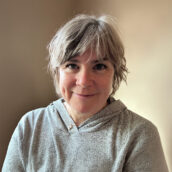
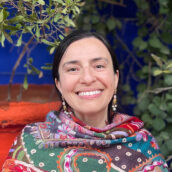
This fourth episode of the Wounded Healer Series welcomes three educators whose wounds shaped not just how, but why, they teach. Mays, a Palestinian-Iraqi neuroscientist and educator, lost her home and homeland. She has carried that wound into every classroom ever since. Allison, a teacher and naturopathic doctor worked through her shadows and learned, in her graduate classrooms, what it means to teach from a place of security. Rachèl Hughes, a trauma-informed educator, came to teaching through personal tragedy and found that the most meaningful lessons she offers her students have nothing to do with their curriculums.
Together our three guests discuss:
- The nature of the teacher’s wound
- Why the classroom, at its best, is a sanctuary, and what the costs is when it isn’t
- What the brain does differently when a student feels seen, through the neuroscience lens
- Why resiliency is a double-edged sword
- The difference between delivering content and being present to who is in the room
What does it mean to teach from a wounded place? And what becomes possible when a teacher stops delivering content and starts presencing themselves? Join us, if these questions resonate with you.
Episode transcript
00:02:44 Rosemary
Welcome to the Gifts of Trauma podcast by Compassionate Inquiry. I’m Rosemarie Davies Janes and today I am joined by three exceptional guests for the fourth part of the Wounded Healer series. Today we are moving beyond the therapy room to focus on the the Teacher’s Wound. I’d like to take a moment to briefly introduce each guest. Your full bios are in the show notes, so I’m just going to offer highlights here. And I will begin with Allison Creech. Alison is a licensed naturopathic doctor and professor at the Canadian College of Naturopathic Medicine. She’s a certified compassionate inquiry practitioner with advanced training in somatic, relational and psychedelic therapy and psychedelic therapies. She’s also a much loved member of the Compassionate Inquiry educational team supporting Gabor Mate’s work. Welcome, Allison. It’s a delight to have you back with us.
00:03:50 Allison
Thank you so much, Rosemary. I’m really glad to be here today.
00:03:54 Rosemary
Thank you. We’re also honored to be joined by Dr. Mays Aymad, an educator interested in understanding the social determinants of student well being and success, who also advocates for institutions to tend to intergenerational trauma and prioritize, repair, healing and intergenerational well being. Ma I am truly so Happy to have you with us in this conversation. Is there anything you’d like to share with our listeners that I haven’t covered in your full bio or in your brief bio? I should say.
00:04:33 Mays
Thank you so much, and I’m very happy to be here with all of you and our listeners. I think an immigrant is something that is so integral to who I am. Someone who’s lost home. And, you know, this idea of home is something that is. I carry with me the. The yearning, the longing, the loss, and. Yeah, so it’s. It’s very part of who I am.
00:05:08 Rosemary
Thank you. Allison, I should have asked you as well. Is there anything you’d like to add to your bio that. Okay, fair enough. Now I’d like to introduce Rachelle Hughes, who’s also with us today. You found your way to healing through the heart of education and through a life that taught you what it means to need both. A life. I’m sorry. You work with students at secondary and post secondary levels in places where learning and healing overlap. You’re a certified compassionate inquiry practitioner, a compassionate inquiry circle leader. You’ve also contributed to curriculum development and education educator support, educator support initiatives, bringing trauma informed practices into schools and learning communities. Welcome. Rachelle, I’m so happy you’re joining us in this conversation. Is there anything that you would like to add?
00:06:05 Rachèl
Thank you so much, Rosemary. And I feel really honored to be here with everybody. And as you read that bio, I was just thinking about something about trauma informed practices. And I’m really starting to. I mean, I’ve always felt it’s really trauma informed presence. I use that word a lot. Trauma informed practices. Trauma informed teaching, Trauma informed. But I feel like trauma informed presence is. It’s a. It’s where I sit. Thank you.
00:06:49 Rosemary
Thank you. And that is a perfect addition to your bio because we’re in a series that began with Exploring the myth of Chiron, the wounded healer. So it’s. It. You know, Presence. Presence has been shown in every single episode to be of primary importance. Thank you, Rachelle. Now, in Compassionate Inquiry, as Rachelle and Allison know well, we tend to start each session with an intention to focus our conversation for the next hour. And I’d like to invite each of you to offer one if you care to. I have a very simple intention which is to hold space for this conversation to unfold and engage the hearts and minds of our listening audience as we are all at various points in our lives, both students and teachers who’d like to share an intention.
00:07:55 Mays
I will go. I would like to Set the intention and to invite you to. To join me, to invite future and previous ancestors to join us in this gathering, this conversations, teachers who have come before us and those who will come after us and with us.
00:08:24 Rosemary
Thank you, Mace. Beautifully said. Alison, is there an intention you’d like to share?
00:08:32 Allison
Just to be open and receptive and to invite this space to bring out of us what will enrich and support and serve everyone who listens and all of us gathered here. Thank you.
00:08:49 Rosemary
Thanks, Allison. Rochelle,.
00:08:55 Rachèl
Thank you. I have a little note that nobody can see and it says just be here. So just be present in this moment. Have step into courageous conversations. Have the for me be open and have the courage to. To be able to speak from the heart, speak from that place of that place of knowing that place of spirit. And hopefully in doing so, others.
00:09:31 Rosemary
May.
00:09:31 Rachèl
Be able to do the same. So thank you.
00:09:34 Rosemary
Thank you, Rochelle. And yes, that’s a beautiful. Just be here. I extend that to our listening community. Just be here and ride the wave of the conversation. If something pops up, that serves you great. And yeah, if something pops up that doesn’t resonate, just ride on by. Beautiful. Thanks everybody. Now, I’d like to start by speaking about an author that I was introduced to by a guest last year. Her name is Bell Hooks. She may be familiar to many of you. She describes teaching as the practice of freedom and as a revolutionary act. And she describes the classroom as a place of ecstasy, pleasure and danger where a student can reinvent themselves as opposed to being at home, where they’re forced to conform to their parents image of who and what they should be. I see a lot of heads nodding, so I’m going to just invite like clearly that resonates with a few of you, perhaps as students, perhaps as teachers. My question really is if the classroom is that place of reinvention, what is the teacher’s responsibility in holding that space? Yeah. Allison, would you like to respond?
00:11:05 Allison
Yeah, I love that question. What is the teacher’s responsibility in holding that space? If indeed the classroom is to be a place of reinvention that will seeing children, adults, whoever the learners are, see them for who they are, have space to support them in their learning style, in their way of expression, in their way of communication, so that each individual feels seen and heard, feels a sense of belonging, feels a sense of contribution, feels a sense of I have something to share and contribute and it’s welcome. And what an amazing landscape that would generate if we could do that in our classrooms.
00:11:58 Rosemary
Absolutely. Thank you. Allison Maze, would you like to add Anything.
00:12:06 Mays
What a beautiful start. To begin with, Bell Hook. You know, she also talks about the classroom as a place of liberating mutuality, that both the students and the teacher, there is that possibility of digging deeper into what it means to be human, to grow, to transform. So to your question, we do have responsibility to cultivate that space. And I would say to be both recognizing the power dynamic and also trying to transcend to the extent possible, it’s not so much of a teacher helping transform, but it’s the co creation, the teachers and the students who are equally powerful and capable of when giving the space to transform and be transformed.
00:13:15 Allison
Yeah.
00:13:17 Rosemary
So there’s a mutuality there. I love that. Thank you. Rochelle, what would you like to add?
00:13:25 Rachèl
Thank you. I would say that when you ask me, when you ask the question, what is the teachers, what does the teacher bring? I don’t know if you said responsibility or not, but what really came to me was empathetic witnessing. Empathetic witnessing has power. And when we ask students, when we ask our own selves to be in those spaces, to take those chances,.
00:13:58 Rosemary
How.
00:13:58 Rachèl
We show up matters. CO regulation. You know, safety is felt. We talk about safety a lot in CI and safety as a feeling, safety as an experience, safety as a perception. But I think in a classroom, I personally feel responsible for providing a safe space. So I guess that that’s. That’s kind of what I would add to that.
00:14:34 Allison
Yeah.
00:14:35 Rosemary
Thank you. Thank you. And it’s. It’s interesting. I love what Mae said. You know, there’s a mutuality. So not only is there an opportunity for the student to be transformed, but it sounds like there’s an opportunity for the teacher to transform as well. And sort of following along those lines, Maes, you’ve described the classroom as a sanctuary, which is a sacred word we’ve heard used across this series in very different contexts. So what does it actually mean for a classroom to be a sanctuary?
00:15:08 Mays
I often say that my own healing started in the classroom, and I didn’t have the exact language. And maybe I still don’t have the exact language, But I began to see myself and my students, and I began to see possibilities.
00:15:33 Allison
And.
00:15:37 Mays
It does. To this day. The classroom feels like a sanctuary for me, by which I mean many things. And one of them is a place where harm is not done. And when I trace back the word sanctuary in the Arabic language, which is my first language, it’s really, it’s. It comes from the root word to forbidden and forbid what? Any transgression, any harm. And it goes to, you know, this idea of safety that my colleague mentioned and the. The witnessing, the mirroring of. Of one another and kind of like to add to this notion of a sanctuary. I am reminded of Thomas Merton, who’s written about how we can lose ourselves in the art and find ourselves in the art. And in some ways, I think my most memorable, my most healing teachers are the ones that, without saying the words or without having a script or kind of empowered me to lose myself in the classroom, and somehow I found at least pieces of myself. And then fast forward, years later, I would come to see the same thing with my students that they, in their own beautiful and glorious and messy wave, they cultivate the space for that losing and coming apart and coming together. Together. Yeah.
00:17:34 Rosemary
Thank you. I wonder, Allison and Rochelle, would you like to comment on the classroom as sanctuary?
00:17:44 Rachèl
Sure, I can go. Maze. Thank you for that. I, you know, resonate so much. Probably most of us do with that, right. How teaching can undo us and bring us back together as well. And the other part, when you said sanctuary, it makes me think about my own classroom spaces. And even now, I’ll see kids who come back and they’ll say, I always loved your class because I’m very intentional about what’s around me. So I am fortunate to be able to have my own room. And so I’m able to, you know, have mood lighting. I’ve got nice music. It smells good. It looks good. There’s a real sense of, as you come in, it’s like, you know, you can just see this kind of lowering of the lowering of the energy. And even as they come in, putting in small practices just for them to. I used. I’ve done for many, many years this. I call it mind, body, soul. So it begins as they come in, something for their mind. You know, right brain, left brain activities, something, some kind of small movement, and then a little mindfulness practice of. Or something of some kind for them to really transition into that other space. So sanctuary as a internal feeling for them, but also external as well. Yeah. So to me, that’s what sanctuary. Thank you. Thank you.
00:19:35 Rosemary
Thank you. Rochelle. I just got a picture of, like, entering the temple, putting your shoes aside and just being surrounded and feeling spirit rise to meet the surroundings. Allison, would you like to comment on that?
00:19:49 Rachèl
Yeah.
00:19:49 Allison
I love the way this is unfolding and this idea of a learning space as a sanctuary where there may be different environment, a different norm, different, you know, the absence of certain pressures that are in the outside rooms and hallways and aspects of our lives. And yet the classroom can be a place that alleviates some of that. I’m thinking of some of the adult learning environments where students may come in carrying all kinds of pressure. That’s actually part of my intention in the classes that I teach at the graduate level is to make this a space where those pressures are not so present. That invites new opportunities, it invites a new kind of learning. It invites a new kind of engagement, a new knowledge of self. I love what you said, Mais, about that finding of ourselves and how important it is too, for our younger learners. I think of my child and the difference I see in him in a learning space that provides that sanctuary and how grateful I am for the people who approach education in this way.
00:21:15 Rosemary
Beautiful. Thank you, Alison. Now. Oh, go ahead.
00:21:19 Rachèl
I just was going to add something to it because. Thank you, Allison, for saying that. What I wanted to say was as I brought more of these mindfulness type practices into my classroom, It wasn’t always met with how I intended it to be. So you can imagine over my career in teaching, you know, having anywhere from grade 9 to adult learners and you know, I come with this. Oh, this is great. This is this. And there are students who come, especially the mindfulness stuff, you know, started really, really small and having to be able to sit with, well, a. I guess it would be having to be able to have the confidence to sit with it myself. The uncomfortableness of some students who found it hard to be quiet because of their own. Their own things that they were coming with their own things from their backpack. I guess I love that analogy, Alison. We use that a lot about, you know, can you take your backpack, pack off and leave all your cares at the door. And as I stepped more and more into providing those spaces, it makes me think about the challenges or the reorienting of my own self that I had to come with that and being informed around, you know, offering even something as simple as, you know, if you don’t want to close the eyes, you can just have a downward gaze, you can do those things. And we, we see that in our practices in CI when we’ in those spaces. But as you, as we all know, when children come, they many of them have never had those experiences. So I think being confident my myself helped me to hold space for those that had a challenge with that.
00:23:35 Rosemary
Thank you, Michelle. Great addition. Now, in an episode on this very podcast, I spoke to a guest professor, Bia Blaly, and she shared that when her students feel safe, she’s a math professor. And honestly, her bio I couldn’t Even pronounce the level of university math that she teaches. It’s way beyond me. But she shared that when her students feel safe, connected and seen, something transformative becomes possible that no curriculum can manufacture. So I’m curious, and this is sort of in May’s wheelhouse again, what does the brain actually do differently when a student feels genuinely seen? And on the flip side, what does chronic unsafety in a learning environment do to the developing nervous system over time?
00:24:42 Mays
You know, I recently wrote an essay about cultivating aha. Moments in the classroom for. And how it would help with not just learning and retention, but also civic responsibility and civic engagement. I had to really dig into the literature, the neuroscience, the cognitive science. One of the things that emerges is that when the nervous system, the embodied nervous system, when it enters this state of flow, then things emerge. Those things are there in our, I suppose in my brain’s background or so for learning to happen and for learning to happen in a meaningful and sustainable way. We know that our background and our identity and the conscious and the subconscious all come together. It’s this beautiful and sometimes spontaneous and sometimes unpredictable dance that happens. So in this, when the students feel safe and the students feel connected and the students feel it’s about risk taking also, and it’s about. You reach a point where you’re like. And maybe you don’t even voice it, but your body goes into that flow and it’s almost like the effect can become quantum, you know, like these, aha. These insights. And you know, I come from a tradition that says you contain all, all the questions and all the answers. And Rumi says you are the ocean and the drop. Just that we contain the many and the whole and the. And so these aha. Moments and these things that emerge and these quantum moments, they’re all in there, but they’re masked and they’re covered by the wounds and the, the isms and the. And then when you just start, when you kind of cultivate, as Rochelle says, that safety and that co creation and, you know, the unmasking can happen and then things are no longer linear. It’s kind of like this exponential happening. And on the flip side, we know from years of data that that the brain really, I mean, not to be anthropomorphic about it, but the brain really struggles under the feeling of constriction and the othering and not being seen and being in this uncertain state of do I matter? Am I seen? That’s really painful, right? And it really, I mean, there is like physical, anatomical, biochemical things that happen. I always say that teaching and learning are biological, physiological, physical phenomena in addition to being spiritual and psychological and emotional. And so when. When learning can really stifle and growth can stifle, when a student is sitting in that uncertain state of, am I seen? Do I belong? Do I matter? And not just with each other, but also with the knowledge that we are learning together. So then the environment becomes so critical because the environment can unmask or remove and tap into that ocean and that drop within.
00:29:16 Rosemary
Beautifully said. I’m sorry I got lost in your prose there. I just. I was feeling everything and. Wow. Thank you, Ma. Who’d like to comment? Feel free to unmute. Thank you, Alison.
00:29:29 Allison
I think it just, you know, it speaks to. We know so much in terms of development and neurodevelopment about the parent, child dyad or the family system. And really the educational system isn’t. You know, it has the same kind of significance and the health and vitality of the system, the degree of connection, the presence of that safety, you know, it has the same kind of impact. Perhaps I started to say even more. I don’t know if that’s fair. But, you know, if there’s been a challenging home system, then the educational system, that teacher connection, the peer connection, the classroom connection, can actually bring out those latent potentials that maybe the home environment hasn’t been able to see or nurture. And I really, I mean, I’ve seen it in people that I know how. How essential those spaces, the sanctuary, how essential that has been for them. And sadly, also, what happens when that system, kind of the next developmental layer out into community and into the system, when it doesn’t nurture that vitality, the impact of that in both brain and body and psyche and sense of self.
00:30:53 Rosemary
Thank you, Ellison.
00:30:57 Allison
Michelle, thank you.
00:31:02 Rachèl
When you were. Both of you were speaking, it made me think of, you know, and I think of this often as teaching is a relational field, not just knowledge delivery. And I think that for me, that’s something at the center of it, which kind of is sanctuary as well.
00:31:26 Rosemary
Yeah.
00:31:28 Rachèl
And I was thinking, Allison, of what you said around just, just your. Your comment. And as I was preparing for this and I had a bit of nerves, I pulled up an email that I got once from a student and myself and probably many teachers where. Where we don’t toot our own horn very often. Right. We don’t often see the impact. But of all the letters that I’ve gotten, this one really resonates. And I. I happen to have it up. So I Will just tell you, just paraphrase a little bit. And, you know, the. The student said some lovely things, but what really resonated with me is she said, not only have you enriched my understanding of triology, which is psychology, sociology, and anthropology, but you taught me how important it is to put yourself first. You taught me how to work through stressful times and understand what’s going on inside our bodies. When it comes to anxiety, one specific instance sticks out to me. And this is. This is to me when everything else feels like it’s going to crap in a hand basket. Excuse my language. She says, I was overwhelmed in class and was trying hard to hold in my tears, but then you told me to just let it out. And that meant so much to me. Having a teacher who cared about my feelings and knowing tears did not diminish your view towards me made me feel comfortable. And then she talks about teaching approach and all those things. But that sentence, when I have doubts, it’s like, that’s all that matters. I mean, obviously, we have to cover pedagogy and all this stuff, curriculum and everything, but that’s to me. What? Yeah, that’s why we do it.
00:33:20 Rosemary
That’s the heart and soul right there. Rochelle, thank you.
00:33:23 Rachèl
Thank you.
00:33:25 Rosemary
And, you know, I’d like to just share with you. I’m not sure if you’ve had any opportunity to listen to the first and second episode, but because I’m involved in the production, of course, I was interviewer. I’ve been party to four interviews now include and plus this one. And the thread, really, that kept coming up and repeating through all previous Wounded Healer episodes, is that healing is not something you do. It’s something you allow. It’s something you tend to. It’s something that you receive in yourself through your ancestors and in right relationships with others. So that framing seems to be directly related to your reparative, humanistic work. Mace. Transforming pain into wisdom through presence, remembrance, and responsibility to one another. It’s different words, but it seems to be saying very much the same thing. It’s essentially describing the wounded healer. So I’m wondering if you can speak a little bit on how that concept comes to life in your work. How does it show up?
00:34:42 Mays
So, thank you for asking. So the term reparative humanism, actually, I first learned about it from Professor Pumla Gubodo Medikazela from South Africa, who was part of the Truth and Reconciliation Commission and has a center at Stellenbosch University. That is the aftermath of violence and reparative quest. And Pumla asks us, what does it mean to be human in the aftermath of violence and trauma? And I. It was just so natural for me to say, what does it mean to be human? In my teaching and in my classroom, in the midst of trauma and violence and othering, just remarkable othering that I see every day at a micro, meso and macro level. And it’s a question that is with me every day. And some days I have some ideas and others I think I don’t know. And I’ve learned to be okay with I don’t know because as you noted, Rosemary, that it’s not so much that we’re going to do something and arrive at we’re healed or repaired or human. It’s a cycle. It’s a praxis for me, whether I’m teaching a very heavy neuroscience course or I teach a course called Traumatic Stress, Biofeedback and Intergenerational Resilience. More than anything, I really want the students to at the very least.
00:36:40 Rachèl
Ask.
00:36:40 Mays
The question, what does it mean to be human?
00:36:44 Allison
And.
00:36:45 Mays
And why it’s so vital to ask it and to keep asking it. And so this reparative humanism, you know, I don’t have a definition, but I do know that repair is needed, and perhaps it’s always needed. I mean, trauma, I suppose, is an enduring human story, and so is repair, and so is healing. And so sometimes it’s been my experience. I mean, with all of the pain and the wounds and the wars and the traumas and the, you know, racism that I’ve experienced, sometimes it’s been a stranger’s nod that just realigned me, helped me remember where I come from. And those are, you know, like, if you expose. These are glorious glimmers that I want us to. In my classroom and with the students, with each other, with myself, with the knowledge to kind of. To kind of look for those and. And impart those on. On each other. So the reparative is, I suppose, in the space in between, in the humanity that emerges and lives in the. In between. Yeah, yeah.
00:38:14 Rosemary
I love that there is, you know, sowing seeds of human kindness, but I think glimmers of humanity is also just a beautiful concept. Rachelle, Alison, would you like to comment?
00:38:40 Rachèl
Thank you. I love that I wrote glorious glimmers. I love that it’s like I. It’s gonna. It’s gonna take up a new sticky note. And this one says, one small act of kindness can change someone’s whole world. Right. And when you say, when you’re speaking that I guess I’m not gonna say. I don’t want to say the skeptic, because that’s not what it is. When I hear you say that, it makes me think about how there is so much collective out there and how do I. How do I be in a space? And I think it makes me go back to what we always know about healers. Teachers. We need to look after self. Right. When we say we can’t pour from an empty cup, that’s not just something we say. It’s something. Well, it can be. My invitation is always. That’s the space to be. You know, I think of the main tensions that specifically teachers have, you know, authority, what we’re supposed to be doing versus attunement, care versus boundaries. Right. There’s sometimes this back and forth that we’re navigating. And when I’m better, when I feel. When I’m within spirit, it seems easier. It seems a little bit more. It seems easier to discern where I’m at on the continuum. And when I need my own reminders, then it makes it sometimes a little bit harder to. To navigate those. Those tensions. I don’t know if that really resonates, if that’s really meant for this space in this question. It just. It’s just what. What it made me think of when you were talking. Thanks.
00:40:59 Rosemary
You’re being here. That’s all that’s asked.
00:41:04 Rachèl
This is.
00:41:05 Rosemary
Yes, you are being.
00:41:06 Rachèl
This is the other one. Just be here. Thank you.
00:41:11 Rosemary
You’re welcome. Thank you. Alison, is there anything you’d like to share?
00:41:15 Allison
Yeah, you know, I’m just the. The human part of it. And, you know, maybe trauma is one of the stories. In fact, maybe out trauma is one of the stories that. That we carry in our humanity as well as the repair and this, you know, kind of wounded healer theme. I did listen to the. The first with the myth of Chiron, and it’s. It’s just kind of coming to me that, you know, the learning environment, the classroom space, the teacher, the students, you know, we can either perpetuate those traumas, perpetuate those systems that the traumas live in, or we can strive, choose to create again, back to that word, sanctuary, a space where those aren’t so alive. And yet, you know, teachers at all levels are, you know, there’s. There’s pressures on them, too. I may want to be relational. I may want to engage students in a kind of learning that’s meaningful and, you know, speaks to them individually. And yet there may be these very real external outcomes. That I’m held accountable to. And that can be. That could be a challenge.
00:42:40 Rachèl
And.
00:42:42 Allison
I’m grateful to have some space where my conscious intent is to not carry those trauma lines forward, at least in this space and at least in this moment, so that there is some attention to the shared human experience, and there is some attention to what becomes available outside of those traumatic constrictions.
00:43:20 Rosemary
Thank you, Allison. Yes. Go back to bell hooks. The classroom is a place of transformation, of ecstasy. And yet I believe she spoke about rebellion as well, so. Yes.
00:43:33 Allison
And yet how that’s been flattened out in so many educational spaces.
00:43:43 Rosemary
Yeah, I suspect the weight of structure has something to do with that, but we won’t go there right now. That would be a whole other podcast. Thank you. Now, the physician’s wound is often about powerlessness, the limits of what medicine can fix. The therapist’s wound is usually relational about connection and rupture. I’m curious to hear from all of you, what is the teacher’s wound? Where does it live? And what does it ask of you? Yeah, feel free to jump in. Anybody?
00:44:34 Mays
A great question.
00:44:40 Rosemary
You knew we’d get there. You knew we would get there. Given the theme. Yes,.
00:44:47 Mays
You can still hear me, I think the teacher’s wound, where I am now. In my journey, I have been soul searching and asking a question that I thought I had settled. And the question is, what does it mean to be an ethical and a relevant and a meaningful educator in this moment? And it’s terrifying that sometimes I have no idea what the answer is. And that’s wounding. For a teacher that sees. It’s not a profession, it’s a calling, it’s a. And another wound is to be in the classroom that, on the one hand, I see as a sanctuary, and on the other hand, an element that perpetuates a system that others and wounds and transgresses, to use bell hooks words. And so there are moments where I’m standing before my students, and I feel like it’s a big lie. That’s very wounding. And yet I also feel that it is my responsibility to, if I must, to use what one of my mentors said. If I must, then my responsibility to smuggle the healing, whatever that means, to plant seeds for healing, not to escape the pain. You know, I. There’s a. There’s an Arabic poem that talks about how a human being without sadness is just a memory of human being. So I am aware that part of that wound is to sit in the wound, to hold the grief, to be in the contradiction of The. I am, I suppose, an agent of the system and fully believe in the power to liberate us and them and the world. So I’m not sure if that makes sense, but the question profoundly resonates with me. So I said it’s a brilliant question. And it’s, it’s kind of like moving parts in my heart that, that I just have to like tend to. And I often think, can I. And I do ask, especially students that graduate, did you feel wounded and did you tend to that wound in your education?
00:48:02 Rachèl
And.
00:48:03 Mays
Yeah, so I’ll stop here.
00:48:07 Rosemary
That’s beautiful. Thank you. I’m just. My heart is responding to your words. Allison, what is the teacher’s wound? Where does it live and what does it ask of you?
00:48:22 Allison
Such a great question. And I did think about it beforehand, knowing we would get there, and I didn’t land on an answer. But something that’s coming now is, it’s, it’s for me something in the zone of, of compassion. Something in a desire to bring kindness, care, lifting others up in ways that maybe we didn’t receive for ourselves or maybe that was inspired by that one person in our lives who did see us and who did make a difference. So maybe the wounding for me is, is somewhere in there the pain of knowing how many children but adults and humans, you know, are, are living disconnected from unawareness of who they really are and what gifts they do really have to bring, but has to flow through them. And if they never get the chance to be them, those gifts never get the chance to land here.
00:49:53 Rosemary
I resonate so strongly with that. Yes. Because if we can’t see ourselves and we’re not reflected by a community of like minded souls, we can not know ourselves for our entire lifetimes. So from that perspective, the role of the teacher is so important. Raechelle, what would you like to add?
00:50:18 Rachèl
Thanks for that. Sorry, my. I got frozen a few times so I didn’t hear the whole complete.
00:50:25 Rosemary
Let me, let me ask you really, we’re focusing in on what is the teacher’s wound and where does it live and what does it ask of you?
00:50:47 Rachèl
I can think, I can speak from, I can collectively. I’ve spoken to many teachers obviously in my career, but when I answer this question, it’s like I have to answer it from a personal level as well.
00:51:09 Allison
Right.
00:51:10 Rachèl
Because there is as many types of people there are. That’s, that’s, that’s the type, many types of people that there, that there are teachers. When I think of the spaces that I’ve had to do the most stretching is around. Well, let me just back up to say that I came to teaching. Teaching’s my third career, so I didn’t come to teaching directly from. From university. And having had a lot of different experiences, what I was, I guess what I was surprised about teaching was that we often suffered in silence, especially when I was starting out. There was. Seemed to be this space of teachers didn’t really know, you know, we were, I say, suffering. There were things that were going on for me personally I wasn’t sure about. I was new to it at, you know, in my 30s. And like, I remembered what school was like, but the classroom didn’t seem to be like that anymore. And wanting to connect with people, to understand that. And there seemed to be this sense of, we don’t talk about it, everything’s fine, and you knew it wasn’t fine. But there was a part about, you know, having a hard time finding support in that. And I would say for a lot of teachers, that is the wound. How do I be the way I want to be? How do I find my own community within. Within teaching? How do I find my people so that I can offer that up to people, I can have that safe space for my own, for my own healing, for my own well being. So I would say that that is something that I would think is probably most. Many teachers perhaps experience that and that lives. Where does that live? I mean, it lives in the body in a certain way, but it also lives in all the moments when you’re on your own, in those quiet moments when you’re experiencing all the things we do, when we’re not there with our own children because we’re there with somebody else’s children and all the things that we’re doing. And I think the beauty of having some. Well, the beauty of finding CI, obviously, but also the beauty of having some wisdom is to know that.
00:54:07 Allison
At the.
00:54:07 Rachèl
End of the day, looking after me is what my responsibility is. So that lives in my body in a way that says, really embody that I have to look after myself. So that’s where it lives in the body for me.
00:54:22 Rosemary
Thank you, Rochelle.
00:54:23 Rachèl
Yeah, beautifully said.
00:54:25 Rosemary
And as I was listening to your words, like across this series, every healer has named something that they bring to their work that arrive not through training, but through wound or through loss, through the long road home to themselves. I’m just wondering what is the thing that each of you brings to your teaching or facilitation that you could never have been taught that showed up in a different way? Maze Can I put you on the.
00:54:58 Rachèl
Spot with this one?
00:55:08 Mays
Yes, I suppose. Losing home. And by home, I don’t mean a structure of the house, the. But I also mean the people in the land and the air that you breathe and. And then you carry wounds. You don’t even know they exist. And they go with you everywhere. They drink your coffee with you and bake your bread and shower and do the laundry and show up in the classroom. And when I say I saw myself and my students, I saw that that wound of loss is so profound. You lose your.
00:56:19 Allison
And in.
00:56:20 Mays
In. I didn’t think that, you know, you could find yourself or pieces of yourself. But the classroom and the students and the knowledge and the relationships and the liminal gave me hope. So in many ways, you know, if I had to. If I had to write my life, I probably would keep those wounds because of how they have contributed to my complexity as a teacher. The mess within me and the beauty within me. Yeah, I think this is what’s resonating mostly with me, this, this kind of loss.
00:57:14 Rosemary
Yeah, I just. You keep coming up with these gems. The mess within me and the beauty within me. I love that. You got another Post it handy, Rochelle.
00:57:26 Allison
Thank you.
00:57:28 Rosemary
Ah, thank you. Yes. And anybody else?
00:57:37 Rachèl
Yeah, thank you. I do have my Post it here ready. Thank you for sharing that maze. It’s like, I can see that there. Yeah, yeah. And when you asked the question, I jotted down something and I said I probably would have never believed. I would probably would have never had faith in my capacity to be able to hold what I’m able to hold. And I know that I have had, as I mentioned, a few different. Three different careers. And the two most profound ones have been education and finding CI. And both of those events came on the heels of real tragedy. And I know tragedy is probably a big word because that’s relative as well. But for me, they were personal. And from those places, when I didn’t have faith in my capacity to. To manage a lot of things, I was able to find that. So really, grief informed the highs and lows for me. And we talk about resiliency and it’s used a lot in education, language, and in life. And beneath the word resiliency, there is a real life lived.
00:59:29 Allison
Yeah.
00:59:29 Rachèl
So the highs and lows that have led to all those things. Thank you.
00:59:35 Rosemary
Thank you, Rochelle. And resiliency seems to be a double edged sword. I just. Well, I’ve completed recording the therapist’s wound and we had two women of color as guests and they spoke about the Exhaustion that resiliency requires from a woman of color, someone who’s from somewhere else. And I just. I just wanted to presence that because typically, resiliency is regarded as admirable and something to achieve. But like anything else in life, I suppose there is. There is a downside to resiliency. And when it’s expected and forced, it can be a cost. Alison, would you like to. Oh, sorry.
01:00:24 Allison
Yeah.
01:00:24 Rachèl
Yeah. Thank you for saying that. Because even as I was saying the word, it’s like this word doesn’t really feel like the right word because we are using it so much. We’re using it in education. Right. How do we teach resiliency? And for me, often the first conversation is like, resiliency is a word, but what is. What does it really mean? What’s underneath it?
01:00:51 Rosemary
Yeah, thank you.
01:00:52 Mays
Yeah.
01:00:53 Rosemary
And I. I think it’s a great point to linger on because, you know, if you think of our fearless leader, when the body says no, if the body’s saying no, who are we serving by pushing on and bouncing back and extending ourselves?
01:01:10 Rachèl
So.
01:01:11 Rosemary
Okay, I will stop with that. That’s not what we’re here to discuss. It’s just so interesting. Allison, would you like to say something about, you know, the thing you bring to teaching or facilitation that you could never have been taught?
01:01:29 Allison
Yes, and I also want to. Not going to turn down that road. But wait, I want to, you know, like resiliency as a potential response to adversity as distinct from thriving. Right. So in, in teaching, resiliency, that’s great. But that means that there’s this real chronic presence of adversity, and we’re organizing a healthier response to that versus thriving, which is a different kind of energy, and how might we support each other to thrive?
01:02:04 Rosemary
So it’s almost like a regrouping the way that you’re. It’s like, you know, just gathering and.
01:02:10 Allison
Yeah, thank you. Yes. And. And to the question, you know, I think from this perspective and looking back over, you know, 20 years of teaching at the graduate level, but I was certified as an education while I was in university and, and got qualified to teach early childhood elementary. Spent a little time with the Wii ones, which was play, and I loved it. Spent a little time with the older ones and wished it could still be Play. Spent these 20 years at the graduate level. And looking back, I can see how I’ve worked out layers of my shadow. You know, with those littlest ones, I can remember having to sing, and I was like, horrified that I would have to Sing. Because that was not my thing. And lo and behold, I learned to sing and enjoy it and call the kids in. And who cares if you’re off key or you forget a word or your voice does something weird? There’s a joy in singing and trusting that that’s okay. And, you know, I look back at these 20 years at the graduate level, where, like many teachers, investing extra time, extra money, extra supplies, extra this, giving, giving, giving, giving, giving to a system that’s not going to say, no, they’re not going to say, oh, you’ve been giving. Let us, you know, feed you back some of that. And it took me a long time to find that boundary around, oh, this is where I’m gonna not do anymore. Even though I could. I also learned, you know, I would do it one way in one semester with one class, and the feedback would say, we want this. So I do more of that and less of that. But then the next group would want more of the other and less of this. And. And so after. I mean, it probably took me a decade, to be honest, 10 years to get to a place of, like, o, this is what I feel good about. This is the way that I want to share it. It’s not going to work for everybody all of the time. I’ll receive. You know, I’m still looking to. To grow and refine here. But, like, this is how I’m. This is. I’m good with how this is being served. I’m good with how we’re. We’re. How I’m engaging. You know, that’s all shadow parts of me that had. I was conditioned to show up very, very differently. And so I can track in myself a movement through different layers of shadow to a place that feels like security in. In myself and much more permission to be authentic and to engage people from that place feels a lot different than trying to jump through all the hoops that that shadow self put in place.
01:05:37 Rosemary
Beautifully said. Thank you, Alison. Now, as everyone has shared, each of you arrived in a teaching or facilitation space carrying something your training didn’t account for. My next question is really, what was the moment that you realized that what you were actually doing as a teacher or facilitator had very little to do with subject matter and everything to do with who was in the room? Yeah, Allison, I see you smile. Can I. Can I pick on you again?
01:06:15 Allison
Yeah. This just. It’s such a good question, right? And it’s such an important point to, like, have that reconciliation with, because it is a function of who is in the room. I mean, it’s not a mechanistic delivery. I mean, it can be, but where’s the fun and vitality in that? So it’s, it’s everything about who’s in the room which takes it right back to it being relational. There’s a spontaneity in it. There’s an, an aliveness in it. It’s, there’s a hundred different ways to teach whatever the content that needs to be delivered is. And that to me is where it gets fun and creative and vital.
01:07:04 Rosemary
I hear play creeping back in there.
01:07:08 Allison
It is, it is creeping back in there. You know, I, we, we, we. Our brains thrive and learning thrives in the biochemistry at play. You guys might know the numbers. How many repetitions it takes a brain to learn in a, you know, just neutral state. How many repetitions it takes a brain to learn in a stress state? Many, many, many, many, many. If that brain is in a place state, it only takes, you know, sometimes a single repetition, but not many. So I feel like that play is actually supporting the biochemistry and the neurology of learning.
01:07:49 Rosemary
Beautifully said. I remember I had an experience with my very first psychology professor in university and he was just so entertaining, so much fun. I remembered everything he said I didn’t like. I took notes, but I didn’t need to refer to them. And unfortunately, it was a, it was a misdirect on what my university experience would be like. It’s like, this is so easy. I just go and listen and it sinks in and it’s there. It wasn’t until I had a few more classes under my belt that I realized what a rare type of teacher he was. But yeah, it’s, it’s really interesting. Who’d like to ask that question? What, what was the moment that you realized what you were actually doing had very little to do with the subject matter and everything to do with who was in the room? Rachèl Mays?.
01:08:45 Rachèl
Well, my answer, I guess would be a short answer to say, I don’t really know when I knew it. I know I knew it when I was sitting in the grass with my class outside and we were looking at the grass.
01:09:11 Rosemary
That’s a perfect answer. Thank you Rachèl, May/.
01:09:19 Mays
I don’t know if there’s one instance, there have been many, and one I will share. I was teaching a genetics and biotechnology class and we were going to talk about this large scale DNA. Study to identify ancestors and relatives. And. One of the student, one of the students asked if, oh, could this be used to help identify the children that were separated from their parents. This is during, I think, the first Trump administrations. And there was a lot of chaos and a lot of separation. A lot of thousands of children were separated from their parents. And it wasn’t done in a very organized way. And so, you know, how you gonna return the kids? And so when she asked that question, it felt kind of like moment, like time stopped. How do I tend to that question beyond. She really wasn’t looking for an academic answer. You know, she was going deeper because it was her community. And many of the students in that particular class is their community that were affected by it. That one really stood with me. You know, like, I remember. I remember thinking, pausing, it seems like forever. And how do I answer this in a way that is going to bear witness to the wound in this room right now? And also, you know, how do we. How do we. What do we. What do we. How I work with it. Right. So that was in a content, you know, and. And I, you know, just another one that I want to share from my own experience as a student in undergrad studying philosophy. And one of my professors, Maureen Linker, who I believe is still teaching in our symbolic logic class, would share a story of her wedding and her brothers and fathers, you know, just dancing around her because her mother wasn’t there, and how much that touched me in that moment. And I remember everything from that class, and I remember mostly just the moment of being human. And so together, these and many other. Is that, you know, we’re. Yeah, we’re teaching content versus. Really goes back to, you know, being human. Yeah.
01:12:32 Rosemary
Thank you. We’re coming to the end of our time. It’s gone so quickly. And I have a final question that I’d like. Well, second final question that if you could answer just very briefly and going back to where we opened, Bell hooks and others have circled the same idea that at its best, deepest teaching is an act of love. So I’m. I’d love to hear just briefly, your perspectives on what it takes for teachers to love their students or their clients or their learners, whatever the situation might be. Allison,.
01:13:21 Allison
What’s coming. Yeah. What’s coming to me now is it’s the things we’ve spoken about.
01:13:27 Mays
Right.
01:13:28 Allison
But the more than anything, the willingness to be changed by the people that you’re with, and that there’s a back to that mutuality to me that. That feels at the center of the space, at the center of the experience.
01:13:57 Rosemary
Thank you. Mays.
01:14:08 Mays
What’s coming to me. I’m actually, like, feel stunned at this Question. And what is coming to me is even though I. I’ve written an article about love and education, and I, you know, James Baldwin says I live a hope despite my knowing.
01:14:26 Rosemary
Better.
01:14:28 Mays
And in a way, the love and the hope, you know, are born in those spaces. The sanctuary, the. The in between. And sometimes you can’t explain it, but it’s there, and it’s unmistakable, and it is what will get us to where we need to be.
01:14:58 Rosemary
Thank you. Beautiful answer. Rachelle, I don’t want to put you on the spot. Do you have something you’d like to say?
01:15:11 Rachèl
When what resonates with me is looking through the eyes of love. Right. So to me, personally, looking through the eyes of love is tuning into spirit, self, inner knowing, and looking through the eyes of love at my students, at colleagues. And love for me is forgiving, forgiving myself, forgiving the system that’s the key to thriving for me. It’s easy to get mired in the broken blame and all that stuff, but if I’m looking through the eyes of love.
01:15:57 Rosemary
Beautiful.
01:15:58 Allison
Oh, yeah.
01:15:59 Rachèl
Thank you.
01:15:59 Rosemary
Thank you. All right, so my last question, because we really are pushing the timing here, I’d like to ask you to consider if you could say one thing to every teacher, every facilitator, every person who has given their life to helping others learn and grow, what would it be?
01:16:38 Rachèl
Michelle, I can. I can say a little bit like that was kind of my last answer. Just look at yourself, your students, the system, through the eyes of love. And, yeah, forgive for it not being the way you want it to be, or, you know, forgiving self that. That I’m making this real.
01:17:10 Rosemary
Thank you. Yeah. Allison,.
01:17:17 Allison
You know, I think in its most simple, for me, it would be a very sincere thank you for being a person who’s there in the trenches of humanity, showing up, willing to be affected, willing to make connections, wanting to make a difference, wanting to bring love to these spaces, and. And really knowing what a difference individuals do make. And we may not always see it or know it in the moment, but when we take the wide view, it’s there. So a very deep, genuine, heartfelt thank you. Doing the hard work.
01:18:11 Rosemary
Thank you. Alison Mays?.
01:18:16 Mays
I’m gonna use Rumi as the word that. And I would tell teachers everywhere that you are the ocean and the drop.
01:18:29 Allison
Yes.
01:18:31 Rosemary
Oh, thank you so much. Dr. Mays Aymad. Allison Creech, Rochelle Hughes, thank you for being here today and sharing your wisdom with us. It’s been a really rich and deep conversation. I’m so very grateful to each of you for joining us on the Gifts of Trauma podcast today.
01:19:00 Rachèl
And I have one thing for all of you.
01:19:05 Rosemary
A little.
01:19:05 Rachèl
Sending you all much love. Yeah.
01:19:07 Rosemary
Little post it note with a heart. I love that. Thank you.
01:19:10 Rachèl
Thank you. Thank you. Yeah.
01:19:11 Rosemary
Thanks, Allison. Thank you.
01:19:13 Allison
Can I say one more thing, Rosemary? This.
01:19:16 Rosemary
You certainly can.
01:19:17 Allison
I don’t know who said this. You know, the education is what’s left when everything you’ve learned or everything you’ve been taught has dropped away. And I think that’s what you are kind of pointing to here in the wounds, in the love, in the questions you’re asking is what are we really creating together? It’s not about, like you said, it’s when everything else drops away. Education’s what’s left there. You got tumbled over the words there.
01:19:48 Rosemary
But that’s okay. I get it. I am doing a training myself and the feedback that I get, you know, people, people are welcome to show up, however they show up. And what’s been amazing is even though many of them have not followed along and done any of the homework, they’re still seeing the results. Like the seeds that I’ve planted have sprouted and are bearing fruit. And it’s just.
01:20:16 Mays
That’s.
01:20:16 Rosemary
It’s all them. It’s all them. They were there. They took it in in whatever way suited them. So. Yeah. So I think your thank you, your, your, your thank you, Allison, was appropriate. So thank you for being here and offering that to all of our listeners. And Ma, thank you too. All right, I will be back to you by email with links the day that it publishes and be able be happy to support any of you in any way you need with the sharing. So thank you all for being here.
01:20:52 Rachèl
Great. Thank you. Thank you folks.
01:20:54 Allison
Thank you.
01:20:55 Rachèl
Appreciate it.
01:21:01 Rosemary
Bye bye. And I would like to offer that same appreciation to all of you, our listeners. Thank you for being here. Please join us next week for the fifth episode in the Wounded Healer series. It’s our closing episode. I’ll be joined by Solea Anani, the spiritual mentor who opened this series in episode one. And doctor Amy. And doctor Amy Apigian. And doctor Amy Apigian, a double surgeon. And doctor Amy Opyon, a double board certified physician and author of the Biology of Trauma, a national bestseller. Together we will explore the biology of healing when science meets spirit. Together they will explore the biology of healing, where science meets spirit.

Resources
Websites:
Related Links:
- Compassionate Inquiry
- Dr Bea Bleile’s Interview
- Bell Hooks
- Mays on Witnessing & Wonder; Moral Wounds in Higher Education
- Mays on Higher Education
- Mays on Teaching & Learning
- Mays on Trauma & Repair
Quotes
- “You are not a drop in the ocean. You are the entire ocean, in a drop.” – Rumi
- “I can track my movement through different layers of shadow to a place that feels like security in myself and much more permission to be authentic.” – Allison Creech
- “Resiliency means there’s a chronic presence of adversity. Thriving is a different kind of energy.” – Allison Creech
- “Teaching is a relational field, not just a knowledge delivery system.” – Rachèl Hughes
- “‘Having a teacher who cared about my feelings, and knowing tears did not diminish your view of me, made me feel comfortable.’ When I have doubts, that sentence is all that matters. That’s why we do it.” – Rachèl Hughes
- “I am an agent of the system and I fully believe in its power to liberate us, them and the world.” – Dr Mays Imad
- “Sometimes it’s been a stranger’s nod that realigns me, helps me remember where I come from. These are glorious glimmers.” – Dr Mays Imad