
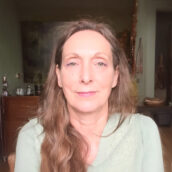
Season 03 – Episode 05: Healing the Trauma of the Heart, with Tiph Fedor
By The Gifts of Trauma /
Listen this episode here:
or here
The spiritual journey and process of trauma healing are presented as aligned experiences that unfold together as we progress through healing into wholeness.
This conversation begins with Tiph’s healing journey. A highly sensitive, empathetic child, growing up in a family where emotions were suppressed was a painful experience that led her to heroin addiction— described as a “magic bullet,” it numbed Tiph’s emotions but made her life a ‘grim’ period of survival.
She goes on to share how she overcame her addiction, and the major influences in her healing journey:
– Motherhood, a “massively heart opening” experience that taught her patience and selfless love
– Training with Eckhart Tolle’s which profoundly impacted her ability to calm her mind and be present
– The moment of “oneness” where she realized her purpose
– Compassionate Inquiry’s skillful approach to “unpicking stories,” releasing beliefs and emotions
– Psychedelics, which she finds very aligned with the Compassionate Inquiry® approach
- Today Tiph feels settled, free, comfortable in her body, deeply peaceful and connected to the divine. The conversation concludes with an exploration of her current work with clients, in which she combines all her learned skills. She believes healing is “absolutely possible” and “more important than anything.”
Episode transcript
00:00:01 Tiph
I don’t think we can mirror something to our clients if we’re not embodying it and seeing it in a way of it in ourselves, including spirituality. My experience has been that my clients can only go to places that I have been to in myself as well, that I believe that at our core we are all the divine. What gets in the way of us knowing that, are the layers of self limiting beliefs, suppressed emotions, the trauma, the kind of build up of all of that. And so the reason why I think it’s important to do the trauma work is with every moment of healing, it’s like a kind of gossamer layer is lifted. And that’s a slow process and a very beautiful process. And so we move more and more closely, or I have moved more and more closely into who I am, that space of the divine. And for me, healing the trauma of the heart is what connects me to the divine. It feels like that the more open my heart can be, the more I feel connected.
00:01:11 Rosemary
This is the Gifts of Trauma podcast stories of transformation and healing through compassionate inquiry.
Kevin:
Welcome everyone to another edition of the Gifts of Trauma podcast from Compassionate Inquiry. My name is Kevin Young. I am joined today by one of my favorite Compassionate Inquiry people. And I notice I’m blushing a little bit saying that. Tiph Fedor am I saying that right, Tiph, your surname?
00:01:46 Tiph
Fedor.
00:01:47 Kevin
Fedor, thank you. Yeah, Thank you for joining us, Tiph. You’re really welcome. I’m wondering, just in this moment, how are you doing?
00:01:55 Tiph
Good. I’m doing good, happy to be here, feeling very relaxed.
00:02:00 Kevin
Thank you, Tiph. I too am keen to see where this conversation goes. I have no expectations, no agenda. Maybe the only agenda is to get to know you a little bit better and for our audience to get to know you a little bit better. And maybe we could start… You’re one of our newest compassionate inquiry facilitators. You’re the Newbie on the team.
00:02:20 Tiph
The new kid, Yeah.
00:02:22 Kevin
The new kid on the block. What I’d love to do, Tiff, is gifts of trauma from compassionate inquiry. It’s all about stories of trauma, healing from our past, our childhoods, right up to where we are today. Yeah. And I would love for you to share some of what has worked for you and what… we’ll get to that, in your personal healing. And I would love to hear how you’re working with people, what sort of people are showing up for you, the work that you’re doing with them and how that’s impacting their lives as well. To start us… rather than me introduce you, I wonder, would you like to tell us a little bit of who is Tipf Fedor? Who is Tiff Fedor?
00:03:06 Tiph
Just Tiph. Just Tiph, it’s easy enough.
00:03:08 Kevin
OK, we’ll go with that.
00:03:10 Tiph
And me and more me too.
00:03:12 Kevin
Yeah, OK, who’s Tiph in this moment?
00:03:14 Tiph
Gosh, who’s Tiph in this moment? As in where I have arrived now rather than…
00:03:19 Kevin
Whatever comes to your mind when you think, yeah, am I in this moment? What is Tiph all about?
00:03:25 Tiph
Who is Tiph? This is a really difficult question and yet so simple too. I am someone who has a big story and has, I feel like I have journeyed a long way through that story of healing and working through my own trauma to reach a place honestly now where I can see most of the time I’m in a place of deep peace or feeling quite settled in who I am, of being really comfortable in my body, feeling free and feeling deeply peaceful. And that’s not a small thing. I feel like that’s been hard fought and it’s been a battle worth fighting. And so, also a lot of gratitude for finding the things that I encountered on the way that have helped me get to this place.
00:04:17 Kevin
It is not a small thing.
00:04:19 Tiph
No, and that feels like the single most important thing. I’m a lot of things and there’s a lot of things in my life, but actually that, for me, feels like the foundation to everything and feels really important.
00:04:29 Kevin
Thank you, Tiph. Maybe that is… quite often in this work we talk about healing and what is healing and how long will it take, how much work do I have to do? And maybe that would be a beautiful definition of what healing is to be, at peace.
00:04:46 Tiph
Yes, and I don’t think I’m at the end of the journey, but I’m not sure that journey ever ends. But I think I’m sufficiently far along it that I am definitely reaping the rewards of it.
00:04:59 Kevin
Yeah. Thank you. It’s interesting that as you talk about peace and the rewards of that work, I can notice it softening my body and maybe that co-regulation that when we sit with someone who is at peace, that is palpable.
00:05:15 Tiph
Yeah. I mean, it’s what I suppose, the flip side of being at peace is not having the tension, is not having the contraction in the body. The body does feel relaxed, that the mind is calm, that this definitely a feeling of safety and beauty is a big part of that. Seeing beauty from this place feels really important.
00:05:36 Kevin
We’re now moving beautifully into the landscape of the conversation that I love to have, Tiph..
00:05:43 Kevin
Are we 5 minutes and we’re already there? I had a question, but I’m gonna park it for a minute and I would love you to tell me a little bit more about seeing beauty from this place. Elaborate a little bit on that.
00:05:58 Tiph
Yeah, I mean, it’s, it’s a very felt thing. It’s hard to intellectualize. Seeing beauty feels like it comes from a place of deep connectedness, with nature, with other people. Nature is so easy to see the beauty, just to be present in nature… and it’s…it surrounds us. Something around seeing the beauty in other people is about seeing beyond the mask, seeing beyond the personality, seeing beyond all the facade and really seeing truly the depths of the person, the potential, the possibilities, the beauty and the…
00:06:33 Kevin
Tiph, can I share something with you? And I don’t want this to sound like I am… I don’t know what the word for that… that I’m, blowing smoke, but can I share something that I really love about you?
00:06:48 Tiph
Please do, it’s always nice to hear nice things.
00:06:52 Kevin
For sure. And I was lucky enough to share a very intimate space with some of our other Compassionate Inquiry facilitators last week. And I noticed myself talking about this. And this is a thing that I notice about the people that I really love. This is a really important thing for me. And you fall into this bracket and I just wonder how you receive this. Something that I really love about you is that your feet are firmly planted on the ground. So you seem like a very grounded person, and at the same time, I would say your head sits with the divine. When we talk about beauty, I’m sure we’re going to talk about spirituality. I’m sure we’re going to talk about the altered states of consciousness and those sorts of things. So what I love in people, and in you in this moment, is that both of those things are true. Your feet are on the ground and your head is up there and in consciousness and with the divine. How do you receive that? Is that true, is it true for you?
00:07:54 Tiph
It’s definitely true. I’m not sure. For me that one comes without the other. It’s a huge part of how I work with people and also my own… my own healing journey has been that the two have to go side by side, that whilst I’m in the garden noticing the beauty of it all, I’m also picking up the dog shit. If I can say shit.
00:08:23 Kevin
You can, of course.
00:08:25 Tiph
And you know, that is mirrored all through life. And that’s important for me, that I am real, that I am grounded. And that has to be true for me to be able to connect to the divine.
00:08:37 Kevin
And that might invite the question then, Tiph, how did that happen? Was it always the case? Maybe that was always true for you? Or what has allowed that to be your experience in life right now?
00:08:49 Tiph
No, it definitely wasn’t always the case. I definitely have been through periods… I suppose some would call it spiritual bypassing, where I wanted that connection to the divine, but I hadn’t done the trauma work, essentially, that allowed me to be really present. So, what’s allowed me to do that, I guess, is all the skills I’ve learned along the way. All the skills I’ve learned along the way.
00:09:12 Kevin
Tell me a little bit more about those, what would be… I wrote down just as we were starting a couple of brief questions and one was the greatest assets to your journey and then maybe I wrote down as well the greatest hindrances. So I wonder when you talk about that, all the skills and tools you’ve learned along the way, could you share some of those, maybe your top few or top one, whatever works for you?
00:09:35 Tiph
So I guess if I had to pick the top few, you know, it’s a long lifetime of lots of things tried and tested, but the most profound ones, I suppose that stay with me are motherhood. I’ve learned a lot being a mother and from my children. Then taking a deep dive into the works of Eckhart Tolle, really embodying what he teaches, for me, was profound. The work with Compassionate Inquiry, that has been huge, combining that with Eckhart, and I suppose the final thing would be my work around psychedelics and what they’ve allowed.
00:10:19 Kevin
We’re taking a brief pause to share what’s on offer in the Compassionate Inquiry community. Stay with us, we’ll be right back.
If you’ve been listening to our podcast and are curious about the compassionate inquiry approach developed by Doctor Gabor Matte and Sat Dharam Kaur, consider joining the Professional Training program. It’s open to all healing professionals, including naturopaths, positions, body workers, coaches, and therapists. In addition to learning how to use compassion to support your clients in their most vulnerable moments with greater empathy and authenticity, you’ll also deepen your own internal process if you’re interested, look for the link in the show notes.
Kevin:
I like how you made the path of the journey, that to get to the divine that you need to come through the trauma work. So we need to be doing that. Would you be willing to talk to me about what is the trauma that you have worked through using…?
00:11:25 Tiph
How long have you got here?
00:11:27 Kevin
We have as long as we need the Tiph, and you’re welcome to only name what you want to, of course, you know, And so I’m wondering these greatest assets, motherhood, Eckhart Tolle, Compassionate Inquiry and psychedelics that you’ve used to move through that trauma work. What was the trauma work you were doing? What did you perceive or believe was your trauma?
00:11:45 Kevin
What was the trauma work you were doing? What did you perceive or believe was your trauma?
00:11:50 Tiph
I suppose first, well, I’d like to say, which feels really important to me is that I believe that at our core, we are all the divine. And what gets in the way of us knowing that are the layers of self limiting beliefs, suppressed emotions, the trauma, the kind of build up of all of that. And so the reason why I think it’s important to do the trauma work is with every moment of healing. It’s like a kind of gossamer layer is lifted and that’s a slow process and a very beautiful process. And so we move more and more closely, or I have moved more and more closely, into who I am, that space of the divine. And for me, healing the trauma of the heart is what connects me to the divine. It feels like that the more open my heart can be, the more I feel connected. So I feel like I want to say that first, so the journey to the divine is through healing the trauma. What have I healed? Gosh, I mean that I don’t know that invites, like, where do I start the whole story or specifically how each of those things has helped in some way. Maybe in motherhood it would be hard to define exactly how that helped, but it’s definitely a massively hard opening for me becoming a mother, learning to develop patience and the ability to love in a way that’s selfless for children. And I suppose my own story started in a family where we would say it was very dysfunctional. There was a lot of suppressed emotions, and generations, I suppose, of broken people. It felt like I was the one born into the family who was going to feel everything that came in with great sensitivity and an inability to shut off the feelings, and that was very hard. It felt like I was expressing and feeling the feelings for the whole family.
00:13:57 Kevin
How was that received, Tiph in the family that you were in?.
00:14:02 Tiph
Yeah, it was very difficult. I think for everybody it was very difficult. How was it received? I was teased for it. I was made wrong for it. Yeah, I guess I was made wrong for it. So that became a big part of my struggle was having these big feelings but feeling like I shouldn’t have them and trying to suppress them, which leads to me doing drugs in my teenage years, I got addicted to heroin, which worked amazingly. You know, it took away all of those emotions and made everything feel wonderful.
00:14:36 Kevin
What age was that Tiph? When did you start?
00:14:38 Tiph
I think about 17 or 18, yeah.
00:14:41 Kevin
And I’m imagining you didn’t go from zero to heroin or, or is that true? Or maybe you did. Maybe you moved through other things. Alcohol.
00:14:49 Tiph
No. Strangely, almost aside from a little bit of a little bit of smoking grass in the park, I pretty much went straight to heroin. OK, interestingly, right, which is unusual, but I think I fell into a group of people who were using and I tried it and it just felt like a kind of magic bullet.
00:15:07 Kevin
OK.
00:15:08 Tiph
Yeah.
00:15:09 Kevin
So at 17, 18, you’re using, and in your own words, addicted to heroin.
00:15:14 Tiph
Yeah.
00:15:15 Kevin
And I don’t mean this to sound like a trite question. How was that experience, Tiph? How was that Tiph when she was using, and addicted to heroin?
00:15:24 Tiph
It was chaotic. It was, it was grim, really. It was pretty grim. Yeah. I was living in squats in London. It was a violent and unpleasant life that became a kind of a journey of survival, I think, with heroin being the only thing that really matters. So yeah, tough. Really tough.
00:15:49 Kevin
And to find out that, I mean, I have a daughter who’s 19 and I know you have a daughter who’s 16, maybe 17 at the minute.
00:15:55 Tiph
18….18.
00:15:56 Kevin
18, and the Compassionate Inquiry question Can you imagine your daughter in that environment?
00:16:03 Tiph
No, no, not in a million years. Not in a million years. Because I suppose… because I know her and I know that’s not why she’d go, but also just the pain of imagining her would be unbearable.
00:16:17 Kevin
Yeah, for me the same. Imagining my daughter doing that.
00:16:22 Tiph
Yeah. And it’s the thing I carried being a parent all through their childhood was the fear that they might end up there, because back then I didn’t understand why I had done it. And so it just seemed to be this thing that could happen to any kid. I didn’t understand the kind of self medicating that I was doing. And that actually, that hasn’t, thankfully, happened with any of my kids.
00:16:45 Kevin
Talk to me a little bit more Tiph, I know we’re teasing this out, I don’t mean to repeat myself, but talk to me a little bit more about what you were self medicating.
00:16:52 Tiph
I think the deep sense of… I remember the thing that used to go through my head a lot as a kid is ‘what’s wrong with me?’
00:17:00 Kevin
What’s wrong with me? Yeah.
00:17:01 Tiph
What’s wrong with me? A belief that there was something deeply wrong with me. I think that’s whatI I lived every single day, that I never felt enough, good enough, lovable. So yeah, a deep sense of what’s wrong with me, and the pain of that.
00:17:17 Kevin
Yeah. You, you, you know, it fascinates me, Tiph. Recently, a couple of years ago, we were in the Vancouver conference and we went to, I suppose the start of the Gabor Maté story. We went to Hastings where he talks, you know, he talks about working there and there were some people there, men, women and others who define themselves, which whichever way they place. And they were in a really, really bad state, like a really bad state. And the thought that was coming to me was, so the condition that they’re in right now, and it wasn’t a good condition. They were in a very poor condition. The condition that they’re in right now is better than whatever they don’t want to be experiencing. Their previous life, their family life, these beliefs, this pee in as you’ve described, the pain of there’s something wrong with me. And that, that breaks my heart that someone may choose something that’s so destructive, so harmful, so risky, and that is better than not having that.
00:18:20 Tiph
Yeah, yeah. I think for me, during my time of taking drugs, that the aspect, the horror of it didn’t matter, really. Yeah. Because compared to the pain it was, it was numbing. That felt like nothing. I mean, I say it felt like nothing. Of course. I think every addict has days where they wish they weren’t an addict and it’s… but it’s a… it’s a difficult journey out of that. But most days it is just about not feeling, and the relief of that.
00:18:53 Kevin
Yeah. Hmm. I’d love to hear your thoughts on this as well. Tiph when we work with Compassionate Inquiry and we watch Gabor working, he often talks about what the drug or the thing, whatever the thing is, what did it do for you? And when I think of all the things that I consumed, some of them got me high, some of them got me low, some of them got me drunk, some of them got me stoned, some of them got me sped up, some of them got me slowed down, some of them got me numb, some of them got me excited, and everything else in between. And what I landed on was like, I didn’t really care what the substance did. I didn’t really care so long as it wasn’t what sober felt like.
00:19:37 Tiph
Yeah.
00:19:39 Kevin
Does that land for you?
00:19:40 Tiph
Yes. And I suppose the reason I didn’t do lots of different substances, is once you’re addicted to heroin, you don’t really think about trying anything else. It’s like a huge hammer. So you wouldn’t then go off and try something less. But yes, yeah.
00:19:56 Kevin
Yeah. Thank you for sharing that Tiph. I really appreciate that, how are you in this moment? Just sharing that… in yourself right now.
00:20:03 Tiph
There’s a little bit of heaviness in my chest. There’s sadness there. It’s, it’s, it’s just sad. It is sad. That was the beginning of my life. That’s how I started off.
00:20:18 Kevin
Yeah, for sure. Again, I’m just thinking of you, the beautiful woman that you are right now and comparing you to my daughter that’s 18, 19 and, whoa, that would be a… that would be a pretty tricky start, a young adulthood.
00:20:35 Tiph
Yeah. And I suppose when, but when you think about that, it’s not just that period of drug taking, the tricky start is all of it. I felt like I was already at a disadvantage because of everything else. So actually talking about those, I think it was 2 years I was using. They’re just a part of it. So for me, they didn’t feel like the major part of it. In some ways they’re an easier part of it because there wasn’t feeling so much, then. So yes, it’s the whole story really, that I think I’m sad about the whole story, not just that part, yeah.
00:21:11 Kevin
Thank you. So walk me forward from that a little bit, Tiph, and let us get to know that younger version of you a little bit more as well. In between 19, 20, 21, 22… What’s going on there?
00:21:23 Tiph
I left the country to sort out my drug habit and went, weirdly, to live in Ibiza. It seems like a strange place to go to give up heroin, but I did… came back to the UK.
00:21:36 Kevin
So you did that. Sorry, sorry to have interrupted. So you did that alone? You did. You just went and.
00:21:40 Tiph
Yeah, so I had my very close friend at the time who wasn’t involved in drugs, bought me the train ticket. Because if you’d given me the money, I’d have spent it on drugs, Bought me the train ticket, I guess. Yes, I had the desire to do it. I chose to do it. I got on the train and travelled out there alone. I had an ex-boyfriend, actually, in Ibiza, who I went to stay with. So I had a focus of where I was going. I think what I knew for my survival was that I had to take myself out of the environment that I was in, that I knew that… because things had escalated, I got into trouble with the police. I was supposedly meant to live back at home, but they were still secretly using it was, it’s a, it’s a really complicated life, that life. So I knew that if I was going to come out of it, I had to change the whole environment. So I left and it was the right thing for me and I spent about a year over in Spain, coming off, and then I returned to the UK and I had no more physical addiction to the drug. But of course, nothing was resolved because I didn’t even know about resolving anything, or that there was anything wrong at that point. The actual, the beginning of healing didn’t start for probably another… until I was in my late 20s. So the whole period of my 20s, I think I was still a very traumatized, reactive, unhappy person. Got into a bad marriage. Had my first two children though, which was definitely profound and beautiful and life changing, but very difficult times. I wasn’t using drugs, but I was desperately unhappy. Yeah. I yeah. I don’t know if you want me to say more about that period, really.
00:23:25 Kevin
Maybe walk me on a little bit… what I’m… to let you know that I have an agenda right now, Tiph.
Tiph:
Yes, tell me.
Kevin:
And my agenda is just to walk us… walk our listeners… and really connect to your walking through that journey, to maybe where the tipping point came, or something happened that you started to get interested in, maybe was it spirituality, maybe was it meditation, was it therapy work?. So just walking through up to that tipping point, if there was one or tipping period?
00:23:55 Tiph
No, it was more like I fell into something. It was interesting. It’s a strange story really. I used to go to see a lady who did reflexology on my feet because I really, really like having my feet massaged. And so I would go occasionally and this was just something really lovely and relaxing that I did for myself. And, one time I was in the place where she worked, and there was this guy who said he was a spiritual healer. And I was a bit like, yeah, whatever. And he said, don’t poo poo it till you’ve tried it. So eventually… cut a long story short, I tried it. He worked from the same place. So I had a session and something happened. I was lying on a, you know, on a massage couch. He was doing his thing. And I suddenly felt, I don’t know, as if energetically something was shifting in me and it felt amazing, as I was lying there. And this thought came into my head. Who am I? Just that one question, and it felt really profound in the moment and I had no idea what the answer was. So I then started going every week, and every time I went I would feel so much better, and it would fade as the week went on. And so I would go back for a top up every week. And I remember saying to him one week, I don’t want to keep coming to you for a top up. How do I do this for myself? What is this? How do I learn more about this? And I got in touch with… back then, they were called the National Federation for Spiritual Healers. I think they’re now called the Healing Trust and they ran training programs and that was my first training. I went and I trained with them, did all their training, and it was the beginning, I suppose, for me, of connecting with something else that felt bigger than me. I suppose, is the only way I can put it.
00:25:58 Kevin
Yeah. And I always wonder, Tiph as well, when people share that sort of experience, I think of this synchronicity, the idea of being there for reflexology and then this thing happened and then this thing happened and sounds like you took to it very well. And maybe that for me, again, I just your thoughts on this… for me. There’s something in us that is pulling us towards our own healing. When you said there about that, you talked about a desire to heal and recover. You left England and went to Ibiza and you could have seen that guy and went yeah, right. And went on about your business and went for a cup of coffee. But you didn’t. You stopped and then you could have, not asked him. How do I do this for myself? So there’s something in you pulling you toward that. What is that?
00:26:44 Tiph
I don’t know. Yeah, I don’t know. That’s hard to put into words. There is definitely something in me that I was always felt pulled, driven towards something. I think in a sense that was even there as a child, there was some connection to… I was always interested in reading about astral projection and other-worldly things and having a sense as a child of connecting with those things. Having dreams that were premonitions or sensing when things were going to happen, or, I don’t know, strange things like blowing on a didgeridoo and seeing blue come out at the end as sounds. So there was always an element of that in my world, and there’s always been a belief in something. I couldn’t even say it was a belief that I could put that into words, but there has always been something in me that has been searching for something bigger than myself in some sense.
00:27:42 Kevin
I’m going to drop in the G word, not the God word, so forgive me. Forgive me for that. And where I’m from that comes with a shudder in my body. But there’s a teacher I think we’re familiar with, Rupert Spira, and he quotes, is that Merdin? Or… anyway, and he says that that thing or search for God or search for the divine or search for consciousness is consciousness’s search for itself.
00:28:06 Tiph
For itself, yes, and for a long time I was looking for something outside of myself. I have a library full of books and I’ve read them all and you know, I went on to do a lot of shamanic retreats. After the Healing Trust, I went on to do shamanic retreats. I would go every few months and do these things. There was always a searching and it honestly never really touched me. It always felt like a trying, like I was doing, like I was looking out there for something, desperately wanting it, to somehow feel it. But it never felt authentic. I never felt like I was really connecting with it. There was a strong desire, but I also couldn’t fake it. I couldn’t pretend. So it was quite frustrating a lot of my life searching for this thing that I never really felt that I had touched on.
00:28:58 Kevin
I can certainly relate to that, and I’m guessing a lot of our listeners will relate to that, to that. Yeah, bouncing around looking for something that’s going to do the thing that we think needs to be done so that we can be happy and at peace. And I tried many things and went down some dark alleys and dark entries searching for these things only to be hurt and abused. So walk me on a little bit, on from that. So you’ve done this healing stuff, you do the healing courses, you’re starting to do shamanic work and shamanic retreats. And it’s, I hear you say it’s still not. You’re still not quite touching it. Walk me on a little bit from that then. So what’s going on after that?
00:29:40 Tiph
So I had started working with people energetically, I was doing body work with people, which was profound and there were some amazing things happening that I was questioning because I do have a mind that really questions, that wants to understand things as well. So… and people kept talking to me when they came and they wanted to talk. They didn’t want to just like, lie on the bed and be quiet while they did the energy where they wanted to talk. And I felt a real sense of responsibility. And then I didn’t know how to listen, not in a therapeutic way. I didn’t feel I had the skills. So at that point I, I did my training as a counselor, and they were also talking about their body and the inside of their body and how I’ve got a pain here or this isn’t working. And, and that worried me that I had no idea what they were talking about. I didn’t know where anything was in the body. So I also did a, I did a year long training. It was actually a massage training, but it came with anatomy and physiology. So I did it for that. So I felt this sense of responsibility of wanting to meet people in a way that felt safe. So I had a period of doing that. So then I was combining the energy healing with counseling. That was good. And I don’t think I’d even really started on my own healing at that point. I maybe sort of had, but I really don’t think I had. I think I was still living a life of fairly unconsciously, reactively stuck in my own self limiting beliefs, full of all these emotions that had never been expressed, but being there for others because I’m good at that and being some kind of rescuer, yeah.
00:31:18 Kevin
Yeah, the thing I was going to mention, being the rescuer, it’s a great, it’s a great thing to hide behind unconsciously, of course, not saying that we’re doing it consciously.
00:31:27 Tiph
Absolutely, yeah. Made me feel good about myself. And that part that thought there was something wrong with it. Maybe I’m not quite so wrong if I can be here and rescue others. I still do. I have rescued every single animal that I’ve ever come across that’s inches in any way obsessively. And that’s part of that, right. Although now it seems to come from a slightly different place, but I still do it. But yeah, I very much… the role of, of being a healer that was helping people and also a mother that was an identity really. I’m a good mum. I worked hard at being a good mum because I knew what it was like to not have a good mum. And so that also made me feel better about myself. But through all of those years, I was definitely doing all these things so that I didn’t have to deal with how it felt underneath it. But of course, I was still feeling it as well because it was it’s there, being triggered every day, in different ways.
00:32:24 Kevin
And I’m imagining that a lot of people listening to this will recognize that at least why they started out on this path that they’re maybe not there right now, but I would put my hand up. I’ll stand and not this section of that ven diagram with you, Tiph, and say, yeah, I started off because if I can just make all these other people feel good, then I’m liked and I’m loved and I’m recognized and I’m good and I’m helpful. And yeah, I can see that in myself as well, for sure. So bring me on a little bit forward then, Tiph. So what’s going on then? So you’re doing this work, doing energetic work with people, you’re doing your counselling, you’re hearing them talk about stuff, emotional stuff, their bodies, their pains, their tensions and constrictions. And what I’m hearing is moving along this lifeline as you’re adding little packages into your toolbox of little skills and things that you can do move me on a little bit further then, what’s going on after that.
00:33:22 Tiph
What goes on after that? I suppose there is a chunk of time where I’m not working, when my daughter was born. I’m in my second marriage and I’m also deeply unhappy. I’m not working because I’m full time looking after her. She’s at a Steiner school which requires they do like 3 hours of school twice a week to begin with or something. So it’s that there’s a commitment and I was so deeply unhappy, but it’s not my way to to look out of the marriage for any kind of fix. So what I did was I just started to look inwards, that one way to look at it is within the marriage, because I kept thinking there was something wrong with me. I started to do some really deep work on myself, and maybe that’s when the healing really began in a serious way. It’s doing some very serious therapy and starting to unpick the whole story, and there was definitely some sense of if I could just be good enough, then my marriage will be alright. So it all became about me looking inwards and trying to fix myself. God, it’s an incredible journey. Because also the only solace I found was finding that by doing this work at the time, I started to connect with the deep peace within me bit by bit, slowly, bit by bit. And it was that was the safe place. That was a safe place that no one could touch. That was entirely mine that wasn’t out there. And I think that’s possibly the reason why I have gone so deeply into this place. Would I have done that if I had been happy? Maybe not.
00:35:06 Kevin
I would think maybe is not a strong enough word Tiph, you could probably say that you definitely wouldn’t have done it had you been happy, as a guess. And then in have known you, I’m aware that you have a wealth of both psychedelic knowledge, personally, psychedelic usage and training around psychedelic facilitation and psychedelic sitting. Talk to me a little bit more about how that came into your life then, please.
00:35:31 Tiph
That didn’t come in till quite a bit later because although I had used psychedelics in the past, therapeutically, I started doing it when I discovered Kiyumi, who were the company that were aligned with Compassion Inquiry. And I think I felt, although I had a real interest in doing it, I had held off until I found somewhere I trusted. And I suppose I felt if Compassion Inquiry had aligned with with them, that it was worth a go. So that was quite well into my Compassion Inquiry training. I’d finished the year long training. Actually, I think on my first retreat with Kiyomi, I got the news that I had certified as a Compassionate Inquiry practitioner. Yeah, that was the best moment. OK.
00:36:15 Kevin
Yeah, I know Kiyumi too and Kiyumi have have as you know as well. They had a circle program linked with Compassionate Inquiry and they were really beautiful and wonderful people to work with. So then Tiph here we have this woman who has had, you talked a little bit about a pretty tough childhood who was using heroin at the age of 17,18. I don’t want to use words you didn’t, but a tough enough 20s moving through your 20s, dropping into shamanic and energy healing, then into counselling and working with people there and then fast forwarding. I’m imagining this timeline almost has us into your 40s right now and starting to do this psychedelic work and psychedelic training and sitting with people. So then when people come along to work with Tiph right now, what are they getting? What are you offering them? How are you helping these people that show up for you right now?
00:37:11 Tiph
Maybe you should talk to them, they might tell you better.
00:37:14 Kevin
Well, we’ll get, in Compassionate Inquiry style. We’ll get a feedback form sent out to them, but for you, you know, what do you believe that you’re offering? What do you believe brings people to you?
00:37:25 Tiph
So I think it’s a combination of all of this. I hugely value the work of Eckhart, the ability to calm the mind, to be really in the body, to be the watcher of the mind and the emotions. We do that in Compassion Inquiry. We invite people to the body. But I think I have an ability to do that profoundly because of the deep work I did with Eckhart. The work I did alone with Eckhart took me to a moment of oneness that I can’t even put into words. So I fell into that place using his teachings. So for me that’s transformative. That’s now embodied in me and a part of me. So that has to show up. I can’t leave that outside the room because it’s part of who I am now. It’s staring at me all the time, I think. Compassion Inquiry is beautifully skillful at helping people unpick their stories, let go of the unconscious beliefs that they hold. And then the ability to deeply be with the body, for me, is where we release the emotions. And I believe in every person’s ability to fully realize who they are. I really do. I trust that everyone, when I’m sitting with them, I have no agenda. I have no thought that somehow I know what’s right for them. I just know that if I can hold the space for them, and guide them gently to see who they are and what it is they’re carrying, that I know that authentic self sits pristine inside them, untouched. I know that’s true.
00:38:59 Kevin
I wonder Tiph, I’m just going to interrupt. I wonder because sitting and watching you right now, I wonder are you aware of what seems to me to be excitement, passion. Your speech has speeded up. Your face has brightened up. When you get to talk about doing what you do, you notice how that is impacting you right now.
00:39:16 Tiph
I hadn’t… reminds me of when I had my moment, which I don’t often talk about because it’s so special and precious and here I am sharing it in a broadcast. But OK. The one thing that I remember that was really profound about that moment was in that moment, I knew who I was. I don’t know whatever words we want to use, but I was consciousness. I was connected to everything. I was peace and beauty and love in a way that’s unspeakable. And the thought that came to me was, this is who everyone is and my work is to help them know this, and that actually brings up some emotion, even saying it. I felt like I, I suddenly knew who I was. This is who I am and this is why I’m here. And I didn’t know how I would do that. I didn’t think it was by going around telling people I’ve had this experience and I have to tell you, this is who you are. But then from that moment it unfolded and I found Compassionate Inquiry and the psychedelics and that this way of working with people. Yes, I think I’m passionate about it. It’s more than just the passion, as I talk about my whole body just feels alive. It’s the answer to the question. Who am I? That I had right at the beginning?
00:40:29 Kevin
I can see it, I can see it in you, I can hear it in you. It’s just sparking your whole system and it’s beautiful. I’ve noticed, I’ve crossed my arms, I’ve sat back and I’m just enjoying watching you and listening to you talk about this. It’s really beautiful to see someone really connect with their truth of who they are, and how when someone does that, they just bloom. That’s really beautiful. Tiph, tell me a little bit then about, and I don’t want you to disclose through names or anything like that, but what are people presenting to you with? What sort of people do you speak to? What do they come with?
00:41:07 Tiph
Yeah, surprisingly, I have quite a lot of young clients, which I find really beautiful and encouraging, young people doing this deep work. Yeah. When I think back to myself at that age, I wouldn’t even have known what the work was. And here they show up with such focus and dedication and hard work, and they’re inspiring. They really, they inspire me and they give me hope for humanity. So that. Quite a few of my clients have come far enough along that their trauma work that we incorporate the spiritual and that’s not come from me. That’s in different ways. They have encountered that in their lives and brought it to me and told me. And it’s, I think it’s been helpful for them to have a place where they could talk about it, where it was OK, where it was welcome. And in very different ways,to me, but arriving at the same place. And that’s really beautiful. And they realize that they’ve got there in part because of the trauma work. So they continue doing that. That’s really rewarding work to work with people who have come that far along.
00:42:10 Kevin
And recognizing the similarity, I spoke to Sat Dharam a few weeks ago Sat Dharam Kaur, and we too were having the conversation about,.. because myself as well. I don’t really introduce this type of conversation into the work that I do with people until it’s asked toward that naturally goes there. And Sat Dharam and I, and now you and I are talking about… almost how we have to move through that trauma work, when we move through the body sensations, emotions, beliefs, behaviors, addictions. And for most people, when they move far enough through that, this idea of spirituality or consciousness or divinity… it’s like peeping behind the curtain in the Wizard of Oz. And when you peep behind the curtain, then there is divinity and spirituality and consciousness and these sorts of conversations. And it’s interesting that you’re bringing that up again. And I also, Tiph think that maybe you could reflect on this as well. I think that will only happen with an empathetic, abiding presence that can hold that, that being you in this case.
00:43:16 Tiph
My experience has been that my clients can only go to places that I have been to in myself as well. You know, in the early days, that might have been more basic stuff. And I have found that as I have worked through things, I used to think, is it just synchronicity that these people show up and they seem to be working, and then I question that and they go, is it that I couldn’t see it in them? I couldn’t mirror it in them until I saw it in me, which I think is probably more true. I like the synchronicity story, but yeah, so I don’t think we can mirror something in our, to our clients if we’re not embodying it and seeing it and aware of it in ourselves, including spirituality.
00:43:57 Kevin
And Tiph, would it be fair to add, we talked earlier about that, that searching, we’re saying that this thing in us pulls us towards something. And for me, I could really imagine someone who had a little inkling of something being drawn to someone like you because Namaste the divine in them recognizes the divine in you. Would you agree with that?
00:44:19 Tiph
I’m sure that’s true, but the spiritual in me doesn’t shout about it, doesn’t blow horns. I think it is this, and I think it just gently draws people in when they’re ready. I think that is true.
00:44:32 Kevin
So thank you for sharing that Tiph, I’m I’m conscious II, you’re another person that I could. OK, let’s get the kettle on. Let’s get a box of tea bags in and let’s settle in. Let’s settle in for a 12 hour conversation.
00:44:45 Tiph
There are so many threads.
00:44:46 Kevin
Yeah, I’m aware of all of them all, yeah, totally. I’m aware of them all and noticing that maybe moving our conversation towards a close. So you’re now facilitating within Compassionate Inquiry. How is that for you?
00:45:00 Tiph
Loving it and really loving it. It’s beautiful to embark on this journey with people and it’s a reminder of how profound it is right at the beginning. I remember starting the training and saying, and you get told it might be quite triggering in the beginning, it might bring up your own stuff. And I was like, yeah, doing this stuff for ages. That’ll be fine. I was so wrong. It was really humbling. I was like, oh, OK. It felt like I was in primary school. So it’s lovely. And the feedback from people is thank you and how amazing that is. So it’s very, it’s very real. This training is not theoretical. It’s really powerful in a very beautiful way. So it’s lovely to be a part of that and to be supporting people on that journey.
00:45:43 Kevin
Yeah, thank you Tiph. I just want to acknowledge not 25 minutes ago or half an hour ago, we were talking about a young girl, a child who had a tough time growing up and holding the emotional turmoil and trauma of a dysfunctional family and getting mocked for that and believing there’s something wrong with me. And then finding her way of dealing with that through drug abuse and whatever else. And I think you said the chaotic and messy life that brings. And then, this young woman finding reflexology, finding spiritual energy healer, finding counselling, motherhood, moving through that. And here we have a woman who came from that, now connecting with people on a deep level to help them work through their own trauma and facilitating the work of Gabor and Sat Dharam Kaur. I just want to pause on that a little moment Tiph, because that is that’s a, again, not too trite a phrase. That’s a rags to riches story right there.
00:46:47 Tiph
Yeah, I guess it is. I think in the last year, I have reached a point where I’m able to pause and really appreciate that. That I’ve worked so hard on healing and being with it all. And I do feel like I’ve reached the point where I can just go, OK, I can have gratitude and appreciation for the journey and where I am now because of it.
00:47:13 Kevin
And my wish through this work Tiph, this work with Compassionate Inquiry and certainly this work within the podcast is that there may be someone somewhere who is struggling with something and can look at someone like you and think, it’s possible for me too.
00:47:33 Tiph
Absolutely. If I can do it, anyone can do it, and it requires focus. And is it worth it? Like, it’s more important than anything, is what I would say. It’s the one single thing that has changed my life more than anything else. And I wouldn’t swap it for anything. To have that deep connection to who I truly am, to be authentically me, to be able to show up without the belief that there’s something wrong with me, to feel this deep peace and appreciation of everything, really is… I mean that’s, what more could I ask for in life? Everything else is just frosting on the cake really.
00:48:13 Kevin
I’m surprised Tiph, that I just noticed that as I asked that question, you gave that answer how emotional I felt. And that surprised me. Like, wow. Yeah, I think I just love to hear and support and encourage. Again, clunky term, but I’d love to support rags to riches. I love to see people healing. I love to see people say, hey, you know what? Today I’m pretty good. But I think it’s like crying with joy. It’s not crying with sadness. It’s that joy that… and I can feel tears in my eyes of joy just celebrating and here you are doing this beautiful work and it is possible.
00:48:48 Tiph
Absolutely possible, yeah.
00:48:51 Kevin
Thank you, Tiph. I really like that little moment just there, and then Tiph, that question I was about to ask, what next? What’s next for Tiph? And this isn’t an intention, it’s not an achievement as maybe an aspiration. But what do you see coming in your future? What would you like to see in your future?
00:49:10 Tiph
Yeah, it’s a good question because it’s… it rose up for me in the last six months just this, and what next? I feel like I’m standing at the doorway of the unknown with infinite possibility ahead of me. So I don’t know what’s next, but I have a sense of excitement. Wonderment. Can I just stay present in this place of the unknown and allow it to unfold? I definitely want to work more with groups. I want to work more with groups in person, maybe with the psychedelics. That’s… I really love group work. So that’s a possibility. But I’m mostly just trying to hold this space of not knowing and, curiosity with what will unfold.
00:50:04 Kevin
I call that standing at the edge of the universe.
00:50:09 Tiph
Oh I like that.
00:50:09 Kevin
Our own personal universe, like I kind of almost imagined Tiph, that the tip of our nose is already in the future for just yes, we’re just stepping through that right at the edge of the universe. Nothing is nothing is beyond the tip of our nose and we get a chance to cocreate that. There is a plan, there is a… something’s going to unfold and we get to choose how we engage with that unfolding, with that plan.
00:50:36 Tiph
So for me, the most important thing is to keep showing up, every moment, to continue to look at what gets in the way of me being open hearted and present. That’s my kind of guiding light.
00:50:49 Kevin
This question just came to me, Tiph, and I wonder, might I ask you and maybe one more before we close. You talked about the books that are on your shelf, and I’ve been really reflecting recently how important other things are in our healing. So are… you mentioned beauty when we think of for me it’s poetry and words and lyrics and songs and music. And I, I wonder, would you recommend a couple of things that people could dip into? Would that be, I don’t know, books, dancing? What would be a couple of things that people could dip into that might just guide them a little bit along along their journey along their path?
00:51:32 Tiph
It partly is finding your passion. I paint. It’s meaningful to me. Eckhart’s books were powerful for me. But some people have said that they’re the most boring thing they’ve ever read. And for me, it’s listening to my daughter play the violin or watching her dance or the photographs that my son takes or the poetry that my other son writes is… it’s just creativity. I think in any form, whether we’re appreciating someone else’s or doing our own is really profound. I think whatever gets in the way of us being creative, what are the blocks? Because I think that’s an important part of being here, is being in the process of creating. So, play the piano badly. I don’t know, paint without worrying about what it’s going to look like.
00:52:15 Kevin
Yeah, thank you. I know Tiph for me, that I’ve always had a love for music and live music and it didn’t start, for me, it’s playing guitar badly and that’s not self deprecation. That’s the truth. I know enough good guitar players to know that I’m not one of them. But what prevented me, and I’m saying this just sort of our audience can reflect, what prevented me was the fear of ridicule or the fear of not being good enough, or the fear of someone telling me I was terrible. And that fear was the very thing that kept me from… is probably… the most joyous thing in my life right now is playing guitar badly.
00:52:50 Tiph
Some idea that you have to be good enough? Yes, yes.
00:52:54 Kevin
And so that’s an invitation, and doubling down on your invitation if you want to play the piano badly.
00:52:59 Tiph
Play it for being in the moment with it, and just for the joy it brings us. For getting lost in the moment of it, not what it might sound like to someone else. And if, if there’s a fear of what others think, that’s the work. Yeah, that’s where to take the deep dive, do that work. So then the next time you come back, it’s a little less scary when you play. And it’s a process.Yeah.
00:53:19 Kevin
Thank you. Tiph And I often ask this question of people and maybe you’ve heard it. You’re welcome to answer it or to not answer it, whatever works for you. If you could whisper a few words into the ear of humanity, what would those words be?
00:53:39 Tiph
But as soon as you said that, I haven’t heard you ask that question. But as soon as you said it, it’s like sadness. And I want to say, be kind. Be kind. It’s like, if we can just be kind to each other.
00:53:53 Kevin
Beautiful and profound and simple and difficult and all happily kind.
00:53:58 Tiph
And when we’re not, be curious about why we weren’t. Don’t beat yourself up, but find out why. Why wasn’t I kind then? What came out for me that stopped me being kind because there’s little acts of kindness can be so profound for others. Everybody is struggling in a way that we can’t begin to understand. So if we can meet people with kindness, that feels like a huge thing.
00:54:20 Kevin
Yeah. Thank you Tiph – be kind. Tiph, would it be OK to land our conversation just there? Yeah. I really appreciate you coming and opening your heart to me, for allowing me to get curious and delve a little bit. So Tiph, I just want to say thank you. Thank you for coming on the Gifts of Trauma podcast from Compassionate Inquiry, and I hope to see you again really soon.
00:54:46 Tiph
Thank you, Kevin, and I want to say thank you for making it so easy to be here.
00:54:52 Kevin
It’s been a delight for me. I’m glad it’s been easy for you as well Tiph.
Rosemary:
The Gifts of Trauma is a weekly podcast that features personal stories of trauma, healing, transformation, and the gifts revealed on the path to authenticity.
Listen on Apple, Spotify, all podcast platforms. Rate, review and share it with your clients, colleagues and family. Subscribe and you won’t miss an episode.
Please note this podcast is for informational purposes only. It is not a substitute for personal therapy or a DIY formula for self therapy.
Resources
Websites:
Modalities:
Teachers:
Quotes:
- “To me, the spiritual journey and the process of healing trauma are not separate paths but deeply
intertwined, unfolding together in the pursuit of wholeness and inner transformation.” – Tiph Fedor“I believe that at our core we are all the divine. What gets in the way of us knowing that are the
layers of self limiting beliefs, suppressed emotions, the trauma, the build up of all of that… it’s
important to do the trauma work as with every moment of healing, a gossamer layer is lifted… a
slow and very beautiful process.” – Tiph Fedor