
Season 03 – Episode 86: When Grief Is Stolen: Invasion, Colonization & Griefology, with Rosemary Wanganeen
By The Gifts of Trauma /
Listen this episode here:
or here
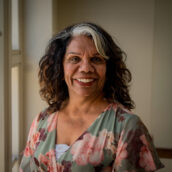
If grief is the energy generated by loss, what happens to a people whose grief has been stolen for generations, and what becomes possible when we grieve our way home? In this episode, Rosemary Wanganeen, a Kaurna, Wirungu, and Koogatha Aboriginal woman and Australia’s only griefologist, presents one of the most provocative perspectives explored in this series. She traces the suppression of grief and the ensuing psychopathic violence of Australia’s colonizers/invaders to a declaration by Plato in 388 BC—the toxic legacy of which continues to fuel the behavior of spirit-absent humans.
She also explains how:
- Suppressed grief causes the spirit to separate from the body
- A spirit-absent human can commit atrocities
- The invading colonizers deliberately dismantled 60,000 years of sacred Aboriginal culture
- Griefology offers a path out of the unresolved grief that traps colonized peoples
- Her own spirit came home after five years of intuitive healing
Rosemary’s story—which takes her from a women’s shelter in Sydney (where she encountered an ancestral grandmother) through founding the Healing Centre for Griefology to her current work—is a living testament to what becomes possible when we grieve our way back home to ourselves.
Episode transcript
00:00:01 RDJ
If you’ve been listening to our podcast and are curious about the Compassionate Inquiry approach developed by Dr. Gabor Mate and Sat Dharam Kaur, consider joining the Professional Training program. It’s open to all healing professionals, including naturopaths, physicians, bodyworkers, coaches and therapists. In addition to learning how to use compassion to support your clients in their most vulnerable moments, with greater empathy and authenticity, you’ll also deepen your own internal process. If you’re interested, look for the link in the show notes.
00:00:37 Rosemary
I was born into the Western construct where I was living in a colonized mindset. So when 1788 came here, I think that they took this around the world. When the west went out, they took out three warfares, outright warfare, killing as many indigenous peoples as quickly as possible. Whoever was left, apply germ warfare, whoever was left, psychological warfare. So the conditioning that you’re less than that you’re a ‘poor thing,’ you need our help. The power of their psychology keeps not just indigenous peoples locked in, trapped in thinking and believing that they’re poor things and that they’re disadvantaged. And in that process of being born into a colonised mindset, I was colonized to believe that I was ‘less than,’ I was a ‘poor thing,’ I was disadvantaged ‘cause I’m aboriginal and a woman on top. What I’d done in the process of that five years, I decolonised my mind. All hell broke loose, to become who I am today.
00:01:54 RDJ
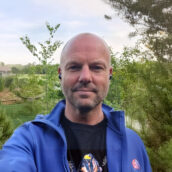
This is the Gifts of Trauma Podcast. Stories of transformation and healing through Compassionate Inquiry. Welcome to the Gifts of Trauma podcast by Compassionate Inquiry. I’m Rosemary Davies-Janes and today I’m here with my co host, Kevin Young, and we will both be speaking with Rosemarie Wanganeen, Australia’s leading and only griefologist who has pioneered the revolutionary field of griefology. Rosemary, thank you so much for joining us today to have this conversation about collective, cultural and indigenous grief.
00:02:42 Rosemary
Ngaityalya Thank you so much Rosemary.
00:02:45 RDJ
Just such a delight to have you here. Your full bio is in the show notes. I’ll just say a few words, shine the light on a couple of highlights. You are the founder and CEO of the Healing Center for Griefology, established in 1993 in response to your own personal experiences as part of the stolen generation. And now I’ll invite you, Rosemary, what would you like to share about yourself and your journey that’s perhaps not included in your bio? Who is the woman who became Australia’s leading and only griefologist who’s founded this healing center?
00:03:25 Rosemary
So I think what would be important for your listeners to know is what’s the actual catalyst to set up the healing center, was me ending up in a women’s shelter in Sydney in 1987 and unfortunately, badly assaulted. Not the first time I’ve been in family violence, but the first time I’ve been in a woman’s shelter. And in this woman’s shelter, I didn’t have my children. And I think that that gave me an intuitive space for me to start questioning, what the hell is going on with you, Rosemary? “How did you end up busted up yet again?” were the exact words I said to myself. And it just sort of started to unfold from there. But you know, on reflection, that gratitude for that whole experience for happening, I cannot deny it had to be a part of my journey to get to where I am today, or at least to set up the healing center in 1993, because I spent five years in my intuitive research. But that life experience, you know, I look back on that with gratitude.
00:04:40 RDJ
I love that perspective. And that says a lot about who you are as a human. Rosemary. In order to make this easier for our listeners, given that we’re both Rosemary, I’m going to invite Kevin and you, Rosemary, to refer to me as RDJ. I often go by my initials just to avoid any confusion about which Rosemary is being asked which question, and so on and so forth. So, you know, please feel free to do likewise. Something else that we often do in Compassionate Inquiry is set an intention for our conversations in our sessions. By the end of it, where would we like to have landed? Kevin, you could probably explain an intention a little bit more succinctly and clearly than I did.
00:05:26 Kevin
I think you’ve done a wonderful job, RDJ. But I might add, what it does, Rosemary, is help us keep our conversation focused. And I would probably admit, and so might RDJ, that RDJ’s conversations are maybe slightly more focused than mine, because I like to wander where the conversation likes to wander to. But yeah, so an intention would be maybe something that you would like to get from this conversation or something that you would like to offer. What would that look like if we asked you, “What might be your intention for speaking to our audience?”
00:06:04 Rosemary
Oh my gosh. To keep getting griefology out in the world. I mean, that became a focus. This is 30 odd years now, that I’ve been doing this. But to continue spreading griefology, because it’s something that I know is underestimated. It’s very powerful and I’m a living example of how griefology can empower a human being who perhaps is struggling through their intergenerational, suppressed, unresolved grief and doesn’t understand why they are suffering, and in a lot of mental and emotional and spiritual pain. So this, particularly this podcast, it’s a real honor to be here to be able to keep on talking about the power of griefology, because it’s a therapy that incorporates, as we’ve been talking about, Rosemary, incorporates the metaphysical world. And I’m obviously not a trained psychologist or any of those academic ways of being trained, but I’m pretty sure, based on my lived experiences, that they wouldn’t know how to incorporate the metaphysical world, whereas griefology has intuitively done that.
00:07:26 Kevin
Thank you, Rosemary. RDJ, what would your intention be?
00:07:30 RDJ
Well, it’s very interesting because you’re right, Kevin. I do tend to be more focused. But today I had an entirely different experience. My questions were prepared, my thoughts were arranged, and I just felt myself wearing this heavy mantle, this heavy mantle that I could only identify as sadness and grief. And it caused me to pause. At first, I tried to run away from it, I tried to distract myself. Is there just not another task I can do so I can slide out from under this mantle? But it was really good because I’ve been dodging, processing sadness and grief for a lot of years. So my intention really, today, Rosemary, is to create a welcoming space where listeners can safely feel into and accept the grief that they carry and be open to what is shared amongst us all about the process of integration. Kevin, do you have an intention?
00:08:33 Kevin
Yeah. Thank you both. Thank you, Rosemary and RDJ. I have to get used to that. Rdj. Well, I’m maybe going to be the excited one then, because Rosemary Wanganeen, when Rosemary was contacting you about the show and you had almost apologetically suggested that you might bring in the metaphysical, the spiritual, and when I read that, I went, yes, you know, I have an adversary, a counterpart. I have a sparring partner for questions around metaphysics and spirituality and love and beauty and earth and esoteric conversations, and about death and life and afterlife and pre life. And I thought, yes, I want to speak to this woman about all of these things. So my intention is to pull our conversation into the metaphysical arena where I can just get really curious about all of the things that you know in this field. So that’s my intention, to really dive into that aspect of this conversation. And I often say it in my work, in our work as Compassionate Inquiry practitioners, as with your own work, Rosemary, it’s big work, it’s heavy work, it’s deep work, it can be painful work. And I, hand on heart, believe that we can do all of that work with a twinkle in our eye and a light heart. So I want to dive into those big metaphysical questions with a light heart, a smile on my face and a twinkle in my eye. So that’s my intention. Let’s see how we go with that.
00:10:20 RDJ
Wonderful. Thank you, Kevin. We have sort of an inside joke, the producer and I, that Kevin likes to live on Mount Esoteric. And every once in a while he comes down and graces us with his presence. So we will get there, Kev. We will get there. I’m wondering, Rosemary, if you can start us off. You know, before we gathered today, you shared a story with me. We’ve already touched on it a little bit when you introduced yourself, but I wonder if you can just walk us through what drew you to the study of griefology. It’s a phenomenal story and really well worth sharing.
00:10:58 Rosemary
And in relation to the woman’s shelter and how all of that unfolded?
00:11:04 RDJ
Absolutely. I remember when we spoke before today, you were talking to me about, you know, the evolution of this whole process, and being a mom and, you know, having insights as you’re cleaning up after dinner, washing dishes, you know, just dealing with everyday life as this whole process was unfolding within you. And then you captured it, and fortunately for the rest of us, you’re sharing it, moving it on to the people who need it. So I wonder if you could just walk us through that.
00:11:36 Rosemary
Yeah. You know, when I reflect back on that time, it was crazy, it was scary. It was a place where I didn’t know if I was going to survive it. It was so dark and deep that I had suicidal thoughts. Even though all of those thoughts started in the women’s shelter and got even more stronger and powerful when I’d left. So within this five year period from ’87 to 1992, and when I visited the woman’s shelter, my marriage, my second marriage was unraveling. I ended up leaving Sydney to come back to Adelaide. And as I was going through this process, and again, it’s really important for your audience to recognize I was going through this healing and this grieving process, in a deep state of my intuitiveness. It was guiding me. And I had that experience where I was sharing with you, Rosemary, about this old ancient grandmother who came to me in this woman’s shelter, and I’d stayed in contact with her and she was always within me. But I was so unconscious of that. So I had that ancient ancestral grandmother guiding me, communicating to me. So that’s sort of where the metaphysical aspect of griefology started there. Absolutely not knowing where this was going to take me. I was just in a lot of pain. But when I came back to Adelaide, my marriage was still unraveling. Becoming a second ex-wife, but I was still a mother, I was a daughter, I was a sister, I was an auntie. I had all, all these other human identities that I still had to attend to. And as I was saying, you know, I’d be vacuuming the floor, I’d be washing up the dishes, I’d be shopping, just living a normal, but very painful day to day life. But they were interrelated. Deep, deep grief that I didn’t understand, didn’t have a name for it, didn’t know I was doing it, but then this joy of being back home in Adelaide with my family, my extended family, my kids. I was just living a normal life. But at the same time, unbeknownst to myself, let alone my family, I was going through this massive healing and grieving process that incorporated the metaphysical. And it just got more and more powerful, stronger, seemingly no structure to it. But you know, when I reflect back, there was structure to it. But I’m just living a normal life. I didn’t pack up and go to some other place to sit down and meditate and heal. I was just living a day to day life. But I did pack up and go to the center of Australia. That was a part of the healing and the grieving process. Getting near the end of the process of 1992. But that’s even more sacred, more connected to ancestry and what we call over here in the Aboriginal community dreaming totems. But that came later, at the end of 1992, but between 1987 and the end of 1991. Yeah, just living this normal life, but at the same time going through this massive healing and grieving process.
00:15:10 RDJ
Thank you for sharing that. And I have one more question, then I’m going to invite Kevin to jump in. I understand that your initial focus, once this process had formed, once you knew what was happening, was supporting Aboriginal people, but that it has expanded. And I’m just going to share a quote from you, Rosemary, that says, “I remember entering my grieving process as a victim, only to emerge inspired and empowered to want to share it and help other Indigenous Australians.” And now today, and I’m not sure how early in the last 30 years it started, you do not limit your support to Indigenous Australians, to Aboriginals. You support all kinds of people. And I’m just wondering how that unfolded.
00:15:59 Rosemary
Yeah, ah, oh. So what I’d come out of my personal healing and grieving process and was able to document the phases that I’d gone through, which I call the seven phases to integrating griefology. And griefology is one word with me incorporating loss and grief. So I just needed… It sort of started to sound a bit clunky. Loss and grief, loss and grief. And I’m thinking, how can I, how can I simplify loss and grief? And came up with the word griefology. So it is about documenting my journey and I came up with the seven phases to integrating griefology. And so in 1993, I’ve now set up the healing centre,in the spare front room of my home and started to work with Aboriginal, particularly Aboriginal women in family violence. And it wasn’t until it really struck me and came really clear for me. I was invited to go to Italy and talk about my work. And a psychotherapist was here in Adelaide, had seen my work, met me and invited me to Italy. He’s a psychotherapist, Mario is his name. And one particular day he invited me into his clinic and I was observing one of his clients and they started to talk about their family violence, alcohol fueled, family violence and all that goes with, you know, children caught up in alcohol fueled family violence. And as I’m listening to this Italian family, I’m startled with… him talking about my family? Because that’s my childhood background growing up in alcohol fuelled family violence as a child and how I had no healing from those experiences, so took it into my adult life. And now as an adult I was experiencing alcohol fueled family violence, and I couldn’t believe how our stories mirrored each other. And that’s when I came back and realized… it took some time to process it. I thought, hang on, is loss and grief a human experience? We all go through this? And I realized that it is. And so that’s when I thought, I have a responsibility to help whoever wants to understand not just their lives through family violence, but their lives, if they’ve experienced any sort of trauma, as the term is commonly used, which griefology doesn’t use at all. But in this context, anybody that’s experienced childhood trauma, childhood and adolescent trauma, and that’s had no place to heal and grieve from it and how they’re reflecting that in their adult life. So since I’ve been working with anybody who’s a human being, put it simply, no human being can escape losses. It’s a part of being a human. It’s a part of life. We have to have loss. And what I recognized in my research, when I found a guy called Plato, who coined the idea that, “Grief is not only illogical, but it’s a weakness.” When I read that, I started to, you know, read between the lines and put one and one together and process and assess. And it’s one thing to have loss after loss, but what I started to recognize, as with my life and my family, I had nowhere to go to grieve. So it’s the grieving that is truly misunderstood. A lot of people that… certainly that come to me, actually don’t know where to start to grieve. The word is used… I don’t want to say it’s sort of thrown around, but it’s used in ways that don’t really understand the depth of what it means to actually grieve. And as I may have mentioned to you, Rosemary, that I work with eight common grief emotions. And so that’s where I opened up the healing center for people from all different cultural backgrounds. And griefology can be applied to anybody who steps through the door. For example, I had one Muslim man come to see me, and his story is a common human story. And so I was able to weave griefology into his world, into his life, into his family life. Then after we finished our session, he asked permission to go and grab his mat and do prayer in the reception area. And I said, absolutely. So loss and grief doesn’t… Nobody can escape it.
00:20:57 RDJ
Yeah, beautifully said. And as you said, you know, the word grief gets tossed around. I had an image come to my mind. It does… it gets tossed around like a Frisbee. As soon as we grab it, we chuck it away and try to dodge actually feeling anything. It’s like it lands, it’s gone, it comes back. Let’s just keep moving out of the way. And as you’ve said that… that doesn’t do anything good for us. Kevin, I wonder if you’ve got some questions for Rosemary.
00:21:27 Rosemary
Yes.
00:21:29 Kevin
So stop me when it’s time for me to stop talking. RDJ please. Rosemary, I think what’s really apparent to me is your passion for what you do. And, you know, that might be a strange thing to say that someone is passionate about grief, but really what you are is passionate about helping people grieve. And I love to see anybody be passionate about anything, whether it’s knitting socks or music or writing books or their work or their family or reciting poetry. Passion, for me is a metaphysical word. It’s an esoteric word. Are you familiar, Rosemary, with the work of Francis Weller? I’ve been reading a lot of Francis Weller lately. There are two books. Well, the first one I read was called The Wild Edge of Sorrow, really quite famous book. But the second one, I’m just reading it, I’m reading it right now and it’s called, In the Absence of the Ordinary: Soul Work for Times of Uncertainty. And it’s about grief. It’s about sorrow. Maybe I’ll read you something in a little minute. It’s particularly about the idea of how grief, pain, sorrow can only be processed in the presence of ritual, culture, tradition, community, family, whatever that looks like. And listening to you talk, you talked about your own journey and you talked about being back in your family, back with your children, going to Uluru, going to the center of Australia. You talked about ancestry, you talked about this wise grandmother figure that visited you. You talked about tradition and culture. And the question that arises for me, and I’d love to get your thoughts on it, if grief is such a human experience. Of course it is. It’s a real part of being human is to grieve. And I mean this with the utmost respect. Where did we lose the skill to do that? You know, why do we need griefologists, and why do we need therapists? You know, where did we lose the ability to commune with each other, to join together in communion and process these things, hold these things? Where did we lose the ability to grieve and be together through suffering?
00:23:53 Rosemary
Great question, Kevin. I think that I found the source to stop the grieving process and I’ve already alluded to him. And it came within that five year intuitive research where I found a book called Why Do Christians Find It Hard to Grieve? By Jeff Walters. And as I’m reading again, just by instincts were really heightened. But I didn’t know that I was living in living through my instincts because it’s been switched on, but I didn’t know that it was switched on. And it got switched on because there was a point where I was emptying my physical body out of all this grief energy, live grief energy. As I’m grieving in this five year period, I’m getting all this grief energy, dark grief energy out of my physical body, got to a point where there was enough out of my physical body where it then switched on what I now call my intuitive intelligence. So the third eye is what I would recognize got switched on. And so I refer to it as my intuitive intelligence. So I’m in this, in this state of listening to my intuitive intelligence. I found this book and as I’m reading it, I came across Plato. Plato coined the idea that grief is not only illogical, but it’s a weakness, in 388 B.C. I remember having a physical reaction. My stomach churned, it’s like my heart rate went up a little bit. So I said, hang on, there’s something in this. So I started to read between the lines of that paragraph. So what I came up with is, question after question. And I said to myself, well, hang on, if this fellow coined this idea at a time when it was a patriarchal society, he’s a well known philosopher, he coins this, passes it across… one can imagine him passing across his peers, his generation, that next generation passes it on to their generation. And so it goes down the line in this patriarchal society. They stop grieving out of fear of being labelled weak. Because that’s his exact words. Grieving is not only illogical, but it’s a weakness. And so these young boys become young men who become old men, start learning to fear the grieving process, a grieving process out of fear that they’ll be labeled weak, be taunted and teased if they got emotional, if they cried over, you know, the loss of their mother or the loss of their loved one. So they held onto their emotions, shut down, and shut them up. So if you think about it, 388 BC, how many generations came into being? So if we use Jesus as a timeline, how many generations between Plato and the time Jesus came into being had shut up and shut down their grieving processes? And in the state of shutting down their grieving processes, what I think happens to the physical body is the spirit extricates itself out of the physical body because it can’t stay within a body that is churning up all this grief, dark grief energy to protect itself. It extricates itself and just hovers around the physical body. But the two are separated. And I think that then what happens is that human male can’t see, feel and hear their own pain, let alone the pain of other human beings, and can then go out and commit atrocities by suppressing their grief-anger. Their grief-anger can escalate to grief, rage, to grief, violence, inhumane atrocities, psychopathic behaviors. So were men able to. And it was just a matter of time before the Roman Empire came into being. But could then men in this era and in this part of the world, could this explain why they can go around? And I don’t mean to be graphic here, but it has to be said and it has to be part of the truth. Can they go around decapitating another human being? Can they go around quartering another human being? Can they go around raping and pillaging, violating women and children and not feel… not be able to see, feel and hear the cries and the fear and the pain of another human being, to be able to stop? And I say, yes, they can’t see that because their spirit has separated itself from the body. And so the patriarchal society gets even more and more powerful. They become mobs and react off of each other and can go around and rape and pillage, invade because they can’t feel the pain of what they’re doing. That’s become intergenerational. So a man passes onto the son. Don’t get emotional, don’t cry, because you’ll be seen as weak. And so they learn… this learned behavior to shut up and shut down the grieving process. And we’re still living with that legacy today. Now, you know, in the last, I would say only the last 50 years, and probably through TV and radio, that society is becoming more and more aware of, not so much loss and grief, but trauma and childhood trauma. And so there’s more conversations about it, there’s more talk about it, but targeting intergenerational, suppressed, unresolved grief it still eludes mainstream psychology, psychiatry, academically trained therapists, you know, was I meant to have gone through all of my experiences to become a griefologist, to honor and respect, in the first instance, my intergenerational suppressed, unresolved grief that I was caring of my ancestors. But it also came here in 1788. The psychopathic behaviors, your audience might not be aware of even aboriginal people existing here for 60,000 years. But we had the genocide happen to my ancestors, in this country, that my question in my research was, why was it so psychopathic? We didn’t do anything to these people, but why are they so psychopathic? What happened to them was a question. What happened to them? What’s their story? For them to be psychopathic and violent. And that’s where it took me back to learning about England’s history. Being invaded by the Roman Empire in 43 A.D. Okay, so what’s the Roman Empire’s story? What made him so psychopathic? And going all the way back into history is where I found Plato. And so once I found Plato, I didn’t need to go back any further. So was this my purpose, to have my lived experiences, to see what I’m going to do with it, Kevin. And I guess that’s what I’ve done with it. Is to become a griefologist through my lived experiences to help other human beings. Then I realized that the purpose for humanity is to heal and grieve, to evolve spiritually in this physical world. And I say that because that’s what happened to me, but I didn’t know that that was waiting for me. So I’ve evolved to become highly spiritual, by tapping into my intuitive intelligence. So my life every day is through my intuitive intelligence. Whereas before I was living in an unconscious state. And in that unconscious state, when one stops grieving, that’s where I think we can be born, into an unconscious state where we can do harm. But for me, amongst a whole range of other things, when I, if I could put it this way, when I crossed over into becoming conscious, crossed over into a conscious state, and in that conscious state I was able to switch on my intuitive intelligence and connect back to ancestry and connect back to my humanity through living in a state of joy and inspiration. I mean, I have my off days, I have bad days. I’m still a human at the end of the day, but 90% of my day to day life is living in my intuitive intelligence where I’m tapping into my humanity and tapping into caring for humanity, the planet, the animal world, and doing everything I can to minimize the harm on any of those
areas. Thank you, Kevin, for that question, that very important question, I think, to open that up.
00:33:43 Kevin
You’re very welcome. And I’m going to hang on to you for another five or ten minutes before I give you back to rdj. At least another minute or two. I really appreciate what you’ve shared and Rosemary, and a couple of things, a couple of things I want to offer you. First, just as we move through this conversation, I heard you apologize for speaking your truth in a language… And I, I can’t tell you what to do. Of course I can’t. I ain’t your boss. But I want to offer you that you need make no apologies for speaking your truth or use words like decapitated, raped and pillaged. Because until we start using them and naming these things as they were, then they are, they are secret. And I heard a lovely phrase today, I can’t even remember where I heard it. Someone I heard say, “You are as sick as your secrets are deep.” And I really like that, you know, just that the deeper our secrets, the deeper our sickness. And I really like that. So I’m inviting you to say whatever you want about whatever you want. That would be greatly appreciated. The second thing I’m really enjoying is as you’re describing there. And I think you’re right. I think what you’re describing as grief is very much matched with the language that we use in Compassionate Inquiry around trauma. Because Gabor says that, ‘Trauma, the result of trauma, is the separation of self.’ So we get separated from ourself because almost it’s not safe to be in ourself. So a way to escape is to separate from self. So you’re almost describing that journey that white men made, that what enabled them to be so violent and so vicious and so psychopathic was to separate from self. What I also heard you say, Rosemary, I think, and of course I could be projecting onto you, is that your own healing was the coming back to self. And yeah, I don’t know that self goes anywhere. I think that we just distance ourselves from it. I’m not sure our self goes anywhere or has anywhere to go. It’s just always everywhere all the time, isn’t it? So I think we step away from self as in our small egoic self steps away to save us and protect us. Would that be fair to say that, that you’re describing your process, the seven stages of grief and griefology of inviting someone back to themselves?
00:36:19 Rosemary
Absolutely. Just a different way of interpreting it. But if I could just sort of use my language and what I recall happening once, and I’ve sort of alluded to this, once my physical body was emptied out of all this grief energy through my healing and grieving processes. There was a moment, it was a Saturday morning, where I recall being different.
00:36:47 Kevin
And I even love that you can remember the day, Rosemary. I love that, that you can remember the day. That’s beautiful.
00:36:55 Rosemary
I know.
00:36:55 Kevin
Sorry for interrupting. Please, please, please.
00:36:58 Rosemary
It’s all good. I think probably because that’s how powerful the feeling of being different was.
00:37:04 Kevin
Yeah.
00:37:05 Rosemary
That’s where I think my intuitive intelligence, my third eye switched on. And who was this person? So it was a Saturday morning, and for all of that to have happened and give me that powerful sensation, I think that’s when my spirit came home. It was a five year process. But I had to empty my physical body out of all that grief energy for my spirit to feel safe enough to come home. And between my physical body and my spirit, we’ve been able to sustain that connection. And I think it’s a human thing where once spirit comes home and it’s sustained through griefology, one can’t undo that. You can’t go back to harming another human being because you become conscious.
Kevin: Because you feel.
Rosemary: You feel. Exactly, yeah. Because you feel, yeah, yeah, yeah, you’re not shut down, where we can’t feel the pain of another human being, hence going out and committing pain. So that’s the purpose, I think, for griefology, for humans to find our way back to this grieving process and say, you know, “Thank you, Plato, but no, thank you.” He had no idea the power of his words. He had no idea the harm it was going to cause future generations. And some people might know he went into grief because of his beloved teacher dying or being put to death, Socrates. And so that’s where his grief came from. And he seems to have had nowhere to go to grieve the loss of Socrates and eventually came to that way of shutting down because he didn’t know what to do with it. But, “Thank you, Plato, but no, thank you.” We are now living in an era where we have to fight our way back. And can you imagine, Kevin and Rosemary, what would society be like for future generations if we were able to heal and grieve through griefology? Our spirit comes home where we can feel the love for humanity, for each other, for the self, for the animal kingdom and for Mother Earth. Imagine what society would be like. I won’t be here, but that’s okay. I’ll be in the spirit world, looking down at society, getting on with life, through being one with themselves and each other.
00:39:47 RDJ
We’re taking a brief pause to share what’s on offer in the Compassionate Inquiry community. Stay with us. We’ll be right back.
00:39:57 Kevin
Your journey with Compassionate Inquiry matters. Your work in the world matters. If you have a story to share about bringing compassionate inquiry into the world, we’d like to amplify your voice. Spotlight episodes are full length Gifts of Trauma podcast interviews offered exclusively to CI community members. You’ll not only share your story with 55,000 healing professionals across all platforms, you’ll receive a pre interview strategy session plus three promotional video clips. We’re offering only 10 Spotlight episodes per year and production realities require a financial contribution. Follow the links in the show notes to access full details and express your interest.
Kevin:
Thank you, Rosemary. RDJ, I see you wanted to ask a question. Please go ahead or else I’ll keep this other Rosemary all to myself. So please, please, please go ahead. RDJ.
00:40:55 RDJ
Thank you. Thank you. I just had a sense come to me. A picture come to mind. You know, where would we be? You’ve connected some really important dots, Rosemary, you know, from Plato to the psychopathic people who colonized so many countries. And it’s so interesting because your research lands as truth, in me, somatically, all of the people who were influenced by the philosophers, like Plato, and all of his progeny, I guess I can put it that way. I’m thinking back to conversations with various Indigenous elders and wisdom keepers, of which you are one, being absolutely shocked at these people who rolled up, actually floated up to their shores and started behaving in ways unlike those that any human had behaved before. I was speaking to a wisdom keeper who was Canadian, Anishinaabe, and he shared the story of how Canada was taken by the newcomers from the Indigenous peoples, just through lies. There were no wars. And what you’ve just shared shines such a light on why there was such shock and disbelief on the part of the Indigenous people who had not listened to Plato, who were continuing to grieve, who were fully feeling everything, who were switched on, you know, spirit was present, self was present, and these creatures showed up that looked like humans, sounded like humans, but behaved so, so very differently. So the psychopathic aspect really shone through. And you went on to sort of pose a question, something I read on your website, that when you unearthed the framework that you call the seven phases to integrating griefology, a disturbing question arose for you, which was, ”To what extent could Aboriginal disadvantage be a Western construct that was created and continues to maintain an Aboriginal industry?” So basically, it’s to keep certain people in their place and to keep these disconnected, unfeeling spirit, absent Plato progeny doing what they do and wall off the others. So I wondered if you’d like to comment about that.
00:43:31 Rosemary
Thank you, Rosemary, for bringing that up. Yes, it was. Again, just keep in mind, and for your audience, I come from no academic training. I had no academic structure on how to do research. Where the heck did this come from?
00:43:50 RDJ
If I may, you dodged the Plato bullet!
00:43:53 Rosemary
Okay. That would be a pretty powerful way of describing it. Yes, our ancestors did. And so going through my processes enabled me to heal and grieve and to find my intuitive intelligence, to then switch on my third eye, switch on my intuitive intelligence to be able to get all these downloads from my ancestors from everywhere and anywhere, integrate the downloads, if I put it that way, assess the downloads, process the downloads. Can I use this? What’s this about? Do I need this question? Do I need to do… so, question after question. And that, you know, ultimately became my training, my education on how to. How to listen to my instincts and to honor them. I’m in this state of being, living in my intuitive intelligence. And that’s when this question came up for me, the one that you just shared, what if it is a Western construct? And I’m saying it is a Western construct, designed to keep us as an industry. But what’s really powerful and really, really scary about that, Rosemary and Kevin, is that we were only… or I’ll speak on behalf of myself, a colonized mindset. So I was born into a colonized mindset of believing it’s a psychological warfare. So when 1788 came here, and I think that they took this around the world, when the West went out, they took out three warfares, outright warfare, killing as many indigenous peoples as quickly as possible. Whoever was left – applied germ warfare, whoever was left – psychological warfare. So the conditioning that you’re less ‘than than,’ you’re ‘a poor thing,’ you need our help. The power of their psychology keeps not just indigenous peoples, but in this context and from my experiences, keeps a lot of indigenous people locked in, trapped in thinking and believing that they’re poor things and that they’re disadvantaged. And that’s our lot. That’s all I have in this life, and in that process of being born into a colonized mindset, because I was colonized to believe that I was ‘less than’ I was ‘a poor thing,’ I was ‘disadvantaged.’ Cause I’m aboriginal and a woman on top. What I’d done in the process of that five years, I decolonized my mind to be living in my intuitive intelligence, but a decolonized worldview. Taking off the horse blinkers to see the world, to see my world, that first and foremost, Rosemary, you’re a human being. Because that’s what I felt I was, amongst a whole range of other things. That’s where I felt I was climbing towards, finding my humanity, finding out that I was actually a human being first, who just happens to be aboriginal, who just happens to be a woman, who just happens to be a daughter, et cetera, et cetera. But once I’ve stepped into and owned and claimed the fact that I was a human being, I was able to shed and give back to the colonizers, the invaders/colonizers, give back the label of ‘just a poor thing because I’m aboriginal’ and stepping into my humanity, into my human being, if I could put it this way, all hell broke loose to become who I am today and woe betide anybody who gets steps in my way sort of thing, you know. And so that was 30 odd years ago. So thank you for that question and I hope that answers it.
00:47:47 RDJ
It does, thank you. And the other part of that, and I’ll hand off to Kevin as soon as I make this comment, the other part of that is like, what would it be like if we were not in the thrall of this Plato legacy? And what I saw was we would be back in our indigenous states, because, you know, you’re aboriginal, we’re all indigenous. It’s just a long time ago for Kevin and I. And it’s, you know, it’s muddled. It’s muddled. But we would be, you know, in that state where we’re at one with nature. And I’m not trying to paint a false picture. Before the settlers came to Turtle Island, North America, there were seasons where the weather was awful for the crops. There were blights. You know, it wasn’t perfection. There were wars between tribes, people were killed, but there was a harmony because the spirits were intact, the rituals were intact, the ancestors were recognized. So my hope is that if we were to heal, we could perhaps return to someplace very much like that, once we throw off this mantle that Plato was so kind to create and disseminate. Kevin, I’m going to pass it on to you.
00:49:05 Kevin
Thanks, Rosemary. And thank you, Rosemary Wanganeen, as well. You know, I sit here right now thinking this conversation could go a thousand ways, Rosemary Wanganeen. A couple of weeks ago, we had a conversation with Sat Dharam, who’s the creator of Compassionate Inquiry. She’s the chief. And the conversation we had was around the idea of ‘mind the gap.’ So the gap between the world at the minute, which seems to be tearing itself limb from limb in many different places, and where we want to be. And we’re all here as people who want to share compassion and love and help humanity heal. I guess that’s all our purposes. What you described happening to you, this coming out of this… the word slavery came to my mind there, so I’m going to use it. Being enslaved to this colonial power, and I hope that word isn’t too abrupt. But stepping out of that slavery of colonial power that you described happened to you, I almost see that that seems to be happening on a world stage right now. I think there are a lot of us who are just starting to rub our eyes and look around and go, hang on a second. This is not… This is not life. There is more humanity to me. And I think as more of us step into that place of what you described, my humanity, I am a human being, I’m hopeful, and I use the word hopeful carefully as well. I am hopeful that all hell is going to break loose. And I think that’s going to be a compassionate revolution. I think it’s going to be a revolution of love. I think it’s going to be a revolution of community and togetherness and connectedness. And I hope that the hell that you’re breaking loose continues to ripple across your lands and other lands. Rosemary, I’m really conscious of our time, but I would love you to talk a little bit. I’m conscious that I have an itch of curiosity that hasn’t been scratched. And I would love you to talk to us a little bit, just for a few minutes about the idea of processing grief and healing from an Aboriginal point of view. And I’m really interested in the metaphysical, I’m really interested in the traditional side of things and how do Aboriginal traditions help people grieve and heal?
00:51:30 Rosemary
So where I would go with that, Kevin, is to gently remind your audience that when 1788 arrived here, which was our genocidal warfare. Yes, we had for 60 plus thousand years very sacred structured grieving ceremonies. They were honored and respected, which enabled my ancestors to, not just survive, but thrive for 60 plus thousand years on this continent. Really tapped into not just their humanity and in relationship with everything that walked on this continent, living or not living, so to speak. They were able to stay tapped into the wisdom of their ancestors and the knowledge of the ancestors that was passed on to them. So then when 1788 arrived here, I come from that 60,000 years, see? So when 1788 arrived here, my ancestors experienced, as we’ve been alluding to psychopathic behaviors and the… I call it our invasion/colonization. So honoring them both, we had an invasion, non-Aboriginal people refer to as a colonizing, as colonizing. And so I put them two together to honor both. My ancestors experienced the invasion/colonization and a part of that invasion colonization. Of course, the system, the structure of invasion/colonization was to dismantle, fracture, shatter traditional ways of being doing and saying. And so if you can imagine the first generation experiencing that firsthand living in it, the invasion/colonization, then the next generation is born, still living through the story, the stories of that… Then the next generation is experiencing germ warfare. The next generation is experiencing psychological warfare, where Aboriginal people were now put onto missions and reserves, very similar to Native Americans’ and Canadians’ story. We had missions and reserves here and mine was Point Pearce here in South Australia, managed by government officials, and religion played a part in that. And so my ancestors a few generations back were forced to live on these missions and reserves across South Australia. We had 11 set up, up and down South Australia. So my parents, grandparents, great grandparents were herded onto these missions. Not allowed to speak language, not allowed to do any form of ceremonies. Any form of ceremonies. If you were caught speaking language or doing ceremonies, you were punished severely in some sort of way. And my mum and dad were raised on a mission. The first five years of my life was on a mission, Point Pearce. So by the time I come into being, running around, playing, laughing, on this mission, I heard nobody speak language. If I never heard language of my mum, my dad, my grandparents, my aunties, my uncles, how do I learn language? I don’t. But that’s a part of the psychological warfare and the germ warfare and the outright warfare. So to your question, when I started this process in that woman’s shelter, I had no traditional ways of being, doing, and saying (in particular to grieving ceremonies) nothing. But how did I end up becoming a griefologist through the pathway, through the downloads of my ancestors. How, how did that happen? The only thing that I could put it down to, Kevin, is something like my grandmother, my mother’s mother, My mother died when I was nine, and hence becoming part of the stolen generation here. I had a grandmother who could still speak language, that I very rarely heard, but she could speak it fluently, but she very rarely spoke in front of us, her grandchildren. But I had this knowing that she’d come from some forms of traditional ways, minimal to none, but still some traditional ways. And I always knew that she had a language. So I think growing up, knowing this about Nana, kept some sort of a spark in me. So I’m, you know, going through my childhood, going through my adolescence, going through my twenties, in and out of stolen generation, family violence, alcohol, all of that stuff. But I think that spark that she may have inadvertently given me, and that I’d anchored on, unconsciously, I end up in this woman’s shelter. Went to bed that night, and about 3 o’clock in the morning, I woke up in tears. I was crying because I had a dream. I’ve got no idea what the dream was, to this day, but intuitively I got out of bed. Intuitively I walked over to the mirror in my bedroom in this really dark and dingy woman’s shelter, intuitively stood in front of that mirror and said, “How the hell did you end up like this, busted up yet again?” Talking to the mirror. And then within seconds, this old ancient grandmother’s face came over mine and she said, “Daughter, you gotta find out what happened to your faith and trust.” And also, “What if you was a bit of a perpetrator of family violence as well? I remember rejecting that, but said to myself, “No, no, no, hang on, just what if?” So I’m having this conversation with myself at this mirror, went back to bed, got up the next morning and started the process of healing and grieving.
So still getting to your question, Kevin, I think also when I’d left that woman’s shelter, and had that experience of that old ancient grandmother. I think there was also a knowing growing up that my ancestors had a very structured sacred… They were a complete civilization that had sacred ceremonies and could speak to ancestors. So I think growing up, having this knowing, and maybe through my grandmother, all I had was staying connected to that ancient grandmother intuitively, because that’s all my ancestors lived on. They really just lived on their intuitive intelligence, for 60 plus thousand years. So I feel like that they, they helped me find my way back to that, to live in that, to tap into my aboriginality, my Kaurna heritage, my Koogatha and Aboriginal heritage, stay tapped into that so that they could show me, give me those downloads of what to do next. So I had them tapping into me, showing me what to do next, how to do it intuitively, merging together some Western ways of grieving. Because I remember in 1993 I attended some training with bereavement educational services, very basic training. But it was so profound for me that I locked it in and I used the eight common grief emotions, amongst other things. So again, there’s something about me being a very contemporary Aboriginal Australian tapping into my intuitive intelligence. It was a time in my life where I couldn’t avoid this thing that was happening. But I also gotta say, what if what I did, forget about, like my, how it came about and how my story is the journey towards me tapping into my intuitive intelligence… What if all human beings are meant to heal and grieve, to find their way back to their intuitive intelligence, that can help them tap into their ancestry and ancestors? And with the utmost respect, I say, I’m afraid that religion and government policies, practices and procedures were incredibly dehumanizing. And so I had to drop all of that, particularly the religious doctrine, that I had to be conditioned to be a part of. Very dangerous and very damaging. So it’s about, I suppose it could be said, if it’s meant to be for you in any given day or moment, it’s going to happen, are you as an individual human being able to recognize it, to tap into it and sort of go, hang on, what? Ah Ha! You know, sort of have those moments? Because that’s sort of how I found mine. I still don’t have language, Kevin. I still don’t have sacred structured grieving ceremonies that my ancestors could pass on to me. I still have a combination of my ancestors way of grieving that is very contemporary, and the Western ways of healing and grieving. And, you know, ever since I started this process and left the process, came out of the process, the two just continued to be merged. I still get downloads from, from ancestors. But who hasn’t got ancestors, Kevin? What human being has not got ancestry or ancestors to be able to, just to say, to tap into.
01:01:17 Kevin
I’m loving what you’re saying, Rosemary. I’m really enjoying what you’re saying and how you’re saying it. And there’s something that one of the first things that I wrote down as you were chatting, and it’s a very tough sentence to hear, but the first thing I wrote down was, “Sometimes people have to suffer enough/” And for us all to tap into that ancestry, for us all to tap into that, you’re calling it intuitive intelligence. You know, I like to call it consciousness. And I’m even getting closer to using the word God. I’ve kind of got the religious terminology of God out of my mind, and I’m nearly happy to use that word. I think it’s all the same thing for us to be able to tap into that sometimes I think we have to suffer enough before we say to ourselves, I cannot suffer anymore. I need to make myself a receptacle for the wisdom of my ancestors and for the wisdom of consciousness and presence and intuitive intelligence, etc., etc. So, you know, I also wrote down here that you talk about, what have I done? And I wrote down cheekily, you know, you haven’t done anything. It’s been done to you. So your ancestors came and ‘done that to you’ and said, “You’re going to do this work, so sort yourself out, shake yourself down. I’ve got a job for you to do.” And it seems that they chose you. Rosemary. Rosemary, ending our conversation, something that I always like to ask our guests, and I know this is completely off the cuff, so just whatever you answer is fine. It can be playful, it can be serious. If Rosemary Wanganeen had the ear of humanity and you were to whisper something into the ear of humanity, what would that be? What would you whisper?
01:03:00 Rosemary
I think I’d have to say to that. You have to wait for your rock bottom. Human beings have to wait for their rock bottom to say, I can’t do this anymore, enough is enough. And then tap into, how do I get myself out of this now? And I would say in this context, do whatever you can to tap into your ancestry and your ancestors. So it’s that reaching your rock bottom that is critical, not anybody else’s. Doesn’t matter what they tell you. Your rock bottom has to be your rock bottom. And, you know, some people lose their lives at their rock bottom, but it still has to be your rock bottom. That’s how I would respond to that.
01:03:47 Kevin
Thank you, Kevin. Thank you, Rosemary. Rosemary, would it be okay to land our conversation just there? Is it okay to wrap up?
01:03:55 Rosemary
Absolutely.
01:03:56 Kevin
Thank you, Rosemary. I really, really appreciate you being here. You’ve been a delight to chat to.
01:04:00 Rosemary
Thank you. Thank you so much, Kevin.
01:04:03 RDJ
Rosemary, goodness, it’s been such a delight. You have made so many things, make so much sense. I can only offer you admiration. I have a very strong image of you in my mind, facing yourself in the mirror of that shelter room, seeing your grandmother and listening and allowing that transformation to happen. Because look at 30 years later – the result. You are a gift to the world. Rosemary Wanganeen, thank you so much. It’s been a delight.
01:04:39 Rosemary
Thank you both. Thank you so much. It’s a real pleasure to talk with you. And thank you so much for wanting to help me share griefology to a wider audience. I wish only for those who are ready to hear it, embrace it, to become the individual human being that they are meant to become in this lifetime, in their lifetime. Thank you both so very, very much. I’ll never forget this.
01:05:07 Kevin
Rosemary, just before we let you go, how do I say thank you in. In your language?
01:05:11 RDJ
Ngaityalya.
01:05:12 Kevin
Ngaityalya.
01:05:13 RDJ
I will try also. Ngaityalya.
The Gifts of Trauma is a weekly podcast that features personal stories of trauma healing, transformation, and the gifts revealed on the path to authenticity.
Listen on Apple, Spotify, all podcast platforms. Rate, review and share it with your clients, colleagues and family. Subscribe and you won’t miss an episode.
Please note this podcast is for informational purposes only. It is not a substitute for personal therapy or a DIY formula for self therapy.

Resources
Websites:
Related Links:
- Good Grief Grave Matters Podcast (2024)
- Discovering Griefology Video (2023)
- Healing the Soul of Australia Podcast (2023)
- Loss, Grief and Forgiveness Podcast (2023)The Seven Phases to Integrating Loss and Grief Article
Books:
- In the Absence of the Ordinary (2025)
- Working Together (2024)
- Living Legacies of Social Injustice (2023)
- How to Age Against the Machine (2023)
- The Wild Edge of Sorrow (2015)Why Do Christians Find It Hard to Grieve?(1997)