
An Internal Family Systems, Somatic Experiencing and Compassionate Inquiry® Practitioner and Gestaltist, Stephen’s private practice and group work combine all of these modalities and more. His passion for group work extends into the corporate and community sectors, where he provides training, retreats, and team development experiences.
A Compassionate Inquiry® Practitioner and Mentorship Coordinator, Addiction Counsellor and Integrative Supervisor, Tony also serves as Operations Manager of a state-funded, trauma-informed addiction and recovery program. His private, global practice offers clients a safe, compassionate environment in which to reconnect with themselves and move toward lasting growth. In this excerpt, three men who’ve spent years sitting with men inquire, “How did we get here?” and “What are we going to do about it?” Listen to the full conversation on The Gifts of Trauma Podcast.
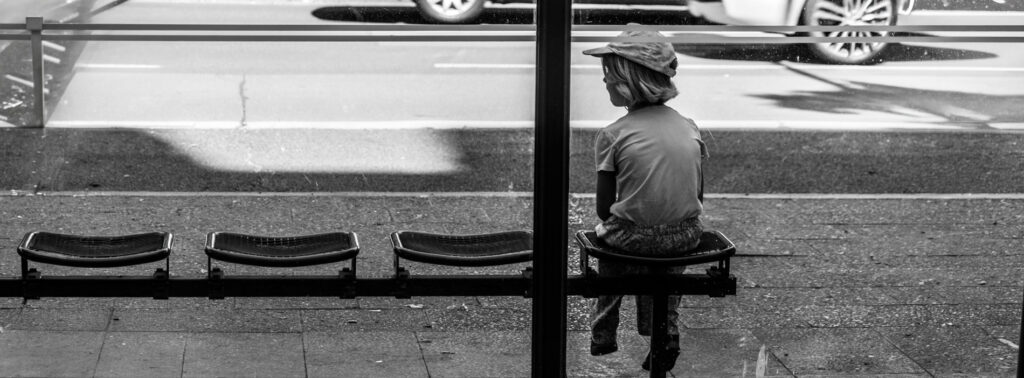
The numbers are hard to look at in Dublin’s Mountjoy Prison: 83% of inmates come from just five areas of the city; 90% are incarcerated for addiction-related offences. In the UK, the number of 18- to 20-year-old men receiving sentences longer than their age has more than doubled in five years. A 13-year-old was recently arrested for stabbing two teachers at a school.
These statistics are offered as context for the questions that ground this series. “How do we get here? How do we get here to this place where this is happening for men?” And, “What, if anything, can be done?”
Kevin, Stephen and Tony have spent years working with men who struggle. Between them, they bring decades of hard-won experience and the humility to say they have very few answers.
TONY: When they open their front door, there are people dealing. From seven, eight or nine years of age they’ve been groomed into gangs, groomed into the kind of lifestyle that says—if you do this, you can make a few bob. When they grow up, it’s their world. It’s a bit like the Matrix, because this lifestyle is so normal and natural for them. It’s the world that they grow up in.
Stephen recognizes the same pattern from working with young men in the north of Ireland, where the additional weight of conflict, colonialism and intergenerational poverty adds additional pressure.
STEPHEN: I was working with young people who had reached the stage where they needed to do this program or they were going to go to prison. During their final residential, everything expected kicked in like clockwork. On the first night—alcohol, drugs, fights. We came to realize this acting out was their way of staying in the program, because once it ended, they were back in their communities, and they no longer had the safe container of people who had their backs, who could see the possibility in them.
Tony shares another story that’s quietly devastating in its ordinariness. A young woman he worked with told him she was looking forward to Christmas Eve because that’s when she got to do cocaine with her granny.
TONY: For her, this was like the ad where someone puts the fairy on top of the Christmas tree. It was a really special event. That’s what Christmas was about. So I think we’ve lost a lot of our community, our connection. Where do we gather as communities? It used to be the Catholic Church; it used to be the pub. Where do we come together?
Kevin names what all Stephen and Tony are circling: The cauldron. Socioeconomic struggles, the breakdown of institutions, the absence of role models, and the ingrained belief “This is it. This is our lot. Don’t go getting notions about yourself.” The conditions were built long before any individual boy arrived in them… and yet Kevin, Stephen and Tony arrived in them too.
At 15, Tony was out of school and mopping floors in a supermarket. His parents were delighted. A job for life, they said. That was the expectation. He was the first person in his family, as far back as anyone could trace, to get a degree—and he did it at 34, in secret, terrified of being told he was getting ideas above his station. What changed the trajectory for Tony wasn’t a policy or a program. It was a man who saw something in him.
TONY: I’ve been really lucky to be around beautiful men all along my journey. When I was 15, one of the managers in the supermarket asked me, “Would you be interested in going?” I’ll pay you. It’s two days a week, and you go into the city.” And he got us out into the Wicklow Mountains, where we’d do some hiking or maybe some art. These were all alien experiences to me that had such an impact on me at such an early age.
KEVIN: I know what I’m up to isn’t great. And I find myself in a situation where it’s really difficult to do anything about it. And maybe just appealing to that, because if we can recognise our own potential… That’s why I’m chatting to you both. I recognize that you’re both men who really see the potential in others.
There is an inner compass, Tony says. Even in the middle of the worst of it, alone in the dark, there is a voice that knows. The question is whether anyone is there to help a young man listen to it.
TONY: Men are in pain. Women are in pain. Young people are in pain. And who do you turn to?
Late one night, Kevin found himself thinking about plants and about how when something in nature goes wrong, our instinct is always to look at the environment, the light, the temperature, the conditions. We never say, “That’s a bad plant.” When a yogurt goes off in the fridge, we never say, “That’s a bad yogurt.” It is only people we blame. It’s only people that we condemn first and ask questions about later, if at all.
Stephen reads to his groups from a children’s book—Edwardo, the Horriblest Boy in the Whole Wide World. The message is almost insultingly simple: if you tell a boy he is the worst, he will become it. What if we said something different?
The conversation doesn’t end with solutions. It ends with an intention to step up, each man in his own sphere, with whatever he has. A hand on a shoulder. A cup of tea. A hug that lasts long enough to matter.
Over a hundred years ago, an Irish priest named Father Edward J. Flanagan founded a home for homeless and at-risk boys in Omaha, Nebraska. His conviction, carved on his tomb, has stood the test of time. “There are no bad boys. There is only a bad environment, bad training, a bad example, and bad thinking.”
From the opening question, “How did we get here?” To the closing invitation, “What are you going to do about it?” This conversation ends as your engagement begins.
The Gifts of Trauma is a weekly podcast that features personal stories of trauma, transformation, healing, and the gifts revealed on the path to authenticity. Listen to the full conversation, and if you like it, please subscribe, rate, review, and share.
Editor’s Note: This post is comprised of edited excerpts drawn from The Gifts of Trauma podcast transcript. Selected passages have been carefully woven together to create a cohesive narrative that speaks in the guests’ voices and faithfully represents their perspectives. – Rosemary Davies-Janes