
Listen this episode here:
or here
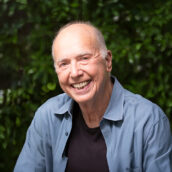
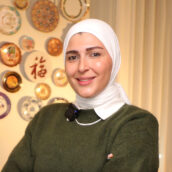
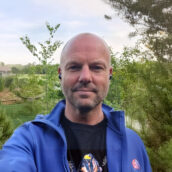
In this episode, Kevin is joined by James Gordon, MD, founder of the Center for Mind Body Medicine, whose teams have worked in Gaza, Kosovo, Syria, Bosnia, Northern Ireland and beyond, and Diana Garib, a clinical psychologist on the front-line in Beirut, recording live as conflict surrounds her.
Together they explore:
- What it looks like to show up for others when your own world is on fire
- How humanizing the other can become the first act of healing
- Why finding common ground—from shared grief to shared hummus—may be where peace actually begins
- What it means to transform helplessness into action
If you’ve ever wondered what grief sounds like when bombs are falling, drones are overhead and your six-year-old is playing war with his dinosaurs… It might sound like this conversation, which wanders —with warmth, humor, and hard-won wisdom—from grief to survival, from despair to agency, from the deeply personal to the global.
Episode transcript
00:00:00 Kevin
If you’re not a therapist or a healer, but you heard our guest describe the personal transformations they experienced during their Compassionate Inquiry journeys and wonder what might that be like for me? There is a program that is offered to anyone who wants to experience the power of Gabor Mate’s approach to trauma healing. I’m Kevin Young and I’ve been facilitating CI circles since 2022. I’ve seen people transform in many ways. I’ve seen people change beliefs, relationships. I’ve seen people change how they show up in the world. I have seen people literally change how they look in front of my very eyes. There are many, many ways that people change during Compassionate Inquiry Circles. Circles is a 10 week small group experience. Click the link in the show Notes. That’ll bring you to a webpage that gives you all you’ll need to figure out if this is for you.
Kevin:
So it seems to be a really confusing time, at a time where people are shutting down, or freezing or, I think and I’d love to get your thoughts on this, both of you or getting very angry, justifiably angry. And I wonder from a professional position, would you both talk about that idea? My favorite author, John O’Donoghue, talks about, “…the multitude of emotions that accrue there.” And I notice in me there is an anxiety about going to the United States. And I’m also conscious that… or curious, how is it there for you people? How are your Americans doing? How is it to be on the front line of the USA?
00:01:51 Dr Gordon
It’s quite disturbing right now.
00:01:53 Kevin
And Diana, then… Diana, I’m very conscious and aware that you’re sitting there on the front line, on the front line of this experience. Right now, in this moment, there are drones flying over your head. And I just want to treat that with the utmost reverence and respect. And maybe that same question for you then. How is it for you to show up right now? How is it for you to show up for yourself and others in the situation that you find yourself
Diana:
Brave came to my mind.
00:02:30 Rosemary
This is the Gifts of Trauma Podcast, stories of transformation and healing through Compassionate Inquiry.
00:02:47 Kevin
So welcome to the Gifts of Trauma Podcast from Compassionate Inquiry. I am Kevin Young. Delighted to be here. Quite often I start these conversations saying I’m very excited to be here, and I’m noticing that is true today, and there’s something else going on for me. I’m not sure what it is. I’m sure it’ll unfold as we go through our conversation just with the people that we have today, how these paths have aligned to have us all here today is really interesting. And I don’t know, I think it may be, it feels like a grief or a sadness present for me as well, maybe a heaviness just with how the world is right now. And I know that our guests today, Dr. James Gordon and Diana Gharib, will help me to lean into that a little bit. And I really hope that we can give ourselves the freedom to allow the conversation to unfold as it needs to unfold. So let me take time just to say hello and welcome you both. Dr. James Gordon, hello. Welcome. Thank you for coming on the podcast. How are you doing today?
00:03:55 Dr Gordon
Thank you. I’m doing very well. Just lots going on, as you might expect. And I seem to be rising to the occasion, which is good. As opposed to the alternatives.
00:04:07 Kevin
Yeah. And the alternative is a very scary thing right now these days, Dr. Gordon. If we don’t rise, then what do we do?
00:04:15 Dr Gordon
We tend to either go under or withdraw. And that’s a lot of what’s happening here in the United States. As I talk with people all over the country. That, so many people are feeling quite overwhelmed and very troubled by what our government is doing, most recently in Iran. But many of those people who are troubled by it, don’t quite know what to do. I was just talking with a colleague who was in Florida meeting with relatives who were retired military veterans, and I said, what were they saying about Iran? And she said to me, they weren’t talking about it at all. And she said, I brought it up gently. And they just shook their heads and ended the conversation. So I think a lot of what’s happening here in the United States, and I’m very interested in what’s happening elsewhere as well, is that there are some people who are very fired up in opposition. And I’m working with people on the streets, who’ve been on the streets in Minnesota these last couple of months and working with them. And there’s a very passionate commitment to dealing with the injustice of what the Immigration and Naturalization Service is doing there in ICE. But then other people, there are people in our country who, particularly Republicans in our Congress, who simply are going along with what President Trump is doing. And then there are other people who are just… they’re scared to do much of anything else. And then there are a whole lot of people who just don’t know what to do and who are, as I said, they’re either withdrawing, they’re numbing themselves to what’s happening, or they’re just feeling overwhelmed and depressed and down. That’s what I’m dealing with, and just try to work with people who are ready to wake up and to discover what they’re meant to be doing during this time. And that’s what our work is, here in the US and also we’re developing programs in Syria. I was just on a call with our team in Haiti, just looking for places where we can make a difference, where people are ready to make change. So it’s great to be with you here, and Northern Ireland is one of those places… I was thinking as I saw you, Kevin, I felt as soon as I went, I felt so much at home in Northern Ireland. It’s great. We did an initial workshop. Cory Amelia, which is this wonderful interdenominational group, brought me and a colleague there. And the first evening I did a workshop in a pub, of all places. So I was talking about trauma, and there were Irish musicians playing music and people were having Guinness stout. And it was a kind of… dealing with what has happened all these years and doing it in a very creative way. And so I enjoyed that. I also have enjoyed being in Lebanon in the past. And of course, Diana, you and your other countrymen, country women, are going through so much now, and so it’s good to be with you and to explore what… How we can be of help and what we can do in Lebanon together.
00:07:16 Diana
Yeah.
00:07:17 Kevin
Yeah. Thank you, Dr. Gordon. Maybe that’s a beautiful time to introduce Diana. So Diana is a colleague of mine, and Diana is a clinical psychologist based in Beirut in Lebanon. Diana, how are you doing?
00:07:32 Diana
Well at the moment, but focusing on what we’re saying. And part of me is just also circulating about what the environment is, also listening to the drone above my head right now just at the moment. So just trying to have a meta routine that is, that gives a sense of grounding during the day. And also, Dr. Gordon, when you said that there’s a lot of people that they don’t know what to do, what came up to me is, as I started doing sessions again recently after two days of freeze when the escalation started, many people feel helpless. You know, that’s what’s the thing that’s on the table. So many of the clients, they say, ‘We’re helpless. We don’t know how will this unfold, what we can do, and how we can just support ourselves or our loved one at the moment.’
00:08:27 Kevin
Thank you, Diana. For me as well. I was lucky enough to be in Lisbon last week with my youngest daughter. And apart from her stamina for retail therapy, one of the things that I noticed was, I know Diana well, and I have other colleagues that live in Dubai and other places around the Gulf States. And there I was, drinking beautiful Lisbon coffee and eating pastel Donatas, sitting at little cute street coffee shops with my youngest daughter. You know, there was a real… a sense of my privilege and my freedom to do that and a heavy heart that my friends and colleagues in the Gulf States and other places around the world, the USA as well. So it seems to be a really confusing time at a time where people are shutting down or freezing or, I think, and I’d love to get your thoughts on this, both of you, or getting very angry, justifiably angry. And I wonder from a professional position, would you both talk about that idea? My favorite author, John O’Donoghue, talks about; “…the multitude of emotions that accrue there.” Maybe we’ll come to you first. Dr. Gordon, in your experience, how do people respond? Talk to me about the gambit of emotions that goes on when you’re working with people in places like Beirut and Belfast.
00:09:51 Dr Gordon
I think what I’m hearing, I’m thinking of a colleague whom I’ve worked with in many places, including in Gaza over the years. She’s now a psychologist in Minnesota. And I said, “Margaret, what’s going on?” And she said, “We’re transforming the anger into action.” And that’s beautiful, where that’s possible. I think that it’s a question of recognizing and honoring all of the emotions and all of the feelings that are coming up, including the feelings of helplessness and hopelessness and saying, yes, those are there and doing our best. And my role is to help other people do their best. And also for myself, too, when I have those feelings, to sit with those feelings and then watch as if I can sit with them and with whatever sadness, grief, anger, helplessness comes up, then I can notice that those feelings can change. One of the things that you mentioned, is you spoke about compassion and Compassionate Inquiry. And what I was thinking of is our team in Gaza, we’ve been working extensively during these last two years of war. We’ve been working in Gaza now for 23 years, 24 years. And during this war, our team, which has grown to 70 people, Center for Mind Body Medicine staff in Gaza. And we’ve worked with close to 300,000 children and adults. And one of the things that people say who come to our program is, “I was in despair.” I’m thinking of women, mothers particularly, who’ve lost children or lost other family members, lost their homes, and the fact that there was somebody here who cared who understood what I’ve been through and who was there with me. That was the beginning of my coming back from their words, the edge of suicide. So I think what’s so important is to be with people when they’re going through this and for us to create us as therapists, physicians, community activists, to create opportunities for people to come together and share with each other what’s going on. Because as I’m sure, one of the things that happens when there’s trauma is we feel that we’re alone with it, no matter, even though we can see that so many other people have suffered similarly because of the sort of disruption, psychobiological disruption, we feel very alone. So to create that opportunity for people to feel that compassionate support is a real beginning. And then to give them the opportunity to explore, to give them tools to bring themselves back into physiological balance and to give people the opportunity to explore what is it that I need to do for me, and it’s going to be different for everyone. There may be some people who say, really what I need to do is just take care of my children right now. That’s crucial, and that’s why I’m still alive, basically, is to take care of the children, other people. And we’ve seen this everywhere, and including most dramatically over these last two years in Gaza, is, ‘I’m learning something that’s helping me. I want to help other people.’ And in that helping of other people, there’s the discovery of meaning and purpose as well as connection. So all those things, I think our job is to. But relax as best we can, to be aware of what’s happening in ourselves, to be present with ourselves and present with others. So you let us in a grounding exercise to begin with, that’s so we can just relax and be here with each other. So that’s the kind of way that I work, whether I’m in the middle of a war or consulting with people in Minnesota who are dealing with immigrants being taken away from their families.
00:13:48 Kevin
And Dr. Gordon, I want to come back to you in a moment. I want to talk about, if it’s not too intrusive, I want to talk about you, and just my impression of you that I’ve got from doing my little bit of research. But I’d love to come across to Diana. So, Diana, tell us a little bit more. Tell us a little bit more about your experience right now and the experience of the people that you’re interacting with.
00:14:08 Diana
Yeah, yeah. What I’m observing, Kevin, and Dr. Gordon, is that at the moment when it’s very heated. People are not so much directly connected to the anger, while more they are connected to the vigilance that they are in. They are very hypervigilant just to know what, what might happen next. When I hear the sound, will a car be bombed? Will something else? Would the food supply be shortage in a few. So the vigilance that people are now in, I think pushes towards rage over others. So I’ve noticed lately that also people starting to come into groups and maybe to… who’s to blame? Who’s to blame. So people are sometimes not connected to the anger directly or to the emotion and they try to put the rage on someone else which at the moment where the heat it is, and you just observe so common about people that they just want to attack. And Dr. Gordon, when you mentioned things about people in Gaza, because I had the opportunity to work with people in Gaza, and I do remember that one of the times with one of the clients and I just asked him, “How are these sessions good for you?” And he said, it’s only a space that someone can hear me with no judgment. I can share things that I might not feel comfortable to share with others. At that time during supervision, I was thinking, I wish he would tell me that these sessions are not good to him because it was loaded to me. So I was asking him, how good do you find these sessions? Are they of any benefit? And he said yes, “It’s only I come and talk and you listen.” And little by little… Also Dr. Gordon, they used to gather in the rest house where he was sitting with a lot of other families and they used to follow the news all the time. And then I asked him what could have, what could you do differently with the group? And there he said, maybe we can pray with each other. Maybe we can focus on, like reciting some of the maybe Koran verses and try to discuss our opinion about that. And like after one session, when he came after the session and he said how I was discussing how what happened, what have you tried of what you have mentioned? I said that the group have felt less heavy when they did this rather than just focusing on the news that just made them more helpless. So it’s very amazing how the group when they come together and focusing on what’s happening right now and getting more in touch about what their emotions and what’s just happening and discussing it and maybe shifting to other focus help to release the whole group.
00:16:55 Kevin
Thank you, Diana. Well, you know what I’m thinking of before I come back to you, Dr. Gordon? There’s a quote that I love, and it’s in a book called the Presence Process by Michael Brown. And the quote says, that, “The first consequence of a charged emotion is drama. And drama is reactive projection, physical, mental or emotional, that we use to gain attention from the outside world that we can’t yet give ourselves.” So when we think of people who are in these very heightened states that aren’t able to give attention to that themselves, of course they’re wanting to blame. They just want to put that into the outside world. And of course that’s understandable. But when we stand back a little bit, we can see how that might just beget more trouble, more difficulty, more situations that are inflamed. Dr. Gordon, I don’t want this to sound too flattering, but I want to… If it sounds flattering, you’re welcome to take that. But as I was reading a little bit about you and looking at The Center for Mind Body Medicine and we’ll have the website in the show notes, I’m not going to try to read it all because it would take me the whole podcast to read just about the work that you’re doing and the books that you’ve written and the help that you’re giving. But one thing I noticed I’m going to read a little, just a couple of sentences from a John O’Donoghue book and then I’d love to ask your opinion on it and Diana as well. The book that I’m going to read from is a little book called Divine Beauty by John O’Donoghue. Not that I’m a biased Irishman, but he is Irish and he says, “For Aquinas, beauty also included the notion of integrity, integritas. He understands that each thing is alive and on a journey to become fully itself. Integrity is achieved when there is a complete realization of whatever a thing is supposed to be.” And these two little lines here, “Integrity is the adequacy of a thing to itself. There is here a sense of achieved proportion between a thing and what it is called to be.” And as I looked at your work, Dr. Gordon, those few lines came to my mind in that there seems to be a humility, an integrity, a hands on approach about you and your work. And from a Compassionate Inquiry lens, Gabor talks about it. It’s not what we know or what we do, it’s who we are when we show up to support people. How does what I’ve just said land with you, Dr. Gordon?
00:19:34 Dr Gordon
Thank you. I’m touched by your description. I. I hope it’s true. I’m doing what I’m meant to do. Tears ago. We worked with New York city firefighters after 9 11. And you may remember 300 firefighters were killed. And they were. They happened to be all men. And the other firefighters regarded them as their brothers and they were terribly grief stricken by what happened. And we began working with him shortly after 9 11. And at first they’re very skeptical about our work. One of them, named Kevin Guy, who was a New York City Fire Department lieutenant from the Bronx. I don’t know if you know about the Bronx. He is one of the toughest, funniest, smartest human beings I’ve ever met. And when he first saw our work, doing the kinds of things that all three of us do, teaching meditation techniques, perhaps doing a little bit of stretching and yoga, mental imagery, he said, “What is this, some kind of chick flick?” But he became our greatest advocate for the program. He went completely through our training and began to teach other firefighters and their families what we had shared with him. Techniques of self awareness, self care and mutual support. Anyway, after six or eight months, we were sitting around one evening and he said to me, “Jim, I get it. I get who you are.” I said, his name happened to be Kevin. I said, “Kevin, who am I? He said, you’re just like us.” And I said, “That’s a great compliment because firefighters are incredibly brave.” And I said, “What do you mean?” He said, “You like to help people and you like to be where the action is.” And so I think that’s a pretty fair description. And that’s what I’d like to do. I like to help people, and I like to help people where the need is great. It feels good to me. And I also believe that everyone has a great capacity to better understand and care for themselves than most everybody realizes at first. And then we talk about being ourselves, fully ourselves, and when I am that, I feel quite content. So I’m glad it came comes across on our website, hopefully in my book Transforming Trauma, the Path to Hope and Healing, which is really all about the subject we’re talking about, that’s me. And where I’m not authentic, I’m in pain. So I have to say, okay, gotta get back on track because somehow I violated myself in some way, either by being impolite or unkind, inattentive or whatever I’ve done.
00:22:21 Kevin
Oh, thank you. I just like that phrase, Dr. Gordon, when I’m inauthentic, I’m in pain. That’s a beautiful phrase. And of course that pain is a somatic experience. So it is our body that tells us that we’re being inauthentic. There’s a pain in there. And Diana, then, Diana, I’m very conscious and aware that you’re sitting there on the front line, on the front line of this experience right now, in this moment, there are drones flying over your head. And I just want to treat that with the utmost reverence and respect. And maybe that same question for you then. How is it for you to show up right now? How is it for you to show up for yourself and others in the situation that you find yourself?
00:23:04 Diana
Brave came to my mind because just showing up, Kevin, I could have not shown up, okay? I could have decided just to just stay wherever I am with my kid and just staying together. But I decided that I need to stand up. It’s the word Sumud that we always resort to, sumud in Arabic. It’s just to stand up with the root. And like few years ago, that my calling was just to give space to people and to psycho educate my community about different things that have been going on. I speak out to myself. It has been four generations since my grandmother have moved from. In 1948, walking from Safad to Lebanon. And then my mother had all the war she have witnessed, Brian, and now my kids. So we are four different generations of women witnessing war all over. So, yeah, this power that gives me to just be brave and to show up and to do this work and to have a voice.
00:24:12 Kevin
I see you smile as you do that. You say that, Diana. To have a voice that seems to be something that touches you. Diana, your Internet is a little bit sticky. And maybe if that happens again, I might say to you, might invite you just to knock your camera off and we will still have your voice. Something else that I wanted to do in this conversation is make it a conversation. I’m noticing that at the moment, given that I sit in this seat, which is called the host seat, Right? For now, conversation is moving through me and I would like to step aside and make it so that the conversation can move between Dr. Gordon and Diana directly. I’m curious, are there any questions that you have for each other?
00:24:50 Dr Gordon
Well, I have to reflect. You were saying that the drone was flying overhead and I just wanted you perhaps to talk more about what it’s like, even when there is not an explosion near you. I’ve been in Gaza when there have been Israeli planes flying overhead and bombs falling somewhere away. And the drones now create a whole other, I think, climate of fear. So I’d just like to hear what’s happening to you and how you’re dealing with it and how other people are dealing with it.
00:25:21 Diana
At the beginning, it was. We were very vigilant about the sound, about the noise of the drone. And as the time passed, it became part of our daily experience. And now we… This is. I said we. It came from the humor that we use in Compulsion Inquiry. We just keep on using all the cursing words that are funny to the drone. And we have names to the drone. We named the drone so many names, and we just make fun out of it that it’s now it’s above our head. And sometimes you just go. And we say, “Hi. You see us, we’re there.” So it’s also amazing how the brain tries to accustom and try to just have this kind of keeps you going, this resilient part. So at the moment, while I’m sitting here, I can hear it, but at the same time, I got myself or my brain have been used that I can focus on somewhere else.
00:26:15 Dr Gordon
What kind of funny words do you use? I’d love to hear them. And you can translate from the Arabic to the English. So Kevin and I get it.
00:26:23 Diana
But they are a bit out of the margin.
00:26:27 Kevin
Swear words. Swear words are good. Swear words are good.
00:26:30 Diana
We use the word. It’s like a prostitute. So in Arabic, we say sharmouta.
00:26:37 Dr Gordon
Okay.
00:26:38 Diana
Sometimes we call it. We call it like, I don’t know, like the mother of someone. So we get all the words that just. We are swearing, we’re cursing at it. Maybe it’s in the unconscious. It gives us a bit of power that we’re just cursing. That we can curse, at least.
00:26:55 Dr Gordon
Yes, what’s the way forward that you see psychologically and socially and politically in Lebanon now? How do you… In the midst of this latest Israeli invasion and the conflict with Hezbollah, what’s next?
00:27:10 Diana
Yeah, and I think that what’s next is very important. Like right now, I think what’s most important, just to be grounded till the wave just comes to an end, maybe. Because I think a little thing to do just right now, it’s only what we’re doing. We’re trying to support, keep space and be grounded with all the maybe breathing techniques, doing some somatic work, because this kind of emotional regulation is all what we need right now. But later, it’s where the trauma will start to embed and to show up and to unveil. And I guess also, Dr. Gordon, when I looked at your work, which is amazing, because I saw that the biopsychosocial approach were needed in trauma because we can’t only focus on the narrative, but also on the emotion, also on the body, also on the support of the communal people. So how those people can come together and how can these stories come to like a unity and emotions, maybe mixed emotions, cocktail of emotions can be experienced. And also maybe my bias to Compassionate Inquiry also mentions that like in Compassionate Inquiry, I just wrote something when you were talking about integrity and realization. I worked a lot with victim of torture in different prisons around the MENA region. And the resistance that was first with these men and women is that we can’t get fixed. And at the moment, even myself, I dropped the idea that they need to be fixed because they’re not broken. Dr. Gabor always talks about the essence which is not broken. When I was able to see behind that trauma that the person is carrying and just to see the essence of those people, it started to unfold and it started healing, started to house its rays. So I think what we need is a lot of compassion coming together, finding maybe common language, naming things, sometimes just people. They need to be named. What’s happening with me?
00:29:16 Dr Gordon
Yeah, that’s very important. One of the things that I’m wondering is about the possibility in many places, including here in the United States, of bringing together people who have political disagreements with each other. That seems to me so… In this country it’s clear that it’s vitally important in Israel, our Israeli team is working with Israeli Jews and also with Palestinians, and they’re doing their best to work jointly with them. And I’m wondering what the prospects are in Lebanon. How are people reacting to what’s happening now? And is there a path for coming together in the future, bridging some of these gaps that have been there for so long?
00:29:59 Diana
It’s quite difficult in Lebanon because in Lebanon we are so much. Lebanon is based on sectarism. I always say, unfortunately, we don’t have a belonging to the country. For most Lebanese, the belonging is to the sect because each sect believes that can’t be protected unless its leader is protecting the sect and for things to be different. We need to start by finding a ground social language which we have in common between all these sects. Because we’ve been living in this country for many years and we share many things and these can start to be maybe with the food that we share. We all do tabouleh, we all do hummus, we all do the Dabke dance. So why don’t we start from there?
00:30:44 Dr Gordon
Yeah, beautiful. The other place that I’m hoping, in a way, we’re talking about the gifts of trauma is that potentially one of the gifts is it begins to break down some of those barriers and we begin to become more open to commonalities, including the commonality of our suffering. During this time, everybody doesn’t matter what sect in, as far as I can tell, in Lebanon, you’re still being bombed. I see that as a lot of my work, the Center for Mind Body Medicine’s work is helping people emerge from the common trauma to see other commonalities with each other.
00:31:23 Kevin
One of the things when I was having this conversation just last night with my partner and one of the issues that I see in Ireland, in the north of Ireland is, and I’m not sure which is horse and which is cart, but there seems to be an inability for others to recognize the suffering of others, to be able to look over the fence or over the border and say, wow, that must be really difficult for you to have gone through that as it is for us. And I think there’s a magical thing can happen when people can start to do that. People can commune and come together and say, ‘I can see that what has happened for you has been really painful. And for the other to say, and I can see what has happened for you is really painful.’ For me, that’s a magic spot. And I don’t know whether we need to heal before we can do that or whether we need to do that before we can heal.
00:32:16 Dr Gordon
Yeah, it’s a good question. I’ll tell you a sort of funny thing that happened early in their work in Gaza. This is about 20 years ago. I was leading a training and in our trainings we have a large group of people we train and then we have small groups. So the training went on for five days. Maybe there were 120 people in the training. And I was working with a small group of leaders in Gaza in health and mental health and public health and also some people who were just workers in that situation. And in my group there was a guy who was very angry. He was a nurse, Abdul Hamid by name. And he was just. You could almost see the steam coming out of his ears. There was another guy in our group who was one of the leaders in public health. And on about the third day of the training, Abdul Hamid turned to him and he said, “I’ve seen you on television, I’ve heard you talking publicly. I always thought you were an arrogant…” And then he was a bit obscene. And what he had to say, he said, “But I’ve been in this group for you for three days. And Dr. Gordon’s not letting us argue. He’s just telling us to talk about ourselves. And so I’m listening to you, and I see you’re actually a human being. You’re not so bad.” And he said, and that leads me to believe that it’s just possible that Israelis may also be human. And I tell the story because it was such a wonderful moment. Abdel Hamid became a member of our faculty. Sadly, he’s been killed in this most recent war. But that possibility is there, and I think we need to be aware of that possibility. The way we work at the Center for Mind Body Medicine is that possibility emerges in the process of healing. For example, we have had, in a more recent training, which we did online, we had women from Iran who were working with women and girls who’d been imprisoned or otherwise persecuted. And we had an ultra Orthodox rabbi from Jerusalem. And then we had people from all over the other people from all over the world. And there was a kind of marveling at the humanity of the other. The rabbi said, I never thought I’d be in the same room with Iranian women. No observant covered Iranian women. And the Iranian women, we never thought we’d be with you either. So to me, I think as early as we can in all of our work, if we can create the opportunity for people to come together to deal with common problems, then there is the possibility of developing that common understanding, as you’re saying, Kevin, of each other’s suffering and humanity right from the beginning. And it’s very healing to be doing that wherever it’s possible. We have people, they come to our work not because they want to be friends with each other, but because they want to learn what we have to teach. We did a training in Israel some years ago helping people develop programs of integrative cancer care, which is something we’ve done in the US and the Palestinians from the west bank and the Israelis put up with each other initially because they wanted to learn what we had to teach. But then in the small group experience, they actually came to connect with each other, often in a pretty deep way. So I think that this should be, wherever possible, part of our work from the beginning.
00:35:39 Kevin
And that kind of leads me back to a little bit that Diana was chatting earlier, that when we can humanize the other, there’s much less chance of us traumatizing the other, when we can join together like that. Dr. Gordon, I’d love you to chat a little bit. I was again reading about you and the program that you run, and one of your colleagues was saying, the beautiful thing about this program is we can drop it into multiple places and different times and different people. And I heard you ask Diana what’s next. So I’m conscious of this question and I don’t want to again, conscious of where Diana is and what would you do? So if someone invited you in the next few weeks to go to either the south of Lebanon or into Iran, what would your thoughts be on that? How would that look?
00:36:29 Dr Gordon
I mentioned this, I think at the beginning I’m doing a workshop for people in Lebanon on March 31st. So that often right now, for reasons including difficulty traveling to the region and also accessibility, we begin remote, giving people an experience of what we have to offer and then seeing what the level of interest is. So the way we work and we can talk a little bit about because we’re beginning. I don’t know how we will work eventually in Iran. I’d love to go to Iran. We’ve trained 180 people within Iran or in the Iranian diaspora who are working with Farsi speaking people in Iran and around the world. And I’m hopeful that at some point we’ll be able to go. I’m told now’s not the time, so I have to wait till the time is appropriate. We’re going to go as soon as we get funding. We began in Syria with one person who connected with another person, a wonderful, fabulous sort of humanitarian worker named Shalier Shilier, that’s her first name. And she came through our training remotely. She loved it. So I said, okay, we’ll give scholarships to 10 people. Bring 10 of your best colleagues from around Syria. So they came through our training program and now we’re working with her and with a Dr. Mohammad Khalil, who’s a well known consultant. And we’re hoping to develop a whole program. Now we were originally going to do the training perhaps in northeast Syria, so we can’t do it there now because it’s too conflicted. So we’ll do the training in Damascus and what will happen is Shilier and Mohammed and the other people who’ve come through our training will select people from all over Syria who are interested in, and are in a position to make use of our work in hospitals, clinics, schools, et cetera. And we will train. Hopefully, if we have funding, which we hope to get, we’ll begin by training 100 people and then we’ll provide ongoing mentorship and supervision as they take our work back out into their institutions, whether it’s the military, the prison system, the healthcare system, the educational system. And our work is done with local people. We don’t have any expenses. I go visit and I lead the training, but I don’t stay there. We rely on local people to lead our work. Everywhere we go. Quite often it becomes sustainable. Our programs in Israel and Gaza have both been going on for 24 years. So it’s happening. And the leaders of the programs are fabulous. And the programs grow and reach into the major institutions. And by the way, those teams are in contact, the Israeli Palestinian team, not always, but whenever it’s possible. So that’s the way we begin. And I go as soon as possible. The model really for our work was, after being in Bosnia and working after the war in Bosnia, it became clear to me, but at the time to work is when the war begins. So as soon as the war in Kosovo began in 1998, a colleague and I went into Kosovo. We began to meet people, to do workshops, to meet leadership of the monitors for the Organization of Security and Cooperation in Europe from the Mother Teresa Society who are providing the primary care. And we began to work. And then that was the beginning. And ultimately we worked during the NATO bombing in Macedonia, came back in as soon as the NATO bombing was over. And that work in Kosovo has been going since 1999, and the team there, and there are people still doing our work throughout Kosovo. So I think the crucial thing is to find partners who are interested in what we have to offer and then to work with them to reach out more widely and to find funding. And we do most of the work finding funding back here in the US, we depend on our international team to lead the programs wherever we are.
00:40:43 Diana
I wanted to share something that came up to me about how to find a common ground between people and how they can open to the, maybe, to the pain of others. There’s an essay for Imam Ali, which is a very respected and hysterian person for all Muslims and Christians as well in the Arab region, where he says that people are of two kinds, either your brother in faith or your equal in humanity. So I think this base of knowledge can be embedded here in Lebanon. It would be a very common ground where to start, because we are brothers, either in faith or in just being human with one another. And I think this can be a lens of an open eye to look at people from our common sufferings rather than who’s to blame or to put people just in very close dogmatic circles.
00:41:38 Dr Gordon
Beautiful. Absolutely. Yeah. We work in Gaza, for example. You need people who have that vision like you to make it happen. The leaders of our teams have that vision everywhere we work. That’s part of being fully human, I believe, is to not to be sectarian is to transcend. And so that’s the beginning. If you have that idea, you can draw other people who share that and then reach out, reach out. So in Gaza, we’ve worked with Fata, we’ve worked with Hamas, we’ve worked with people who can’t stand either one. That’s okay. We’re doing our work with them. So that’s beautiful what you’re saying. And I think that’s the basis for making it happen. And hopefully in Syria, Shalier, for example, is committed to working with Alawites, to working with Muslims, to working with Christians, to working with the Armenians, with whoever’s there.
00:42:33 Diana
And I’d like to add one thing also, because this is. It’s a base of how I show. It’s funny for me that when I work with any person, he thinks that I’m in the same group as he is.
00:42:45 Kevin
I can sense myself here, I’m being playful. I can sense myself here sitting like Cupid matchmaker, looking at Diana and Dr. Gordon thinking, this is a relationship that I would like to see develop and grow. But that’s none of my business. Dr. Gordon, I would love you if you’re willing to, and if you’re not, that’s okay as well. You talk about your work and your program and the people that you work with, and would you be willing to lean into a little bit of what that work actually looks like? So what happens? What goes on? I’ve heard you mention about movement and dance and meditation. Can you talk a little bit about the nuts and bolts of the work?
00:43:22 Dr Gordon
Absolutely. What we do, the basic premise is you cannot help other people to take care of themselves and to better understand themselves unless you’re doing that for yourself, and unless you’re continuing to do it. Because it’s not like a gallbladder surgery, which basically you have to learn under the… You may be able, and it has happened occasionally on ships, to take out your own gallbladder, but you can only do that once. You have to be very skillful and very lucky, but with self care, you have to learn yourself, and then you share it with others. In our training, we teach people and we give them the experience of what we hope they will in turn share with all those whom they serve. And when we do our training, we do it both in a large group and then we do it in small groups. So if there are 100 people in a training, there are 10 small groups. And we teach a variety, 16 self care techniques. My most recent book is called Transforming Trauma: The Path to Hope and Healing. People can read these techniques and other techniques, they are in detail in the book. But basically we teach the techniques and then we teach the science. Or at the same time we teach the science behind the techniques. Why does it slow deep breathing with the belly soft and relaxed work? Because it stimulates the vagus nerve, which is the antidote to the fight or flight response, decreases fear and anger in the amygdala, enhances activity, decision making and self awareness and compassion that are centered in the frontal cortex. But more detail, but that kind of scientific explanation. So we begin with techniques that bring people into biological and psychological balance. The slow deep breathing, a little bit like the grounding technique that you were teaching to us at the beginning of this session, we teach that right away. And then we also very quickly in our training program, we get people up, shaking and dancing, shaking for five or six minutes to fast drumming music to open up those bodies that are shut down, they’re frozen when we’re traumatized or even just to give energy to people who are depleted. And a couple of minutes of mindfulness and observation and then a few minutes of music that gets people expressing themselves and feeling the energy. And in Gaza we usually use this Dobka music. So we use, in other places… I play Bob Marley’s Three Little Birds. All music that’s appropriate for whatever place. So we begin with those. Then people go into their first small group. And in the small group begins with an explanation of what the ground rules are of the small group. Confidentiality, no interrupting, no analyzing, no interpreting. Just everybody is there to learn for themselves. People speak in turn. The leader is both the leader of the group and makes sure that everybody has a chance to speak. And the group begins and ends on time. And the techniques are taught. But also the leader participates. So if I’m leading the group and I’m teaching shaking and dancing in the group, I get up and shake and dance with everybody. We’re all in this together. Then we do an opening meditation, a few minutes of soft belly breathing. Then we do a check in. And the check in is, who are you? Why are you here? What would you like to get out of this experience? And how are you feeling right now? We’re always helping people come back to what’s going on in the moment. Because if you’re in that relaxed moment to moment awareness that characterizes meditation, the past loses its grip on you and you’re not so preoccupied with the future and you’re in balance. So we go around and maybe go around twice as people share. Then we teach technique. In the first group, we have people do three drawings. Draw yourself with your biggest problem and draw yourself with your problem solved. So that gets people out of the sort of rational, verbal way of dealing with the world and into something that’s more right brain, if you will, more intuitive, more imaginative. And almost everybody’s self conscious about their drawings. Not everybody, but I can’t draw. That’s okay. I can’t draw either. So do whatever you can stick figure, abstract or representational. Everybody does those drawings. And in those drawings it helps them identify what the biggest problem is, which may or may not be what they thought 20 minutes earlier was their biggest problem. And then it helps them imagine a solution to the problem. And then everybody shares their drawing in that first group and some they share in the second group as well. And that gets people knowing each other, gets them over the self consciousness quite a bit, and gets them seeing the similarities as well as the differences in the drawing. So that’s just the first group. Every group unfolds in a similar way. We teach a different technique or set of techniques. In the second group, we teach biofeedback and autogenic training. Autogenic training are phrases that mobilize the parasympathetic nervous system to bring us into balance, that are kind of antidotes to fight or flight. My arms are warm and heavy. I am at peace. And biofeedback, we use very simple, inexpensive devices to measure temperature in the hand. When we’re under stress, our hands tend to be cold. As we become more relaxed, our hands warm up. So what people do is they do the autogenic. They look at their bio dots that measure the temperature according to the color of the biodot. It’s brown if you’re cold, gets green and blue and purple as it gets warmer. They look at it before they do the autogenic training. Then they do the autogenic training. Six phrases we repeat six times. And afterwards they look at the biodot again and almost always it’s changed color. So they see this is a concrete demonstration. This is not theory, not even scientific studies. It’s your experience that you’re able to change your temperature, you’re able to relax. So right from the beginning, what we’re teaching people is you have the capacity to make a difference in how you feel. In fact, everyone can do it. If you can’t do it the first time, you’ll likely do it the second time. And then once you are in a more relaxed state. You can use your imagination to explore possibilities for yourself. Those are the themes essentially during the course of a training. We have eight two hour groups and then we have lectures on before we use mental imagery in a group, there’ll be a lecture in the large group on the sort of science of imagery and they’ll do a basic imagery technique. And that’s the way it goes throughout four or five days of training. And then we have an advanced training. Once people have come through this, a four or five day experience. In the advanced training, the participants in the initial training are the ones who lead the groups. We do some coaching and then we say, okay, it’s your turn. Diana and Kevin, you’re going to lead the group on guided imagery. You’re going to teach the science, you’re going to lead the exercises. And then you get feedback from the other members of the group and from your faculty member. And then after that we provide ongoing mentorship and supervision. So you’re taking your work back out to Lebanon or Northern Ireland, and you’re working. Maybe you’re working in a school or maybe you’re working in a hospital or with a women’s center. And every week you might meet with one of our international supervisors. We have fabulous supervisors in Ireland, as it happens, we have Arabic speaking supervisors if you don’t happen to speak English, and you meet with them and you talk about how it’s going and they’re there to help you bring your work out into your community. So that’s how our program operates.
00:51:17 Kevin
It sounds like a beautifully experiential training. I looked and I’ve looked at the dates for your training as well. It sounded very interesting. I’m thinking, Diana, should we do it? Should we do it together?
00:51:30 Dr Gordon
Please do it, do it. Come.
00:51:33 Kevin
Yeah, that might happen. I did look and it’s all on your website, which again which will be on the show notes. And I would really encourage people who are doing this type of work, anyone looking after people really is. It seems to be that that work would be really beneficial for, and really useful for.
00:51:48 Dr Gordon
And we can give, Kevin, we can give some scholarships, at least generous partial scholarships to people who are doing the work with communities that really need it where they don’t have the financial resources. We want to bring people who really need what we have to offer and we want to develop programs. So please, you two come, invite your listeners, viewers to come as well.
00:52:09 Diana
And what took my attention when Dr. Gordon mentioned that it starts with how we experience this work and like in Compulsionate Inquiry like when we start with the one year long training, we have to start by working on ourselves through ourselves. So the experience is on ourself to start with. And what came up to me, Dr. Gordon, when you’re saying it’s too much experiential, that it brings up agency to have a corrective experience to what we carry on and from there, which has parallel with when you come together with the compulsion inquiry, it’s about how we can have a responsibility after having this corrective experience now, like, we have more an ability to choose how to respond than just being reactive and being just in the loop of what we carry.
00:52:58 J’aime
If you’re listening right now and wishing that this platform could be available for you to share with the world the unexpected ways that the Compassionate Inquiry approach is helping you bring more connection, healing and authenticity into your clients lives. We’ve got a really exciting offer for you, so stay with us and then we’ll be right back.
00:53:19 Kevin
Many of you are certified Compassionate Inquiry practitioners and Compassionate Inquiry trained community members, bringing this work into the world in beautiful, unique ways. If you’re interested in expanding your practice, The Gifts of Trauma Podcast is now offering spotlight episodes and sponsor opportunities exclusively to members of the Compassionate Inquiry community. Spotlight episodes are full length interviews. Sponsors receive a custom scripted promotional message that airs across multiple episodes plus hosts, mentions and show notes. Placements with links to your website and special offers. Both gain exposure to our internal audience of 55,000 people across all Compassionate Inquiry platforms. Platforms. This is Compassionate Inquiry promoting its own amplifying voices that genuinely embody the approach. These opportunities are limited to 10 per year and production realities require a financial contribution. Follow the links in the show notes to access details and express your interest.
Yeah, I would encourage a lot of people to look at the website. It really does look for me. I’m not sure what you’re thinking, Diana. For me as a Compassionate Inquiry person, this really looks like it would go hand in hand with Compassionate Inquiry.
00:54:36 Dr Gordon
Yeah, it fits extremely well, I think. Yeah, it’s great.
00:54:40 Kevin
Diana, can I check in with you as well? Just now, again, conscious of where you are and as I watch you listening to Dr. Gordon, I almost see a lightness. And again, I don’t want to be disingenuous because I am not in Beirut, but there almost seems to be a lightness about your face. You’re smiling. How are you doing in this moment?
00:54:58 Diana
I’m happy, Kevin, to be here. And I also thought I’m blessed to have none, Kevin, because I was keeping an eye on myself while having an eye on the conversation and I thought that. I feel like I’m relieved. As Dr. Gordon was saying, I’m just here, I’m not anticipating what’s going to happen because they have given a lot of warning signs and notices that we’ll be bombed soon. And I’m not really thinking about what has happened early today with the bombs and how I noticed my 6 years old child playing Israel and Iran and Hezbollah. He was playing with his toys. He was putting all the dinosaurs and he was playing Israel, Iran and Hezbollah. This is what he was playing. So I’m just here and enjoying the moment. So thank you, Kevin.
00:55:46 Kevin
Diana, thank you. And Dr. Gordon, thank you. There is something about what you both described earlier. That idea of communing and community and when we come together and when we see and hear each other, how healing that is to just be in a space where you’re seen and heard with non judgment, compassion, presence. It’s a very beautiful experience. I’m also conscious that we brought Dr. Gordon and Diana, here, to talk about grief. Sometimes I’m thinking, sometimes when people go for a psychedelic experience, they have an intention and they want to go into that psychedelic experience to… teach me about my fear or help me release my anger and they get a totally opposite experience. And I’m thinking we came here to talk about grief, and we seem to have spoken about the pathway out of grief. Would that be true for you? As I recognize that in me?
00:56:41 Dr Gordon
My experience with psychedelics is whatever I come in with is not of such great importance. What’s important is what they have decided, what the medicine has decided in its wisdom to teach me. I’m open to… the shift is fine with me.
00:57:00 Kevin
Maybe I could… have another question. It’s a bit of a right angle. I agree. And then we’ll maybe begin our descent as the captain of the airplane says. I notice in me, Dr. Gordon, that over the last few years I’ve traveled quite a bit. I’ve been in South America quite a lot. I’ve been in Eastern Europe, other parts of Europe. I’ve been to India, I’ve traveled quite a lot. And next month I’m going to the States. And I’ve only had a couple of fleeting visits in the States, lots and lots of years ago. And I notice in me there is an anxiety about going to the United States. And I’m also conscious, or are curious, how is it there for you people? How are your Americans doing? How is it to be on the front line of the usa?
00:57:44 Dr Gordon
It’s quite disturbing right now. I think we’re not in a good place as a country, that there is so much fear, so much intimidation that’s coming from the Trump administration, so much division politically, socially, ethnically. I was thinking, Kevin, how friendly Northern Ireland was, and it feels, I don’t feel most of the United States is that friendly right now to visitors or to each other, for that matter. So it’s a difficult time. And I think that it’s a time when I’m looking to reach out, and I think it’s important and it’ll be interesting. Where are you going in the States?
00:58:22 Kevin
I’m going to Arizona and just spending a lot of time around. I’m going to do a meditation retreat just outside Tucson and we’ll spend a couple of weeks either side of the retreat, touring and traveling.
00:58:34 Dr Gordon
Yeah. Good. And what group do you work with in Tucson? What’s the meditation group?
00:58:39 Kevin
It’s actually a gentleman called Harper Kaish Kalsa. He is Sat Dharam’s husband. Sa Dhairam is the head of Compassionate Inquiry, and he teaches a meditation in the style under the teachings of Xin Zhen Yang. So in a Zen type of meditation.
00:58:54 Dr Gordon
Well, I think in those kinds of groups, that’s where those are places, sort of oases of peace here in the United States, those groups of people who are coming together for meditation. I was recently in a psychedelic retreat with US Veterans who were deeply traumatized, often by combat. And it was beautiful, people coming together. Most of the staff were also veterans and they were helping each other. There are those communities of people who are coming together. So much of Minneapolis and St. Paul, you might be interested if you have time to go there, people are coming together. So where that’s happening, that’s beautiful and that’s hopeful, and that’s a place where you would feel some kind of peace and some kind of hopeful energy for moving ahead. Other parts of the country, people are bogged down right now. So I’m always looking for places where there is the possibility or the openness to change, and those are the communities that I’m most connected with.
00:59:53 Kevin
Yeah. Thank you. And is that, Dr. Gordon, this is a big question and I’ve asked a few of my guests this. How did we get here? When you’re talking about the United States, a lot of places not being very friendly, very xenophobic, certainly homophobic. Is that a response to trauma? How did you get there?
01:00:14 Dr Gordon
That’s a good question. Any answer I have is going to be very incomplete. I think we never adequately healed the wounds of our civil war. That’s part of it. That’s 160 years ago. So thinking of Belfast, Northern Ireland, it’s not surprising that everything had not healed still, but we never adequately addressed it. The hopeful movement in our country, to me, which I was part of, was civil rights movement in the 1950s, 60s, and that was a place of a group of people who were committed to nonviolent resistance and committed to seeing everyone as potentially brothers and sisters. The spirit of that movement dissipated, sadly, and became divided up into different segments. There’s also so much economic inequity in our society that economic inequity has been exploited. It’s obviously exploited by the ultra rich who control much too much, control too much of our whole political life. And it’s also exploited by people who are saying it’s the elite that are responsible. It’s the people who. Not the ultra rich, but the sort of the globalists, the internationalists. All those people whom we have to be wary of, whether they’re Jews or gay or Muslim, or whatever they are. All those people who think the world is in some sense we have to be part of the whole world rather than just connected to America. All those people who challenge our idealized vision of who we are. So that hate has been very cleverly and fiendishly, if you will, mobilized. And that’s something that we’re…. And of course the Internet has contributed, and particularly the sort of way that algorithms are used to reinforce people’s prejudices. And now there is a general generalizing look, but there’s an anti intellectualism and kind of revulsion and critical thinking, when critical thinking is what makes it possible, makes it possible for us to think clearly about our situation. And many parts of the country, people are saying, no, you shouldn’t do that. You shouldn’t be exposed to these other points of view. And that’s also happened on the left too. It’s happened on the left as well. We don’t want to hear those speakers. When I was in college, I wanted to hear them all. I wanted to hear the people I disagreed with as well as the ones who I agreed with. I wanted to learn something. We’ve lost some of that which is the best of our liberal democracy, which is that openness to different opinions and different ways of being. So mine is not a very crisp analysis. It’s kind of impressionistic, of what’s going on. My question is what to do, and how to bring back that sense of curiosity, that sense of community, of reaching out to other people. I grew up in New York City and Lenny Bruce, I don’t know if you know his name. Lenny Bruce was the great iconoclastic, obscene comedian of the 1950s. He’s the sort of grandfather of all the shocking comedians of our day. Lenny Bruce said everybody in New York is Jewish. And he was right, in a sense. He couldn’t have said everybody in New York is Puerto Rican or everybody in New York is black. There’s a kind of common language that we had back in the day, not that there weren’t difficulties and divisions. We’ve lost that appreciation of a common language. Incidentally, I think Mandani in New York City is bringing back, a Muslim, is bringing back that hope for a common language. He went to an elite New York City public school where all the smart kids from all the different ethnic groups gather together. And so he’s bringing that spirit out, and we need more of that. It’s going to be different in different parts of our country, but we need people who have that appreciation for the value of difference, also people with a sense of humor, which he has. People who like to have fun and like to play games, who like to use their mind. I think we’ve lost the kind of enjoyment of a full life of being fully human. And we’ve gotten too… People have gotten too stuck into very narrow definitions of what it means to be human and what it means to be. I’m just part of this group, and I have this point of view. No, that’s a dead end. So we need, all of us, we need to get together. We need to bring that to our cultures, and we need to bring it to each other’s cultures.
01:04:39 Kevin
Thank you, Dr. Gordon. Yeah, I really appreciate your thoughts on that. And I think it was maybe Aquinas who said the point of debate isn’t to win, the point of debate is to grow. Was that Aquinas said that. And we definitely have it. We’ve lost of that. We don’t listen to others. And when I think of where Diana is sitting today and where I am sitting today, this ability to listen and relate and commune seems to be missing. And I really hope that the work that we’re all doing can make a difference. As we come to the end, I’m very conscious of our time. There’s a question that I often ask my guests, and you don’t know this question, so you’re being asked it completely off the cuff. So please take time to have a think and answer. And I’m going to go to Diana first. And that means you have less time to think. Diana, I’m sorry. The question is, if you had the ear of humanity and could whisper a few words into the ear of humanity, what would you whisper?
01:05:35 Diana
I would whisper, faith.
01:05:38 Kevin
Faith.
01:05:39 Diana
Yeah. And also, if I want to zoom into faith, there’s a word in Arabic called tawakkul, which means to have a full lean on a higher power.
01:05:54 Kevin
Okay, thank you. I really appreciate it. Say the word again in Arabic for me, please, Diana.
Diana: Tawakkuk
Kevin:
I won’t even attempt to repeat that because I will do it an injustice. Thank you, Diana. I really appreciate that. Lean into the faith of a higher power. Thank you. And Dr. Gordon.
01:06:14 Dr Gordon
Well, you’ve given me time to think, but I keep having lyrics from songs come into my mind. Popular song, “Smile on your brother. Smile on your sister.” I’d whisper something like that. And then Bob Dylan, “Don’t follow leaders, watch your parking meters.”
01:06:31 Kevin
They’re great answers.
01:06:33 Dr Gordon
And then the Rolling Stones, “You can’t always get what you want. But [ if you try sometime. You’ll find] you get what you need.” And also quote from. There was a famous American professional football player named John Riggins. Very big fullback, totally outrageous. He was at a big fancy. I don’t remember which. Dinner with Sandra Day O’Connor, who was a wonderful Supreme Court justice. And Riggins got drunk, and as he was sliding under the table and Sandra O’Connor was a bit taken aback, he looked up at her and he said, “Lighten up, Sandy baby.” So we all need to lighten up a little. We need. And that means both let our light shine and also have a little sense of humor about ourselves. To all those things. I’m whispering a lot. I’m taking more time. More here than you perhaps expected.
01:07:23 Kevin
You’re the elder in the group, Dr. Gordon, so you get to have that privilege of whispering a little bit more. So I really appreciate that. Maybe we could land our conversation here. Would that be okay with you both? Diana, please stay safe. Please take care of yourself. I look forward to seeing you again soon. And Dr. James Gordon, you have been an absolute delight as I knew you would by researching you. Thank you for being on the Gift of Trauma podcast to both of you. It’s been a real pleasure. Thank you.
01:07:51 Dr Gordon
Thank you. I look forward to seeing you both again.
01:07:54 Diana
Sure, sure. It was a pleasure, Dr. Gordon, to yeah. Meet you and have this conversation. And Kevin, you just made it better for me. Thank you.
01:08:04 Kevin
Yeah.
01:08:05 Dr Gordon
Yes. Take good care, Diana.
01:08:07 Diana
Thank you.
01:08:08 Kevin
Thank you both.
01:08:21 Rosemary
The Gift of Trauma is a weekly podcast that features personal stories of trauma, healing, transformation and the gifts revealed on the path to authenticity.
Listen on Apple, Spotify, all podcast platforms. Rate, review and share it with your clients, colleagues and family. Subscribe and you won’t miss an episode.
Please note this podcast is for informational purposes only. It is not a substitute for personal therapy or a DIY formula for self therapy.
Resources
Websites:
Related Links:
- The Center for Mind-Body Medicine
- Restart Center for Rehabilitation of Victims of Violence and Torture
- Finding a Steadier Path (2025) Podcast
- Transforming Trauma (2025) VideoTransforming Trauma (2024) Video
Books:
- Transforming Trauma: The Path to Hope and Healing
- Unstuck: Your Guide to the Seven Stage Journey Out of Depression
- Manifesto for a New Medicine:
- Health for the Whole Person
- Divine Beauty
- The Presence Process